Fernweh: Home
    ExploreTravel GuidesPlan a tripMy tripLast visited
    de|en
    All Places & RegionsAll highlightsAbout FernwehFAQPrivacy PolicyImprint
    ExploreTravel GuidesPlan a tripMy tripLast visited
    • Neighborhoods & highlights
    • Eat & drink
    • Food culture
    • Culture
    • Getting around
    • Accommodation
    • Plan trip
    • Nearby
    Nabeul
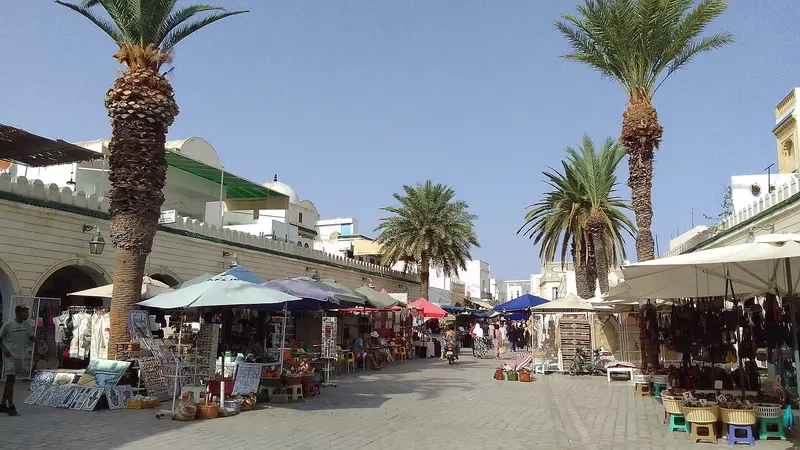
    Mathieu BROSSAIS / Wikimedia Commons / CC BY-SA 4.0

    Tunisia

    Nabeul

    City

    Nabeul is the capital of the governorate on Cap Bon, approximately 60 kilometers southeast of Tunis and about 12 kilometers northeast of Hammamet. The city is known for painted ceramics, Harissa, and its weekly market on Friday mornings.

    by Felix Gillen

    1. Home
    2. Destinations
    3. Tunisia
    4. Cap Bon & Hammamet
    5. Nabeul
    Nabeul is the capital of the governorate on Cap Bon, approximately 60 kilometers southeast of Tunis and about 12 kilometers northeast of Hammamet. The city is known for painted ceramics, Harissa, and its weekly market on Friday mornings.With around 84,000 inhabitants, Nabeul is the region's second main tourist hub after Hammamet; most hotels are located along the beachfront promenade. On the outskirts of the city lie the remains of ancient Neapolis, whose mosaics are displayed in the Archaeological Museum.

    Sights in Nabeul

    Discover the most important sights and attractions

    Nabeul Archaeological Museum
    Museum

    1Nabeul Archaeological Museum

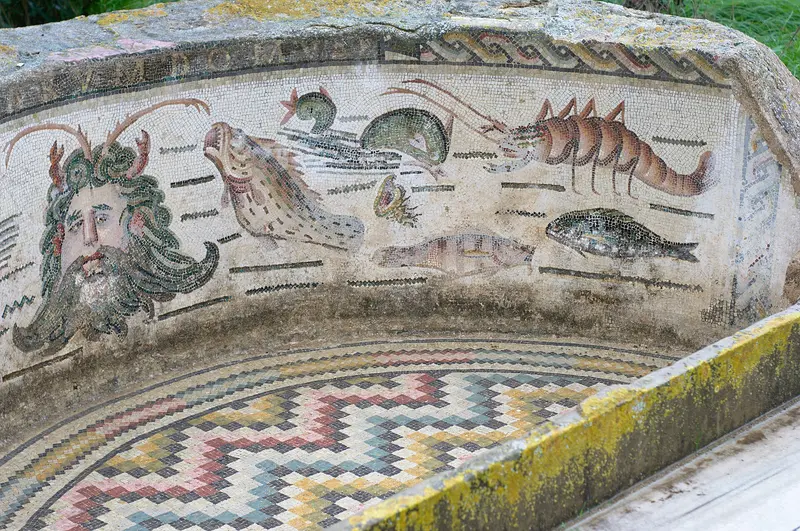
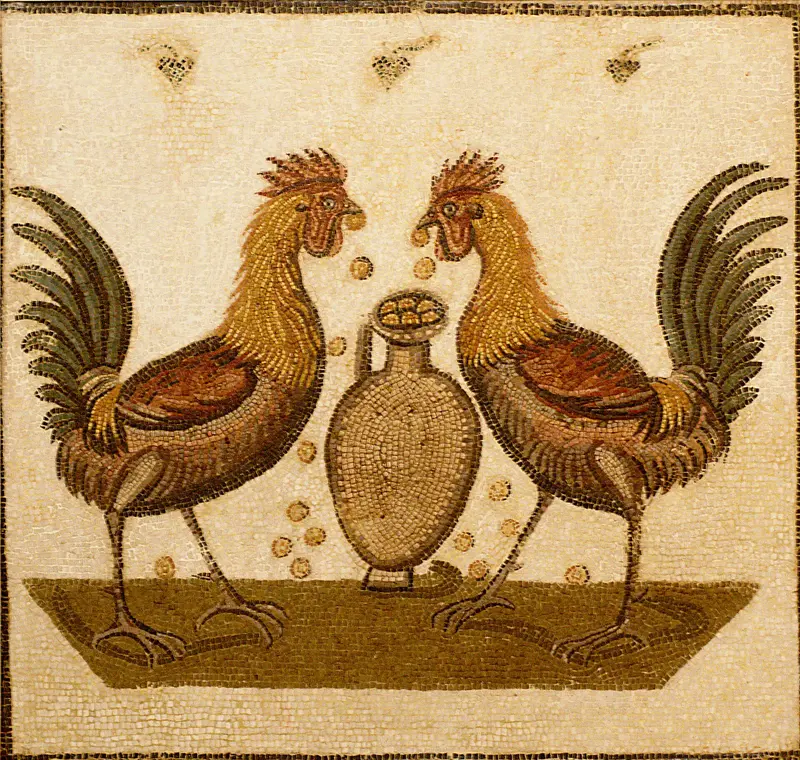
    Opened in 1984, the museum displays finds from Cap Bon dating from Punic and Roman times. Highlights include the mosaics from the House of the Nymphs in Neapolis and terracotta figures from the Sanctuary of Thinissut. Closed Mondays, admission 8 Dinar.
    Open in Google Maps
    Souk of Nabeul
    Market

    2Souk of Nabeul

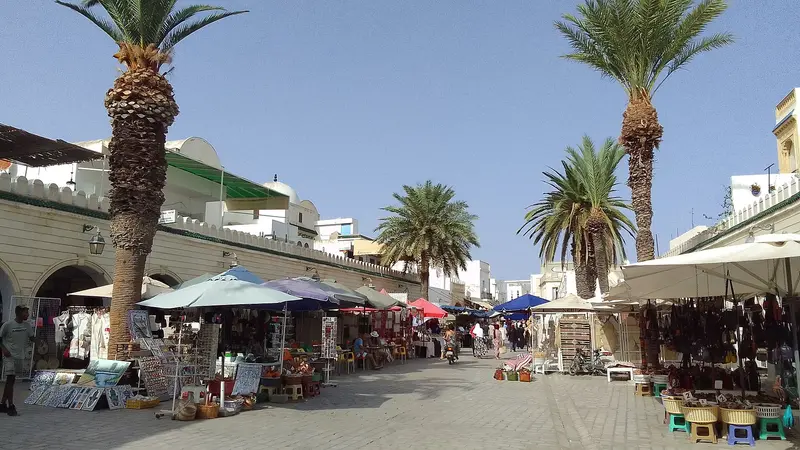
    In the central Souk, vendors sell ceramics, spices, and handicrafts. On Friday mornings, a large weekly market also takes place, attracting traders from all over Cap Bon.
    Open in Google Maps
    Neapolis
    Historic Landmark

    3Neapolis

    The seaside excavation, 2 km from the center, shows ancient city remnants, including the 4th-century House of the Nymphs and fish-salting basins. Most mosaics have been moved to the museum. Closed Mondays, admission 5 Dinar.
    Open in Google Maps
    Jarre Monument

    4Jarre Monument

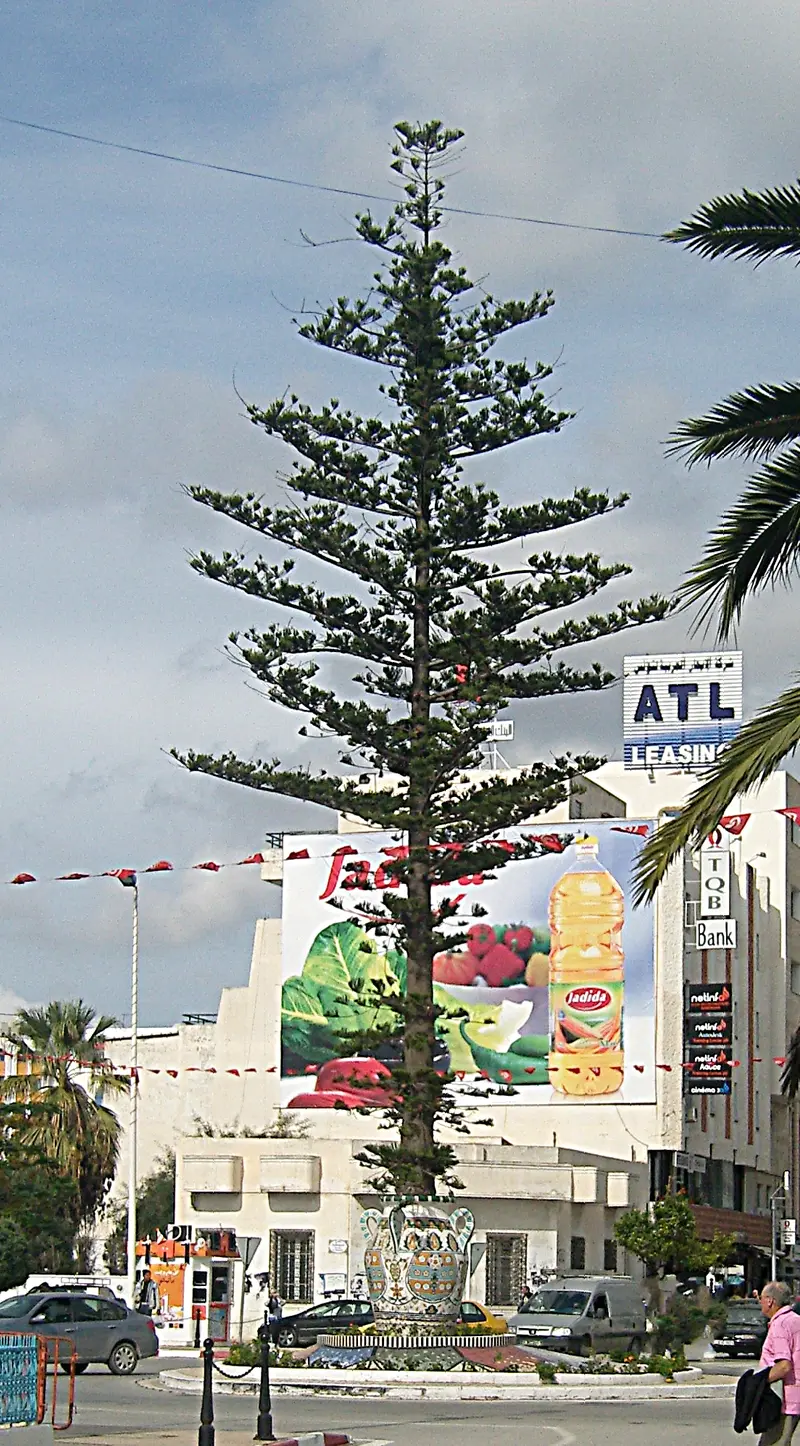
    In the central roundabout stands a giant, colorfully glazed vase. The landmark reminds that Nabeul lives from pottery.
    Open in Google Maps

    Restaurants in Nabeul

    1

    L'Olivier

    Restaurant on Avenue Hedi Chaker with Tunisian and French cuisine. Considered one of the city's more upscale addresses.
    Show on Google Maps
    2

    Le Patio

    Restaurant on Rue de Marbella, specializing in fish and seafood. Portions are large.
    Show on Google Maps
    3

    Bon Kif

    Central eatery with a relaxed atmosphere, especially praised for its fish dishes.
    Show on Google Maps
    4

    Tre Leoni

    Italian restaurant with homemade pasta. An alternative when you want a change after a few days of Tunisian food.
    Show on Google Maps

    Food and Drink

    Nabeul is known for Harissa, orange blossom water, and citrus fruits. You'll find these specialties city-wide.

    Harissa

    The spicy chili paste is the city's most famous product. Many families prepare large stocks during harvest time, known as Oula.

    Orange blossom water

    From bitter orange blossoms, businesses in and around Nabeul distill floral water, as well as rose and geranium water. Some is sold locally, the rest is exported.

    Citrus fruits

    Oranges and the Beldi lemon are the main fruits of the area.

    Sugar Dolls

    Colorful sugar figures, dyed with natural colors, are exclusive to Nabeul in Tunisia. They are made for the Islamic New Year and weddings, and eaten at Ashura.

    Crafts and Tradition

    Pottery and Market In Nabeul, pottery is a family craft, passed down through generations. In the early 20th century, potters like Jacob Chemla revitalized painted faience. Friday Market: Friday mornings draw vendors and buyers from across Cap Bon. Pottery, spices, fabrics, and basketry are sold. Sugar Dolls: Only in Nabeul are sugar figures crafted for Islamic New Year and weddings. Harissa and Orange Blossom Nabeul is known as the city of Harissa. The chili paste, legend says, arrived in Tunisia with the Andalusians in the early 17th century. Many families still store large annual provisions. Zhar: From mid-March to late April, bitter orange blossoms are hand-picked. Distillation: Using the copper or clay still (qattar), orange blossom water is made for coffee, pastries, and couscous. The extracted Neroli oil goes to perfume makers. Ancient Neapolis Neapolis first appears in sources in 413 BC. Rome punished the city in 148 BC for its loyalty to Carthage. In Roman times, it was a major center for Garum, the fish sauce of antiquity.

    Getting There & Around

    Getting There Train: A railway line connects Nabeul to Tunis via Borj Cédria; services resumed in December 2024. For current timetables, check with the railway company SNCFT. Bus: Regional buses operated by the Société régionale de transport du gouvernorat de Nabeul connect the towns of Cap Bon. Airport: Enfidha-Hammamet Airport is located south of Hammamet, Tunis-Carthage to the north. Around Town Market, museum, and promenade are close together in the center. The Neapolis excavation is about two kilometers away.

    Accommodations in Nabeul

    Find perfect stay in Nabeul

    Booking.com* (Affiliate link)
    Search Hotels
    Agoda* (Affiliate link)
    Search Hotels
    Airbnb
    Vacation Rentals

    * Affiliate link: if you book through it, we earn a small commission. The price stays the same for you.

    Plan your trip to Nabeul

    Save places, build a route and plan your city trip, all in one place.

    1. 1
      Sunrise over alpine peaks and a sea of clouds
      1234

      Round trip

      12 days · 4 stops

      Saved

      Pick a route

      Pick a ready-made one or save places and plan your own.

      Open bookmarks
    2. 2

      Trip to Nabeul

      Live
      • 1Nabeul Archaeological Museum3 days
      • 2Souk of Nabeul4 days
      • 3Neapolis5 days
      Budget

      Plan your trip

      The planner sorts stops, days and budget. Plan together in real time.

      Start trip planning
    3. 3
      9:41 No signal
      Nabeul
      Available offline

      Use it on the road

      Download the guide to your phone and use it on site, even offline.

    Nearby

    Hammamet

    Hammamet

    Hammamet is located approximately 60 kilometers south of Tunis and is the most important seaside resort in the Cap Bon region. Its small, walled medina with the kasbah is right on the beach, and in summer, visitors also come for the festival at Villa Dar Sébastien.The city, with around 91,000 inhabitants, stretches along the coast as a hotel belt: Hammamet Nord, the center around the medina, and Hammamet Sud, with Yasmine Hammamet and its marina about six kilometers southwest of the old town.
    Cap Bon & Hammamet

    Cap Bon & Hammamet

    The Cap Bon peninsula juts into the Mediterranean in northeast Tunisia, and on its southern edge, about 60 kilometers south of Tunis, lies the seaside resort of Hammamet. The region combines long sandy beaches with the Punic ruin city of Kerkouane, the pottery craft of Nabeul, and the falconry tradition of El Haouaria.Hammamet, Nabeul, and Kélibia are suitable as a base; all three are located on the coast.
    Zaghouan & Thuburbo Majus

    Zaghouan & Thuburbo Majus

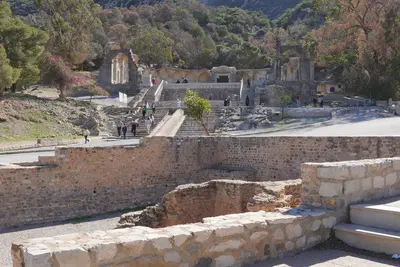
    Around Zaghouan, about 60 kilometers south of Tunis, are two Roman sites that can easily be combined in a single day. On the hillside above the town, the Roman Water Temple collects the springs that supplied Carthage via an aqueduct. A good 20 kilometers west, near El Fahs, lie the ruins of Thuburbo Majus with its Capitol, Forum, and Baths.
    Kélibia

    Kélibia

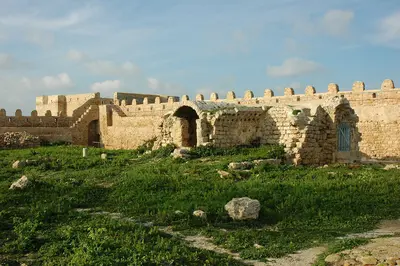
    Kélibia is located on the east coast of Cap Bon, about 100 kilometers from Tunis, beneath a fortress on a promontory overlooking the sea. The town is a starting point for the Punic ruins of Kerkouane, the UNESCO World Heritage site about eleven kilometers north.Kélibia has about 55,000 inhabitants and one of Tunisia's most important fishing ports. North of the center lies the sandy beach of El Mansourah.
    Carthage

    Carthage

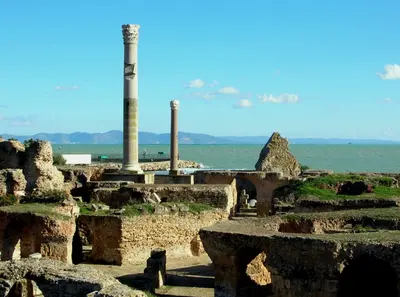
    The ruins of Carthage are scattered among residential areas on the coast northeast of Tunis and are directly accessible by the TGM suburban train. Traditionally founded by Phoenicians in 814 BC, the city was destroyed by Rome in 146 BC and later rebuilt as a Roman colony. Since 1979, the archaeological site has been a UNESCO World Heritage site. Visible attractions include the Antonine Baths by the sea, the Punic Ports, the Tophet, and the Amphitheater.

    Sources & method

    • Photos: Wikimedia Commons, Google Maps. Each photo carries its credit.
    • Place data such as addresses and ratings comes from Google Maps.
    • The content is based on web research from public, traceable sources. How the content is made · The role of AI