Fernweh: Home
    ExploreTravel GuidesPlan a tripMy tripLast visited
    de|en
    All Places & RegionsAll highlightsAbout FernwehFAQPrivacy PolicyImprint
    ExploreTravel GuidesPlan a tripMy tripLast visited
    Dougga
    Mehdi Ben Gharbia / Wikimedia Commons / CC BY-SA 3.0

    Tunisia

    Dougga

    Point of Interest

    Dougga, ancient Thugga, has been a UNESCO World Heritage Site since 1997 and is considered the best-preserved small Roman town in North Africa. The 75-hectare excavation lies about 110 km west of Tunis, with a Capitol, a theatre and a…

    by Felix Gillen

    1. Home
    2. Destinations
    3. Tunisia
    4. Norden & Tell
    5. Dougga
    Dougga, ancient Thugga, has been a UNESCO World Heritage Site since 1997 and is considered the best-preserved small Roman town in North Africa. The 75-hectare excavation lies about 110 km west of Tunis, with a Capitol, a theatre and a Numidian mausoleum from the 2nd century BC. Allow at least 2.5 to 3 hours for a walk around the site.

    Sights in Dougga

    Discover the most important sights and attractions

    Capitol
    Historic Landmark

    1Capitol

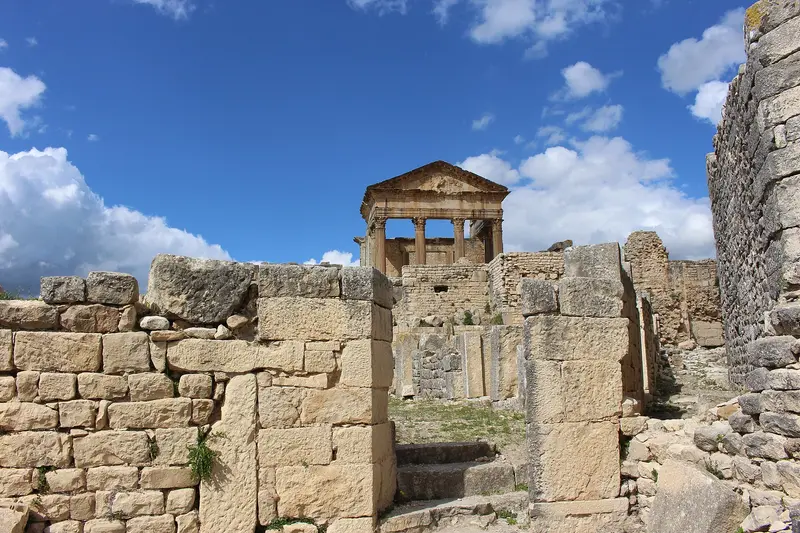
    The 2nd-century temple is dedicated to the Capitoline Triad of Jupiter, Juno, and Minerva and was completed around 166/167 AD. Right next door are the Forum and the Wind Rose Square with the compass rose engraved in the ground.
    Open in Google Maps
    Temple of Juno Caelestis
    Historic Landmark

    2Temple of Juno Caelestis

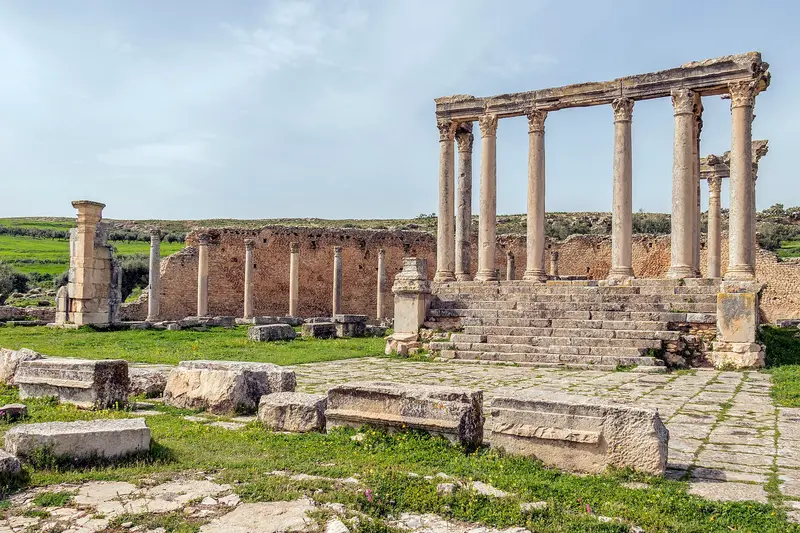
    The temple lies on the city's edge, accessible by a marked path through an olive grove. Unearthed in the 1890s, it was restored between 1904 and 1914.
    Open in Google Maps
    Baths of Licinius
    Historic Landmark

    3Baths of Licinius

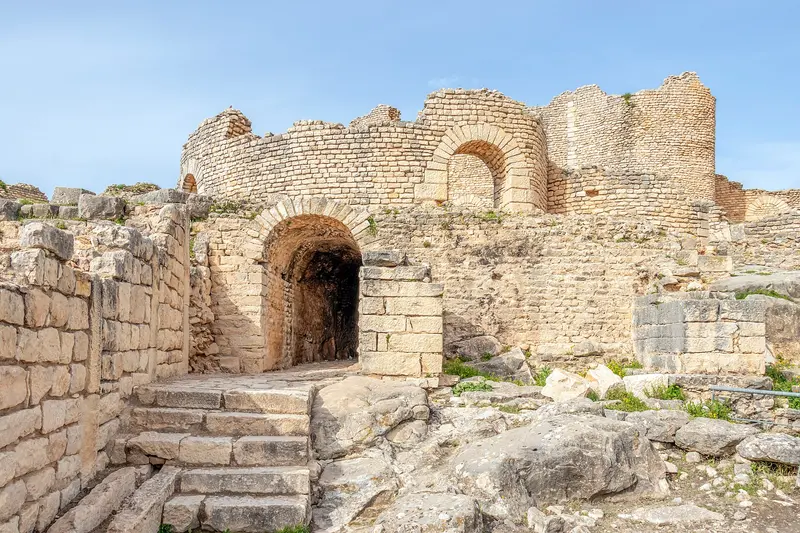
    The Licinian family founded the bath complex in the 3rd century, and it was used primarily in winter. Slaves once ran through the preserved service corridors, heating the water.
    Open in Google Maps
    Theater

    4Theater

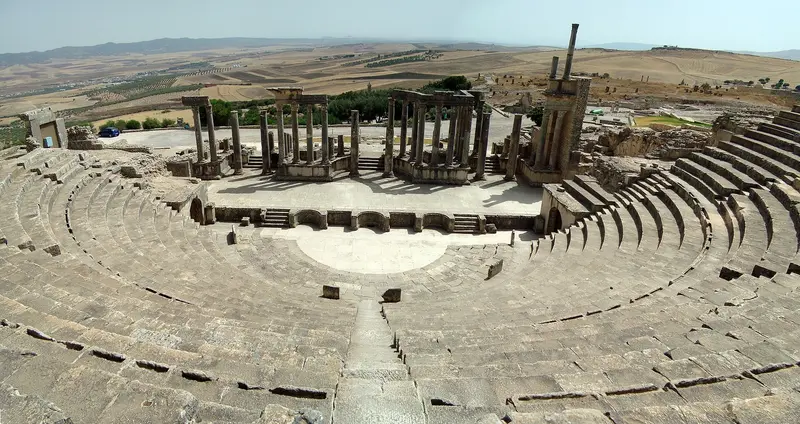
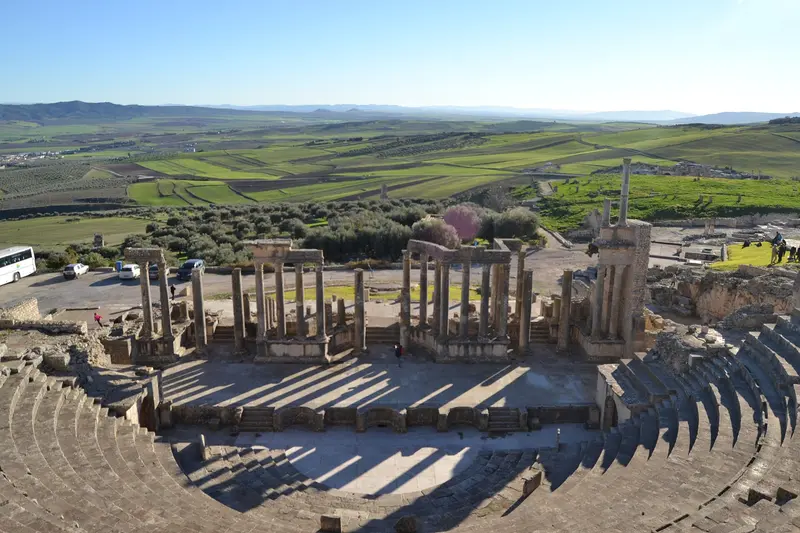
    The theater was built in 168 or 169 AD and seated 3,500, remarkable for a town of only 5,000 residents then. P. Marcius Quadratus, according to an inscription, donated it from his own funds for his hometown. Today, it hosts the Festival International de Dougga.
    Open in Google Maps

    5Libyan-Punic Mausoleum

    The approximately 21-meter-tall tomb, dating from the 2nd century BCE, originates from the Numidian period. Its bilingual inscription was dismantled by the British consul Thomas Reade in 1842; it is now housed in the British Museum and proved instrumental in deciphering the Libyan script. Louis Poinssot meticulously rebuilt the mausoleum between 1908 and 1910, utilizing the stones that had fallen.
    Open in Google Maps
    The Wind Rose Square

    6The Wind Rose Square

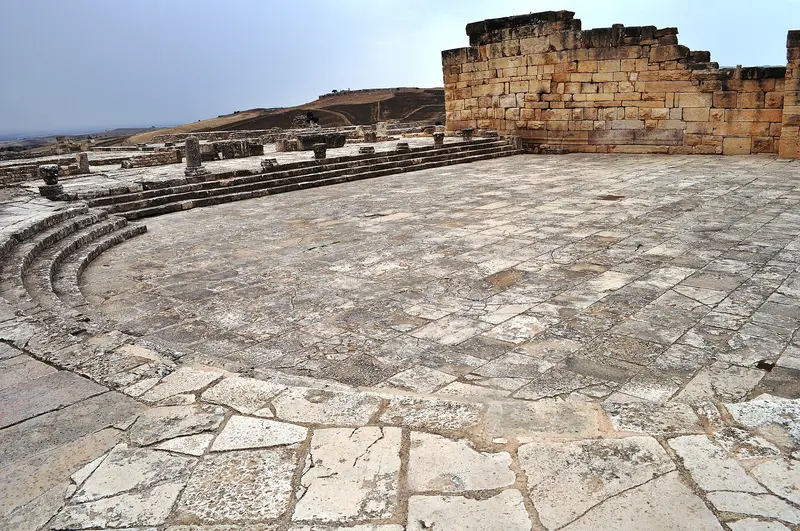
    The square next to the Forum owes its name to a wind rose engraved in the ground. It is situated between the Temple of Mercury and the Market and primarily served as the temple's forecourt.
    Open in Google Maps

    Restaurants in Dougga

    History & Guided Tour

    Numidians, Punics, Romans Long before the Romans, Thugga was a Numidian city. Testament to this is the approximately 21-meter-high Libyco-Punic Mausoleum of Ateban from the 2nd century BC. Its bilingual inscription was broken out by the British consul Thomas Reade in 1842, severely damaging the tomb; the inscription is now in the British Museum. Tour Theatre: Built 168/169 AD, approx. 3,500 seats; usually the first stop after the entrance Capitol and Forum: The temple for Jupiter, Juno, and Minerva from 166/167 AD, next to it the Square of the Compass Rose Temple of Juno Caelestis: On the outskirts of the city, via a path through an olive grove Baths: The Licinian Baths from the 3rd century and the Antonine Baths with supply tunnels Trifolium House: The largest private house of the city excavated to date, named after a clover-shaped room Practical Admission: 8 TND for visitors not residing in Tunisia Opening Hours: Winter 8:30 AM to 5:30 PM, Summer 8 AM to 7 PM, Ramadan 8 AM to 5 PM Footwear: Paths are paved and sometimes steep; sturdy shoes are better than sandals Mosaics: The Cyclops Mosaic from the Baths of the Cyclops is now in the Bardo Museum in Tunis

    Anreise

    By Car From Tunis, it's about 110 km, taking 1.5 to 2 hours one way, depending on traffic. From Téboursouk, the site is signposted, located just under 5 km southwest of the town. By Louage and Taxi Tunis–Téboursouk: Louages depart from Bab Saadoun station once full, taking around 80 minutes; buses need at least 2 hours Final Leg: by taxi from Téboursouk; taxis rarely wait at the excavation site, arrange your return trip in advance Return Journey: In the afternoon, Louages from Téboursouk are often already full; plan your return not too late Organized Tours Day trips from Tunis and Hammamet often combine Dougga with Bulla Regia or Testour.

    Accommodations in Dougga

    Find perfect stay in Dougga

    Booking.com* (Affiliate link)
    Search Hotels
    Agoda* (Affiliate link)
    Search Hotels
    Airbnb
    Vacation Rentals

    * Affiliate link: if you book through it, we earn a small commission. The price stays the same for you.

    Nearby

    Testour

    Testour

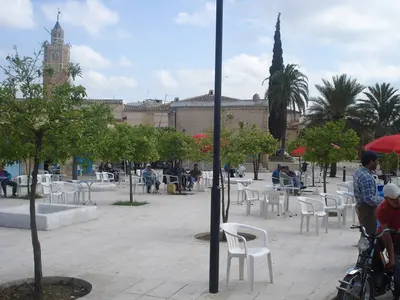
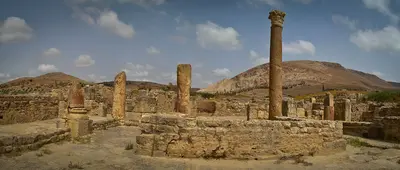
    Testour is a small town in the Medjerda Valley, about 77 kilometers southwest of Tunis, founded around 1609 by Andalusians who had been expelled from Spain. Tiled roofs, arcades, and the minaret of the Grand Mosque with its backward-running clock still recall this heritage to this day. The town lies on the route to Dougga and can be easily combined with a visit to the excavation site.
    Norden & Tell

    Norden & Tell

    Northern Tunisia, between Bizerte and the Algerian border, combines the Mediterranean coast with the Tell hill country west of Tunis. You come here for the Roman cities of Dougga and Bulla Regia, the port city of Bizerte, the rocky coast of Tabarka and Ichkeul National Park. Bizerte is about an hour's drive north of Tunis, Dougga about 1.5 to 2 hours west.
    Bulla Regia

    Bulla Regia

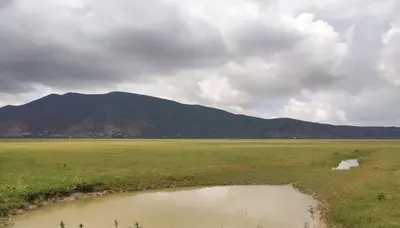
    Bulla Regia in northwestern Tunisia is known for its Roman villas with underground living quarters that offered protection from the summer heat. Some mosaics still lie in their original place there. The excavation site is located 5 km north of Jendouba at the foot of Djebel Rebia, approximately 2.5 bus hours west of Tunis.
    Tabarka

    Tabarka

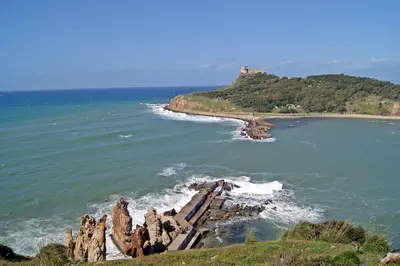
    Tabarka is a coastal town in the far northwest of Tunisia, about 175 km west of Tunis and a few kilometers from the Algerian border. You come here for the Genoese Fort on the rock above the harbor, the Aiguilles rock needles, and the diving spots off the coast. You explore the small town of around 20,000 inhabitants on foot; excursions along the coast depart from the harbor.
    Zaghouan & Thuburbo Majus

    Zaghouan & Thuburbo Majus

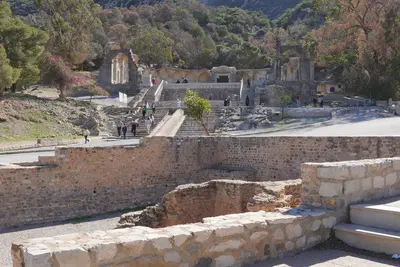
    Around Zaghouan, about 60 kilometers south of Tunis, are two Roman sites that can easily be combined in a single day. On the hillside above the town, the Roman Water Temple collects the springs that supplied Carthage via an aqueduct. A good 20 kilometers west, near El Fahs, lie the ruins of Thuburbo Majus with its Capitol, Forum, and Baths.

    Sources & method

    • Photos: Wikimedia Commons. Each photo carries its credit.
    • Place data such as addresses and ratings comes from Google Maps.
    • The content is based on web research from public, traceable sources. How the content is made · The role of AI