Fernweh: Home
    ExploreTravel GuidesPlan a tripMy tripLast visited
    de|en
    All Places & RegionsAll highlightsAbout FernwehFAQPrivacy PolicyImprint
    ExploreTravel GuidesPlan a tripMy tripLast visited
    Bulla Regia
    Elena Tatiana Chis / Wikimedia Commons / CC BY-SA 4.0

    Tunisia

    Bulla Regia

    Point of Interest

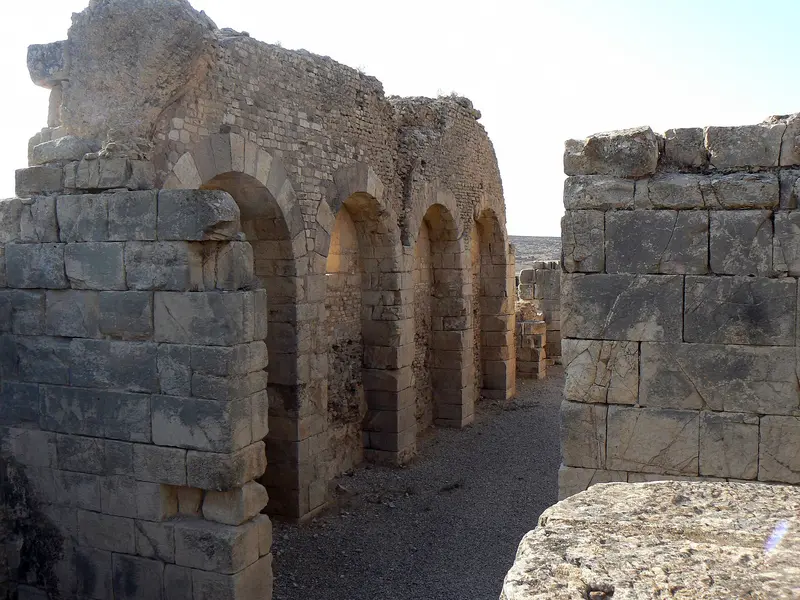
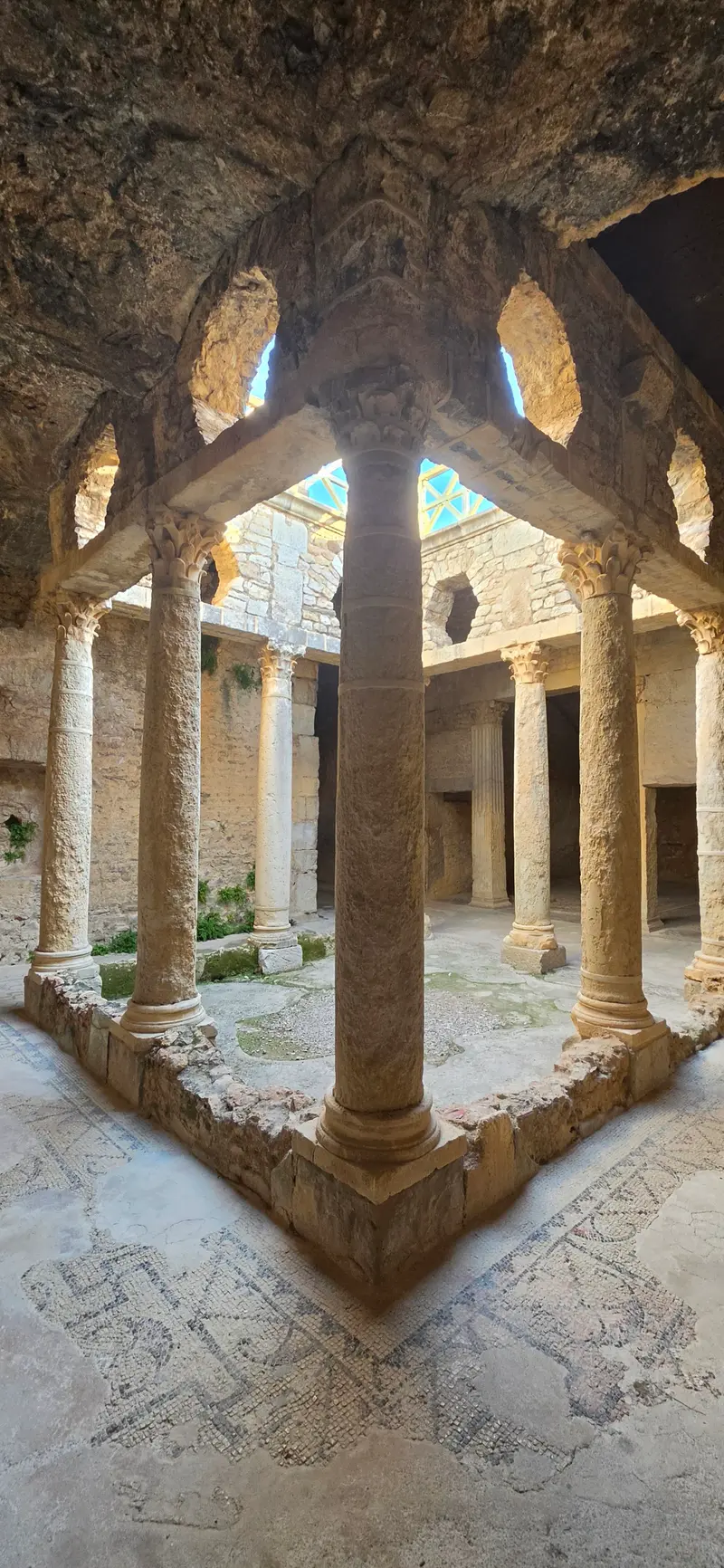
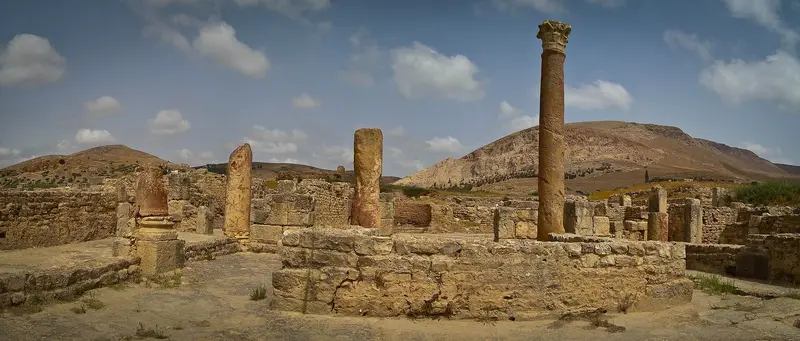
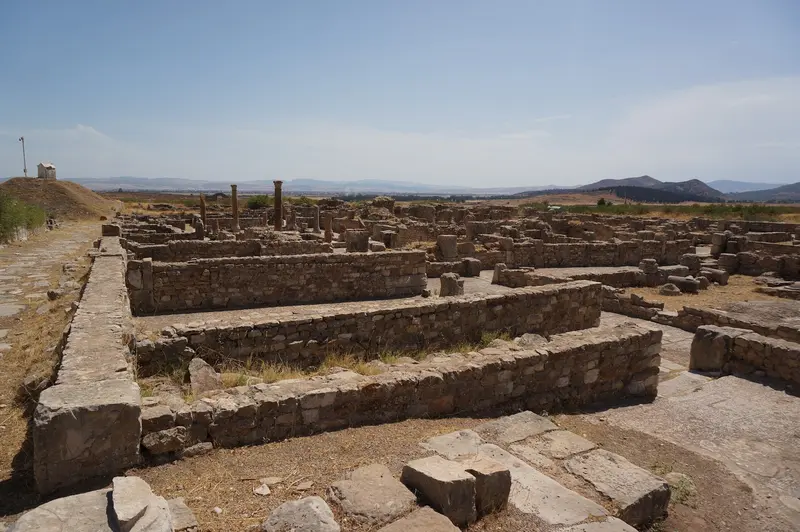
    Bulla Regia in northwestern Tunisia is known for its Roman villas with underground living quarters that offered protection from the summer heat. Some mosaics still lie in their original place there.

    by Felix Gillen

    1. Home
    2. Destinations
    3. Tunisia
    4. Norden & Tell
    5. Bulla Regia
    Bulla Regia in northwestern Tunisia is known for its Roman villas with underground living quarters that offered protection from the summer heat. Some mosaics still lie in their original place there. The excavation site is located 5 km north of Jendouba at the foot of Djebel Rebia, approximately 2.5 bus hours west of Tunis.

    Sights in Bulla Regia

    Discover the most important sights and attractions
    House of Hunting
    Historic Landmark

    1House of Hunting

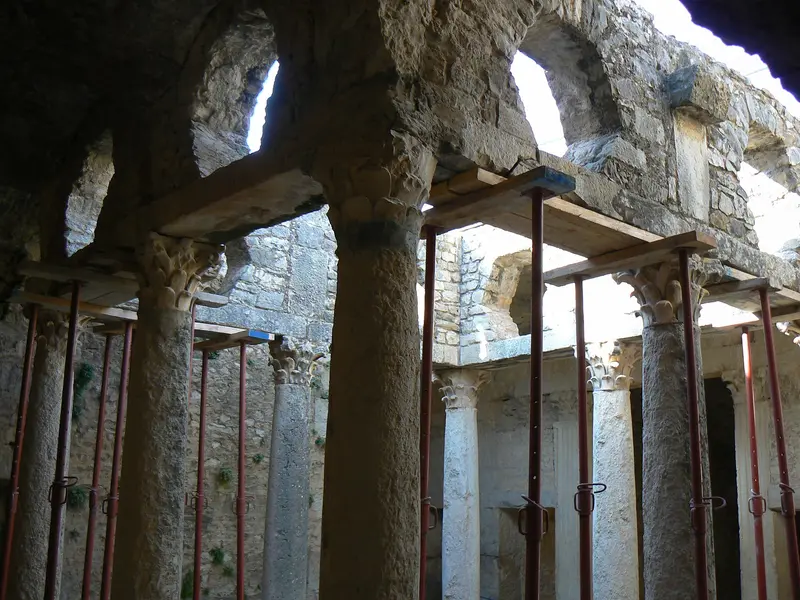
    The villa features a peristyle courtyard measuring 19 by 13 meters with Corinthian capitals. Its underground level offered protection from the summer heat and in its current form is dated to the 3rd to 4th century.
    Open in Google Maps
    House of Fishery
    Historic Landmark

    2House of Fishery

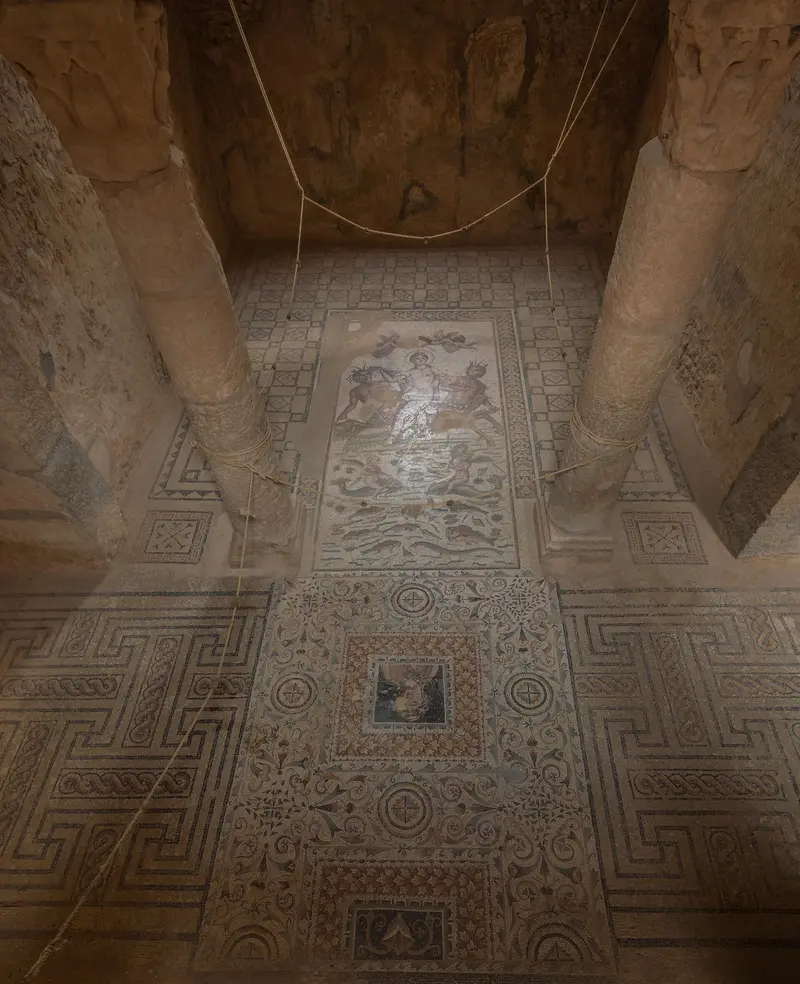
    The villa follows the same floor plan as the House of the Hunt and also has an underground floor. It is named for its mosaic decoration.
    Open in Google Maps
    Julia Memmia Thermal Baths
    Museum

    3Julia Memmia Thermal Baths

    The large bath complex was built under Emperor Severus Alexander and was expanded to approximately 3,300 square meters by the late 4th century.
    Open in Google Maps
    Archaeological Museum
    Museum

    4Archaeological Museum

    The small museum on the site displays in two halls finds from Punic, Numidian, and Roman times. Many of the most significant mosaics are, however, located in the Bardo Museum in Tunis.
    Open in Google Maps
    House of Amphitrite

    5House of Amphitrite

    In the villa's underground dining room lies one of Bulla Regia's most renowned mosaics. It depicts not Amphitrite, as previously believed, but a Venus of the Sea with Tritons and Amoretti, with fish below. It is considered the oldest surviving representation of this motif.
    Open in Google Maps
    Theater

    6Theater

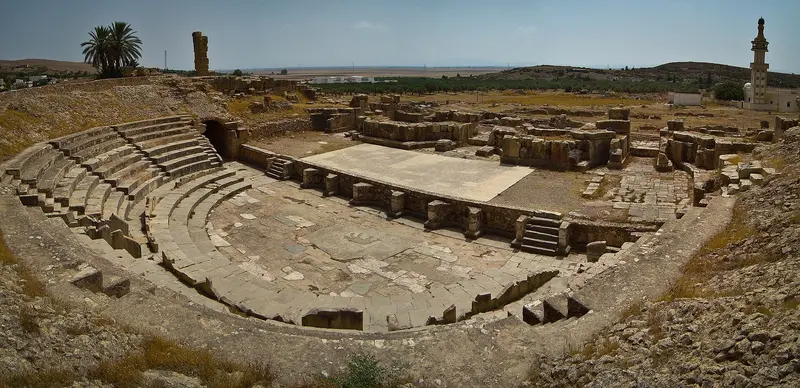
    The theatre, built under Marcus Aurelius and Lucius Verus, was renovated in the 4th century. In the orchestra lies a late mosaic with a bear.
    Open in Google Maps

    Restaurants in Bulla Regia

    History and Villas

    Life Underground Since the time of Emperor Hadrian, wealthy citizens built their houses with a second storey underground. There it was cool even in summer, and water sprinkled on the mosaic floors provided additional evaporative cooling. House of the Hunt: the richest villa, with a peristyle courtyard measuring 19 x 13 metres House of Fishing: built according to the same plan, named after its mosaic decorations House of Amphitrite: with a long vestibule; the mosaic actually depicts a sea-Venus House of the Treasure: named after a jar of Byzantine coins from the 7th century Theatre, Thermal Baths, Museum The theatre was built under Marcus Aurelius and Lucius Verus and was fully excavated in 1957. The Thermal Baths of Julia Memmia date from the time of Severus Alexander. A small museum displays finds from Punic, Numidian, and Roman times; many major works are in the Bardo Museum in Tunis. Location and Security The Governorate of Jendouba borders Algeria. Germany's Federal Foreign Office advises against travel to the immediate border area and the mountain region around Ain Draham. Before you travel, check the current UK FCDO travel advice for Tunisia, or your own government's.

    Arrival

    Getting there from Tunis Bus: SNTRI buses depart from Tunis Sud for Jendouba, approx. 2.5 hours Train: SNCFT trains connect Tunis with Jendouba; check schedules and travel times with SNCFT in advance Organized Tours: Day trips from Tunis and Hammamet often combine Bulla Regia with Dougga From Jendouba to the Excavation Site Public transport does not reach the excavation site. From Jendouba, take a taxi and arrange the return trip, or get dropped off by a bus or louage heading towards Tabarka at the turn-off; from there, it's about a 3 km walk.

    Accommodations in Bulla Regia

    Find perfect stay in Bulla Regia

    Booking.com* (Affiliate link)
    Search Hotels
    Agoda* (Affiliate link)
    Search Hotels
    Airbnb
    Vacation Rentals

    * Affiliate link: if you book through it, we earn a small commission. The price stays the same for you.
    Nearby

    Tabarka

    Tabarka

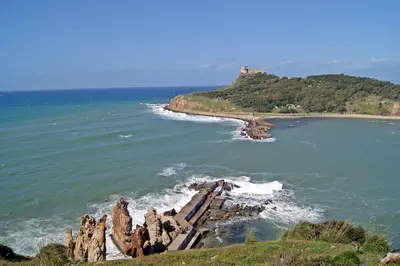
    Tabarka is a coastal town in the far northwest of Tunisia, about 175 km west of Tunis and a few kilometers from the Algerian border. You come here for the Genoese Fort on the rock above the harbor, the Aiguilles rock needles, and the diving spots off the coast. You explore the small town of around 20,000 inhabitants on foot; excursions along the coast depart from the harbor.
    Dougga

    Dougga

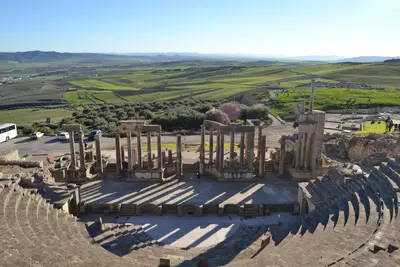
    Dougga, ancient Thugga, has been a UNESCO World Heritage Site since 1997 and is considered the best-preserved small Roman town in North Africa. The 75-hectare excavation lies about 110 km west of Tunis, with a Capitol, a theatre and a Numidian mausoleum from the 2nd century BC. Allow at least 2.5 to 3 hours for a walk around the site.
    Norden & Tell

    Norden & Tell

    Northern Tunisia, between Bizerte and the Algerian border, combines the Mediterranean coast with the Tell hill country west of Tunis. You come here for the Roman cities of Dougga and Bulla Regia, the port city of Bizerte, the rocky coast of Tabarka and Ichkeul National Park. Bizerte is about an hour's drive north of Tunis, Dougga about 1.5 to 2 hours west.
    Testour

    Testour

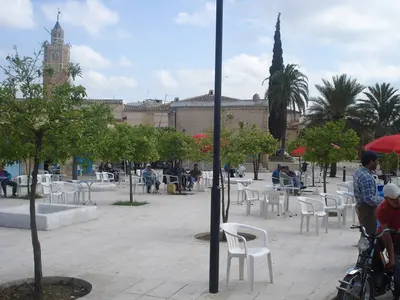
    Testour is a small town in the Medjerda Valley, about 77 kilometers southwest of Tunis, founded around 1609 by Andalusians who had been expelled from Spain. Tiled roofs, arcades, and the minaret of the Grand Mosque with its backward-running clock still recall this heritage to this day. The town lies on the route to Dougga and can be easily combined with a visit to the excavation site.
    Ichkeul National Park

    Ichkeul National Park

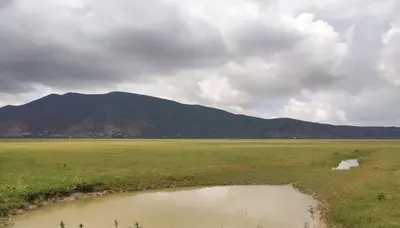
    The Ichkeul National Park, located some 25 kilometers southwest of Bizerte, protects a lake, extensive marshes, and the 510-meter-high Djebel Ichkeul. This wetland has been a UNESCO World Heritage site since 1980 and is an important stopover for migratory birds; you'll see most birds in winter.

    Sources & method

    • Photos: Wikimedia Commons, Google Maps. Each photo carries its credit.
    • Place data such as addresses and ratings comes from Google Maps.
    • The content is based on web research from public, traceable sources. How the content is made · The role of AI