Fernweh
    ExploreTravel GuidesMy Trips
    de|en
    About FernwehImprintFAQPrivacy Policy
    ExploreTravel GuidesMy Trips
    Fontainebleau

    Fontainebleau

    CityCulture
    1. Home
    2. Destinations
    3. France
    4. Fontainebleau
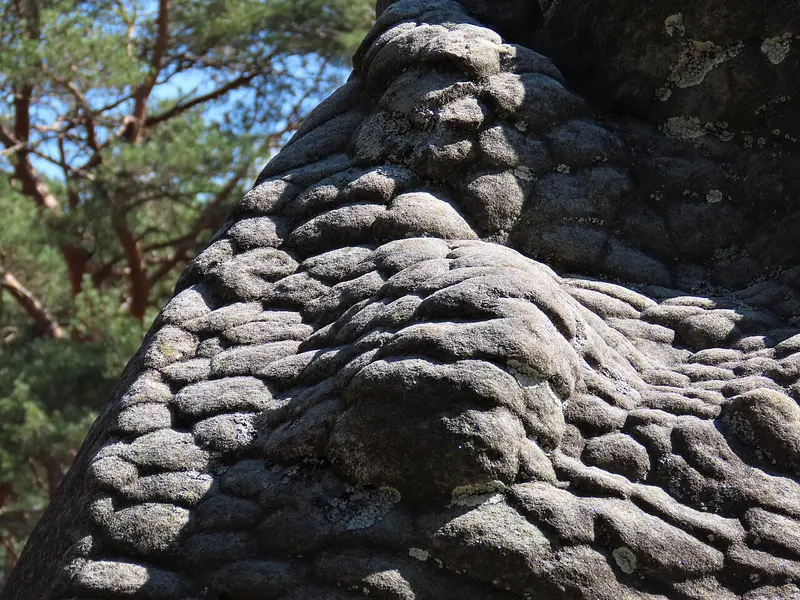
    In Fontainebleau, you'll discover a unique blend of royal splendor and untouched nature that defines the area. The Château de Fontainebleau, a UNESCO World Heritage site, served for over 800 years as a residence for French monarchs, from Francis I to Napoleon III. Here you'll find an impressive blend of Renaissance and Neoclassical architecture, surrounded by expansive gardens perfect for a stroll. The Forêt de Fontainebleau stretches around the town and is a paradise for outdoor enthusiasts. It offers numerous opportunities for hiking, climbing, and bouldering, and is known for its unique sandstone formations. To best enjoy the expansive palace grounds and the tranquility of the forest, a visit in the spring or autumn months is recommended. Plan enough time to explore both the opulent interiors of the palace and the picturesque trails of the forest.
    • Neighborhoods & highlights
    • Walking tours
    • Eat & drink
    • Culture
    • Getting around
    • Accommodation
    • Plan trip
    • Nearby
    • Neighborhoods & highlights
    • Walking tours
    • Eat & drink
    • Culture
    • Getting around
    • Accommodation
    • Plan trip
    • Nearby

    Overview

    In Fontainebleau, you'll encounter royal history and a vast natural landscape that define the area. The Château de Fontainebleau, a UNESCO World Heritage site, served for over eight centuries as a residence for French monarchs from Francis I to Napoleon III. Here you'll find impressive architecture, combining Renaissance and Classicism, surrounded by expansive gardens and parks. The adjacent Forêt de Fontainebleau is a significant natural area, globally renowned for its unique sandstone formations and as the birthplace of modern bouldering. This forest offers numerous opportunities for hiking, climbing, and bouldering on well-marked trails and routes. To best enjoy the extensive castle grounds and the diverse nature of the forest, a visit in the spring or autumn months is recommended. Plan enough time to explore both the opulent interiors and the picturesque paths and rocks.

    Places in Fontainebleau

    Discover the most important sights and attractions

    Sights in Fontainebleau

    Invader FTBL 13

    In Fontainebleau you will encounter the artwork Invader FTBL 13, a characteristic mosaic by the globally renowned French street artist Invader. These pixelated installations, often inspired by characters from the video game Space Invaders, are an integral part of his global 'invasions' of urban spaces. They represent a modern art form that reinterprets public space and encourages a conscious engagement with the surroundings. You can find this specific work by carefully searching the city's facades and walls, as Invader often places his mosaics in unexpected, elevated locations. Our Tip: Take your time searching and look closely, as finding it is part of the experience. For an optimal photo of the mosaic set against Fontainebleau's historical architecture, a visit during clear daylight is recommended to avoid shadows and highlight the colors.
    Open in Google Maps

    Carrefour de la maison forestière, les huit routes.

    The Carrefour de la maison forestière, les huit routes is a historic crossroads in the heart of the Forêt de Fontainebleau, owing its name to a former forester's house and the eight paths that branch off from here. For centuries, this spot served as a central meeting point for royal hunting parties and a strategic location for forest management. Today, you'll find a spacious clearing here, serving as an ideal starting point for exploring the forest. From here, you can delve deep into the impressive nature on numerous marked hiking and cycling trails, known for its unique sandstone formations and ancient trees. Our Tip: Visit the Carrefour early in the morning or on weekdays to enjoy the forest's tranquility and unique atmosphere undisturbed. For photographers, the accessible paths from here offer excellent motifs of the forest landscape, especially in autumn when the foliage glows in vibrant colors.
    Open in Google Maps

    Le Dansieur 7b

    In Fontainebleau, one of the world's most renowned bouldering areas, Le Dansieur 7b presents a remarkable challenge. This specific problem, known for its technical precision and demanding sequence of moves, is a classic at grade 7b, attracting climbers from all over the world. You'll find it in the sector Cuvier Rempart, an area famous for its historical first ascents and distinctive sandstone formations. The route demands not only strength but, above all, refined technique and a keen feel for the often subtle holds and foot placements of Fontainebleau sandstone. Expect a sequence that requires precise body positioning and finger strength to master the crucial cruxes. Our Tip: The best conditions for Le Dansieur 7b are found on cool, dry days, ideally in autumn or spring, when the sandstone offers optimal grip. Make sure to bring enough crashpads and warm up thoroughly before attempting this challenging problem. A spotter is essential here.
    Open in Google Maps

    FONTAINE DES TROIS GRÂCES

    You'll find the Fontaine des Trois Grâces in the picturesque Jardin de Diane at the Château de Fontainebleau. Originally created in the 16th century under Catherine de' Medici as the Diana Fountain, it was remodelled several times over the centuries. The current sculpture group of the Three Graces, symbolising grace, beauty, and joy, dates from the 19th century and replaced earlier depictions. Here you'll see a classical composition that blends harmoniously into the carefully designed garden. The Graces, often depicted as companions of Aphrodite, embody the ideals of the Renaissance and Classicism that define the entire château. The fountain serves as a central focal point in the garden, inviting you to linger. Our Tip: It’s best to visit the fountain in the morning, when the light is softer and the crowds are still manageable. For an atmospheric photo, position yourself to capture the sculpture with the historical backdrop of the château.
    Open in Google Maps

    Invader FTBL 07

    The artwork Invader FTBL 07 is part of the global street art movement by the anonymous artist Invader, known for his characteristic pixelated mosaics. These works, inspired by the 8-bit aesthetic of classic video games, represent a deliberate 'invasion' of public space and challenge viewers to perceive their surroundings anew. In Fontainebleau, this specific mosaic blends into the urban backdrop while simultaneously creating a visual disruption that provokes thought. It is a commentary on digital culture and the transience of art in public spaces. You'll notice that Invader often places his works in unexpected or elevated locations, making the search an integral part of the experience. Our tip: When exploring the city, actively look for details on facades or walls. For an optimal photo that highlights the fine pixel structures and the artwork's urban context, a daytime visit is recommended.
    Open in Google Maps

    City walks in Fontainebleau

    Curated walking tours through the city's highlights — handpicked by experienced travel journalists.

    Wildnis und Felsgiganten: Ein Spaziergang durch den Wald von Fontainebleau

    Tauchen Sie ein in die atemberaubende Natur des Forêt de Fontainebleau, berühmt für seine einzigartigen Sandsteinformationen und als Wiege des Boulderns. Dieser Spaziergang führt Sie abseits der kaiserlichen Pracht tief in die Waldlandschaft, vorbei an majestätischen Felsen und stillen Lichtungen, die seit Jahrhunderten Künstler und Naturfreunde inspirieren. Entdecken Sie die geologische Vielfalt und die wilde Schönheit, die dieser Wald zu bieten hat.

    ~2 Std. 30 Min.
    In Google Maps öffnen
    Stopps (7)

    Dining & Drinks

    History and Artistic Heritage in Fontainebleau

    Fontainebleau is inextricably linked with the history of France, serving as a royal residence from Francis I to Napoleon III. Its origins date back to the 12th century, but its heyday began under Francis I, who transformed the medieval castle into a magnificent Renaissance jewel. Under the direction of Italian artists like Rosso Fiorentino and Primaticcio, the "First School of Fontainebleau" emerged, significantly contributing to the introduction of the Italian Renaissance in France.The architecture of the Château de Fontainebleau is a unique mosaic of various eras, harmoniously blending Gothic, Renaissance, and Classicism. Famous elements like the horseshoe staircase and the Galerie François Ier bear witness to the artistic innovation of this period. Cultural peculiarities include its strong connection to the surrounding forest landscape, which served for centuries as a royal hunting ground and later inspired artists of the Barbizon School. This rich past continues to shape Fontainebleau's cityscape and cultural identity today.

    Getting Around Here

    Charming Fontainebleau is ideally explored on foot to easily discover its imposing castle and picturesque town centre. For excursions into the vast forest and the surrounding area, bicycles are a great option, available for rent in many places. Additionally, a local bus network provides connections within the city, including Fontainebleau-Avon train station.

    Accommodations in Fontainebleau

    Accommodations in Fontainebleau

    Find perfect stay in Fontainebleau

    Booking.com
    Search Hotels
    Agoda
    Search Hotels
    Airbnb
    Vacation Rentals
    Hotels.com
    Hotels Worldwide
    Hostelworld
    Hostels

    Campgrounds in Fontainebleau

    Find perfect campground in Fontainebleau

    Search via Google Maps
    Campgrounds nearby (15km)
    Camping.info
    Find Campgrounds
    Park4Night
    RV Parks & Camping

    Plan your trip to Fontainebleau

    Save places, build a route and plan your city trip — all in one place.

    Save places

    Bookmark sights, restaurants and neighborhoods you're interested in.

    Build your route

    Turn your bookmarks into a route — define order, days and budget.

    Refine with AI

    Let Mein Fernweh suggest experiences and put together a tailored daily plan.

    Start trip planningOpen bookmarks

    Locations nearby

    These places are nearby — perfect for additional days or a day trip.

    Provins

    Provins

    An exceptional medieval fortress town and UNESCO World Heritage site, which transports visitors back in time with its well-preserved fortifications and historical spectacles.
    Disneyland Paris

    Disneyland Paris

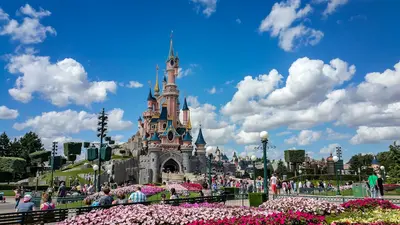
    Disneyland Paris, opened in 1992, is a European-inspired version of the Disney theme park experience.It encompasses the classic Disneyland Park with its Sleeping Beauty Castle, and the Walt Disney Studios Park.In Disneyland Park, you'll find detailed worlds like Fantasyland and Adventureland, along with their attractions.The parks are known for their immersive design, which transports visitors into Disney's story worlds.Visits on weekdays outside French school holidays are ideal; always book tickets and services online in advance.
    Île-de-France

    Île-de-France

    The Île-de-France is the pulsating heart of France, where history and modernity uniquely merge. Here you'll find not just the iconic city of Paris, but also a wealth of royal castles, impressive landscapes, and charming small towns waiting for you to discover them.
    Paris

    Paris

    Paris presents itself as a world-class city, uniquely combining art, culture, and exquisite gastronomy. Here you'll discover iconic landmarks like the Eiffel Tower, the Louvre Museum with its treasures, and the historic Notre-Dame Cathedral on the Île de la Cité. The banks of the Seine, a UNESCO World Heritage site, invite strolls, while districts like Le Marais offer an authentic flair with their alleys and boutiques. Historically, Paris was always a hub of European intellectual history and fashion. For a pleasant travel experience, a visit in spring or autumn is recommended to avoid the large tourist crowds. A practical tip is to use the Métro to efficiently reach the widespread attractions and observe city life.
    Versailles

    Versailles

    Versailles is inextricably linked with the Palace of Versailles, a symbol of the French monarchy and absolutist power. Here you'll discover the opulent Hall of Mirrors, the royal apartments, and the impressive gardens designed by André Le Nôtre. The estate bears witness to the vision of Louis XIV and was the center of France's political power for over a century. Beyond the main palace, the Grand Trianon, the Petit Trianon, and the Hameau de la Reine invite exploration. Plan at least a full day to visit the entire estate to fully grasp its diversity. To avoid crowds, a visit right after opening or in the late afternoon is recommended. You should always book tickets online in advance to minimize waiting times.