Fernweh: Home
    ExploreTravel GuidesPlan a tripMy tripLast visited
    de|en
    All Places & RegionsAll highlightsAbout FernwehFAQPrivacy PolicyImprint
    ExploreTravel GuidesPlan a tripMy tripLast visited
    Vézelay

    France

    Vézelay

    VillageCulture

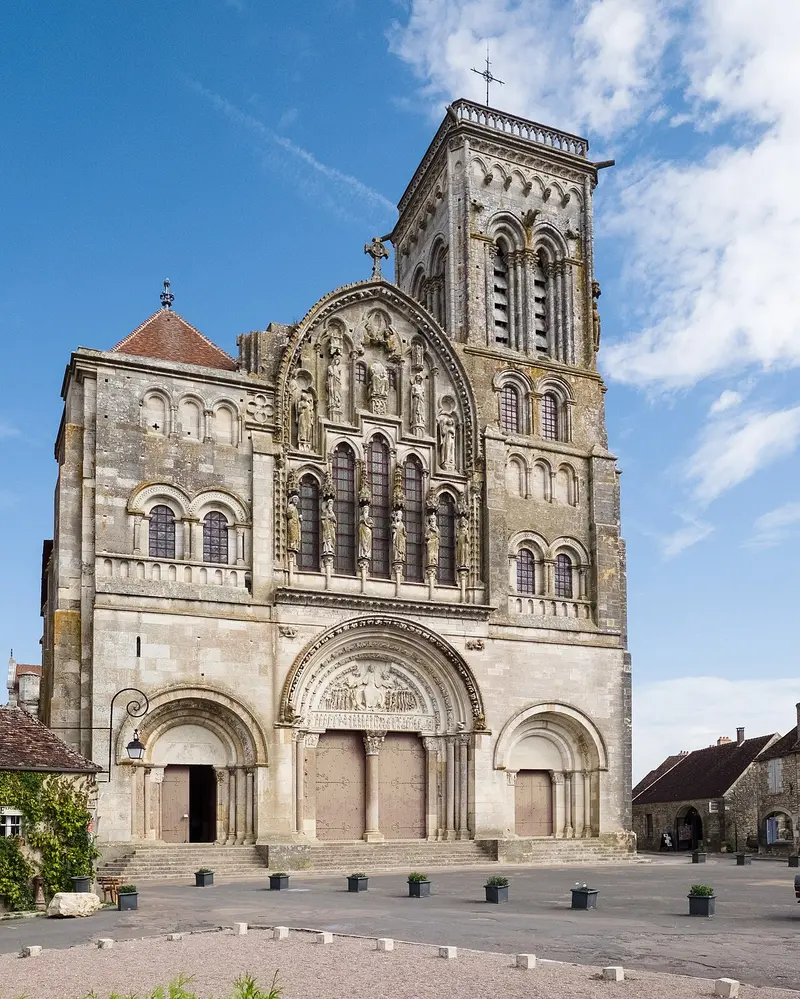
    Vézelay is situated on a hill in northern Burgundy at the edge of the Morvan. Above the village stands the Basilica of Sainte-Marie-Madeleine, a masterpiece of Romanesque art and a UNESCO World Heritage site since 1979.

    by Felix Gillen

    1. Home
    2. Destinations
    3. France
    4. Burgundy (Bourgogne)
    5. Vézelay
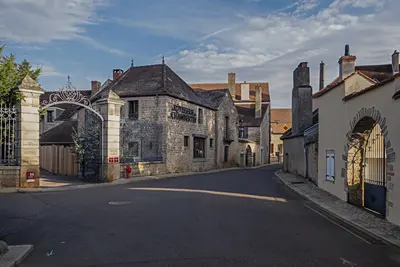
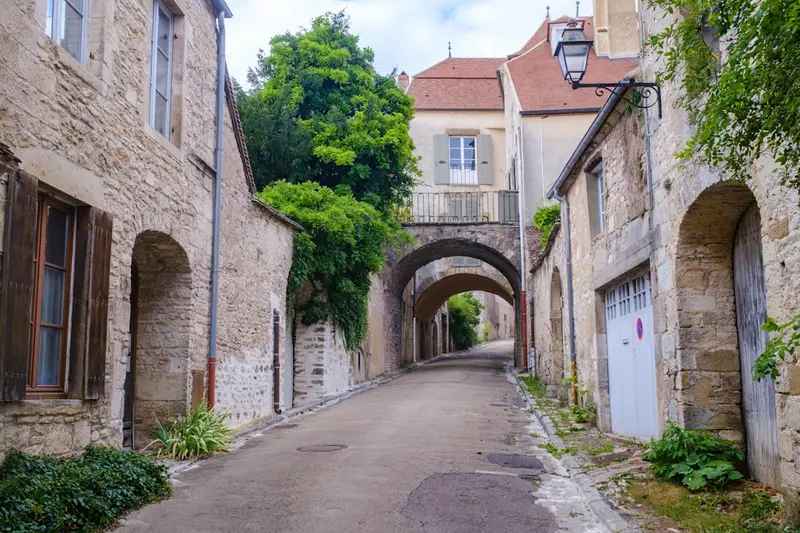
    Vézelay is situated on a hill in northern Burgundy at the edge of the Morvan. Above the village stands the Basilica of Sainte-Marie-Madeleine, a masterpiece of Romanesque art and a UNESCO World Heritage site since 1979. Here, Bernard of Clairvaux called for the Second Crusade in 1146, and it marks the starting point for one of the four major Ways of St. James to Santiago de Compostela. Inside, the bright nave and the sculpted capitals are well worth seeing. The village, with its cobbled lanes, galleries, and small shops, winds its way up the hill. It's quietest in the early morning and outside of peak season.

    Points of Interest

    Discover the most important sights and attractions

    1Maison du Visiteur

    The Maison du Visiteur in Vézelay is an information center for the Basilica of Saint Mary Magdalene. Here you'll learn more about the Romanesque architecture, the iconography of the capitals and tympanum, and Vézelay's role as a pilgrimage site and starting point of the Way of St. James.Practical tip: Come here before visiting the Basilica; you'll then see the sculptures with fresh eyes. Check opening hours in advance.
    Open in Google Maps
    Ste-Marie-Madeleine

    2Ste-Marie-Madeleine

    The Basilica Sainte-Marie-Madeleine is a masterpiece of Romanesque architecture and, along with the Vézelay Hill, has been a UNESCO World Heritage site since 1979. In the Middle Ages, it was a significant pilgrimage destination, as relics of Mary Magdalene were venerated here, and it is the starting point of one of the four major Ways of St. James to Santiago de Compostela. The present building was constructed mainly in the 12th century; the choir is early Gothic.Inside, the bright nave with its two-toned transverse arches stands out. The capitals depict biblical scenes and mythical creatures. The tympanum of the main portal in the narthex, depicting the Sending Forth of the Apostles, is considered one of the most significant works of Romanesque sculpture. Relics of the saint are preserved in the crypt beneath the choir.Our tip: It's quieter early in the morning or late in the afternoon. From the terrace behind the basilica, a wide view opens up over the landscape.
    Open in Google Maps

    3La Roche Percée

    La Roche Percée is a natural rock arch near Pierre-Perthuis, a few kilometers southeast of Vézelay in the Cure Valley. The place name means "pierced stone." Two bridges span the Cure nearby. A hiking trail leads here from Saint-Père through the valley.Our Tip: Combine the rock arch with a hike in the Cure Valley; it's especially quiet here early in the morning or late in the afternoon.
    Open in Google Maps

    4Les Fontaines Salées

    The Fontaines Salées are an archaeological site in Saint-Père on the left bank of the Cure, at the foot of Vézelay hill. Slightly saline springs emerge here. As early as around 2300 BC, people extracted salt by evaporation; wells made from hollowed-out oak trunks are preserved. During Roman times, a sanctuary with a thermal complex was built around the springs, whose foundations you can see today. In the 18th century, the springs were filled in to prevent salt smuggling, rediscovered in 1934.Our Tip: The site is open from April to early November; the ticket also includes admission to the archaeological museum in Saint-Père. A footpath leads down from Vézelay.
    Open in Google Maps

    City walks in Vézelay

    Curated walking tours through the city's highlights, handpicked by experienced travel journalists.

    Vézelay from Below: Wine, Water and Hidden History

    Discover a different Vézelay away from the busy pilgrim routes. This walk takes you to the foot of the legendary hill, to the sources of local life, through picturesque vineyards and to historic sites that tell the rural and everyday story of the place. Experience Vézelay from a new perspective, with wide views of the majestic basilica and the surrounding countryside.

    ~1 Std. 30 Min.
    Open in Google Maps
    Stops (7)

    Dining & Drinks

    Le P'tit V

    Restaurant in 22 Rue Saint-Etienne.
    Show on Google Maps

    Les Hirondelles

    Bar in 2 Pl. sous l'Orme.
    Show on Google Maps

    Cuisine à vue

    Restaurant in 46 Rue Saint-Etienne.
    Show on Google Maps

    Glaces Snack 'la Colline'

    Restaurant in 12 Rue Saint-Etienne.
    Show on Google Maps

    Brasserie Bières de la Colline

    Bar in 4 Rte d'Avallon.
    Show on Google Maps

    Food & Drink

    Vézelay is a village with a few hundred inhabitants and a handful of eateries along the main street. The cuisine is Burgundian; game and mushrooms come from the Morvan.

    Wine from Vézelay

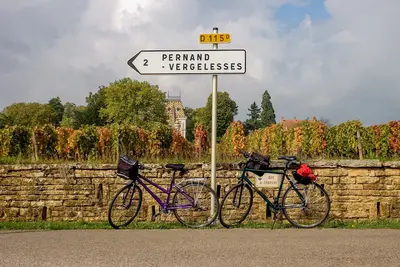
    Around the hill grow Chardonnay wines, which have formed their own appellation since 2017. They are lean and mineral.

    Products from the Morvan

    From the adjacent low mountain range come ham, game, mushrooms, and honey. They feature on all menus in autumn.

    The Burgundian Classics

    Oeufs en meurette, Jambon persillé and Boeuf bourguignon are also found here, often as a daily menu in smaller places.

    Époisses and Goat Cheese

    The strong red-smear cheese and mild goat cheese from the region make up the usual cheese platter.

    Vézelay's Cultural Heritage

    Vézelay, a small commune in the Yonne department, is inextricably linked with the Basilica Sainte-Marie-Madeleine. The Romanesque abbey church has been a UNESCO World Heritage site since 1979 and was a major pilgrimage destination in the Middle Ages. The abbey was founded in the 9th century.The Basilica is an outstanding example of Romanesque architecture, renowned for its sculptures on its tympana and capitals. In 1146, Bernard of Clairvaux called for the Second Crusade here, and in 1190, Philip II Augustus and Richard the Lionheart departed from Vézelay for the Third Crusade.To this day, Vézelay continues to attract pilgrims and visitors. The extensive restoration by Viollet-le-Duc, beginning in 1840, saved the church, which was then threatened with collapse.

    Exploring locally

    The village is small and low-traffic; you explore it on foot. Parking is below the historic centre. The nearest station is Sermizelles-Vézelay, about ten kilometres away; from there continue by taxi or a seasonal bus.

    Accommodations in Vézelay

    Find perfect stay in Vézelay

    Booking.com* (Affiliate link)
    Search Hotels
    Agoda* (Affiliate link)
    Search Hotels
    Airbnb
    Vacation Rentals

    * Affiliate link: if you book through it, we earn a small commission. The price stays the same for you.

    Campgrounds in Vézelay

    Find perfect campground in Vézelay

    Search via Google Maps
    Campgrounds nearby (15km)
    Camping.info
    Find Campgrounds
    Park4Night
    RV Parks & Camping

    Nearby

    Meursault

    Meursault

    Meursault is a wine village on the Côte de Beaune, a few kilometers south of Beaune. It is known primarily for its Chardonnay white wines. The village features stone houses, wineries, the Gothic church of Saint-Nicolas with its tall tower, and the town hall with a colorful tiled roof.
    Troyes

    Troyes

    The historic capital of the County of Champagne delights with a charming old town characterized by half-timbered houses, narrow streets, and magnificent churches.
    Beaune

    Beaune

    Beaune is the historical centre of the Burgundy wine trade and boasts a well-preserved old town within its ramparts. Its landmark is the Hôtel-Dieu of the Hospices de Beaune, a hospital founded in 1443 with a colourful, glazed tile roof. In its lanes, you'll find numerous wine cellars, wine houses, and shops. The town is an excellent starting point for the vineyards of the Côte d'Or and for tastings. It's quieter in spring and autumn than in summer; the famous Hospices wine auction takes place on the third weekend of November.
    Gevrey-Chambertin

    Gevrey-Chambertin

    Gevrey-Chambertin is a wine village on the Côte de Nuits, roughly twelve kilometers south of Dijon. The commune boasts nine Grand Cru vineyards, including Chambertin and Chambertin-Clos de Bèze – more than any other village in Burgundy. In the village, you can taste Pinot Noir at numerous wineries and visit a castle of the Cluny Abbey.
    Pommard

    Pommard

    Pommard is a wine village on the Côte de Beaune, a few kilometers south of Beaune. It is known for its robust Pinot Noir red wines. Amidst stone houses, wineries, and vineyards, you can taste and stroll.

    Sources & method

    • Photos: Wikimedia Commons, Unsplash. Each photo carries its credit.
    • The content is based on web research from public, traceable sources. How the content is made · The role of AI