Fernweh
    ExploreTravel GuidesMy Trips
    de|en
    About FernwehImprintFAQPrivacy Policy
    ExploreTravel GuidesMy Trips
    Santorini (Thira)

    Santorini (Thira)

    CityCulture
    1. Home
    2. Destinations
    3. Greece
    4. Cyclades
    5. Santorini (Thira)
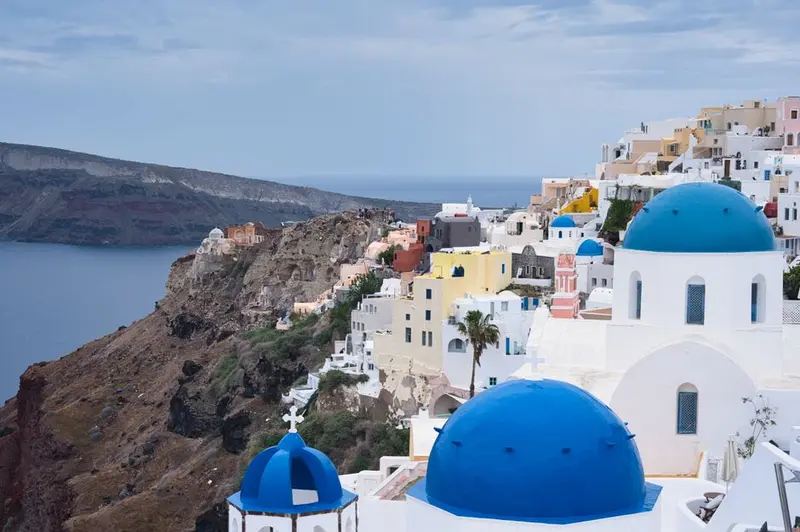
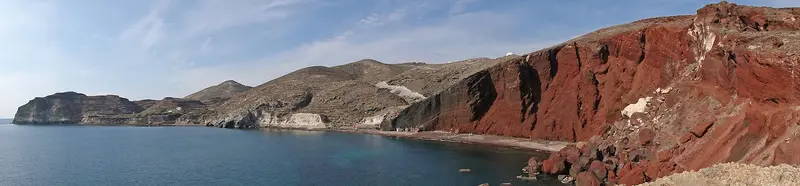
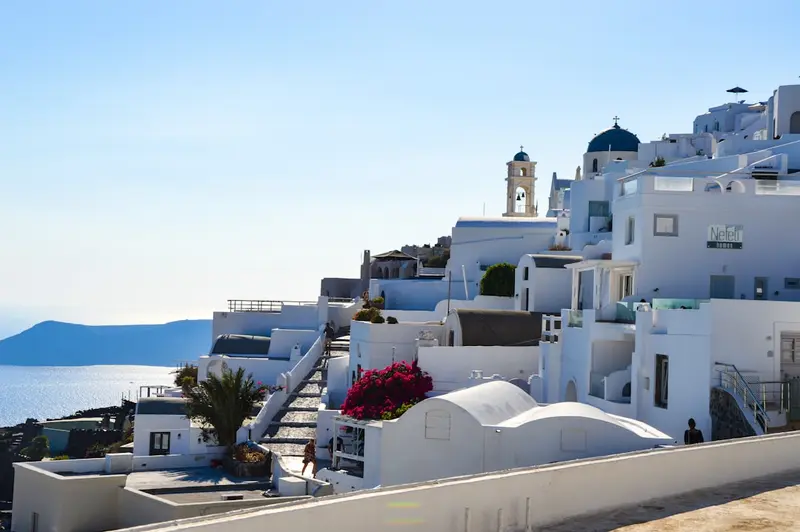
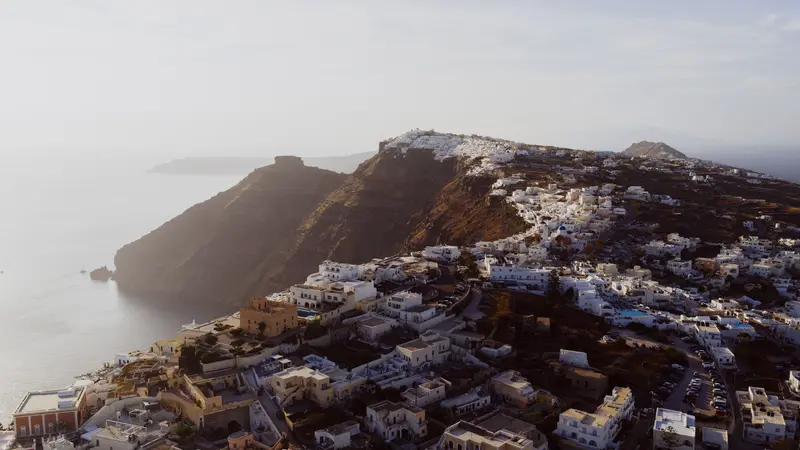
    Santorini, officially Thira, is a Greek island in the Cyclades, renowned for its dramatic caldera and unique Cycladic architecture. Its characteristic whitewashed villages like Fira and Oia cling to steep cliffs, offering expansive views of the Aegean Sea, especially at sunset. The island was formed after a massive volcanic eruption in the Bronze Age, whose remnants shape its current crescent form and buried the archaeological site of Akrotiri. Visitors explore its narrow streets, admire the blue-domed churches, and the breathtaking landscape. Beyond the main towns, beaches such as the Red Beach or the black sand beaches of Perissa and Perivolos are also worth a visit. To avoid the large tourist crowds, the shoulder season in spring or autumn is recommended; book accommodations and restaurants in popular locations early to avoid disappointment.
    • Neighborhoods & highlights
    • Walking tours
    • Eat & drink
    • Culture
    • Getting around
    • Accommodation
    • Plan trip
    • Nearby
    • Neighborhoods & highlights
    • Walking tours
    • Eat & drink
    • Culture
    • Getting around
    • Accommodation
    • Plan trip
    • Nearby

    Overview

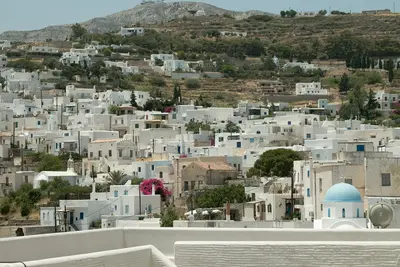
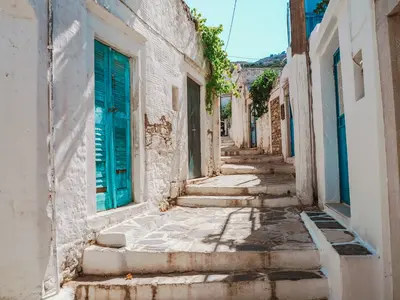
    Santorini, officially Thira, will captivate you with its dramatic caldera, formed by a massive volcanic eruption in the Bronze Age, which gave the island its current crescent shape. The characteristic whitewashed villages of Fira and Oia cling to the steep cliffs, offering iconic views of the Aegean Sea, especially during sunset. You should visit the archaeological site of Akrotiri, a Minoan city buried under volcanic ash, which provides insights into the island's ancient history. Explore the narrow alleys, admire the blue-domed churches and the unique Cycladic architecture. Beyond the main towns, beaches like Red Beach or the black sand beaches of Perissa and Perivolos are also worth a visit. To avoid the large tourist crowds, the shoulder season in spring or autumn is recommended; book accommodations and restaurants in popular locations early to avoid disappointment.

    Places in Santorini (Thira)

    Discover the most important sights and attractions

    Sights in Santorini (Thira)

    Santorini

    Santorini, an island group in the southern Aegean, owes its dramatic landscape to a massive volcanic eruption around 1600 BC. This created the characteristic caldera, whose steep cliffs today bear the iconic white villages with blue domes. Here you will experience unique Cycladic architecture that blends perfectly into the volcanic topography. The prehistoric Minoan settlement Akrotiri, often referred to as the "Pompeii of the Aegean," offers a deep insight into the highly developed Bronze Age civilization.The picturesque villages of Fira, Oia, and Imerovigli perch on the crater rim, offering spectacular views of the sea and the caldera. The sunsets in Oia are particularly world-renowned, though they also attract significant crowds. You can stroll through narrow alleys, explore local boutiques, and enjoy authentic Cycladic cuisine.Our Tip: To avoid the largest crowds at sunset, visit Imerovigli. There you'll enjoy a similarly impressive view in a significantly quieter atmosphere. For undisturbed photos of the caldera and the white houses, an early morning stroll is recommended, before cruise ship tourists disembark.
    Open in Google Maps

    Oia

    Located on Santorini's northern tip, Oia is renowned for its unique Cycladic architecture and spectacular caldera-side setting. Historically, Oia was an important seafaring town, its prosperity developing in the 19th century through trade with the Mediterranean and Black Seas. Here you'll find traditional cave houses, carved directly into the volcanic cliff, alongside elegant captain's mansions that reflect the wealth of bygone eras.Strolling through the narrow, cobbled streets, you'll discover numerous whitewashed buildings with the iconic blue domes characteristic of the Aegean. From almost every vantage point, you can enjoy breathtaking views of the deep blue sea and surrounding islands. Oia is world-renowned for its sunsets, which attract hundreds of visitors daily.Practical Tip: To avoid the largest crowds and experience Oia's beauty in peace, we recommend visiting early in the morning. You can then photograph the picturesque alleys and famous blue domes in quiet solitude. For sunset, you should find a spot away from the main promenade or arrive early, as the most popular viewpoints quickly become overcrowded.
    Open in Google Maps

    Spiridakos Cruises

    Spiridakos Cruises offers you a unique perspective on Santorini's impressive Caldera and its volcanic history. You'll experience the dramatic cliffs and iconic white villages like Fira and Oia from the sea, a view fundamentally different from the land perspective. The cruises typically take you to the volcanic islands of Nea Kameni and Palea Kameni. On Nea Kameni, you have the opportunity to hike to the active crater and experience the geological activity firsthand. At Palea Kameni, you can swim in the sulfurous hot springs, whose reddish water is known for its mineral properties. These tours offer not only spectacular views but also insights into the island's formation. Our Tip: Book your tour, especially a sunset cruise, early to secure a spot, as these are very popular. For the best photos of the Caldera and the sunset, position yourself on the upper deck.
    Open in Google Maps

    Three Domes Of Oia Famous Staircase 1

    The Three Domes of Oia, often mentioned in connection with the Anastasi Church, are an iconic motif of Santorini's Cycladic architecture. You'll find them by following a picturesque staircase that winds through the village and leads to one of the most famous viewpoints. From here, you'll enjoy an unparalleled view of the Caldera, the deep blue Aegean Sea, and the characteristic whitewashed houses clinging to the cliffs. This vista embodies the essence of Oia and has become a worldwide symbol of the island's beauty. The traditional blue domes and the organic construction of the cave houses reflect the local architectural style. Our Tip: Visit this spot in the early morning to avoid the crowds and capture the soft light for stunning photos. Alternatively, late afternoon offers spectacular sunset light, but also significantly more visitors. Be sure to respect the privacy of local residents.
    Open in Google Maps

    Views of Santorini & Caldera

    The Santorini Caldera was formed around 3,600 years ago by a massive volcanic eruption that shaped the island. From the cliffside villages of Fira, Imerovigli, and Oia, you'll enjoy an unrivaled panoramic view. You'll see the deep blue Aegean Sea, the volcanic islands, and the iconic whitewashed houses with blue domes clinging to the steep slopes. This unique blend of geology and Cycladic architecture is Santorini's world-famous hallmark. Our Tip: Visit the viewpoints early morning or late afternoon for ideal photo light and to avoid crowds. The hiking path between Fira and Imerovigli often offers more secluded views.
    Open in Google Maps

    City walks in Santorini (Thira)

    Curated walking tours through the city's highlights — handpicked by experienced travel journalists.

    Oias Magie: Sonnenuntergang, Kunst & Kykladische Architektur

    Erleben Sie auf diesem Spaziergang die unvergleichliche Schönheit von Oia, einem der malerischsten Dörfer Santorinis. Tauchen Sie ein in die einzigartige kykladische Architektur, schlendern Sie durch charmante Gassen voller Kunstgalerien und genießen Sie die atemberaubenden Ausblicke auf die Caldera, die in einem der berühmtesten Sonnenuntergänge der Welt kulminieren.

    ~2 Std. 30 Min.
    In Google Maps öffnen
    Stopps (6)

    Dining & Drinks

    Culture, Art, and History on Santorini

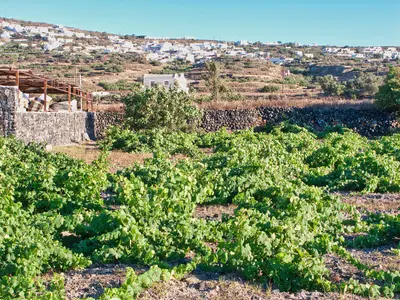
    Santorini's cultural identity is inextricably linked to its dramatic geology and rich history. The island was the site of one of antiquity's greatest natural disasters: the Minoan eruption around 1600 BC, which buried the highly developed settlement of Akrotiri under volcanic ash and provides valuable insights into the Bronze Age.Architecture is an iconic feature of Cycladic culture, characterized by the bright white houses with their distinctive blue domes, which cling picturesquely to the cliffs. These structures, often carved as "Yposkafa" (cave houses) into the soft tuff stone, offered protection from pirates and extreme weather conditions and are a testament to functional aesthetics.Local traditions reflect the adaptation to sparse island life. Viticulture, especially with the grape variety Assyrtiko, has been deeply rooted since antiquity and still shapes agriculture today. The unique cultivation method, where the vines are formed into basket-like wreaths (Kouloura), protects them from wind and sun and is a cultural heritage.Religious festivals and the Greek Orthodox faith play a central role in the daily lives of the inhabitants, visible in the numerous chapels and churches that dot the landscape. Santorini thus preserves a vibrant blend of ancient roots, Byzantine heritage, Venetian influence, and Cycladic way of life.

    On-site Travels

    While Santorini is small, getting around requires some planning. The island has no metro or tram; instead, the KTEL bus network is the main artery of public transport, with Fira serving as the central hub. Tickets can be conveniently purchased directly on the bus, though multi-journey passes are not a common option.For flexibility, many travelers rent a car or an ATV/quad, though this requires caution due to the often steep and winding roads, and parking spaces are scarce in high season. Taxis are available but limited and can be expensive, and classic ride-sharing services like Uber are not widespread. Picturesque places like Oia and Fira are largely pedestrian-friendly, often even purely pedestrian zones, but for longer distances between villages, bicycles or e-scooters are more suited for experienced riders due to the topography.A practical tip: Book transfers from the airport or port in advance to avoid waiting times and explore the island stress-free.

    Accommodations in Santorini (Thira)

    Accommodations in Santorini (Thira)

    Find perfect stay in Santorini (Thira)

    Booking.com
    Search Hotels
    Agoda
    Search Hotels
    Airbnb
    Vacation Rentals
    Hotels.com
    Hotels Worldwide
    Hostelworld
    Hostels

    Campgrounds in Santorini (Thira)

    Find perfect campground in Santorini (Thira)

    Search via Google Maps
    Campgrounds nearby (15km)
    Camping.info
    Find Campgrounds
    Park4Night
    RV Parks & Camping

    Plan your trip to Santorini (Thira)

    Save places, build a route and plan your city trip — all in one place.

    Save places

    Bookmark sights, restaurants and neighborhoods you're interested in.

    Build your route

    Turn your bookmarks into a route — define order, days and budget.

    Refine with AI

    Let Mein Fernweh suggest experiences and put together a tailored daily plan.

    Start trip planningOpen bookmarks

    Locations nearby

    These places are nearby — perfect for additional days or a day trip.

    Cyclades

    Cyclades

    The Cyclades, a breathtaking island group in the Aegean Sea, are the epitome of the Greek dream. With their iconic whitewashed villages, brilliant blue-domed churches, and pristine beaches, they offer an unparalleled blend of cultural richness and relaxed Mediterranean flair. Discover the allure of these islands, where history meets hospitality and every sunset is a masterpiece.
    Naxos

    Naxos

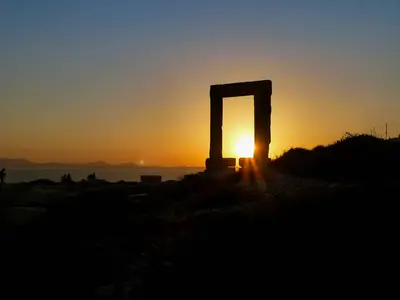
    As the largest and most fertile island of the Cyclades, Naxos offers an impressive diversity, from long sandy beaches to mountainous hinterland and traditional villages. The capital Chora impresses with the Portara, the monumental marble gate of the ancient Temple of Apollo, which overlooks the harbour. In the heart of the city, you'll find the Venetian Kastro, a medieval quarter with narrow alleys and historic buildings, reflecting the island's long history. Away from the coast, a trip is worthwhile to mountain villages like Apiranthos, known for its marble architecture and museums, or to the mythologically significant mountain region of Zas. Try the local products such as Naxos Graviera cheese and Kitron liqueur in the tavernas. The best times to visit are late spring and early autumn, to explore the island at pleasant temperatures and with fewer tourist crowds.
    Paros

    Paros

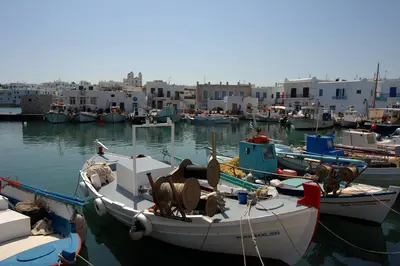
    Paros, an island of the Cyclades, captivates with its authentic aesthetic and the combination of lively coastal towns and quiet mountain villages. The capital, Parikia, welcomes you with a charming harbor, winding alleyways, and the impressive Byzantine church of Panagia Ekatontapiliani. In Naoussa, you'll find a picturesque fishing harbor that transforms into a vibrant meeting point in the evenings, known for its excellent seafood. Visit the traditional mountain village of *Lefkes* to get a glimpse into authentic island life and enjoy the panoramic views. The island is blessed with numerous beaches; Chryssi Akti (Golden Beach) is ideal for windsurfers, while Santa Maria allows for more relaxed sunbathing. To explore the island at your leisure and discover hidden coves, renting a scooter or car is recommended. The best time to visit is in late spring or early autumn, to experience pleasant temperatures and fewer crowds.
    Milos

    Milos

    Milos, a volcanic Cycladic island, captivates with unique geology and diverse coastal landscapes. Here you'll find Sarakiniko with its moon-like rock formations, as well as the striking sea caves of Kleftiko, ideal for exploration by boat tour. The island's capital, Plaka, offers traditional Cycladic architecture, narrow streets, and a Venetian Kastro with panoramic views. Historically significant are the discovery site of the Venus de Milo and the early Christian catacombs near the ancient city of Klima. Characteristic are the colourful fishing villages like Klima and Mandrakia, whose “Syrmata” boathouses are located directly on the water. For exploring the beaches and coves, a rental vehicle is recommended; the best travel time is late spring or early autumn.
    Mykonos

    Mykonos

    Mykonos, one of the most famous islands of the Cyclades, captivates with its characteristic architecture of dazzling white houses and a labyrinth of narrow streets. The capital Chora, also known as Mykonos Town, features picturesque districts such as Little Venice, where colorful buildings stand directly by the sea. A historical landmark is the windmills of Kato Mili, which once served for grain processing and today offer a striking sight. Culturally, the island combines its heritage as a fishing village with a cosmopolitan flair, which is also reflected in the well-known beaches like Psarou and Elia. To explore the charming alleys and boutiques in Chora in peace, an early morning walk is recommended. The best time to travel for a more relaxed atmosphere is the pre- or post-season, especially in May or September.