Fernweh
    ExploreTravel GuidesMy Trips
    de|en
    All Places & RegionsAbout FernwehImprintFAQPrivacy Policy
    ExploreTravel GuidesMy Trips
    South Coast of Cornwall & Roseland Peninsula

    South Coast of Cornwall & Roseland Peninsula

    CityCulture
    1. Home
    2. Destinations
    3. Great Britain
    4. Cornwall
    5. South Coast of Cornwall & Roseland Peninsula
    The South Coast of Cornwall captivates with its blend of rugged cliffs, hidden sandy coves, and picturesque fishing villages. The Roseland Peninsula, an area of outstanding natural beauty, impresses with its pristine landscape and idyllic spots like St Mawes with its historic Tudor castle. Along the South West Coast Path, spectacular views of the sea and the green coastal landscape unfold. This region is deeply rooted in its maritime history, visible in its traditional harbours and local culture. Explore the charming streets of Mevagissey or the botanical diversity of the Lost Gardens of Heligan. The best time to visit is late spring or early autumn, to enjoy the tranquility and experience the walking trails without large crowds.
    • Neighborhoods & highlights
    • Eat & drink
    • Food culture
    • Culture
    • Getting around
    • Excursions
    • Accommodation
    • Plan trip
    • Nearby
    • Neighborhoods & highlights
    • Eat & drink
    • Food culture
    • Culture
    • Getting around
    • Excursions
    • Accommodation
    • Plan trip
    • Nearby

    Overview

    Cornwall's South Coast and the Roseland Peninsula captivate with rugged cliffs, sheltered coves, and idyllic fishing villages. Visit St Mawes with its historic Tudor castle or hike the South West Coast Path for spectacular sea views. Explore the lanes of Mevagissey and the botanical splendor of the Lost Gardens of Heligan. The region is deeply rooted in its maritime history, visible in traditional harbours and local culture. To enjoy the tranquility, a visit in late spring or early autumn is recommended.

    Places in South Coast of Cornwall & Roseland Peninsula

    Discover the most important sights and attractions

    Sights in South Coast of Cornwall & Roseland Peninsula

    The Harbour Gallery

    1The Harbour Gallery

    Amidst the picturesque scenery of Cornwall's South Coast, often situated near a harbour, you'll find The Harbour Gallery. This institution is dedicated to presenting regional art and offers you insight into the area's creative output. Here you'll discover a diverse selection of works, often inspired by Cornwall's unique landscape, the sea, and its maritime heritage. Exhibitions typically include painting, sculptures, and local crafts, with a focus on artists from the region. The Harbour Gallery plays a role as a cultural meeting point and supports the local art scene by offering artists a platform. During your visit, you can enjoy the tranquil atmosphere and let the diverse interpretations of the coastal landscape resonate with you.
    Open in Google Maps
    Curgurrell Beach

    2Curgurrell Beach

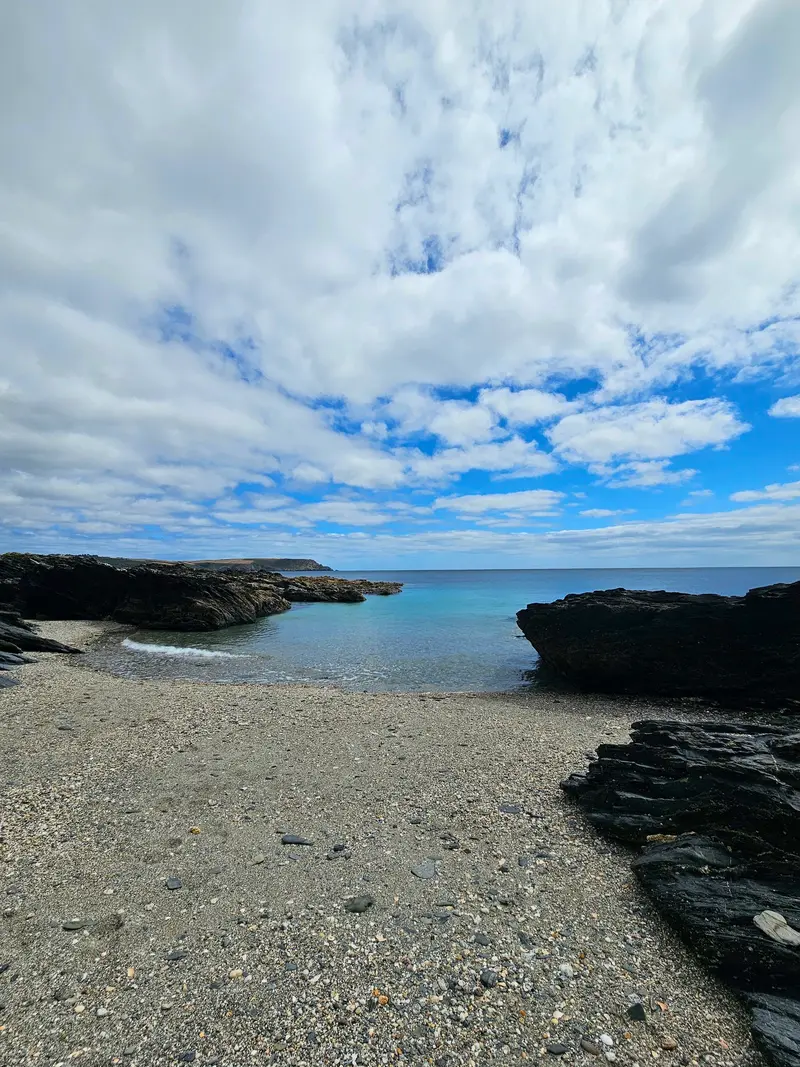
    Curgurrell Beach is located on Cornwall's picturesque south coast, nestled within the protected landscape of the Roseland Peninsula. Here you'll find a rather secluded stretch of coastline, characterized by a natural mix of sand and shingle. The cove is often less busy than other beaches in the area, offering a *tranquil atmosphere*, ideal for relaxed hours by the sea.The surrounding coastline is part of a designated Area of Outstanding Natural Beauty, which underscores the untouched character of the location. Here you can explore the impressive coastal landscape, shaped by Cornwall's traditional fishing and maritime history. The beach also serves as an excellent starting point for walks along the famous South West Coast Path, which offers further views of the rugged beauty of the coast.
    Open in Google Maps
    St Mawes Castle

    3St Mawes Castle

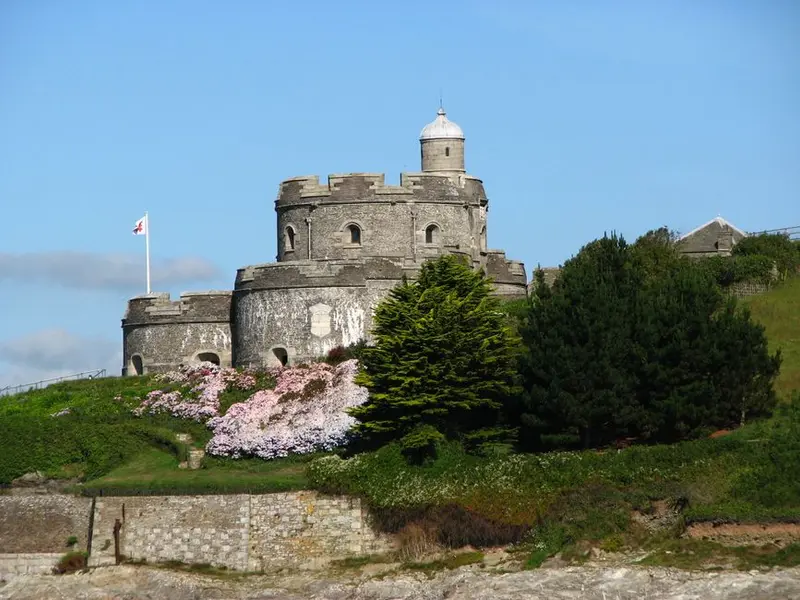
    St Mawes Castle is one of the Device Forts, with which Henry VIII secured the English coast from 1539 against a feared Franco-Spanish invasion. Its layout follows a trefoil: a round tower with three semicircular bastions, consistently designed for artillery and without medieval decorative elements.Together with Pendennis Castle on the opposite side, it controlled the entrance to Carrick Roads, one of the world's deepest natural harbours. During the Civil War, the garrison surrendered without a fight because the fortress, while strong seaward, was undefended landward. It is therefore unusually complete. Latin inscriptions honouring Henry VIII and Edward VI stand on its walls.
    Open in Google Maps

    4St Just in Roseland Church

    The church of St Just in Roseland stands on the shore of a tidal creek, so close to the water that at high tide it almost seems to float from the road. The current building dates from the 13th century, with the churchyard's foundation traced back to the 6th century.More renowned than the building is the churchyard: John Treseder, a local gardener who made his fortune in Australia, began planting subtropical species from 1897 onwards. Today, palms, bamboo, magnolias, and rhododendrons grow there among the gravestones, and a winding path leads down the slope to the water. Bible verses and lines of poetry are inscribed into the stones along the path.
    Open in Google Maps

    5Caerhays Castle Garden

    Caerhays, nestled above Porthluney Cove, is one of Great Britain's most important woodland gardens. From the 1880s, the Williams family funded the collecting expeditions of Ernest Wilson and George Forrest to China; a significant proportion of the magnolias, rhododendrons, and camellias found in European gardens today arrived via Caerhays.It was also here that the hybrid Camellia x williamsii originated, which stopped camellias from shedding their faded flowers, making them ideal for gardens. The flowering season runs from February to May, after which the garden closes. The Neo-Gothic manor house was designed by John Nash, who also built the Royal Pavilion in Brighton. The beach below is freely accessible.
    Open in Google Maps

    Restaurants in South Coast of Cornwall & Roseland Peninsula

    Food & Drink

    The culinary scene on Cornwall's South Coast and the Roseland Peninsula thrives on fresh, regional produce, especially seafood. Whether in quaint pubs, cozy cafés, or upscale restaurants – you'll discover authentic cuisine here, offering local specialties like the Cornish Pasty and freshly caught fish.

    Local specialities

    In Südküste Cornwalls & Roseland Halbinsel you'll find local restaurants, cafés and markets with regional specialities. Taste your way through the dishes typical of the region.

    History, Art & Heritage of the South Coast

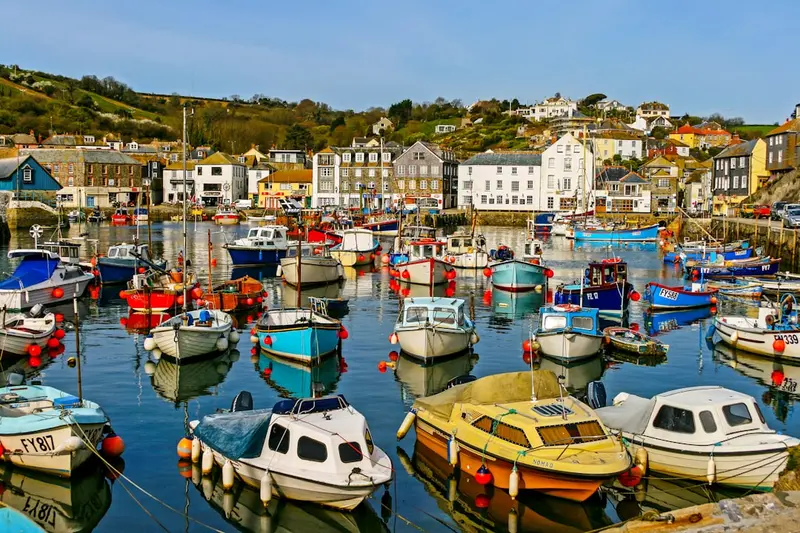
    The South Coast of Cornwall and the Roseland Peninsula are deeply rooted in a history shaped by prehistoric settlements, Celtic influences, and maritime heritage. Early traces of human habitation date back to the Bronze Age, with remnants of hillforts and burial sites testifying to early cultivation of the land and indicating a long, uninterrupted history of settlement.In the Middle Ages, the region played a central role in trade and fishing, which fostered the development of charming fishing villages like Mevagissey, Polperro, and Fowey. The numerous churches, often built in local stone tradition, such as the picturesque St. Just in Roseland Church with its lush gardens, reflect the deep Christian influence and the craftsmanship of this era.A defining era was the intensive mining in the 18th and 19th centuries, particularly tin and copper extraction. Although the main area lies further west, traces of this industrial revolution can also be found along the South Coast, whose distinctive engine houses are part of the UNESCO World Heritage and profoundly shaped the landscape.Architecturally, besides the mining landmarks, the typical fishermen's cottages, elegant Georgian and Victorian buildings in towns like Fowey and Falmouth, and the imposing Truro Cathedral define the landscape. The region also has a long tradition in art; Falmouth, for example, is known for its vibrant art scene, Falmouth University, and numerous galleries that contribute significantly to contemporary art in Cornwall.Local traditions are closely linked to the sea and Cornish identity. This manifests in the cultivation of the Cornish language (Kernowek), which is being revived in place names and cultural initiatives, as well as in a rich folklore full of legends and stories about Piskies and other mythological beings. The Cornish Pasty, originally a practical meal for miners and fishermen, is today an iconic culinary symbol of this unique region.

    Getting Around Here

    Getting around on Cornwall’s picturesque south coast differs significantly from urban centers; you'll look in vain for a subway or tram here. Instead, the bus forms the backbone of public transport, connecting charming coastal towns and idyllic villages. For flexible journeys, day tickets or contactless payment are available, though checking the often varying timetables, especially outside peak season, is highly recommended.The breathtaking landscape also invites you to go cycling, though the hilly topography can be challenging, and an e-bike offers an excellent alternative for more relaxed explorations; e-scooters are rarely found in this rural region. Taxis are available, but should be booked in advance, especially outside larger towns, as ride-sharing services have a very limited presence here.The region is a true paradise for pedestrians, with countless well-signposted coastal paths and hiking trails that promise spectacular views. For the greatest independence and to discover more secluded beauties like hidden coves and charming hamlets, your own vehicle is often the most practical and recommended choice.

    Excursions & Activities

    Recommended activities

    Around Südküste Cornwalls & Roseland Halbinsel there are rewarding day trips and activities – from sights and nature to the surrounding area.

    Accommodations in South Coast of Cornwall & Roseland Peninsula

    Accommodation

    Places to stay

    In and around Südküste Cornwalls & Roseland Halbinsel there are places to stay across different categories and price ranges – from simple to comfortable.

    Accommodations in South Coast of Cornwall & Roseland Peninsula

    Find perfect stay in South Coast of Cornwall & Roseland Peninsula

    Booking.com
    Search Hotels
    Agoda
    Search Hotels
    Airbnb
    Vacation Rentals
    Hotels.com
    Hotels Worldwide
    Hostelworld
    Hostels

    Campgrounds in South Coast of Cornwall & Roseland Peninsula

    Find perfect campground in South Coast of Cornwall & Roseland Peninsula

    Search via Google Maps
    Campgrounds nearby (15km)
    Camping.info
    Find Campgrounds
    Park4Night
    RV Parks & Camping

    Plan your trip to South Coast of Cornwall & Roseland Peninsula

    Save places, build a route and plan your city trip — all in one place.

    Save places

    Bookmark sights, restaurants and neighborhoods you're interested in.

    Build your route

    Turn your bookmarks into a route — define order, days and budget.

    Refine with AI

    Let Mein Fernweh suggest experiences and put together a tailored daily plan.

    Start trip planningOpen bookmarks

    Locations nearby

    These places are nearby — perfect for additional days or a day trip.

    Cornwall

    Cornwall

    Cornwall, located in England's far southwest, enchants you with its rugged coastal landscape, golden sandy beaches, and rich Celtic heritage. Discover charming fishing villages, subtropical gardens, and a unique culinary scene, shaped by fresh seafood, promising you unforgettable experiences.
    North Cornwall Coast

    North Cornwall Coast

    This rugged coastline is known for its dramatic cliffs, golden sand beaches, and excellent surf spots, inviting you to adventure.
    West Cornwall & Land's End

    West Cornwall & Land's End

    This area fascinates with its wild landscape, prehistoric sites, and St. Ives' vibrant art scene, which you must explore.
    Pembrokeshire Coast National Park

    Pembrokeshire Coast National Park

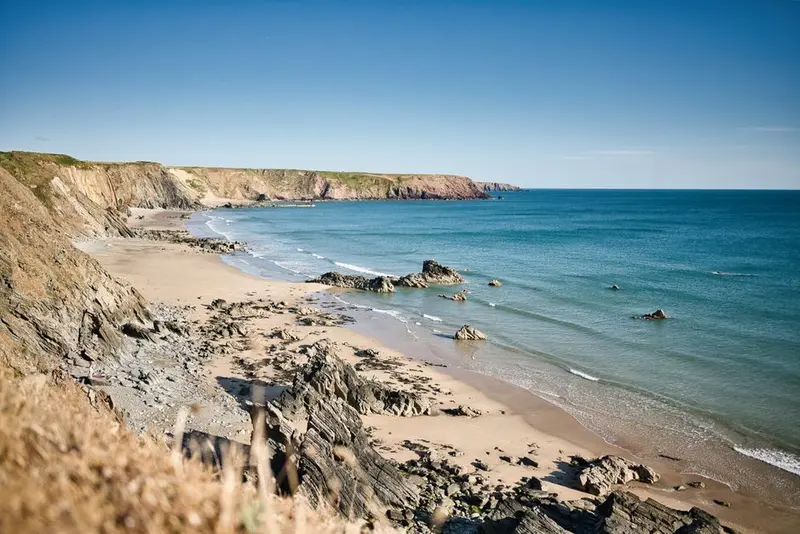
    The Pembrokeshire Coast National Park in southwest Wales is Great Britain's only national park consisting predominantly of coastline. It stretches as a narrow strip for over 400 kilometres of coastline and is in places only a few hundred metres wide.The rock types vary over short distances between Precambrian volcanite, Old Red Sandstone, and limestone, creating bays, rock arches, and sea cliffs in close proximity. The Pembrokeshire Coast Path follows the entire route; whoever walks its full length ascends more metres in elevation than climbing Everest.Off the coast lie Skomer and Skokholm, two islands with one of the world's largest colonies of Manx Shearwaters; in early summer, tens of thousands of puffins also breed here. On land, the density of prehistoric monuments is striking, including the Pentre Ifan Dolmen. The bluestones of Stonehenge demonstrably originate from the Preseli Hills in the north of the park.
    Côte de Granit Rose

    Côte de Granit Rose

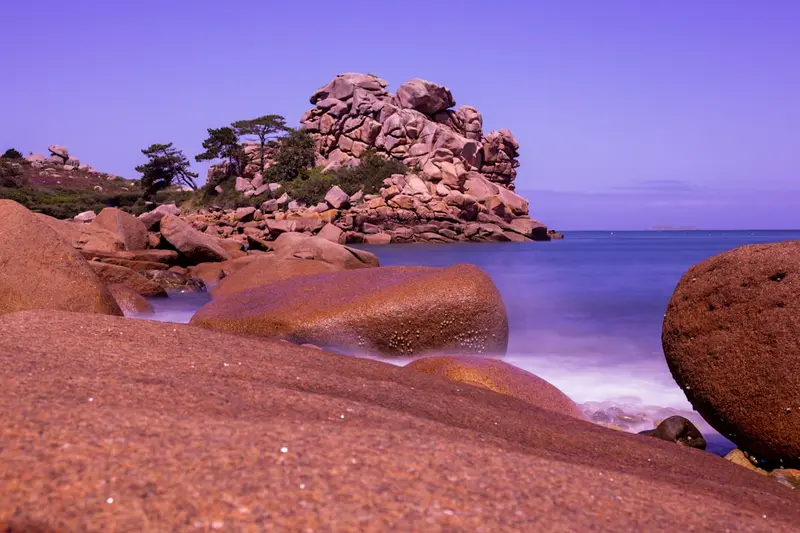
    The spectacular Pink Granite Coast captivates with its unique, erosion-shaped pink rock formations and picturesque coves.