Fernweh
    ExploreTravel GuidesMy Trips
    de|en
    All Places & RegionsAbout FernwehImprintFAQPrivacy Policy
    ExploreTravel GuidesMy Trips
    Cornwall

    Cornwall

    Region
    1. Home
    2. Destinations
    3. Great Britain
    4. Cornwall
    Cornwall, located in England's far southwest, enchants you with its rugged coastal landscape, golden sandy beaches, and rich Celtic heritage. Discover charming fishing villages, subtropical gardens, and a unique culinary scene, shaped by fresh seafood, promising you unforgettable experiences.
    • Overview
    • Places in the region
    • Eat & drink
    • Food culture
    • Culture
    • Getting around
    • Excursions
    • Accommodation
    • Nearby
    • Overview
    • Places in the region
    • Eat & drink
    • Food culture
    • Culture
    • Getting around
    • Excursions
    • Accommodation
    • Nearby
    Located in England's far southwest, Cornwall is characterized by its dramatic coastal landscape and a rich Celtic heritage. You'll find here both expansive sandy beaches and rocky cliffs, ideal for hikes on the South West Coast Path. Historic fishing villages like St Ives with its art galleries, or picturesque Mousehole, offer insights into the region's maritime culture. Cornwall's mining history is recognized as a UNESCO World Heritage site and can be explored in places like Botallack or Levant. The region also hosts impressive gardens like the Eden Project and the Lost Gardens of Heligan, showcasing subtropical plant diversity. For an authentic experience, visit outside the peak season in July and August to enjoy the coastal towns in a quieter atmosphere. The local cuisine is strongly influenced by fresh seafood; be sure to try a traditional Cornish Pasty.

    Places in Cornwall

    North Cornwall Coast

    North Cornwall Coast

    This rugged coastline is known for its dramatic cliffs, golden sand beaches, and excellent surf spots, inviting you to adventure.
    South Coast of Cornwall & Roseland Peninsula

    South Coast of Cornwall & Roseland Peninsula

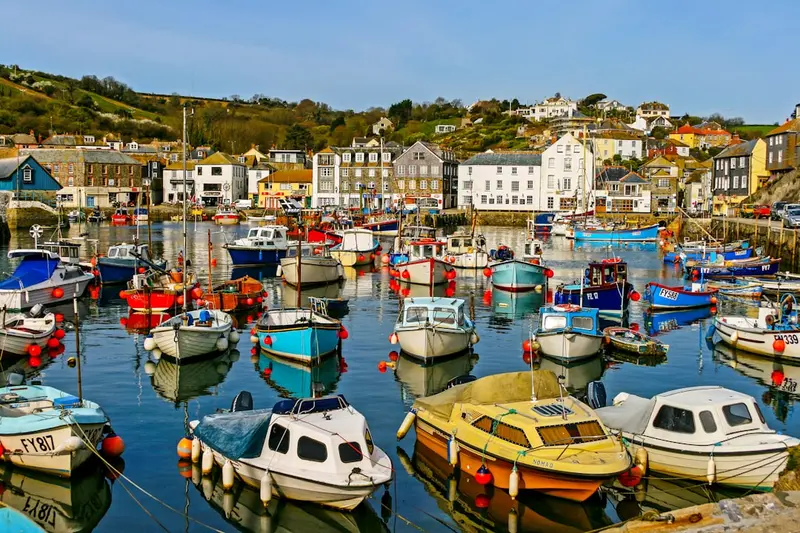
    The South Coast of Cornwall captivates with its blend of rugged cliffs, hidden sandy coves, and picturesque fishing villages. The Roseland Peninsula, an area of outstanding natural beauty, impresses with its pristine landscape and idyllic spots like St Mawes with its historic Tudor castle. Along the South West Coast Path, spectacular views of the sea and the green coastal landscape unfold. This region is deeply rooted in its maritime history, visible in its traditional harbours and local culture. Explore the charming streets of Mevagissey or the botanical diversity of the Lost Gardens of Heligan. The best time to visit is late spring or early autumn, to enjoy the tranquility and experience the walking trails without large crowds.
    West Cornwall & Land's End

    West Cornwall & Land's End

    This area fascinates with its wild landscape, prehistoric sites, and St. Ives' vibrant art scene, which you must explore.

    Sights in Cornwall

    Discover the most important sights and attractions

    Roche Rock

    Roche Rock

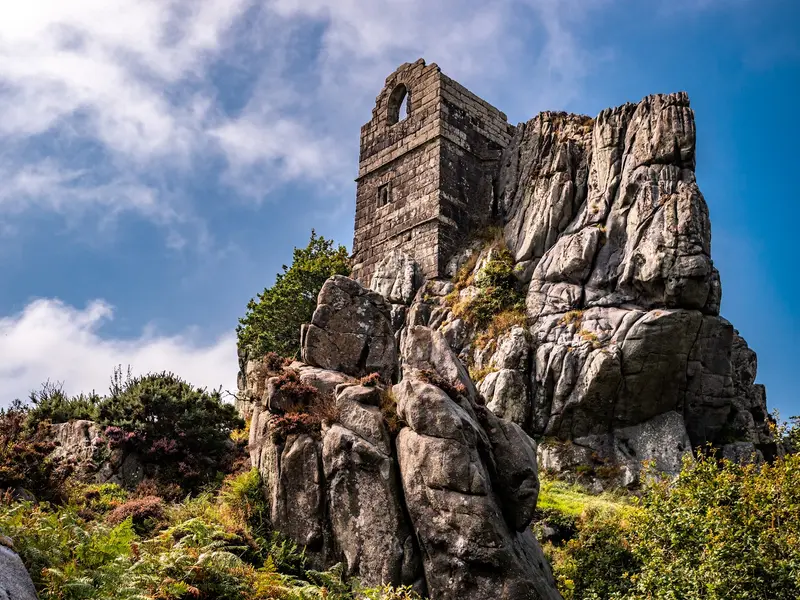
    The Roche Rock is a striking granite formation in the heart of Cornwall, rising dramatically from the surrounding landscape. Here you will find a small chapel carved into the rock, dedicated to Archangel Michael. This unusual structure, dating back to the Middle Ages, bears witness to a long history of use as a retreat. The chapel is only accessible via a steep staircase and offers you a unique insight into the ascetic way of life of former inhabitants. From this exposed vantage point, you can enjoy expansive views over the characteristic landscape of Cornwall. The geological composition of the rock and the architectural integration of the chapel make Roche Rock a fascinating destination that appeals to both nature and history lovers. It is a place of quiet significance and impressive presence.

    Open in Google Maps
    Wheal Martyn Clay Works

    Wheal Martyn Clay Works

    At Wheal Martyn Clay Works, you'll delve deep into the history of porcelain clay in Cornwall. This unique museum preserves the remains of two Victorian clay works, offering an authentic insight into an industry that significantly shaped the landscape and economy of this region. You can explore historical machinery and original buildings that illustrate the extraction and processing of clay. The exhibitions show you the working conditions and lives of the people who were active in this demanding industry. Furthermore, paths lead you through wooded areas to viewpoints, from which you can catch a glimpse of active clay pits. This way, you'll experience the development from historical extraction to the modern use of porcelain clay.
    Open in Google Maps
    Tintagel Castle

    Tintagel Castle

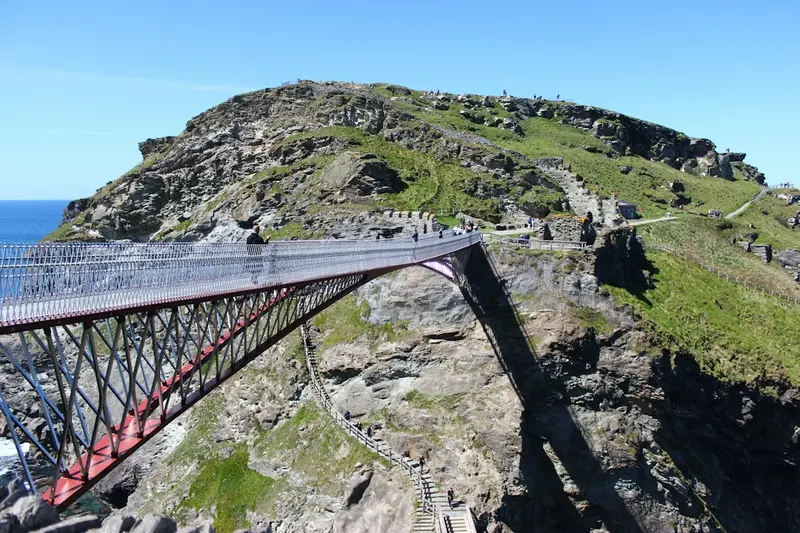
    Tintagel Castle is located on the north coast on a narrow promontory, now only connected to the mainland via a footbridge opened in 2019. The ruins you see date from the 13th century, when Richard, Earl of Cornwall, had a castle built here without any military purpose, apparently solely due to the symbolic significance of the site.This significance is older: excavations on the promontory have revealed a 5th to 7th-century settlement with imported pottery from the Mediterranean, indicating a significant trading post. Since Geoffrey of Monmouth in the 12th century, Tintagel has also been considered the birthplace of King Arthur, a legend that endures to this day. Below the cliffs lies Merlin's Cave, accessible at low tide.
    Open in Google Maps
    Eden Project

    Eden Project

    The Eden Project near St Blazey is located in an exhausted china clay pit, which was transformed into a botanical garden in 2001. The domes, made of hexagonal cushions, are not glass, but ETFE foil, which weighs only a fraction and made construction in the unstable pit possible in the first place.The larger biome depicts a tropical rainforest with rubber, cocoa, and bananas and exhibits a noticeable heat and humidity stratification at height. The smaller one features Mediterranean vegetation from California, South Africa, and the Mediterranean region. Outside, plantings extend over the pit's terraces. The project explicitly sees itself as an educational institution regarding human dependence on plants.
    Open in Google Maps
    St Michael's Mount

    St Michael's Mount

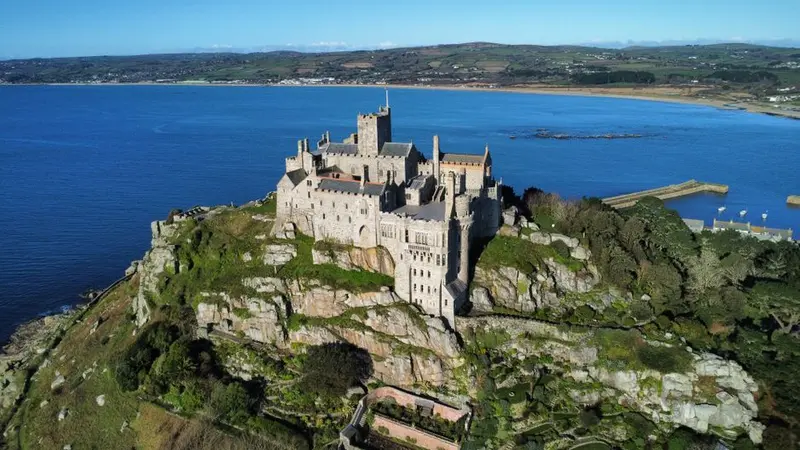
    St Michael's Mount ist eine Gezeiteninsel in der Mount's Bay bei Marazion, gekrönt von einer Burg und einer mittelalterlichen Kirche. Bei Ebbe erreichst du sie über einen gepflasterten Damm aus Granit, bei Flut nur per Boot. Die Gezeitentabelle bestimmt den Tagesablauf hier vollständig.Gegründet wurde die Anlage als Benediktinerpriorat, das dem normannischen Mont-Saint-Michel unterstellt war, mit dem die Insel die Form und den Namen teilt. Seit dem 17. Jahrhundert lebt die Familie St Aubyn auf dem Berg, heute gemeinsam mit dem National Trust. Neben den Burgräumen sind die terrassierten Gärten am Südhang bemerkenswert, in denen wegen des milden Golfstromklimas subtropische Pflanzen wachsen.
    Open in Google Maps
    Minack Theatre

    Minack Theatre

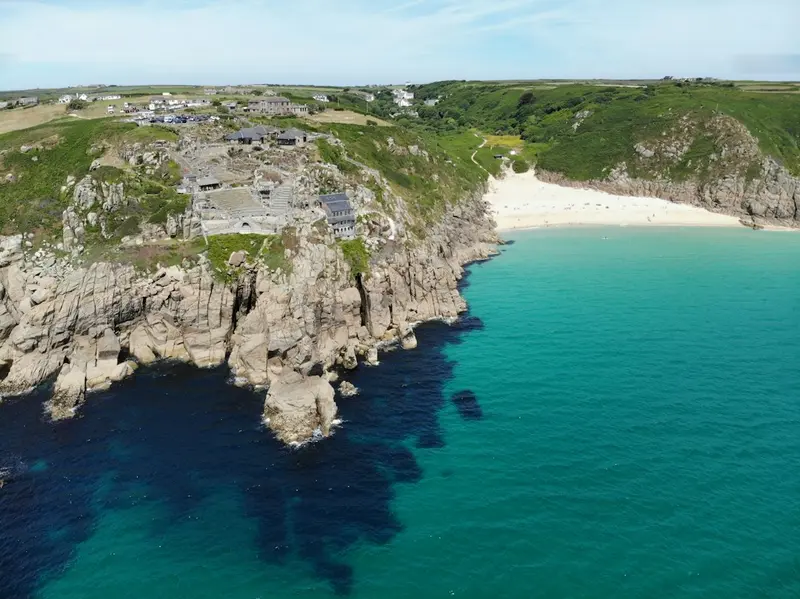
    The Minack Theatre near Porthcurno is an open-air theatre carved into the granite cliffs above the bay. The stage is situated approximately 30 metres above the water, with the open Atlantic stretching out behind it. Rowena Cade largely built it herself, alongside her gardener, starting in 1931 and continuing for almost five decades.The seating rows and railings are made of concrete, into which Cade etched patterns and inscriptions while it was still wet. From May to September, a programme of performances runs, and during the day, the site is accessible even without a show. The terraced gardens feature salt-tolerant and subtropical plants. Performances take place even in wind and rain, so audiences should bring appropriate clothing.
    Open in Google Maps

    Restaurants in Cornwall

    Food and Drink in Cornwall

    Cornwall's cuisine stems from two sources: the sea and mining. Plus, a mild climate permits grazing and thus exceptionally rich milk.

    Cornish Pasty

    The filled pastry with beef, potato, swede, and onion, folded at the edge into a crimp. Since 2011, it has held a Protected Geographical Indication: only those made in Cornwall following the recipe may bear the name. In every village there is a bakery that defends its own version.

    Cream Tea

    Scones with Clotted Cream and strawberry jam, and tea. The order is a point of contention: In Cornwall, the jam goes on the scone first, then the cream; in Devon, it's the other way around. Clotted Cream from Cornwall, like the Pasty, has a Protected Designation of Origin and at least 55 percent fat.

    Fish and Fruits of the Sea

    Newlyn is one of England's largest fishing ports. Catches include monkfish, John Dory, mackerel, and sardines, the latter also origin-protected under the name Cornish Sardines. Oysters from the Fal are still fished under sail to this day because motorboats are forbidden there.

    Stargazy Pie

    A fish pie with whole sardine heads protruding from its crust, gazing skywards. It's a highlight of Tom Bawcock's Eve on December 23rd in Mousehole, commemorating a fisherman who, legend says, saved the village from hunger. It is rarely found outside this date.

    Cider and Ale

    Cornwall boasts its own brewing tradition: St Austell Brewery dates back to 1851, alongside dozens of smaller breweries. Cider is pressed throughout the Southwest, traditionally dry and cloudy. In recent years, distilleries producing gin with rock samphire and other coastal botanicals have emerged.

    Cornwall's rich cultural heritage

    Cornwall looks back on a deeply rooted history that began long before the Roman settlement of Britain. The region was home to Celtic tribes and is characterized by a multitude of prehistoric sites, including megalithic tombs, stone circles, and menhirs, testifying to an early and rich culture. This Celtic identity continues to shape the customs, the Kernewek language, and the mythology of the county, which is closely linked to legends such as those surrounding King Arthur and Tintagel Castle.Cornwall's industrial history is inextricably linked to tin and copper mining, which shaped the region for centuries and earned it UNESCO World Heritage status. Throughout the landscape, imposing stone engine houses bear witness to this era. Cornwall's architecture is often functional and robust, characterized by local granite and slate, especially in the picturesque fishing villages and former mining areas.Beyond its historical depth, Cornwall boasts a vibrant art scene, inspired by the unique light and dramatic coastal landscape, notably the famous St. Ives School of Art and the Newlyn School. Local traditions, such as the celebration of Midsummer bonfires or the unique Cornish Pasty, which originally served as nourishing food for miners, are deeply rooted in the culture. The revival of the Cornish language, Kernewek, further underscores the strong awareness of this unique region's distinct cultural identity.

    On the Road in Cornwall

    Limited Mobility Without a CarThe train line from London ends in Penzance, stopping at Bodmin, Truro, and St Erth, where branch lines diverge to Newquay, Falmouth, and St Ives. These charming local railways, however, cover only a small part of the region. Buses link larger towns, but are infrequent in the countryside and often non-existent on Sundays.The Roads are the Main ChallengeAway from the A30, many connections are single-lane, with passing places and hedges tall enough to block all views. Reversing often becomes standard practice. Expect significantly longer journey times than navigation indicates, especially in July and August when A30 traffic regularly stops.Parking and AlternativesIn coastal towns, parking is scarce and expensive; many offer park-and-ride solutions on the outskirts. The South West Coast Path follows the entire coast and is the most beautiful way to cover short distances. Ferries operate between St Mawes and Falmouth, and across the Camel near Padstow, saving longer detours.

    Trips from Cornwall

    Isles of Scilly

    45 Kilometers southwest of Land's End lies an archipelago of five inhabited islands with a subtropical climate and turquoise water. The ferry Scillonian III departs from Penzance in just under three hours; it's faster by helicopter or from Land's End Airport. A day trip is possible, but two nights are more advisable.

    Bodmin Moor

    The inland high moor is traversed by most travellers on the A30 without stopping. Yet, it is home to Cornwall's highest points Brown Willy and Rough Tor, Bronze Age stone circles like The Hurlers, and the Cheesewring rock stack. Jamaica Inn on the main road was made famous by Daphne du Maurier's novel.

    Dartmoor

    Beyond the border into Devon begins a much larger granite moorland with free-roaming ponies and prominent rock formations, the Tors. From East Cornwall, it's reachable in just over an hour and offers a landscape not found in Cornwall.

    Lost Gardens of Heligan

    A Victorian estate garden near Mevagissey, which became overgrown after World War I as the gardeners didn't return, and was uncovered from 1990. Highlights include productive gardens, a jungle valley with tree ferns, and the moss-covered sculptures Mud Maid and Giant's Head.

    Accommodation

    Places to stay

    In and around Cornwall there are places to stay across different categories and price ranges – from simple to comfortable.

    Locations nearby

    These places are nearby — perfect for additional days or a day trip.

    North Cornwall Coast

    North Cornwall Coast

    This rugged coastline is known for its dramatic cliffs, golden sand beaches, and excellent surf spots, inviting you to adventure.
    South Coast of Cornwall & Roseland Peninsula

    South Coast of Cornwall & Roseland Peninsula

    The South Coast of Cornwall captivates with its blend of rugged cliffs, hidden sandy coves, and picturesque fishing villages. The Roseland Peninsula, an area of outstanding natural beauty, impresses with its pristine landscape and idyllic spots like St Mawes with its historic Tudor castle. Along the South West Coast Path, spectacular views of the sea and the green coastal landscape unfold. This region is deeply rooted in its maritime history, visible in its traditional harbours and local culture. Explore the charming streets of Mevagissey or the botanical diversity of the Lost Gardens of Heligan. The best time to visit is late spring or early autumn, to enjoy the tranquility and experience the walking trails without large crowds.
    West Cornwall & Land's End

    West Cornwall & Land's End

    This area fascinates with its wild landscape, prehistoric sites, and St. Ives' vibrant art scene, which you must explore.
    Pembrokeshire Coast National Park

    Pembrokeshire Coast National Park

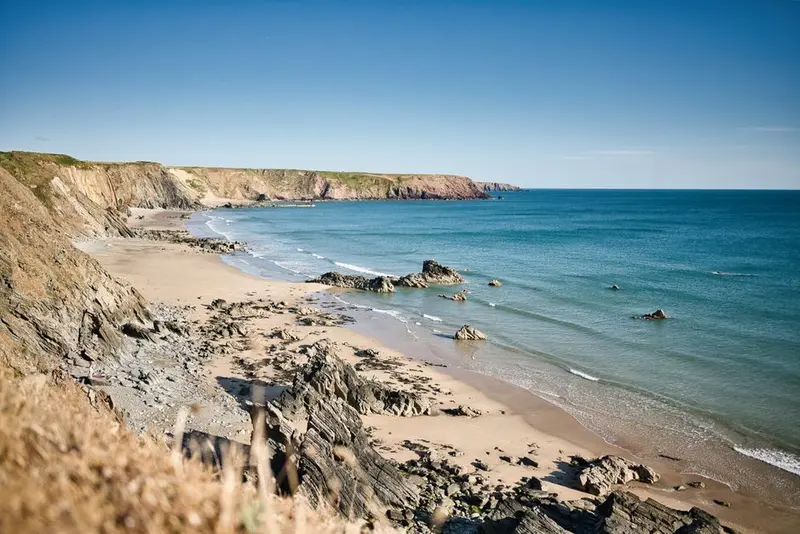
    The Pembrokeshire Coast National Park in southwest Wales is Great Britain's only national park consisting predominantly of coastline. It stretches as a narrow strip for over 400 kilometres of coastline and is in places only a few hundred metres wide.The rock types vary over short distances between Precambrian volcanite, Old Red Sandstone, and limestone, creating bays, rock arches, and sea cliffs in close proximity. The Pembrokeshire Coast Path follows the entire route; whoever walks its full length ascends more metres in elevation than climbing Everest.Off the coast lie Skomer and Skokholm, two islands with one of the world's largest colonies of Manx Shearwaters; in early summer, tens of thousands of puffins also breed here. On land, the density of prehistoric monuments is striking, including the Pentre Ifan Dolmen. The bluestones of Stonehenge demonstrably originate from the Preseli Hills in the north of the park.
    Cardiff

    Cardiff

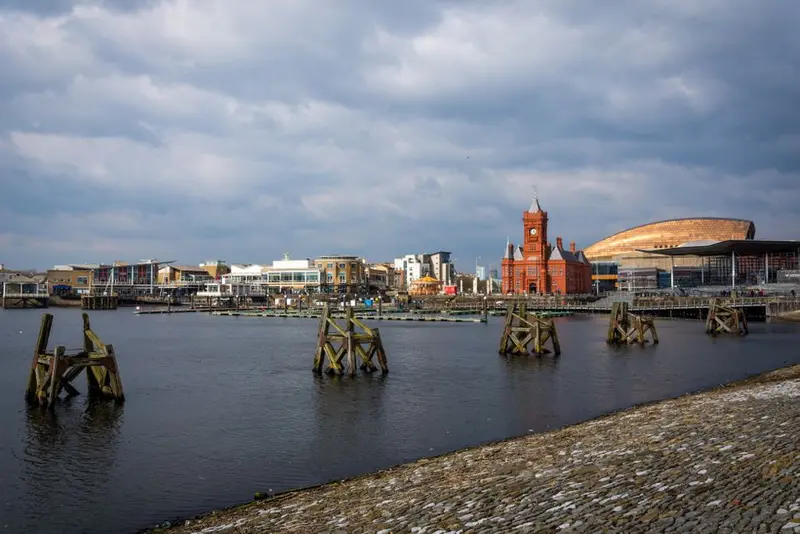
    Cardiff has only been the official capital of Wales since 1955, having been an insignificant coastal town until the 19th century. Coal from the valleys to its north then transformed the city into the world's largest coal port. The Bute family, controlling the docks and mines, was for a time considered Britain's richest family.This wealth is reflected in the opulently designed Cardiff Castle and the Coal Exchange in the Bay, where the first million-pound contract was allegedly signed in 1904. After coal exports ceased, the docks fell into disrepair; since the 1990s, Cardiff Bay has been transformed by a dam into a freshwater basin and revitalized with cultural buildings like the Wales Millennium Centre.The city centre is compact and easily walkable, crisscrossed by covered Victorian shopping arcades. On rugby match days at the Principality Stadium, located right in the city centre, Cardiff becomes a single human tide.