Fernweh: Home
ExploreGuideDestinationsMy tripsMy trip
de|en
All Places & RegionsRound tripsNight trains in EuropeAll highlightsAbout FernwehFAQPrivacy PolicyImprint
Download on the App StoreGet it on Google Play
ExploreGuideDestinationsMy tripsMy trip
    • Overview
    • Places in the region
    • Food culture
    • Culture
    • Getting around
    • Round trips
    • Nearby
    Lombok and the Gili Islands

    Photo: Unsplash

    Indonesia

    Lombok and the Gili Islands

    Region

    Lombok, east of Bali beyond the Lombok Strait, is much quieter than its neighbor. To the north, Mount Rinjani reaches 3,726m; bays and surf beaches line the south; and the three car-free Gili Islands lie off the northwest coast.

    by Felix Gillen

    1. Home
    2. Destinations
    3. Indonesia
    4. Lombok and the Gili Islands
    Lombok, east of Bali beyond the Lombok Strait, is much quieter than its neighbor. To the north, Mount Rinjani reaches 3,726m; bays and surf beaches line the south; and the three car-free Gili Islands lie off the northwest coast.
    Indonesia travel guideSee 2 round tripsPlan a trip with Lombok and the Gili Islands

    Contents

    • Overview
    • Places in the region
    • Food culture
    • Culture
    • Getting around
    • Round trips
    • Nearby
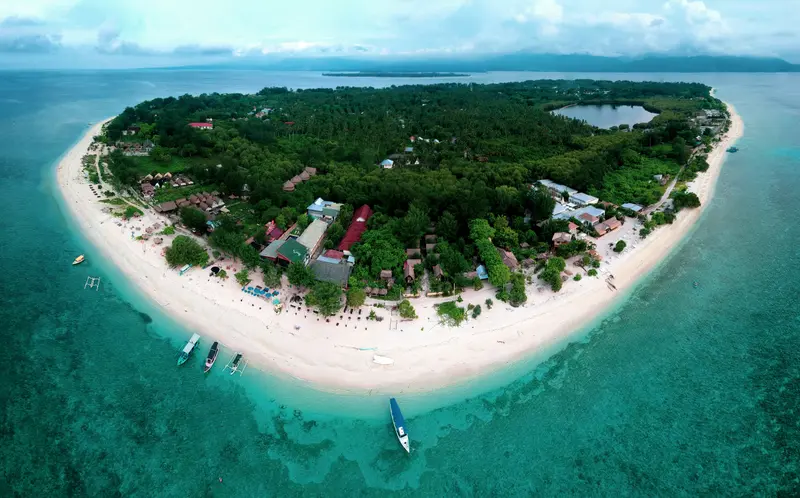
    Lombok is slightly smaller than Bali but receives only a fraction of its visitors. The island is divided into three travel regions: the north with Rinjani National Park and waterfalls around Senaru, the west coast with Mataram and the beach resort of Senggigi, and the south around Kuta with bays like Tanjung Aan, surf spots, and the Mandalika racing circuit. Most travelers combine a few days on the Gilis with the south or a Rinjani tour.The Three Gilis ComparedGili Trawangan: the largest and liveliest island with the most restaurants, bars, and dive schools, featuring music and parties on the east coast in the evenings. The west and north are quieter.Gili Meno: the smallest and quietest, with only a few hundred residents, minimal nightlife, and an inland saltwater lake. Popular with couples and families seeking tranquility, though the selection of eateries and ATMs is limited.Gili Air: closest to Lombok and has the most residents, a village with a relaxed atmosphere, good snorkeling reefs directly off the beach, and a solid selection of eateries. Often the best compromise for families.Cars and motorbikes are forbidden on all three islands. You travel on foot, by bike, or take a horse-drawn carriage (Cidomo). Public boats shuttle between the islands; swimming between them is life-threatening due to strong currents.
    Gili Air

    Photo: Unsplash

    Place 1 of 4

    Gili Air

    Gili Air, nearest to Lombok, blends Meno's tranquility with diverse cafes, dive schools, and accommodations. White beaches and reefs off the east coast make it a prime snorkeling spot, free of cars and motorbikes.

    Discover
    Gili Meno

    Photo: Unsplash

    Place 2 of 4

    Gili Meno

    Gili Meno is the smallest and quietest of the three Gili Islands, approximately two kilometers long and one kilometer wide. You can walk around it in one and a half to two hours along white beaches; a small salt lake lies behind mangroves in the west.

    Discover
    Gili Trawangan

    Photo by Jesse Hammer on Unsplash

    Place 3 of 4

    Gili Trawangan

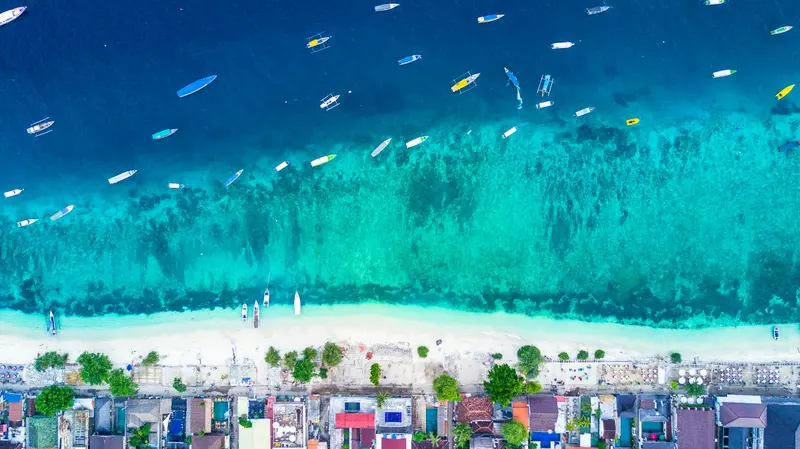
    Gili Trawangan is the largest and liveliest of the three Gili Islands. The east coast is lined with dive schools, restaurants, and bars, while the west and north are quieter.

    Discover
    Mataram

    Photo by Ravish Maqsood on Pexels

    Place 4 of 4

    Mataram

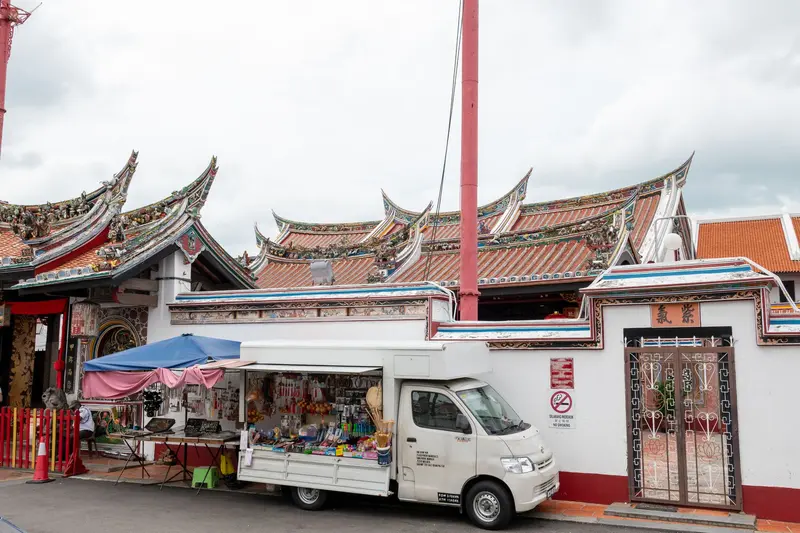
    Mataram is the capital of West Nusa Tenggara province and has merged with Ampenan, Cakranegara, and Sweta to form one city. Mosques, Balinese temples, markets, and Ayam Taliwang eateries showcase Lombok's daily life away from the beaches.

    Discover

    More places in Lombok and the Gili Islands

    Rinjani National Park

    Unsplash

    Rinjani National Park

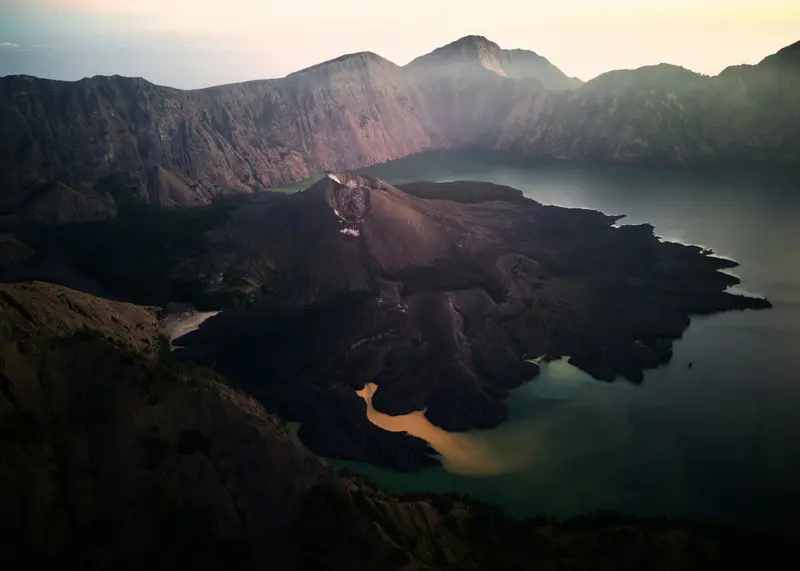
    Gunung Rinjani, at 3,726 meters, is Indonesia's second-highest volcano and dominates northern Lombok. Its caldera contains the crescent-shaped crater lake Segara Anak, along with the young, active cone Barujari. Multi-day treks to the crater rim and summit are among Southeast Asia's most famous mountain tours.
    Kuta and South Lombok

    el jusuf·Pexels

    Kuta and South Lombok

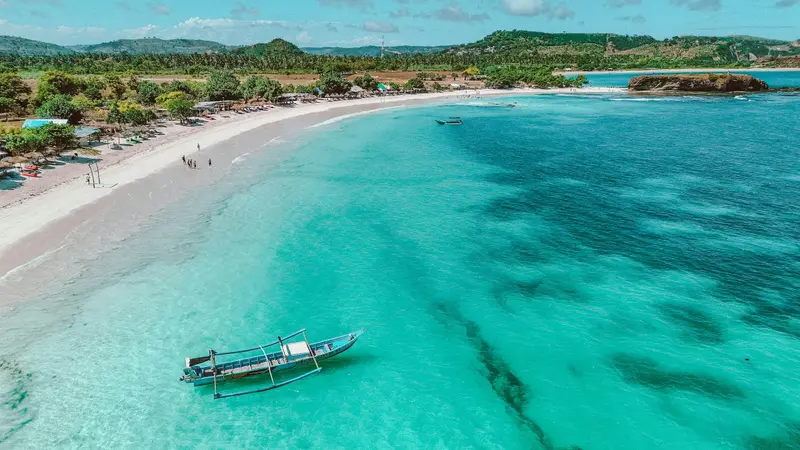
    Southern Lombok is a hilly coast with wide bays, turquoise water, and constant surf waves. Its center is the former fishing village of Kuta, which has developed into a meeting point for surfers and beachgoers. East of it, the Mandalika resort zone is emerging with a racetrack and resorts.
    Senggigi

    ROMAN ODINTSOV·Pexels

    Senggigi

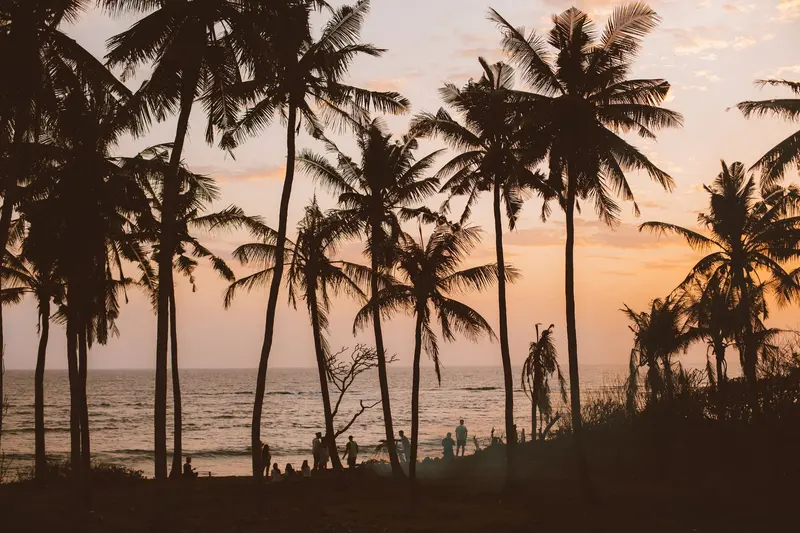
    Senggigi on the west coast was Lombok's first beach resort. Hotels and restaurants line a string of bays with light to dark sand, and north of there, a scenic road winds through coconut groves, offering views of the Gili Islands and Agung on Bali.

    Sights in Lombok and the Gili Islands

    Discover the most important sights and attractions

    Attraction

    Pink Beach (Pantai Tangsi)

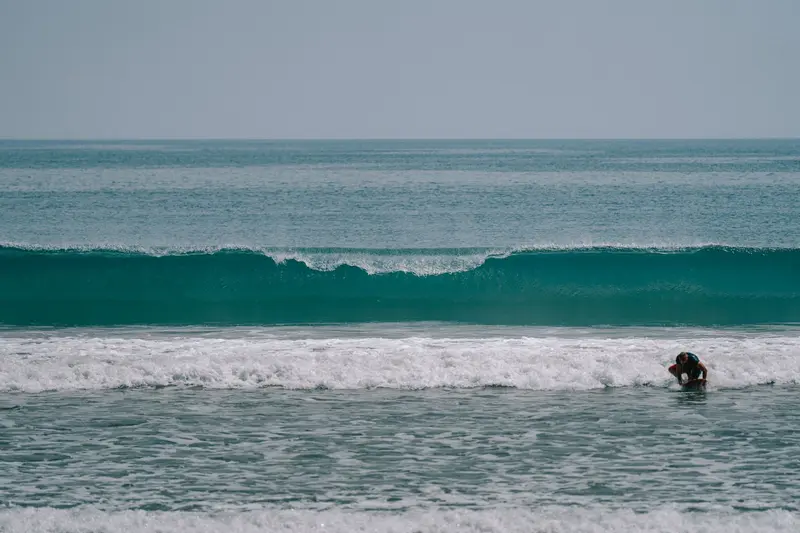
    Secluded bay in the southeast of Lombok, whose sand shimmers pink from finely ground red corals. The drive via the Sekaroh Peninsula is rough; many arrive by boat and combine the visit with snorkeling at the offshore islands.
    Open in Google Maps
    Benang Stokel and Benang Kelambu Waterfalls

    P. Hughes / Wikimedia Commons / CC BY 4.0, mod.

    Attraction

    Benang Stokel and Benang Kelambu Waterfalls

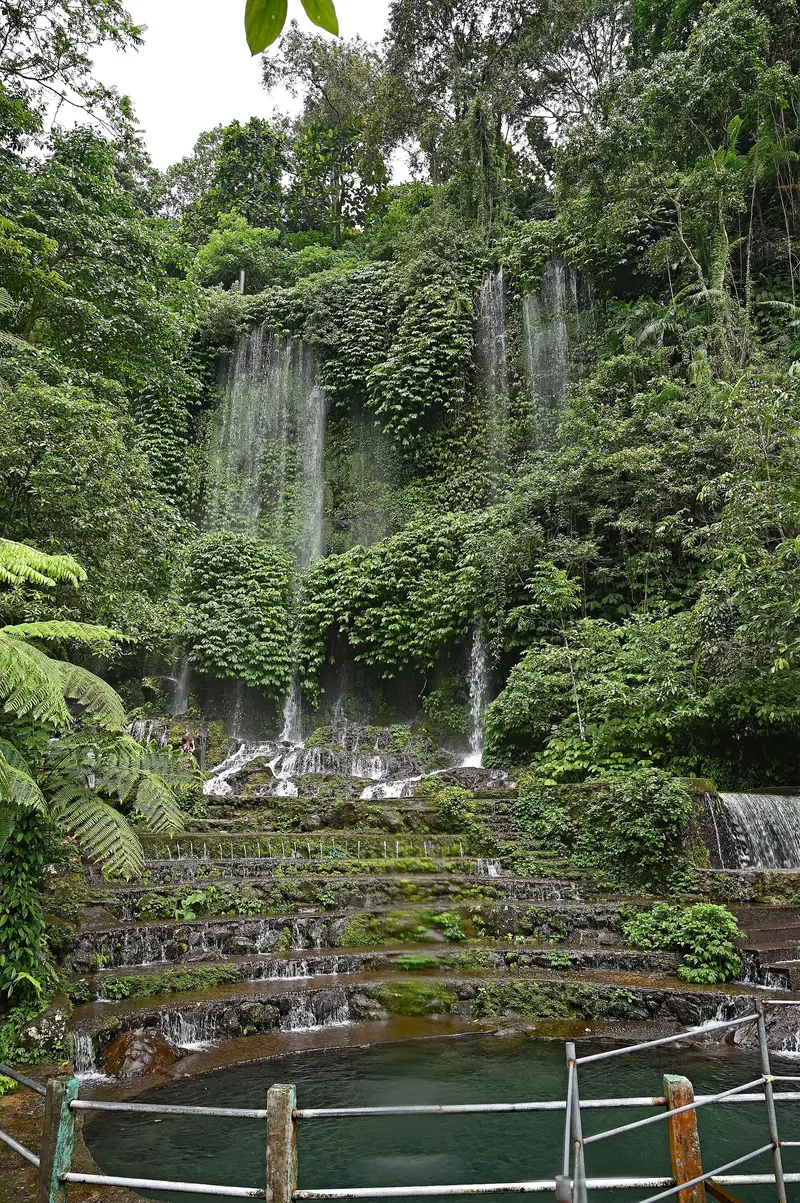
    Two waterfalls on Rinjani's southern slope in Central Lombok. Benang Kelambu cascades in many thin strands over a moss-covered rock face. Local guides lead from the car park through forest and plantations.
    Open in Google Maps

    Food and Drink

    Sasak cuisine is spicy. Even the island's name is often associated with the Javanese word for chili.

    Ayam Taliwang

    Chicken, grilled or fried with a paste of chili, garlic, and shrimp paste. The island's most famous dish is available in specialized eateries in Mataram and Cakranegara.

    Plecing Kangkung

    Blanched water spinach with sambal made from tomato, chili, and lime, often with roasted peanuts. A classic side dish for Ayam Taliwang.

    Sate Rembiga

    Sweet and spicy marinated beef skewers from the Rembiga district in Mataram.

    Nasi Balap Puyung

    Rice with spicy fried shredded chicken, peanuts and sambal, a cheap everyday dish from Central Lombok.

    Sasak, Balinese and a thousand mosques

    HistoryIn the 16th century, Lombok fell under the suzerainty of the Balinese Gelgel Empire. In the 17th century, Balinese people occupied the west of the island, and later the Kingdom of Karangasem ruled from Bali. Temples like Pura Meru and Pura Lingsar date from the period of Balinese rule over West Lombok in the 18th and 19th centuries. In 1894, the Dutch intervened, destroyed the palaces of Mataram and Cakranegara, and incorporated Lombok into the Dutch East Indies. The earthquake of August 2018 severely affected primarily the north and the Gilis, but most damage has been repaired.Religion and BeliefsAround 85 percent of the island's inhabitants are Sasak, predominantly Muslims. Due to its numerous places of worship, Lombok is also known as the “Island of a Thousand Mosques.” Most Sasak follow the Waktu Lima practice of five daily prayers. Especially around Bayan in the north, Wetu Telu continues to thrive, combining Islam with older Hindu-Buddhist concepts and ancestor worship, observing three prayer times. In the west, around Mataram, a Balinese-Hindu minority of about 10 to 15 percent of the population resides.Society and CustomsIn traditional villages like Sade and Ende in the south, you'll find granaries and houses with thatched roofs; floors are reinforced with buffalo dung. Weavers in Sukarara produce Songket and Ikat fabrics. During Peresean, two men fight with rattan sticks and buffalo hide shields, accompanied by traditional music. The fight ends as soon as one of them bleeds or the referee stops it. A Sasak wedding traditionally begins with Merariq: the groom secretly takes the bride from her parents' home at night. In February or March, people gather sea worms on the southern beaches during the Bau Nyale festival, which commemorates the legend of Princess Mandalika.Visitor ConductAway from the beaches, dress modestly; in mosques and temples, cover your shoulders and knees and remove your shoes. During the fasting month of Ramadan, do not conspicuously eat, drink, or smoke in public during the day. In traditional villages, ask before taking photos, and it's best to hire a local guide.

    Getting There & Around

    ArrivalBy air: Lombok International Airport (LOP) near Praya has connections to Bali, Jakarta, Surabaya and Labuan Bajo, plus some international flights.Travel times from the airport: Kuta approx. 30 minutes, Mataram approx. 45 minutes, Lembar approx. 55 minutes, Senggigi approx. 1 hour 20, Bangsal approx. 1.5 hours, Sembalun approx. 2.5 hours, Senaru approx. 3 hours. DAMRI buses run to Mataram, Senggigi and Bangsal; tickets also via Traveloka.Fast boat from Bali: From Padang Bai 1.5 to 2 hours to the Gilis; from Serangan or Sanur 2.5 to 3.5 hours. Many operators, tickets via gilibookings.com, gilitickets.com or 12go.asia. The Lombok Strait can turn rough quickly; crossing times depend on sea conditions.Ferry from Bali: The ASDP car ferry from Padang Bai to Lembar takes 4 to 5 hours plus waiting time; tickets online only via ferizy.com.Safety on the water: Boat incidents do occur and safety standards on boats and ferries are not those of Europe; check the FCDO travel advice before you travel. Do not travel in high waves and make sure life jackets are on board, including children's sizes.To the GilisFrom Bangsal: Public boats leave once enough passengers are on board, mainly in the morning; after 4 pm departures are rare. Public speedboats and private charters are also available.Between the islands: The public island-hopping ferry runs twice a day, in the morning between about 8:30 and 9:30 am and in the afternoon between 3 and 4 pm, depending on the island. Speedboats run roughly every 30 to 45 minutes between 8 am and 5 pm. Tickets are sold at each island's harbour office.On the Gilis: No cars or motorbikes. Rent bicycles from your accommodation; for luggage take a cidomo (horse cart) and agree on the price first. After dark a torch helps, as there are hardly any streetlights.On the IslandPublic transport is limited. Common options are drivers, Grab cars in the west, or scooters; the FCDO travel advice covers the risks of motorbike accidents. Roads in the north and south are winding and unlit at night.When to Go and Family TravelWhen to go: The dry season, roughly April to September, is best for beaches, boat trips and Rinjani treks. In the rainy season, roughly November to March, the Rinjani routes are usually closed for several months.With children: Gili Air and Gili Meno are popular with families for their car-free paths and reefs just off the beach; in the south, sheltered bays such as Mawun and Selong Belanak are good choices. The Rinjani summit trek is unsuitable for children; the waterfalls near Senaru are a good alternative.Health and safety: Up-to-date advice, including on drinks of unknown origin, is in the FCDO travel advice, linked on the country page.
    Round trips through this region

    Lombok, Gili Islands and Flores

    Lombok, Gili Islands and Flores

    The route starts on Gili Air and South Lombok's bays, then flies to Labuan Bajo, boating from there into Komodo National Park. Next, you drive the winding Trans-Flores Road to Bajawa's highlands and the Kelimutu Lakes near Moni; a driver is common there. Return flights to Bali are from Ende or Maumere, connecting in Labuan Bajo or Kupang, as direct flights are unavailable.

    16 Days
    6 stops
    Open jaw

    Giant Asparagus·Pexels

    Bali, Gili Islands and Lombok

    Bali, Gili Islands and Lombok

    The route connects the cultural hub of Ubud and the tranquil Sidemen Valley in East Bali with the car-free Gili Islands and Lombok, featuring Rinjani and its southern bays. From Padang Bai in East Bali, fast boats travel to the Gilis in approximately 1.5 to 2 hours; tickets are available online. An island-hopping ferry operates twice daily between the three Gilis. To reach Lombok, you cross from the Gili harbor to Bangsal; public boats depart once enough passengers are on board, but rarely after 4 PM. On Lombok, traveling with a car and driver is recommended. From Bangsal harbor, it's about 1.5 hours to the airport and half an hour from there to Kuta. Those wishing to skip the Gilis can take the car ferry from Padang Bai to Lembar, a journey of four to five hours. Tickets for this are only available online.

    15 Days
    5 stops
    Open jaw

    Niklas Weiss·Unsplash

    Nearby

    Amed

    Amed

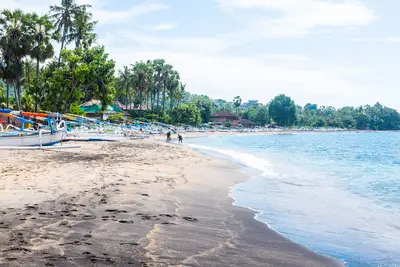
    Amed refers to a chain of fishing villages located on Bali's northeast coast. Dark pebble beaches, colorful outrigger boats, and coral reefs just offshore make it a prime destination for snorkelers and divers.

    Marklchaves·CC BY-SA 4.0

    Nusa Penida

    Nusa Penida

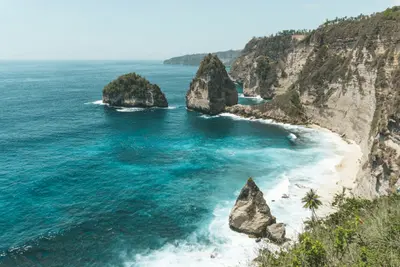
    Nusa Penida, southeast of Bali, is a barren limestone island with spectacular cliffs. Kelingking Beach, Diamond Beach, and the manta rays off Manta Point attract day visitors, while the island's interior remains rural.

    Polina Kuzovkova·Unsplash

    Nusa Lembongan

    Nusa Lembongan

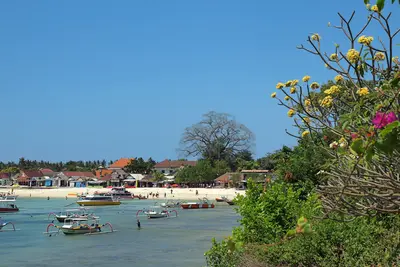
    Nusa Lembongan is a small island between Bali and Nusa Penida. White bays, mangroves, seaweed farms, and a relaxed island life define it, and the neighboring island Nusa Ceningan is accessible via a yellow suspension bridge.

    Jose Mario Pires·CC BY-SA 4.0

    Sidemen

    Sidemen

    Sidemen is located in a valley in eastern Bali, overlooked by the Gunung Agung volcano. Terraced rice fields, Songket weaving workshops, and quiet villages make the valley an alternative to bustling Ubud.

    I Gede Krisna Dharmayudha·CC BY-SA 4.0

    Ubud

    Ubud

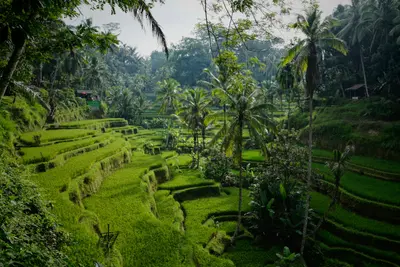
    Ubud, in the highlands of Gianyar, is considered Bali's cultural center. Palace, temples, art museums, and evening dance performances are close by, surrounded by rice terraces and river valleys.

    Niklas Weiss·Unsplash

    Your next steps

    Lombok and the Gili Islands is in Indonesia. Ways to carry on from here.

    • More in Indonesia

      Highlights, areas, routes and the best time to travel for all of Indonesia.

      Indonesia travel guide
    • Round trips with Lombok and the Gili Islands

      2 routes pass through Lombok and the Gili Islands, with stops, nights and a map.

      See 2 round trips
    • Plan a trip with Lombok and the Gili Islands

      The Guide asks about season, length and who is coming, and suggests a trip with Lombok and the Gili Islands.

      Plan the trip

    Sources & method

    • Photos: Wikimedia Commons, Unsplash. Each photo carries its credit.
    • Place data such as addresses and ratings comes from Google Maps.
    • The content is based on web research from public, traceable sources. How the content is made · The role of AI