Fernweh: Home
    ExploreTravel GuidesPlan a tripMy tripLast visited
    de|en
    All Places & RegionsAll highlightsAbout FernwehFAQPrivacy PolicyImprint
    ExploreTravel GuidesPlan a tripMy tripLast visited
    • Neighborhoods & highlights
    • Walking tours
    • Eat & drink
    • Food culture
    • Culture
    • Getting around
    • Accommodation
    • Plan trip
    • Nearby
    Lucca

    Italy

    Lucca

    CityCulture

    Lucca, located in the Serchio plain north of Pisa, is known for its fully preserved 16th and 17th-century city walls. A roughly 4.2-kilometer circular path now runs along its top.

    by Felix Gillen

    1. Home
    2. Destinations
    3. Italy
    4. Tuscany
    5. Lucca
    Lucca, located in the Serchio plain north of Pisa, is known for its fully preserved 16th and 17th-century city walls. A roughly 4.2-kilometer circular path now runs along its top. The old town features the oval Piazza dell'Anfiteatro, the Torre Guinigi with trees on its top, the Duomo San Martino, and San Michele in Foro. Giacomo Puccini was born here; his birthplace is a museum.

    Sights in Lucca

    Discover the most important sights and attractions

    City Wall of Lucca
    Attraction

    1City Wall of Lucca

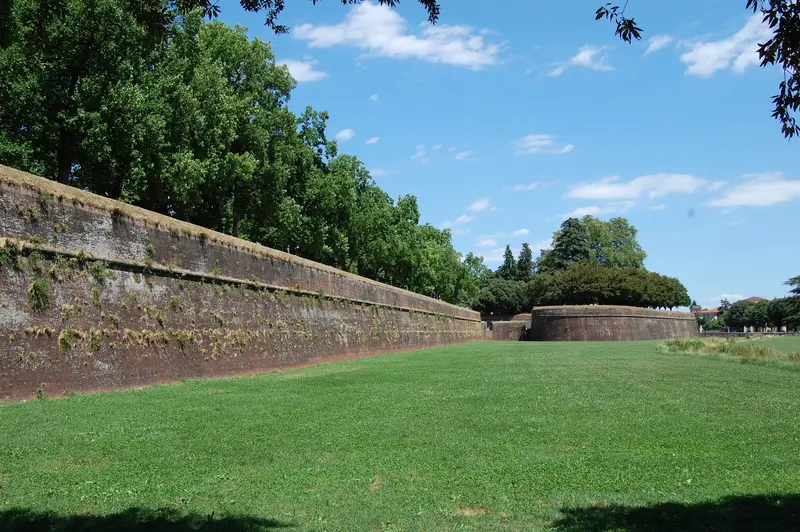
    The present wall, built from 1544 to the mid-17th century, encircles the old town for about 4.2 kilometers with eleven bastions. It was never militarily tested; Lucca was never besieged. Marie Louise von Bourbon had it transformed after 1815 into a promenade and public park. Today, you can walk around the old town on the tree-lined wall-top in about an hour, and much faster by bike. Access is free.
    Open in Google Maps
    Piazza dell'Anfiteatro
    Historic Landmark

    2Piazza dell'Anfiteatro

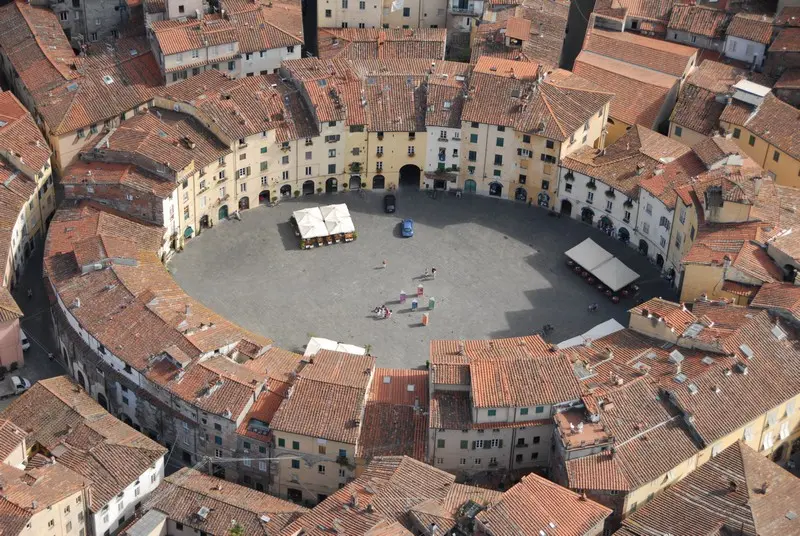
    The oval square traces the layout of a Roman amphitheater. In the Middle Ages, the arena was gradually built over and utilized for various purposes, including a salt store, powder depot, and prison. In the 19th century, architect Lorenzo Nottolini demolished the small interior buildings. Today, the square is surrounded by cafés and restaurants, accessible via four arched gates.
    Open in Google Maps
    Dom San Martino
    Church

    3Dom San Martino

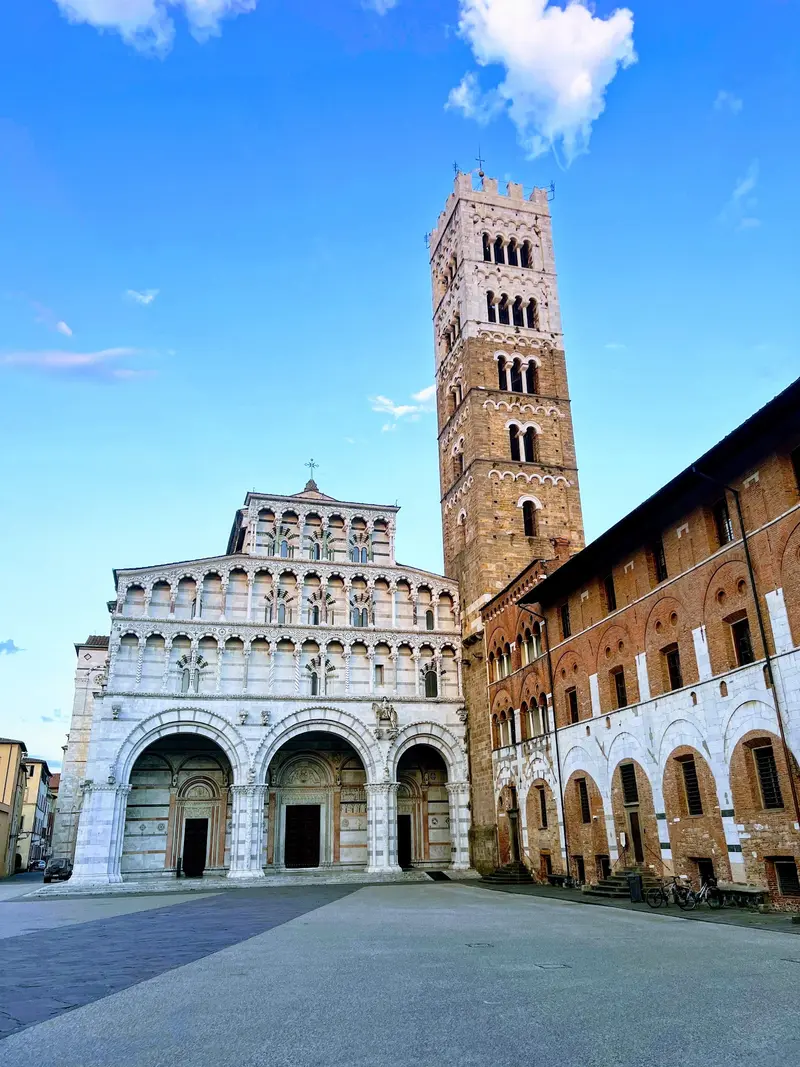
    The present cathedral was built 1060, consecrated 1070. Guido Bigarelli began the west facade with three-arch portico and columned galleries above in 1204. Inside stands the octagonal chapel, which Matteo Civitali built in 1484 for the Volto Santo, a revered wooden crucifix. Also visible is the tomb of Ilaria del Carretto by Jacopo della Quercia from 1413. On the right pillar of the portico, a medieval labyrinth is carved.
    Open in Google Maps
    Torre Guinigi
    Historic Landmark

    4Torre Guinigi

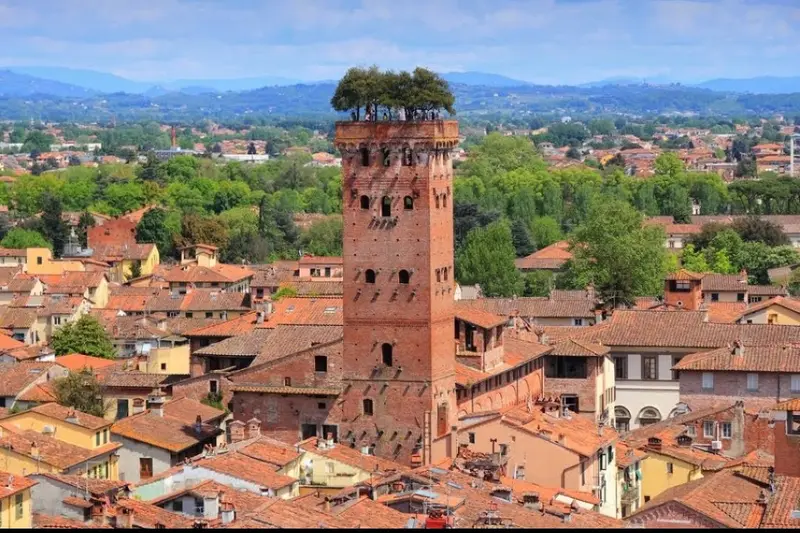
    The roughly 44-meter-tall tower was part of the Guinigi family's houses, who ruled the city in the early 14th century. At its top, seven holm oaks grow in a walled planter. You climb about 230 steps and get a view over the old town's rooftops.
    Open in Google Maps
    Puccini Museum – Birthplace
    Museum

    5Puccini Museum – Birthplace

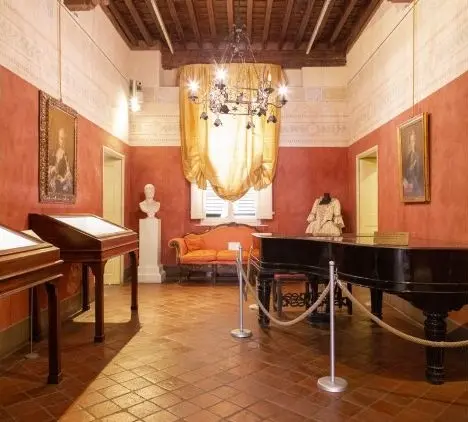
    Giacomo Puccini was born on December 22, 1858, in this house on Corte San Lorenzo. The museum displays letters, early scores, libretto drafts, a Turandot costume from the 1926 New York premiere, and the Steinway grand piano on which he composed Turandot. The rooms are furnished with historic furniture.
    Open in Google Maps
    San Michele in Foro
    Church

    6San Michele in Foro

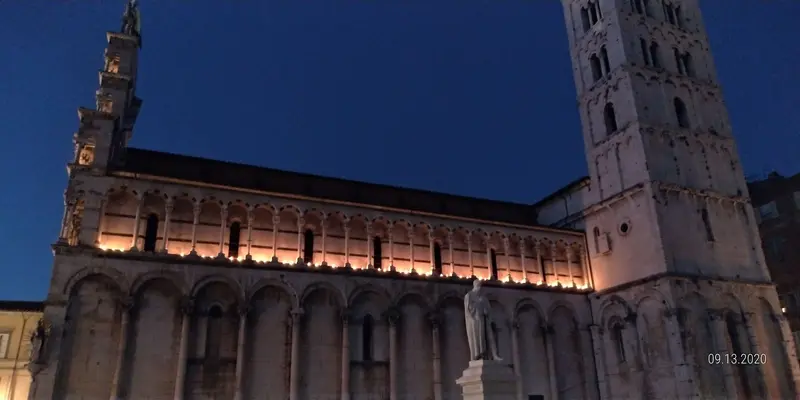
    The church stands on the former Roman Forum in the center of the old town. The upper part of its Romanesque facade has four rows of small colonnades and is crowned by a roughly four-meter-high statue of Archangel Michael. Inside, a panel with four saints by Filippino Lippi is visible.
    Open in Google Maps

    City walks in Lucca

    Curated walking tours through the city's highlights, handpicked by experienced travel journalists.

    Lucca on Foot: A Charming Stroll Through History and Lanes

    Discover Lucca's timeless beauty on this relaxed walk of about two hours. From majestic cathedrals and unique squares to the famous city walls, experience the highlights of the walled city and immerse yourself in its rich history and lively atmosphere. A perfect overview to fall in love with Lucca.

    ~2 Std. 15 Min.
    Open in Google Maps
    Stops (7)

    Dining & Drinks

    1

    Buca di Sant'Antonio

    One of the city's oldest restaurants, near San Michele in Foro. Copper pots and musical instruments hang from the ceiling. The menu features dishes from Lucca and the Garfagnana, such as Tordelli lucchesi, farro soup, and roast kid. Prices are moderate to upscale.
    Show on Google Maps
    2

    Rusticanella 2 da Luca

    Simple trattoria west of San Michele with street-side tables, serving pizza, pasta, and Tuscan meat dishes at moderate prices.
    Show on Google Maps
    3

    Trattoria da Giulio in pelleria

    Traditional trattoria, northwest old town, near city walls. Serves Lucchese home cooking: Tordelli, vegetable Farinata, braised dishes, plus daily specials. Low prices; often full evenings.
    Show on Google Maps
    4

    Gli Orti di Via Elisa

    Restaurant on Via Elisa in the east of the old town, near Porta Elisa. Besides dishes from Lucca, there's pizza and a changing daily menu. In good weather, you can sit in the garden.
    Show on Google Maps
    5

    Osteria San Giorgio

    Osteria on Via San Giorgio with brick vaults and a courtyard. The menu features Tuscan meat and fish dishes and pasta.
    Show on Google Maps

    Dining and Drinks

    The cuisine of Lucca uses ingredients from the plain and the neighboring Garfagnana, especially spelt and olive oil.

    Tordelli lucchesi

    Stuffed pasta pockets with veal or pork, soaked bread and chard, served with ragu or tomato sauce.

    Farro della Garfagnana

    Spelt from Garfagnana with Protected Geographical Indication (IGP), traditionally used for soups and savory pies.

    Buccellato

    Sweet yeast bread with raisins and anise, a specialty of the city, especially eaten around the Feast of Santa Croce.

    Culture and History

    Independent RepublicLucca became a Roman colony in 180 BC. From the 11th century, the city grew wealthy through the silk trade. For almost 500 years, Lucca was an independent republic until the Napoleonic era brought this to an end. In 1805, Napoleon's sister Elisa Bonaparte became Princess of Lucca. From 1815 to 1847, Lucca was a Duchy of the Bourbons and then joined the Grand Duchy of Tuscany.ChurchesThe Old Town boasts numerous Romanesque churches, including San Martino Cathedral, San Michele in Foro, and San Frediano with its golden façade mosaic.Music & FestivalsBesides Puccini, composers Luigi Boccherini and Alfredo Catalani also hail from Lucca. In summer, the Lucca Summer Festival hosts concerts. In late October or early November, around All Saints' Day, the Lucca Comics & Games fair takes place, with over 300,000 tickets sold; the city becomes very crowded then. On September 13th, a procession moves through the city for the Feast of Santa Croce.

    Traveling in Lucca

    On Foot and By BikeWithin the walls, the best way to get around is on foot or by bike. The terrain is flat, and bike rentals are available near Porta Santa Maria, Porta San Pietro, and Porta Elisa.CarWithin the walls, traffic is largely restricted to residents. The main car parks are outside the walls, to the north and south.Train and BusRegional trains connect Lucca with Pisa, Florence, and Viareggio. From Pisa Airport, a direct bus runs to Piazzale Verdi within the walls.

    Accommodations in Lucca

    Find perfect stay in Lucca

    Booking.com* (Affiliate link)
    Search Hotels
    Agoda* (Affiliate link)
    Search Hotels
    Airbnb
    Vacation Rentals

    * Affiliate link: if you book through it, we earn a small commission. The price stays the same for you.

    Campgrounds in Lucca

    Find perfect campground in Lucca

    Search via Google Maps
    Campgrounds nearby (15km)
    Camping.info
    Find Campgrounds
    Park4Night
    RV Parks & Camping

    Plan your trip to Lucca

    Save places, build a route and plan your city trip, all in one place.

    1. 1
      Sunrise over alpine peaks and a sea of clouds
      1234

      Round trip

      12 days · 4 stops

      Saved

      Pick a route

      Pick a ready-made one or save places and plan your own.

      Open bookmarks
    2. 2

      Trip to Lucca

      Live
      • 1City Wall of Lucca3 days
      • 2Piazza dell'Anfiteatro4 days
      • 3Dom San Martino5 days
      Budget

      Plan your trip

      The planner sorts stops, days and budget. Plan together in real time.

      Start trip planning
    3. 3
      9:41 No signal
      Lucca
      Available offline

      Use it on the road

      Download the guide to your phone and use it on site, even offline.

    Nearby

    Pisa

    Pisa

    Pisa lies on the Arno, about ten kilometers from the Tyrrhenian Sea coast. In the Middle Ages, the city was one of Italy's maritime republics. From this era dates the ensemble on Piazza del Duomo, also known as Piazza dei Miracoli, comprising the Cathedral, Baptistery, Camposanto, and the Leaning Tower, a UNESCO World Heritage site since 1987. Beyond this, the university and the Arno's riverside streets define the cityscape.
    San Gimignano

    San Gimignano

    San Gimignano is situated on a hill in the Valdelsa, Siena province. Of the 72 family towers that once stood, 14 still stand today, shaping its skyline. It has been a UNESCO World Heritage site since 1990. Its heart is formed by Piazza della Cisterna with its fountain, and Piazza del Duomo with the Collegiata and town hall. During the day, the town is very crowded; it's quieter early morning and evening.
    Florence

    Florence

    Florence, Tuscany's capital, birthplace of the Renaissance. The Duomo (Brunelleschi's Dome), Palazzo Vecchio, Uffizi, and Ponte Vecchio over the Arno are tightly grouped. Michelangelo's David is in the Galleria dell'Accademia. Across the river, Oltrarno features Palazzo Pitti, the Boboli Gardens, and artisan workshops. A UNESCO World Heritage site since 1982, the Old Town is easily explored on foot. Florence is roughly 1.5 hours from Rome by high-speed train. You should reserve tickets for Uffizi, Accademia, and Duomo Dome in advance.
    Tuscany

    Tuscany

    Tuscany is located in central Italy between the Apennine Mountains and the coast of the Ligurian and Tyrrhenian Seas. The region has almost 3.7 million inhabitants, and its capital is Florence. It is home to eight UNESCO World Heritage Sites: the historic centres of Florence, Siena, San Gimignano and Pienza, the Piazza del Duomo in Pisa, the Val d'Orcia, the Medici Villas and Gardens, and Montecatini Terme as part of the Great Spa Towns of Europe.Besides the art cities, wine regions like Chianti Classico, Montalcino, and Montepulciano shape the area, and in the south, the Maremma with its coast, thermal springs, and tufa towns. For the rural areas, you usually need a car.
    Chianti Classico

    Chianti Classico

    Chianti Classico is the wine region between Florence and Siena, approximately 70,000 hectares of hilly terrain, of which only about a tenth is planted with vines. It fully encompasses the municipalities of Greve, Castellina, Radda and Gaiole in Chianti, and partially also Barberino Tavarnelle, San Casciano Val di Pesa, Castelnuovo Berardenga and Poggibonsi. The distinguishing mark of the wine is the black rooster, the Gallo Nero. Many wineries offer tastings and guided tours, usually by prior appointment.

    Sources & method

    • Photos: Unsplash, Google Maps. Each photo carries its credit.
    • Place data such as addresses and ratings comes from Google Maps.
    • The content is based on web research from public, traceable sources. How the content is made · The role of AI