Fernweh: Home
    ExploreTravel GuidesPlan a tripMy tripLast visited
    de|en
    All Places & RegionsAll highlightsAbout FernwehFAQPrivacy PolicyImprint
    ExploreTravel GuidesPlan a tripMy tripLast visited
    • Overview
    • Places in the region
    • Food culture
    • Culture
    • Getting around
    • Round trips
    • Nearby
    Tuscany

    Italy

    Tuscany

    RegionCultureCulinaryNatureBeach

    Tuscany is located in central Italy between the Apennine Mountains and the coast of the Ligurian and Tyrrhenian Seas. The region has almost 3.7 million inhabitants, and its capital is Florence.

    by Felix Gillen

    1. Home
    2. Destinations
    3. Italy
    4. Tuscany
    Tuscany is located in central Italy between the Apennine Mountains and the coast of the Ligurian and Tyrrhenian Seas. The region has almost 3.7 million inhabitants, and its capital is Florence. It is home to eight UNESCO World Heritage Sites: the historic centres of Florence, Siena, San Gimignano and Pienza, the Piazza del Duomo in Pisa, the Val d'Orcia, the Medici Villas and Gardens, and Montecatini Terme as part of the Great Spa Towns of Europe.Besides the art cities, wine regions like Chianti Classico, Montalcino, and Montepulciano shape the area, and in the south, the Maremma with its coast, thermal springs, and tufa towns. For the rural areas, you usually need a car.
    Most travellers arrive via Pisa or Florence airports, or by train via Florence. Pisa and Lucca are well connected by train; from Florence, Siena is reached faster by express bus than by train. For Chianti, Val d'Orcia and Maremma, a rental car is practical. Many old towns have Limited Traffic Zones (ZTL); unauthorised entry is often camera-detected and can result in a fine months later.
    Montepulciano

    Place 1 of 4

    Montepulciano

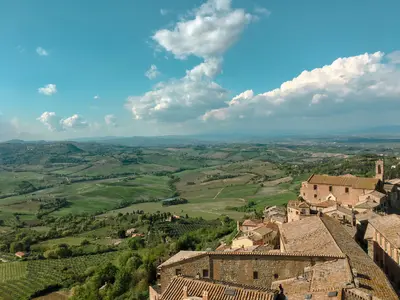
    Montepulciano sits in the south of Siena province on a roughly 605-meter limestone ridge. Its medieval and Renaissance old town culminates in Piazza Grande, home to the Town Hall and Cathedral.

    Discover
    Chianti Classico

    Place 2 of 4

    Chianti Classico

    Chianti Classico is the wine region between Florence and Siena, approximately 70,000 hectares of hilly terrain, of which only about a tenth is planted with vines.

    Discover
    Florence

    Place 3 of 4

    Florence

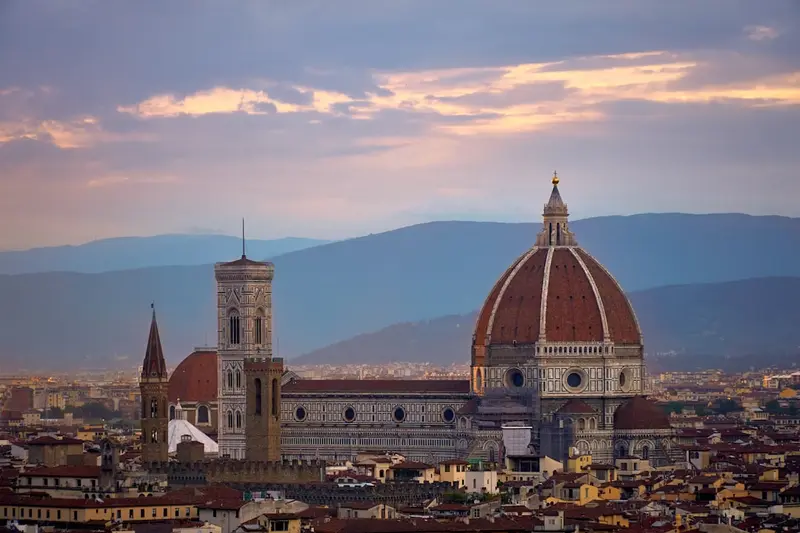
    Florence, Tuscany's capital, birthplace of the Renaissance. The Duomo (Brunelleschi's Dome), Palazzo Vecchio, Uffizi, and Ponte Vecchio over the Arno are tightly grouped.

    Discover
    Lucca

    Place 4 of 4

    Lucca

    Lucca, located in the Serchio plain north of Pisa, is known for its fully preserved 16th and 17th-century city walls. A roughly 4.2-kilometer circular path now runs along its top.

    Discover

    More places in Tuscany

    Pisa

    Pisa

    Pisa lies on the Arno, about ten kilometers from the Tyrrhenian Sea coast. In the Middle Ages, the city was one of Italy's maritime republics. From this era dates the ensemble on Piazza del Duomo, also known as Piazza dei Miracoli, comprising the Cathedral, Baptistery, Camposanto, and the Leaning Tower, a UNESCO World Heritage site since 1987. Beyond this, the university and the Arno's riverside streets define the cityscape.
    San Gimignano

    San Gimignano

    San Gimignano is situated on a hill in the Valdelsa, Siena province. Of the 72 family towers that once stood, 14 still stand today, shaping its skyline. It has been a UNESCO World Heritage site since 1990. Its heart is formed by Piazza della Cisterna with its fountain, and Piazza del Duomo with the Collegiata and town hall. During the day, the town is very crowded; it's quieter early morning and evening.
    Siena

    Siena

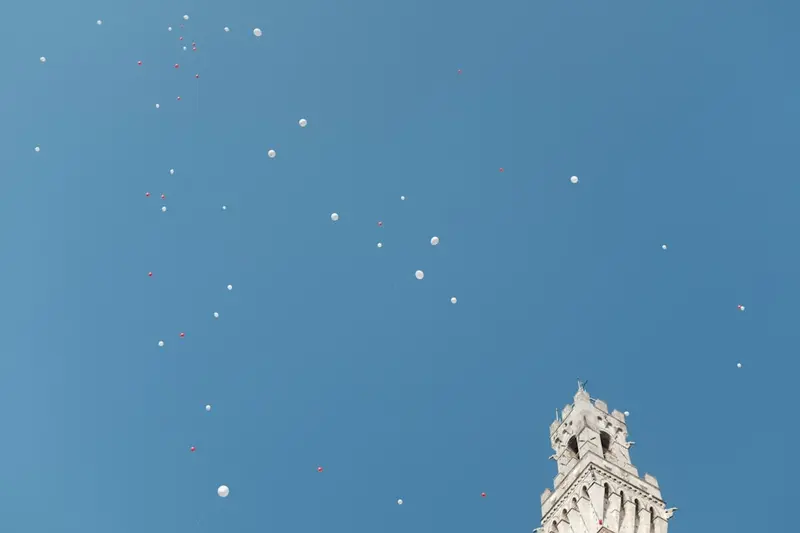
    Siena grew on three hills, its main streets converging in a depression where the Piazza del Campo now lies. A UNESCO World Heritage site since 1995, its Old Town largely retains its 12th to 15th-century Gothic character. On the Campo stand the Palazzo Pubblico and Torre del Mangia; the Cathedral, with its marble floor, is nearby. Twice yearly, on July 2nd and August 16th, the Palio takes place on the Campo.
    Val d'Orcia

    Val d'Orcia

    The Val d'Orcia is a hilly landscape south of Siena, stretching around Montalcino, San Quirico, and Pienza, all the way to Monte Amiata. Since 2004, it has been a UNESCO World Heritage cultural landscape. It acquired its current appearance in the 14th and 15th centuries, when wealthy merchants from Siena invested in agriculture. The World Heritage site includes Montalcino, San Quirico d'Orcia, Castiglione d'Orcia, Rocca d'Orcia, Monticchiello, and Radicofani; Pienza is a separate World Heritage site.

    Sights in Tuscany

    Discover the most important sights and attractions

    Abbey of San Galgano
    Place of Worship

    Abbey of San Galgano

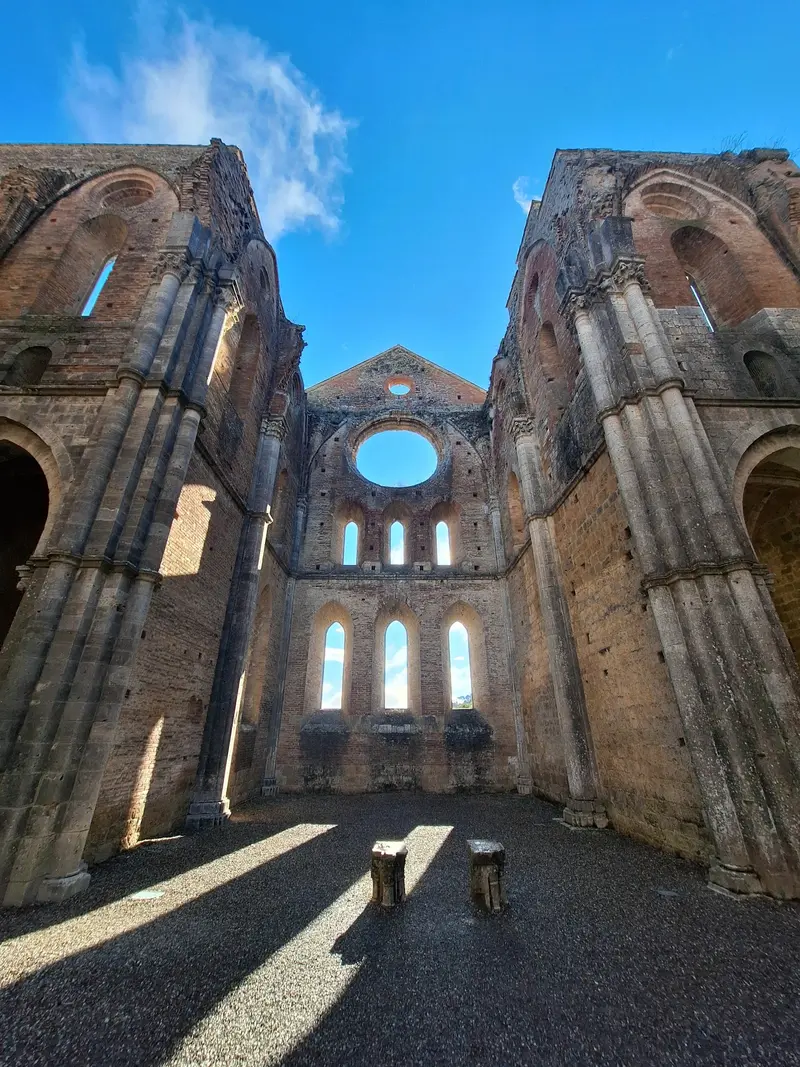
    The Cistercian Abbey in the Merse valley between Chiusdino and Monticiano was built from about 1220. From 1363, mercenaries plundered the abbey, which then fell into poverty. In 1786, the bell tower collapsed, taking the church roof with it; since then, the Gothic church has stood roofless. On the hill above it lies the round Chapel of Montesiepi from 1185, with the tomb of Saint Galgano and the sword in the stone, which, according to legend, he plunged into the rock.
    Open in Google Maps
    Cascate del Mulino, Saturnia
    Attraction

    Cascate del Mulino, Saturnia

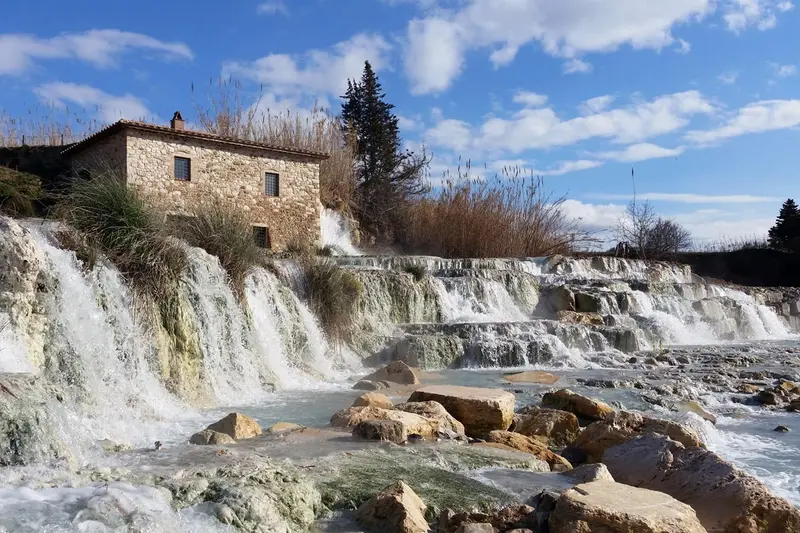
    Below Saturnia, in the municipality of Manciano, sulfurous thermal water at around 37 degrees flows by an old mill over travertine terraces into natural pools.
    Open in Google Maps
    Palazzo dei Priori, Volterra
    Attraction

    Palazzo dei Priori, Volterra

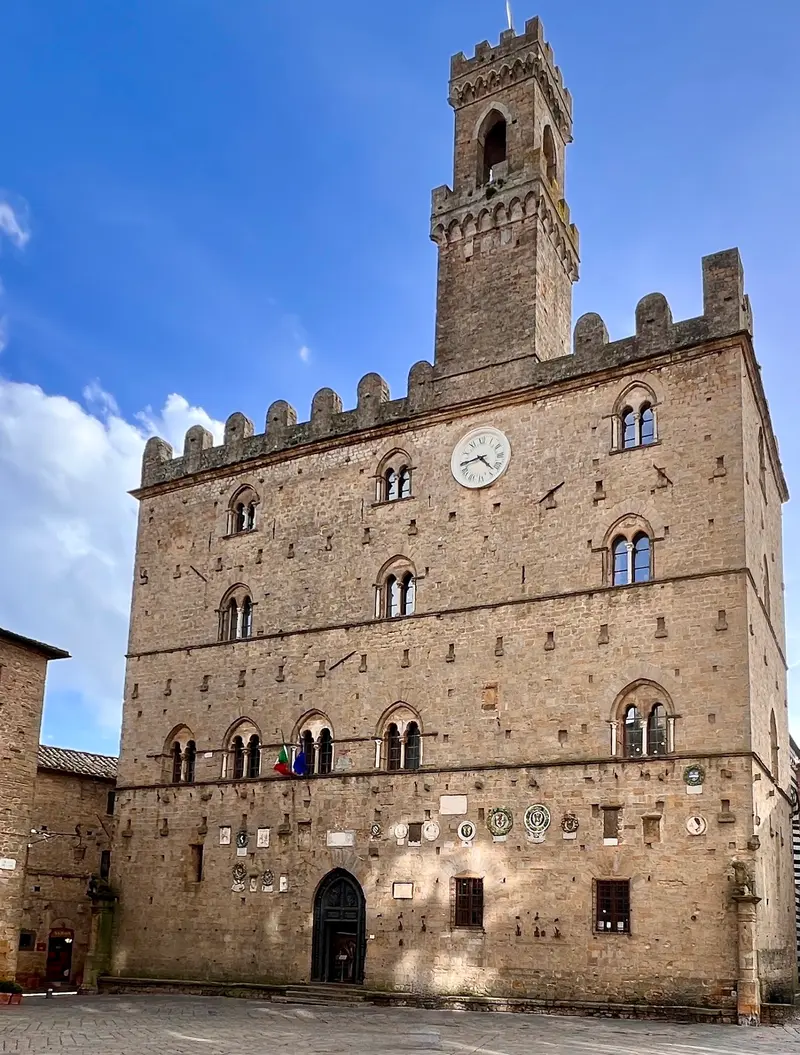
    Volterra's Town Hall, built between 1208 and 1257, is considered Tuscany's oldest communal palace. The council hall is entirely frescoed; however, only an Annunciation by Jacopo di Cione Orcagna (1398) remains from the original, with other frescoes dating from 1881. The pentagonal tower was partially rebuilt after the 1846 earthquake.
    Open in Google Maps
    Pitigliano
    Attraction

    Pitigliano

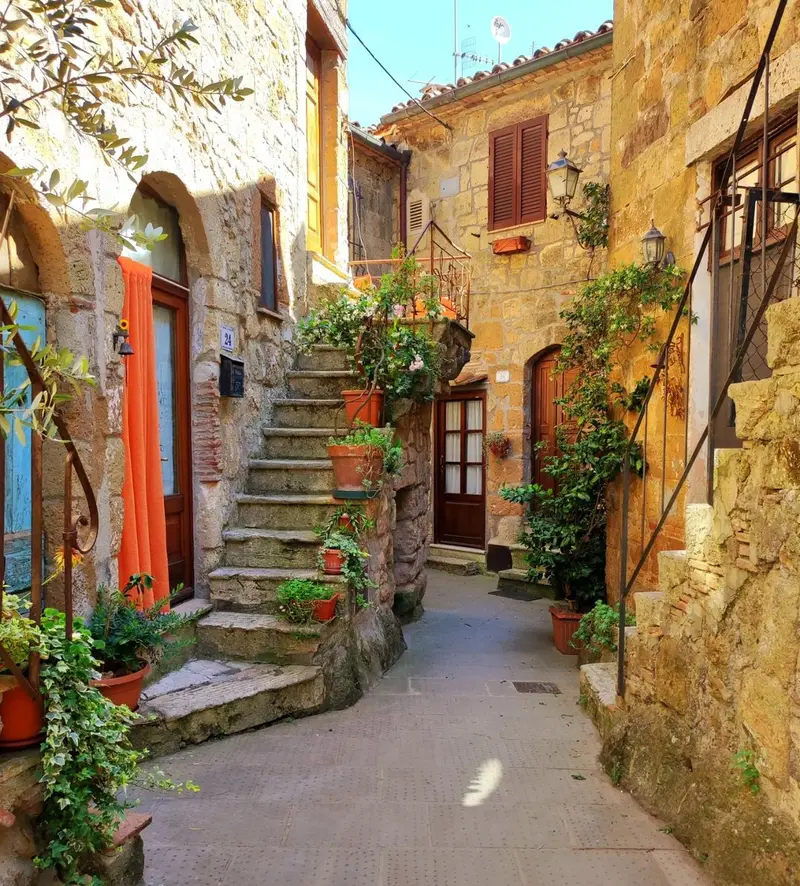
    The small town in the Maremma, about 80 kilometers southeast of Grosseto, is built on a tuff rock. Due to its centuries-old Jewish community, it's known as 'Little Jerusalem'; its 1598 synagogue is still occasionally used today. The surrounding area features paths and caves cut into the tuff from Etruscan times. Also noteworthy are the Orsini Fortress and the Cathedral.
    Open in Google Maps
    San Francesco, Arezzo
    Church

    San Francesco, Arezzo

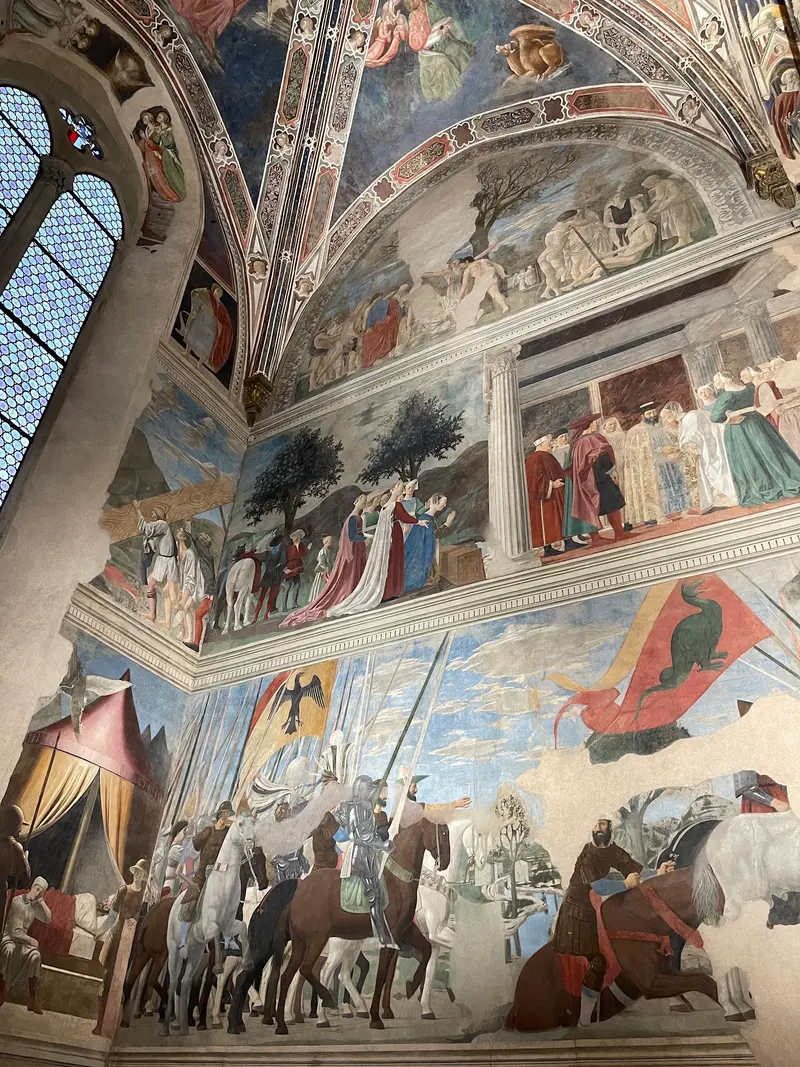
    In the Cappella Bacci, the choir of the Franciscan church, Piero della Francesca painted the fresco cycle "The Legend of the True Cross" in the 15th century, based on the Legenda Aurea. Entry to the chapel is by reservation only; a maximum of 30 people are allowed per 30-minute slot. Closed on Wednesdays.
    Open in Google Maps
    Sant'Antimo Abbey
    Church

    Sant'Antimo Abbey

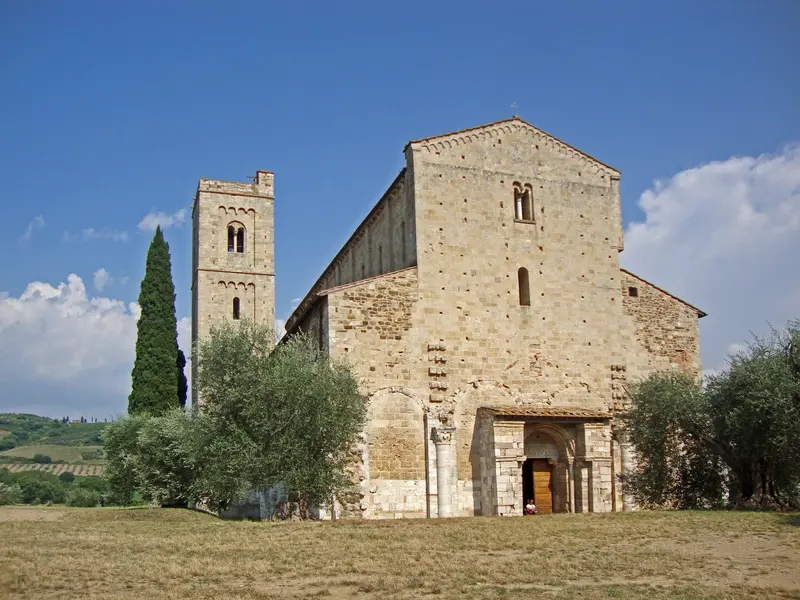
    The Romanesque abbey church was built from 1118 and is located near Castelnuovo dell'Abate in the municipality of Montalcino. The portal features two travertine lions; inside, you'll find alabaster on a column near the choir chapel. Since the mid-2010s, no monastic community has lived here; the Archdiocese uses the abbey for services and cultural events. The Via Francigena passed nearby.
    Open in Google Maps

    Eating and Drinking

    Tuscan cuisine is simple and is based on unsalted bread, olive oil, legumes, and meat.

    Bistecca alla fiorentina

    Thick T-bone steak, traditionally from Chianina beef, grilled and served rare. It is charged by weight.

    Ribollita

    Bread soup with white beans, cavolo nero, and vegetables. The name means 'boiled up'; traditionally, leftover vegetable soup was reheated with stale bread.

    Pici

    Thick, hand-rolled pasta from Siena province, such as with garlic-tomato sauce (all'aglione), breadcrumbs, or ragù.

    Chianti Classico, Brunello, Vino Nobile

    The region's most famous red wines, all based on the Sangiovese grape. Many wineries offer tastings by appointment.

    Cantucci and Vin Santo

    Almond biscuits from Prato, served after dinner for dipping in the dessert wine Vin Santo.

    Culture and History

    Etruscans, City-Republics, RenaissanceBefore the Romans, the Etruscans shaped the region; their golden age was in the 7th and 6th centuries BC, and the name Tuscany also originates from them. In the Middle Ages, city-republics like Florence, Siena, Pisa, and Lucca competed, their town halls, towers, and cathedrals still defining the old towns today. From 1434, the Medici dominated Florence, a city considered the cradle of the Italian Renaissance. In the 16th century, the Medici established the Grand Duchy of Tuscany.Language and TraditionsToday's standard Italian is based on Florentine, whose prestige grew through the works of Dante, Petrarch, and Boccaccio. Among the most famous festivals are the Palio of Siena on July 2nd and August 16th, the historical ball game Calcio Storico in Piazza Santa Croce in Florence with its final on June 24th, and the Luminara in Pisa on the evening of June 16th.Excursion Destinations Beyond the CitiesRewarding rural destinations include the Abbeys of San Galgano and Sant'Antimo, Volterra, the thermal pools near Saturnia, and the tufa town of Pitigliano. In Arezzo, the frescoes by Piero della Francesca can be seen in San Francesco.

    Wandering through Tuscany

    Train and BusRegional trains connect Florence with Pisa and Lucca, among other cities. For Siena, the express bus from Florence is a good alternative to the train; San Gimignano can only be reached by bus via Poggibonsi. In rural areas, buses run infrequently.CarFor Chianti, Val d'Orcia, and Maremma, a rental car is almost indispensable. Pay attention to ZTL signs on the edges of old towns and park outside. The Via Chiantigiana connects Florence and Siena, running for about 70 kilometers through Chianti.AirportsPisa Airport is the busiest in the region, with Florence ranking second. From Pisa, the Pisa Mover takes about five minutes to the main station; from there, you continue by train to Florence.

    Round trips through this region

    Tuscany & Umbria Classic

    Tuscany & Umbria Classic

    From Florence, via Siena and Montepulciano on the edge of Val d'Orcia, to Umbria and the old towns of Perugia and Assisi. Stages rarely exceed an hour's drive. In the old towns, ZTLs apply; park outside.

    11 Days
    5 stops
    Italy Complete Motorhome (2–3 Weeks)

    Italy Complete Motorhome (2–3 Weeks)

    The motorhome route leads from Lake Garda via Verona, Florence and Siena to Rome, to the Lazio coast to Sperlonga, and continues via Naples to the Amalfi Coast. In the historic city centers and on the Amalfi Coast, motorhome access is limited. You park at designated pitches on the outskirts and travel onward by bus, train, or ferry.

    19 Days
    8 stops

    Nearby

    Chianti Classico

    Chianti Classico

    Chianti Classico is the wine region between Florence and Siena, approximately 70,000 hectares of hilly terrain, of which only about a tenth is planted with vines. It fully encompasses the municipalities of Greve, Castellina, Radda and Gaiole in Chianti, and partially also Barberino Tavarnelle, San Casciano Val di Pesa, Castelnuovo Berardenga and Poggibonsi. The distinguishing mark of the wine is the black rooster, the Gallo Nero. Many wineries offer tastings and guided tours, usually by prior appointment.
    San Gimignano

    San Gimignano

    San Gimignano is situated on a hill in the Valdelsa, Siena province. Of the 72 family towers that once stood, 14 still stand today, shaping its skyline. It has been a UNESCO World Heritage site since 1990. Its heart is formed by Piazza della Cisterna with its fountain, and Piazza del Duomo with the Collegiata and town hall. During the day, the town is very crowded; it's quieter early morning and evening.
    Siena

    Siena

    Siena grew on three hills, its main streets converging in a depression where the Piazza del Campo now lies. A UNESCO World Heritage site since 1995, its Old Town largely retains its 12th to 15th-century Gothic character. On the Campo stand the Palazzo Pubblico and Torre del Mangia; the Cathedral, with its marble floor, is nearby. Twice yearly, on July 2nd and August 16th, the Palio takes place on the Campo.
    Florence

    Florence

    Florence, Tuscany's capital, birthplace of the Renaissance. The Duomo (Brunelleschi's Dome), Palazzo Vecchio, Uffizi, and Ponte Vecchio over the Arno are tightly grouped. Michelangelo's David is in the Galleria dell'Accademia. Across the river, Oltrarno features Palazzo Pitti, the Boboli Gardens, and artisan workshops. A UNESCO World Heritage site since 1982, the Old Town is easily explored on foot. Florence is roughly 1.5 hours from Rome by high-speed train. You should reserve tickets for Uffizi, Accademia, and Duomo Dome in advance.
    Val d'Orcia

    Val d'Orcia

    The Val d'Orcia is a hilly landscape south of Siena, stretching around Montalcino, San Quirico, and Pienza, all the way to Monte Amiata. Since 2004, it has been a UNESCO World Heritage cultural landscape. It acquired its current appearance in the 14th and 15th centuries, when wealthy merchants from Siena invested in agriculture. The World Heritage site includes Montalcino, San Quirico d'Orcia, Castiglione d'Orcia, Rocca d'Orcia, Monticchiello, and Radicofani; Pienza is a separate World Heritage site.

    Sources & method

    • Photos: Google Maps. Each photo carries its credit.
    • Place data such as addresses and ratings comes from Google Maps.
    • The content is based on web research from public, traceable sources. How the content is made · The role of AI