Fernweh: Home
    ExploreTravel GuidesPlan a tripMy tripLast visited
    de|en
    All Places & RegionsAll highlightsAbout FernwehFAQPrivacy PolicyImprint
    ExploreTravel GuidesPlan a tripMy tripLast visited
    Chianti Classico

    Italy

    Chianti Classico

    Point of InterestCulture

    Chianti Classico is the wine region between Florence and Siena, approximately 70,000 hectares of hilly terrain, of which only about a tenth is planted with vines.

    by Felix Gillen

    1. Home
    2. Destinations
    3. Italy
    4. Tuscany
    5. Chianti Classico
    Chianti Classico is the wine region between Florence and Siena, approximately 70,000 hectares of hilly terrain, of which only about a tenth is planted with vines. It fully encompasses the municipalities of Greve, Castellina, Radda and Gaiole in Chianti, and partially also Barberino Tavarnelle, San Casciano Val di Pesa, Castelnuovo Berardenga and Poggibonsi. The distinguishing mark of the wine is the black rooster, the Gallo Nero. Many wineries offer tastings and guided tours, usually by prior appointment.

    Sights of Interest

    Discover the most important sights and attractions

    Castello di Verrazzano
    Castle

    1Castello di Verrazzano

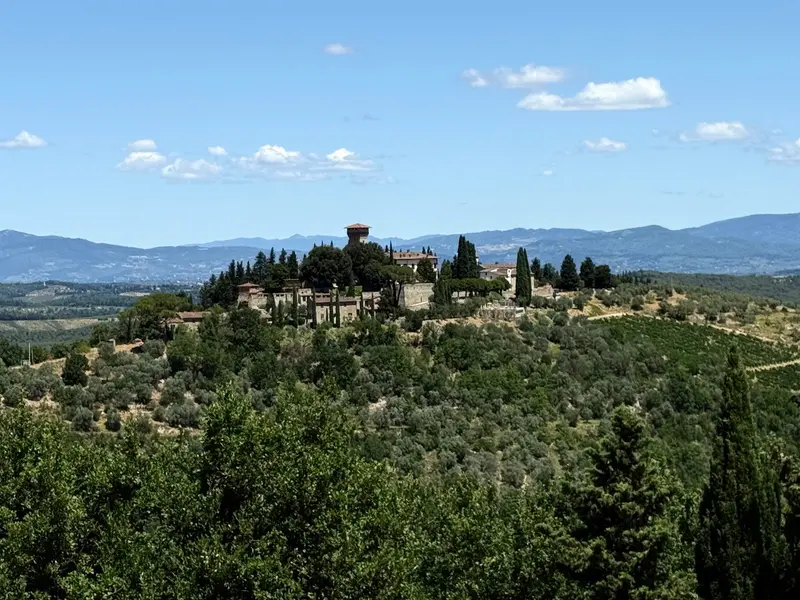
    The castle, on a 348-meter-high hill about two kilometers from Greve, was the ancestral home of the Florentine Da Verrazzano family. From it came the seafarer Giovanni da Verrazzano, who in 1524 explored North America's Atlantic coast, including New York Bay.
    Open in Google Maps
    Museum of Sacred Art Saint Francis, Greve
    Museum

    2Museum of Sacred Art Saint Francis, Greve

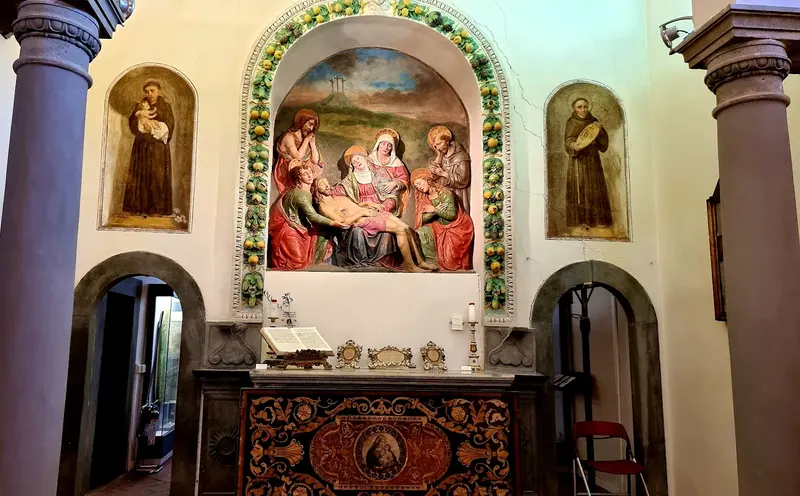
    The museum, opened 2002, is in Greve's former Franciscan monastery. It exhibits sacred art from local churches: a 14th-century Annunciation, a 15th-century marble relief, and liturgical silverwork. Check opening hours in advance. The town center's long, triangular piazza features arcades and a statue of Giovanni da Verrazzano.
    Open in Google Maps
    Rocca di Castellina in Chianti
    Museum

    3Rocca di Castellina in Chianti

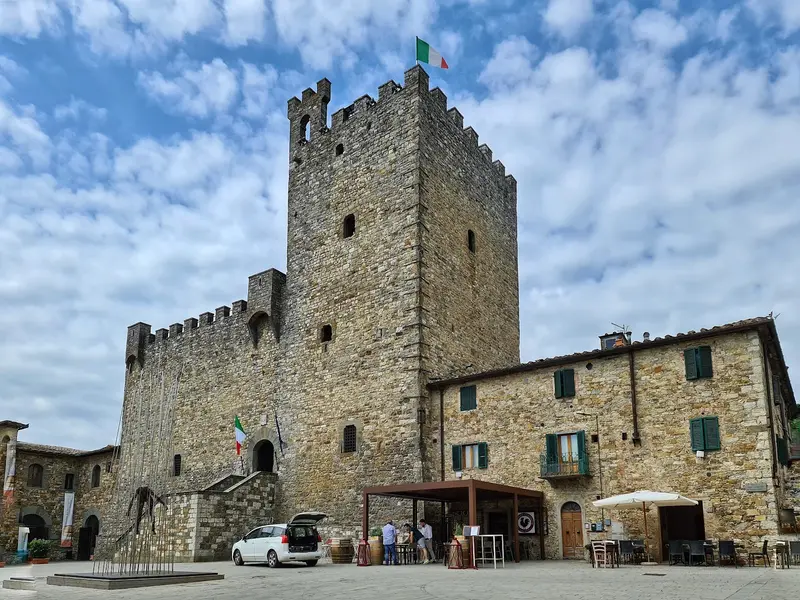
    Castellina was an important member of the Lega del Chianti. After being plundered in 1397, the town was refortified from 1400, and its fortress stands on the main square. Since 2006, it has housed the Archaeological Museum of Chianti Senese, featuring finds from the surrounding area, which was already settled by the Etruscans; the Etruscan tumulus of Montecalvario is located on the edge of town. Along the north wall runs the Via delle Volte, a covered walkway.
    Open in Google Maps
    Castello di Brolio
    Castle

    4Castello di Brolio

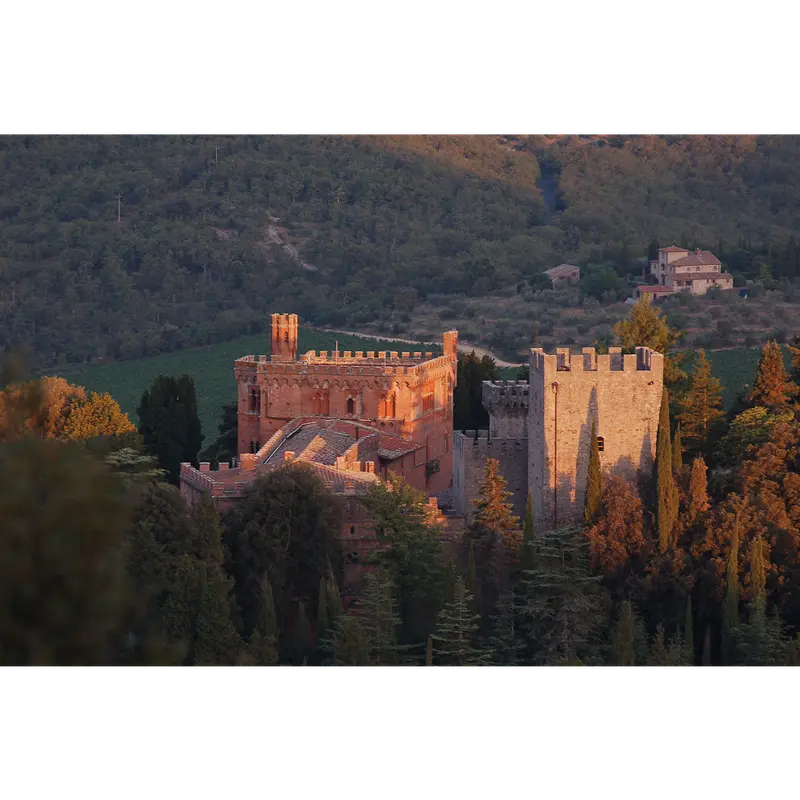
    The castle, approximately 20 kilometers northeast of Siena, has belonged to the Ricasoli family for almost 800 years. Bettino Ricasoli, Italian Prime Minister in the 19th century, helped establish Sangiovese as the leading grape variety of Chianti. The estate includes gardens, and tours are offered.
    Open in Google Maps

    Dining & Drinks

    1

    Ristorante la Bottega del Moro

    Restaurant at Piazza Matteotti in Greve in Chianti. The menu features Tuscan pasta, meat dishes, and Chianti Classico wines. When the weather is good, you can sit under the arcades on the square.
    Show on Google Maps
    2

    Osteria di Passignano

    The restaurant is located in the hamlet of Badia a Passignano, next to the Vallombrosian Abbey, and belongs to the Antinori winery. The cuisine is upscale and Tuscan, with regional ingredients. Antinori wines mature in the abbey's cellars, which you can order here with your meal. Book in advance.
    Show on Google Maps
    3

    Officina della Bistecca

    Butcher Dario Cecchini's restaurant in Panzano is located above his famous butchery Antica Macelleria Cecchini. Guests dine at long communal tables on a fixed menu of various grilled beef cuts, including Bistecca. There are fixed meal times; book in advance.
    Show on Google Maps
    4

    Oltre Osteria

    Restaurant of the Rocca delle Macìe winery south of Castellina in Chianti. Tuscan cuisine is served with the estate's wines, and from the terrace, you overlook the vineyards. Access is via a country road; a car is necessary.
    Show on Google Maps
    5

    Ristorante Vallechiara

    Country restaurant on the Strada delle Masse south of Castellina in Chianti. The cuisine is Tuscan and down-to-earth, with homemade pasta and grilled dishes. The location is secluded; you can only reach it by car.
    Show on Google Maps

    Dining and Drinks

    In Chianti, you eat in trattorias, winery restaurants, and butcher shops with snacks.

    Chianti Classico

    Red wine, at least 80 percent Sangiovese, in Annata, Riserva, and Gran Selezione levels. Recognizable by the black rooster on the bottle.

    Olive Oil Chianti Classico DOP

    The Chianti Classico has its own protected olive oil with designation of origin.

    Vin Santo del Chianti Classico

    Sweet dessert wine with its own DOC.

    Culture and Heritage

    Borderland between Florence and SienaIn the Middle Ages, Chianti was contested borderland between two city-republics. Florence founded the Lega del Chianti (1384), based in Radda, comprising the Radda, Gaiole, and Castellina thirds. Its emblem, a black rooster on gold, became the Chianti Classico symbol. Castellina was plundered in 1397, refortified from 1400.WineIn 1716, Grand Duke Cosimo III de' Medici set the Chianti region's boundaries. Bettino Ricasoli, later Italy's Prime Minister, helped make Sangiovese the leading grape in the 19th century. Since 1996, Chianti Classico has been its own DOCG; Gran Selezione is the highest quality level.AbbeysThe Vallombrosan Abbey Badia a Passignano, west of Greve, dates to around the year 1000. In 1476, Domenico Ghirlandaio and his brother Davide painted a Last Supper fresco in the refectory. The abbey was restored in the 2010s and is open for visits.

    Out and about in Chianti

    CarThe Via Chiantigiana connects Florence and Siena through the heart of the region. Many side roads are narrow and winding, some leading to wineries are unpaved. Park in the towns in the designated parking areas.TrainThe Castellina in Chianti-Monteriggioni train station is about eleven kilometers from the town; for the area itself, you are reliant on a car, bus, or guided tours.

    Accommodations in Chianti Classico

    Find perfect stay in Chianti Classico

    Booking.com* (Affiliate link)
    Search Hotels
    Agoda* (Affiliate link)
    Search Hotels
    Airbnb
    Vacation Rentals

    * Affiliate link: if you book through it, we earn a small commission. The price stays the same for you.

    Campgrounds in Chianti Classico

    Find perfect campground in Chianti Classico

    Search via Google Maps
    Campgrounds nearby (15km)
    Camping.info
    Find Campgrounds
    Park4Night
    RV Parks & Camping

    Nearby

    Tuscany

    Tuscany

    Tuscany is located in central Italy between the Apennine Mountains and the coast of the Ligurian and Tyrrhenian Seas. The region has almost 3.7 million inhabitants, and its capital is Florence. It is home to eight UNESCO World Heritage Sites: the historic centres of Florence, Siena, San Gimignano and Pienza, the Piazza del Duomo in Pisa, the Val d'Orcia, the Medici Villas and Gardens, and Montecatini Terme as part of the Great Spa Towns of Europe.Besides the art cities, wine regions like Chianti Classico, Montalcino, and Montepulciano shape the area, and in the south, the Maremma with its coast, thermal springs, and tufa towns. For the rural areas, you usually need a car.
    Florence

    Florence

    Florence, Tuscany's capital, birthplace of the Renaissance. The Duomo (Brunelleschi's Dome), Palazzo Vecchio, Uffizi, and Ponte Vecchio over the Arno are tightly grouped. Michelangelo's David is in the Galleria dell'Accademia. Across the river, Oltrarno features Palazzo Pitti, the Boboli Gardens, and artisan workshops. A UNESCO World Heritage site since 1982, the Old Town is easily explored on foot. Florence is roughly 1.5 hours from Rome by high-speed train. You should reserve tickets for Uffizi, Accademia, and Duomo Dome in advance.
    San Gimignano

    San Gimignano

    San Gimignano is situated on a hill in the Valdelsa, Siena province. Of the 72 family towers that once stood, 14 still stand today, shaping its skyline. It has been a UNESCO World Heritage site since 1990. Its heart is formed by Piazza della Cisterna with its fountain, and Piazza del Duomo with the Collegiata and town hall. During the day, the town is very crowded; it's quieter early morning and evening.
    Siena

    Siena

    Siena grew on three hills, its main streets converging in a depression where the Piazza del Campo now lies. A UNESCO World Heritage site since 1995, its Old Town largely retains its 12th to 15th-century Gothic character. On the Campo stand the Palazzo Pubblico and Torre del Mangia; the Cathedral, with its marble floor, is nearby. Twice yearly, on July 2nd and August 16th, the Palio takes place on the Campo.
    Val d'Orcia

    Val d'Orcia

    The Val d'Orcia is a hilly landscape south of Siena, stretching around Montalcino, San Quirico, and Pienza, all the way to Monte Amiata. Since 2004, it has been a UNESCO World Heritage cultural landscape. It acquired its current appearance in the 14th and 15th centuries, when wealthy merchants from Siena invested in agriculture. The World Heritage site includes Montalcino, San Quirico d'Orcia, Castiglione d'Orcia, Rocca d'Orcia, Monticchiello, and Radicofani; Pienza is a separate World Heritage site.

    Sources & method

    • Photos: Unsplash, Google Maps. Each photo carries its credit.
    • Place data such as addresses and ratings comes from Google Maps.
    • The content is based on web research from public, traceable sources. How the content is made · The role of AI