Fernweh: Home
    ExploreTravel GuidesPlan a tripMy tripLast visited
    de|en
    All Places & RegionsAll highlightsAbout FernwehFAQPrivacy PolicyImprint
    ExploreTravel GuidesPlan a tripMy tripLast visited
    Val d'Orcia

    Italy

    Val d'Orcia

    Point of InterestCulture

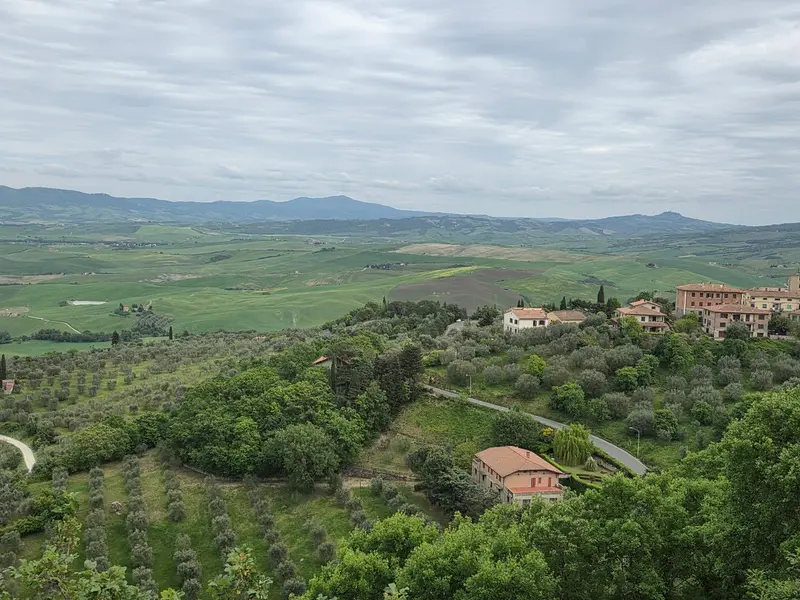
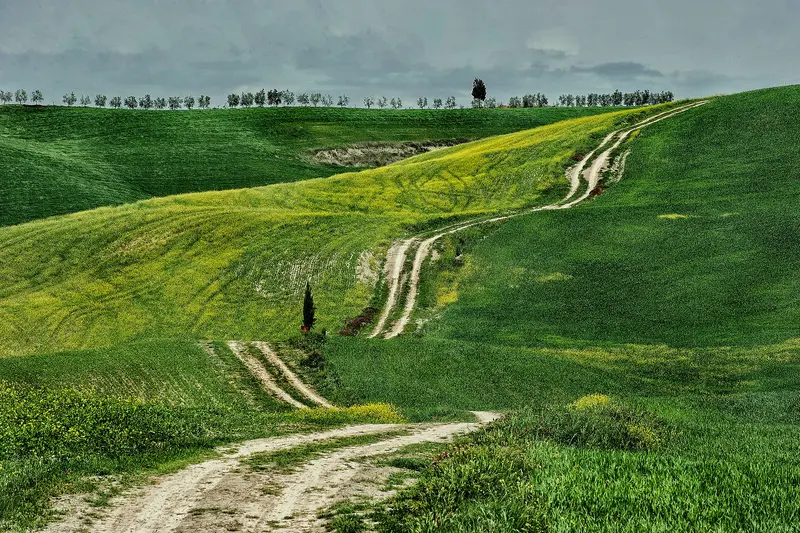
    The Val d'Orcia is a hilly landscape south of Siena, stretching around Montalcino, San Quirico, and Pienza, all the way to Monte Amiata. Since 2004, it has been a UNESCO World Heritage cultural landscape.

    by Felix Gillen

    1. Home
    2. Destinations
    3. Italy
    4. Tuscany
    5. Val d'Orcia
    The Val d'Orcia is a hilly landscape south of Siena, stretching around Montalcino, San Quirico, and Pienza, all the way to Monte Amiata. Since 2004, it has been a UNESCO World Heritage cultural landscape. It acquired its current appearance in the 14th and 15th centuries, when wealthy merchants from Siena invested in agriculture. The World Heritage site includes Montalcino, San Quirico d'Orcia, Castiglione d'Orcia, Rocca d'Orcia, Monticchiello, and Radicofani; Pienza is a separate World Heritage site.

    Points of Interest

    Discover the most important sights and attractions

    Cypress Grove of San Quirico (Cipressini)
    Attraction

    1Cypress Grove of San Quirico (Cipressini)

    The small, diamond-shaped group of cypresses sits on a low hill in the I Triboli area along the Via Cassia, a few minutes' drive north of San Quirico d'Orcia. It is one of Tuscany's most iconic photo spots and easily visible from the road. Surrounded by farmland, stay on recognizable paths. Only stop where you don't obstruct traffic.
    Open in Google Maps
    Pienza – Piazza Pio II and Cathedral
    Church

    2Pienza – Piazza Pio II and Cathedral

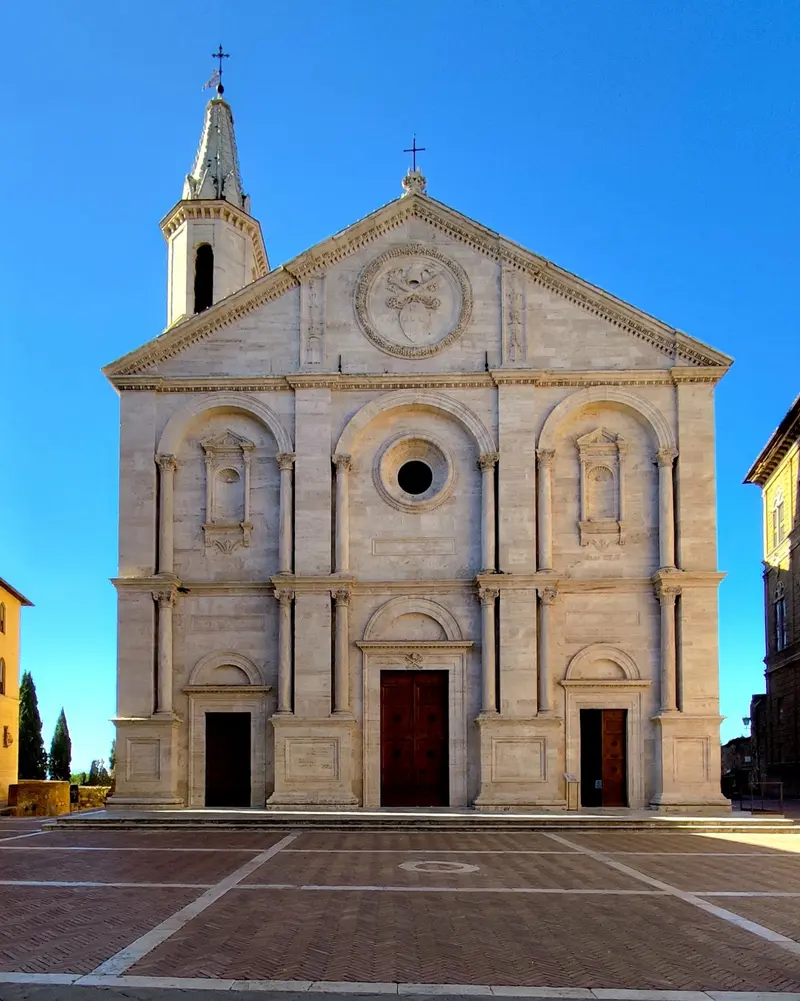
    Pope Pius II had his birthplace Corsignano rebuilt by Bernardo Rossellino starting in 1459. On Piazza Pio II stand the Cathedral, whose brightness Pope Pius II himself praised, the Palazzo Piccolomini, the Town Hall, and the Bishop's Palace. From the loggias of Palazzo Piccolomini, you look out over a Renaissance garden into the Val d'Orcia, all the way to Monte Amiata. The old town has been a UNESCO World Heritage site since 1996.
    Open in Google Maps
    Chapel of the Madonna of Vitaleta
    Church

    3Chapel of the Madonna of Vitaleta

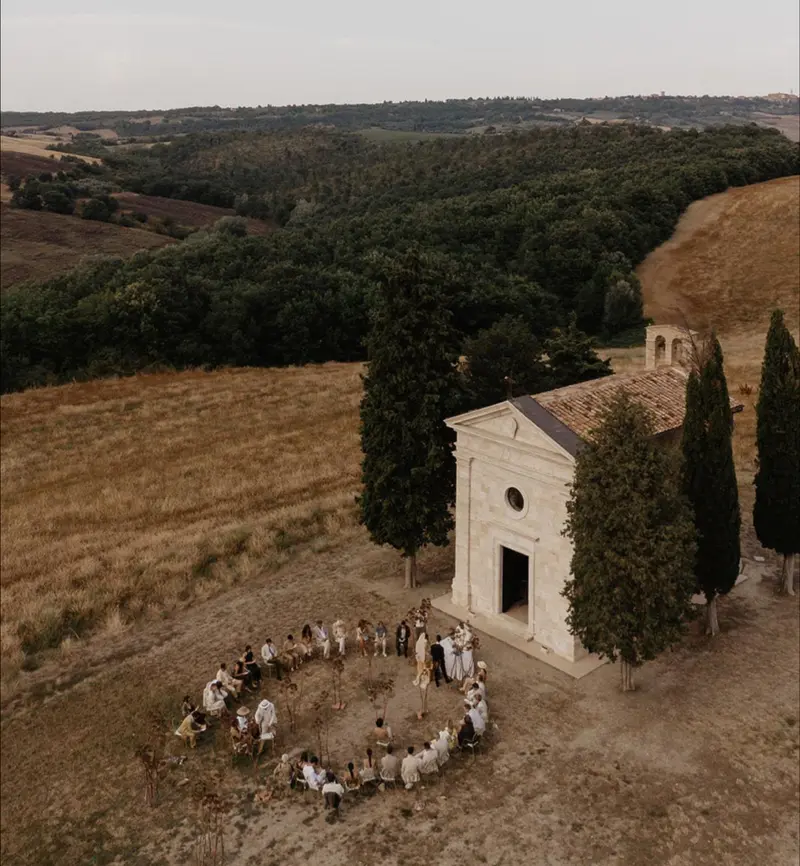
    The small chapel is located among cypress trees on an unpaved road linking San Quirico d'Orcia and Pienza. Mentioned in 1590, it was redesigned by Giuseppe Partini in 1884 after an earthquake, with this design restored in 2021. It is one of the valley's most photographed sights. The chapel is privately owned; access is not guaranteed.
    Open in Google Maps
    Bagno Vignoni
    Attraction

    4Bagno Vignoni

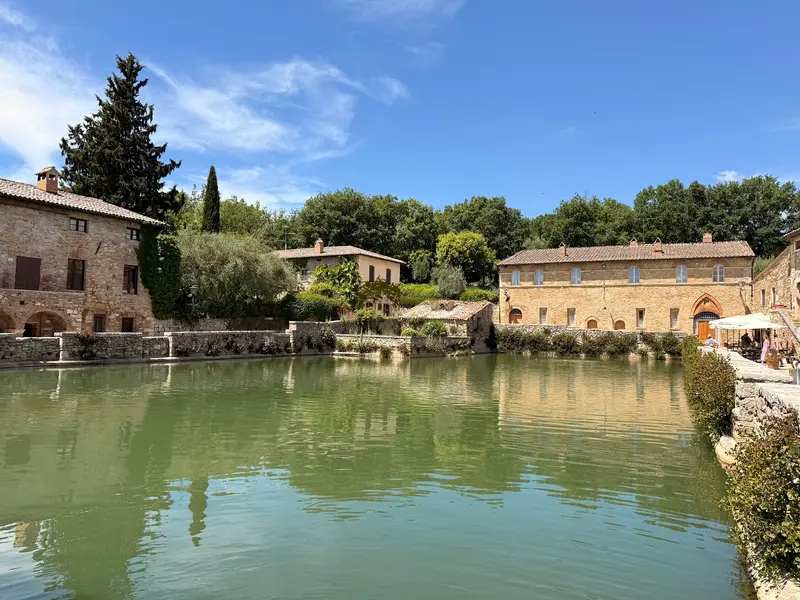
    At the heart of the small thermal town, instead of a square, lies a large 16th-century basin where hot spring water steams; the springs were utilized as early as Roman times. Below the town, the water flows down the steep slope in the Parco dei Mulini, past four medieval mills built into the rock.
    Open in Google Maps
    Rocca di Tentennano
    Attraction

    5Rocca di Tentennano

    The medieval tower on a spur above Rocca d'Orcia guarded Val d'Orcia, a key Via Francigena stronghold, never taken by force. From above, you see the village and valley. Today, it hosts temporary exhibits, part of Castiglione d'Orcia museum group.
    Open in Google Maps
    Cypress Road near Monticchiello
    Attraction

    6Cypress Road near Monticchiello

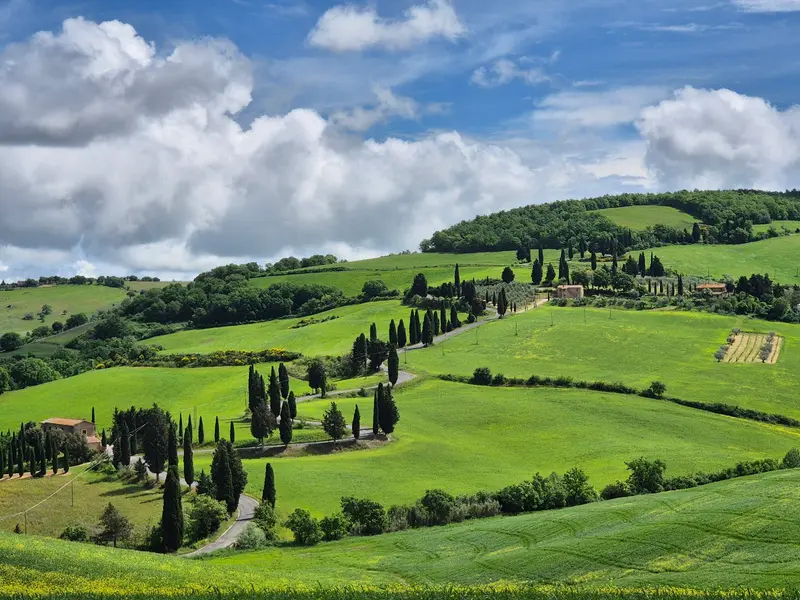
    Near Monticchiello, a cypress-lined road winds in tight curves through the hills, a frequently photographed motif. From a nearby viewpoint, you look north to Monticchiello and west to Pienza.
    Open in Google Maps

    Dining & Drinks

    1

    Bistrot Languorino

    Small bistro in Bagno Vignoni on Via dei Mulini, a few steps from the thermal pool. It offers Tuscan dishes, pasta, and platters with local cheese and cold cuts.
    Show on Google Maps
    2

    Sette di Vino, Pienza

    Simple osteria on a small square in Pienza's old town. The focus is on local Pecorino, fresh, aged, or served warm, along with Pici, soups, and regional wines. Prices are moderate, seating limited.
    Show on Google Maps
    3

    Osteria La Porta, Monticchiello

    Osteria at the gate of the small village Monticchiello between Pienza and Montepulciano. From the terrace, you gaze over the Val d'Orcia. The cuisine is Tuscan, featuring Pici, meat dishes, and wines from the region. Book ahead for a table on the terrace.
    Show on Google Maps

    Dining and Drinks

    In Val d'Orcia, you eat rustic and hearty, with cheese, pasta, and wine from the local area.

    Pici

    Thick, hand-rolled pasta typical of Siena Province.

    Brunello di Montalcino

    Red wine from Sangiovese grapes from the municipality of Montalcino, which must age for five years before sale, the Riserva six years.

    Culture and History

    Shaped LandscapeIn the 14th and 15th centuries, Siena extended its influence over the valley. Merchants from the city transformed the land into productive agricultural areas and introduced sharecropping, where farmers surrendered half of the harvest as rent. Painters of the Sienese School, such as Ambrogio Lorenzetti and Giovanni di Paolo, depicted this landscape.Via FrancigenaThe Via Francigena, the pilgrimage route to Rome, runs through the valley. The World Heritage site also includes abbeys, hospices, chapels, and bridges along this route. Today, it is hiked in stages, passing through San Quirico d'Orcia, among other places.PienzaFrom 1459, Pope Pius II had his birthplace Corsignano rebuilt by Bernardo Rossellino. Pienza has been a UNESCO World Heritage site since 1996.MontalcinoMontalcino is located west of Pienza on a hill; its fortress was built in 1361. This is where Brunello di Montalcino is produced.

    On the road in Val d'Orcia

    CarFrom Siena, the Via Cassia SR2 leads south; you'll drive about an hour to San Quirico d'Orcia. From San Quirico, the SP146 leads to Pienza. Many side roads are gravel paths (strade bianche), passable with a normal car, but dusty and poorly signposted. In Pienza, Montalcino, and Montepulciano, park outside the town walls.BusAutolinee Toscane buses connect Siena with San Quirico, Pienza, and Montepulciano, but only run a few times a day and do not go to the estates.On Foot and By BikeStages of the Via Francigena lead through the valley. The gravel roads are popular with cyclists.

    Accommodations in Val d'Orcia

    Find perfect stay in Val d'Orcia

    Booking.com* (Affiliate link)
    Search Hotels
    Agoda* (Affiliate link)
    Search Hotels
    Airbnb
    Vacation Rentals

    * Affiliate link: if you book through it, we earn a small commission. The price stays the same for you.

    Campgrounds in Val d'Orcia

    Find perfect campground in Val d'Orcia

    Search via Google Maps
    Campgrounds nearby (15km)
    Camping.info
    Find Campgrounds
    Park4Night
    RV Parks & Camping

    Nearby

    Montepulciano

    Montepulciano

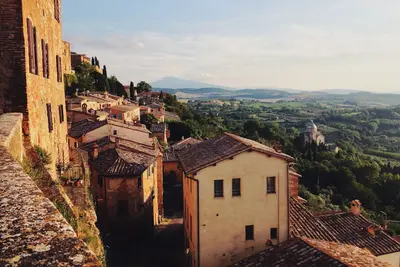
    Montepulciano sits in the south of Siena province on a roughly 605-meter limestone ridge. Its medieval and Renaissance old town culminates in Piazza Grande, home to the Town Hall and Cathedral. The city is famed for its Vino Nobile di Montepulciano red wine, with many cellars nestled directly beneath the old town's palaces.
    Siena

    Siena

    Siena grew on three hills, its main streets converging in a depression where the Piazza del Campo now lies. A UNESCO World Heritage site since 1995, its Old Town largely retains its 12th to 15th-century Gothic character. On the Campo stand the Palazzo Pubblico and Torre del Mangia; the Cathedral, with its marble floor, is nearby. Twice yearly, on July 2nd and August 16th, the Palio takes place on the Campo.
    Tuscany

    Tuscany

    Tuscany is located in central Italy between the Apennine Mountains and the coast of the Ligurian and Tyrrhenian Seas. The region has almost 3.7 million inhabitants, and its capital is Florence. It is home to eight UNESCO World Heritage Sites: the historic centres of Florence, Siena, San Gimignano and Pienza, the Piazza del Duomo in Pisa, the Val d'Orcia, the Medici Villas and Gardens, and Montecatini Terme as part of the Great Spa Towns of Europe.Besides the art cities, wine regions like Chianti Classico, Montalcino, and Montepulciano shape the area, and in the south, the Maremma with its coast, thermal springs, and tufa towns. For the rural areas, you usually need a car.
    Orvieto

    Orvieto

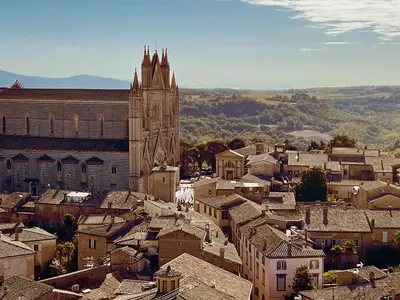
    Orvieto is located in southwestern Umbria on a volcanic tuff plateau overlooking the Paglia Valley. The city dates back to an Etruscan settlement. It is known for its Gothic cathedral with a mosaic facade and frescoes by Luca Signorelli, the Pozzo di San Patrizio, and the many caves carved into the tuff beneath the city. The train station is at the foot of the rock, approximately 125 rail kilometers from Rome.
    Chianti Classico

    Chianti Classico

    Chianti Classico is the wine region between Florence and Siena, approximately 70,000 hectares of hilly terrain, of which only about a tenth is planted with vines. It fully encompasses the municipalities of Greve, Castellina, Radda and Gaiole in Chianti, and partially also Barberino Tavarnelle, San Casciano Val di Pesa, Castelnuovo Berardenga and Poggibonsi. The distinguishing mark of the wine is the black rooster, the Gallo Nero. Many wineries offer tastings and guided tours, usually by prior appointment.

    Sources & method

    • Photos: Wikimedia Commons, Unsplash, Google Maps. Each photo carries its credit.
    • Place data such as addresses and ratings comes from Google Maps.
    • The content is based on web research from public, traceable sources. How the content is made · The role of AI