Fernweh: Home
    ExploreTravel GuidesPlan a tripMy tripLast visited
    de|en
    All Places & RegionsAll highlightsAbout FernwehFAQPrivacy PolicyImprint
    ExploreTravel GuidesPlan a tripMy tripLast visited
    • Neighborhoods & highlights
    • Eat & drink
    • Food culture
    • Culture
    • Getting around
    • Accommodation
    • Plan trip
    • Nearby
    Ishigaki-jima

    Japan

    Ishigaki-jima

    City

    Ishigaki-jima, the main gateway to the Yaeyama Islands, captivates with its subtropical nature and relaxed atmosphere. Here you'll find fine sandy beaches and clear waters, ideal for snorkeling and diving.

    by Felix Gillen

    1. Home
    2. Destinations
    3. Japan
    4. Okinawa
    5. Ishigaki-jima
    Ishigaki-jima, the main gateway to the Yaeyama Islands, captivates with its subtropical nature and relaxed atmosphere. Here you'll find fine sandy beaches and clear waters, ideal for snorkeling and diving. The famous Kabira Bay offers picturesque views and glass-bottom boat tours. For panoramic views of the coast, visit the Tamatorizaki Observation Deck. In Ishigaki City, the island's center, you'll also discover local markets and restaurants serving unique Ryukyu cuisine. A rental car for island exploration and a travel period between March and May or September and November are recommended to avoid typhoon season.

    Sights in Ishigaki-jima

    Discover the most important sights and attractions

    1Ishigakijima Astronomical Observatory

    The **Ishigakijima Observatory** belongs to the National Astronomical Observatory of Japan (NAOJ) and is located on a hill in the island's interior. It utilizes the dark, clear skies of the Yaeyama Islands, which are among the best places in the country for stargazing. Its centerpiece is the *Murikabushi Telescope*, with a 105-centimeter diameter mirror, one of the largest telescopes in Southern Japan.On certain evenings, public observation sessions are held, where you can view planets and stars through the telescope; spaces are limited, so reservations are advisable. *Practical tip:* Check the current dates in advance and plan your visit as close to a new moon as possible.

    Open in Google Maps

    2Ishigaki Traditional Craft Hall (Dento Kogeikan)

    The Ishigaki-shi Dentō Kōgeikan, the municipal hall for traditional crafts, is primarily dedicated to the weaving art of the Yaeyama Islands. It features textiles such as the Minsā-ori, a cotton fabric with patterns of four and five squares, originally given as a belt, and the fine Yaeyama-Jōfu.Our Tip: Inquire in advance about current opening hours and whether loom demonstrations are currently taking place. Private workshops on the island also offer courses in self-weaving.
    Open in Google Maps

    3Funakura Park

    The Funakura Park is a green space with play areas, primarily used by local families. It's not a standalone tourist destination, but it offers a break from beach life and a glimpse into the everyday lives of the islanders.Our Tip: Early mornings or late afternoons offer the most pleasant temperatures; you'll find shady benches under the trees.
    Open in Google Maps

    4Yaeyama Peace Memorial Museum

    Das Yaeyama Peace Memorial Museum auf Ishigaki-jima widmet sich der Erinnerung an die verheerenden Auswirkungen des Zweiten Weltkriegs auf die Yaeyama-Inseln. Es beleuchtet insbesondere das Leid der Zivilbevölkerung, die während der Schlacht um Okinawa und ihrer Nachwirkungen unter Zwangsevakuierungen und einer schweren Malaria-Epidemie zu leiden hatte. Du findest hier eine umfassende Sammlung von Dokumenten, Fotografien und persönlichen Berichten, die die menschlichen Kosten des Konflikts eindringlich darstellen und zur Reflexion über den Frieden anregen. Die Ausstellungen sind chronologisch aufgebaut und zeigen die Ereignisse von der Vorkriegszeit bis zum Wiederaufbau. Tipp: Plane deinen Besuch für die frühen Morgenstunden, um die ruhige Atmosphäre für eine ungestörte Auseinandersetzung mit den ernsten Themen zu nutzen. Das Museum liegt etwas außerhalb des Stadtzentrums, ist aber gut mit dem Bus oder Taxi erreichbar.
    Open in Google Maps

    Restaurants in Ishigaki-jima

    1

    Pizzeria il Trecorde

    Restaurant in 14ー2 Ishigaki.
    Show on Google Maps
    2

    Yaeyama Zenfu Kokkara

    Restaurant in 839-1 Ōkawa.
    Show on Google Maps
    3

    Ishigakijima Kids

    Restaurant in 203-1 Ōkawa.
    Show on Google Maps
    4

    Parlor Umbrella

    Restaurant in Japan.
    Show on Google Maps
    5

    Uminchu Izakaya Gen

    Restaurant in Japan.
    Show on Google Maps

    Food and Drink on Ishigaki

    The gastronomy on Ishigaki-jima offers an authentic introduction to Yaeyama Islands cuisine. You'll find fresh fish and seafood, hearty Ishigaki beef, and popular Yaeyama Soba, available for example at Yaeyama Zenfu Kokkara. Numerous Izakayas, such as 海人居酒屋 源, serve local specialties in a relaxed atmosphere.

    Ishigaki Beef

    The island's Wagyu is mainly enjoyed as Yakiniku, grilled tableside. The popular central restaurants are often fully booked in the evenings.

    Yaeyama-Soba

    The noodle soup of the Yaeyama Islands features thin, round wheat noodles and a slightly sweet broth. It is seasoned at the table with Pipatsu, an aromatic island pepper.

    Pineapple and Mango

    Tropical fruits flourish in the subtropical climate. Pineapples are in season spring and early summer, mangoes in midsummer; you'll find juice stands on the street and at the harbour.

    Awamori

    Several small distilleries operate on Ishigaki. The rice spirit is enjoyed neat, on the rocks, or with water.

    Ishigakijima's cultural heritage and history

    Ishigaki-jima boasts a rich history deeply connected to the former Ryukyu Kingdom. As the main island and administrative center of the Yaeyama Islands, Ishigaki was a hub for trade and seafaring, leading to its unique cultural blend. For centuries, the island was shaped by the rule of the royal court in Shuri, which in turn paid tribute to China and later to the Satsuma Domain; the heavy poll taxes weighed heavily on the islanders.The architecture on Ishigaki-jima is characteristic of the Ryukyu Islands, with traditional houses often featuring red tiled roofs and protective stone walls to withstand typhoons. Many roofs are adorned with Shisa statues, mythical lion-dogs said to ward off evil. Local traditions are deeply rooted; the Minsah-Ori, an elaborate weaving technique for belts with specific patterns, is a significant handicraft.Musical expressions such as the Sanshin, a three-stringed instrument, play a central role in local festivals and gatherings. The island also preserves a vibrant tradition of folk songs and dances, which often tell stories of daily life or nature. These cultural characteristics reflect the deep connection of the inhabitants to their island's history and Ryukyuan roots.

    Exploring Locally

    Transportation on Ishigaki-jima primarily relies on the bus system, as there is no metro or tram. Buses connect the airport with Ishigaki City and serve the main tourist attractions. It's best to check which payment methods, such as IC cards or bus passes, are accepted before your journey; you should definitely have cash with you. For exploring the entire island, its secluded beaches, and nature, a rental car is the most flexible option, as bus services run less frequently outside the center. Taxis are available and practical for shorter journeys, but can be costly for longer distances; ride-sharing services are not widely available on the island. Ishigaki City center is easily explorable on foot. Bicycles or e-scooters are an option for short distances within the town, but less suitable for extended island tours due to distances and heat. Plan your routes carefully, especially if you rely on public transport.

    Accommodations in Ishigaki-jima

    Find perfect stay in Ishigaki-jima

    Booking.com* (Affiliate link)
    Search Hotels
    Agoda* (Affiliate link)
    Search Hotels
    Airbnb
    Vacation Rentals

    * Affiliate link: if you book through it, we earn a small commission. The price stays the same for you.

    Plan your trip to Ishigaki-jima

    Save places, build a route and plan your city trip, all in one place.

    1. 1
      Sunrise over alpine peaks and a sea of clouds
      1234

      Round trip

      12 days · 4 stops

      Saved

      Pick a route

      Pick a ready-made one or save places and plan your own.

      Open bookmarks
    2. 2

      Trip to Ishigaki-jima

      Live
      • 1Ishigakijima Astronomical Observatory3 days
      • 2Ishigaki Traditional Craft Hall (Dento Kogeikan)4 days
      • 3Funakura Park5 days
      Budget

      Plan your trip

      The planner sorts stops, days and budget. Plan together in real time.

      Start trip planning
    3. 3
      9:41 No signal
      Ishigaki-jima
      Available offline

      Use it on the road

      Download the guide to your phone and use it on site, even offline.

    Nearby

    Miyako-jima

    Miyako-jima, an island in Okinawa Prefecture, captivates with its untouched coral reefs and characteristic turquoise waters. Here you'll find some of Japan's most famous beaches, including the expansive Yonaha Maehama Beach, renowned for its fine sand, and the picturesque Sunayama Beach. The island is best explored by rental car, with drives over bridges like the Irabu Ohashi Bridge leading to spectacular coastal panoramas. The rich underwater world offers excellent conditions for snorkeling and diving, while the local cuisine delights palates with fresh seafood and Miyako Soba. Miyako-jima also preserves elements of the unique Ryukyu culture. For a relaxed stay, travel in spring or autumn is recommended to avoid the highest temperatures and typhoon season.
    Jinguashi

    Jinguashi

    Jinguashi, a short bus ride from Jiufen, was, like its neighbor, a center of gold mining. The Gold Museum recounts the history of gold extraction and the miners' lives; during World War II, it also served as a prisoner-of-war camp. Buses 788, 825, 856, 1062, and 965 travel here.
    Jiufen

    Jiufen

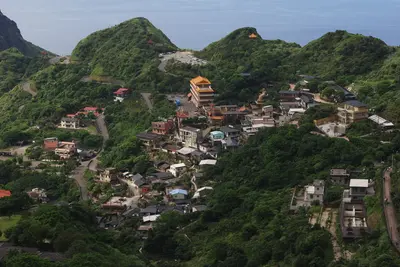
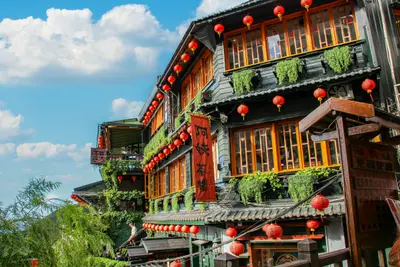
    Jiufen is a former gold mining town located on a steep hillside above the northeast coast, about an hour from Taipei. Its stair-lined alleyways, traditional teahouses, and red lanterns make it the most popular day trip from the capital, especially in the late afternoon when the lights come on and the view extends over the sea.Following gold discoveries in 1893, the village grew into a mining town, its golden age coinciding with the Japanese colonial era. The present-day old town, centered around Jishan Street, primarily reflects those years. After the decline of mining, the town fell into disrepair and only later experienced a resurgence as a popular tourist destination. In the neighboring town of Jinguashi, the Gold Museum, located on a former mine site, recounts the history of gold extraction.
    Taroko National Park

    Taroko National Park

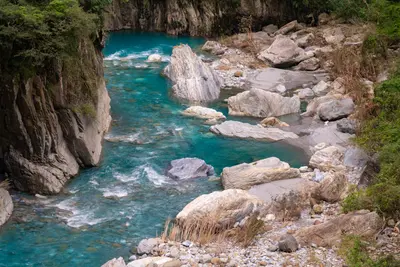
    Taroko Gorge, north of Hualien, is Taiwan's most famous natural landscape: The Liwu River has carved its way through marble cliffs, with walls rising steeply. The area is home to the Truku people.The earthquake on April 3, 2024, severely impacted the park. Well-known trails like the Shakadang Trail, Swallow Grotto, and Zhuilu Old Trail remain closed. Accessible areas include the Visitor Center at the park entrance with the Dekalun Trail, and parts of Tianxiang. Before any visit, check the latest advisories from the National Park Administration.
    Hualien

    Hualien

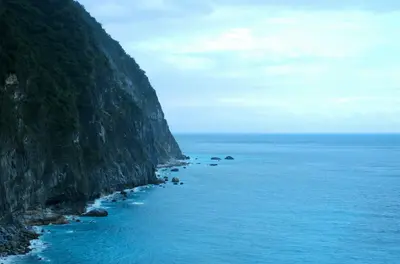
    Hualien on the east coast is the gateway to Taroko National Park and the Pacific coast, where the Central Mountain Range drops almost vertically into the sea. The city itself is relaxed and manageable; its appeal lies in its surroundings: pebble beaches, steep cliffs, and the famous Marble Gorge.The earthquake on April 3, 2024, severely impacted Taroko Gorge. Many well-known trails, such as the Shakadang Trail, Swallow Grotto, and Zhuilu Old Trail, remain closed even in 2026. Open areas include the visitor center at the park entrance with the Dekalun Trail and parts of the Tianxiang area. Before any excursion, check the latest information from the National Park Administration. Between the city and the gorge lies Qixingtan pebble beach.

    Sources & method

    • Place data such as addresses and ratings comes from Google Maps.
    • The content is based on web research from public, traceable sources. How the content is made · The role of AI