Japan
Kanazawa
CityCulture
Kanazawa lies on the coast of the Sea of Japan and is known for its well-preserved Edo-period districts. Right next to the castle park lies the Kenroku-en, one of the "Three Great Gardens of Japan".
by Felix Gillen
Kanazawa lies on the coast of the Sea of Japan and is known for its well-preserved Edo-period districts. Right next to the castle park lies the Kenroku-en, one of the "Three Great Gardens of Japan". Teahouse districts like Higashi Chaya and the Samurai district Nagamachi showcase traditional wooden houses and narrow alleys. At Ōmichō Market, you'll experience the local fish and agricultural culture, while the 21st Century Museum of Contemporary Art exhibits contemporary art. Kanazawa was spared from air raids during World War II, which is why many historic buildings and craft traditions like gold leaf production have been preserved. In autumn, when the leaves change color, Kenroku-en is particularly worth seeing. In some historic Chaya houses, you can participate in a tea ceremony.
Sights in Kanazawa
Discover the most important sights and attractions
Dairen-ji (Temple)
The Dairen-ji in the Nomachi district, south of the Sai-gawa river and at the edge of the Teramachi temple district, belongs to the Buddhist Jōdo school and was founded in the early 17th century. It is closely linked to the Maeda clan: Here, Gō-hime is revered, a daughter of Maeda Toshiie and wife of Prince Ukita Hideie, who was exiled after the Battle of Sekigahara. Her memorial tablet and personal Kannon figure are preserved in the temple, and a relief at the west gate commemorates her.The black-roofed main hall dates from the late Edo period, and a mighty zelkova tree stands on the grounds. Our tip: Combine your visit with the neighboring Shinmei-gū Shrine, the Nishi Chaya teahouse district, and a stroll through Teramachi.
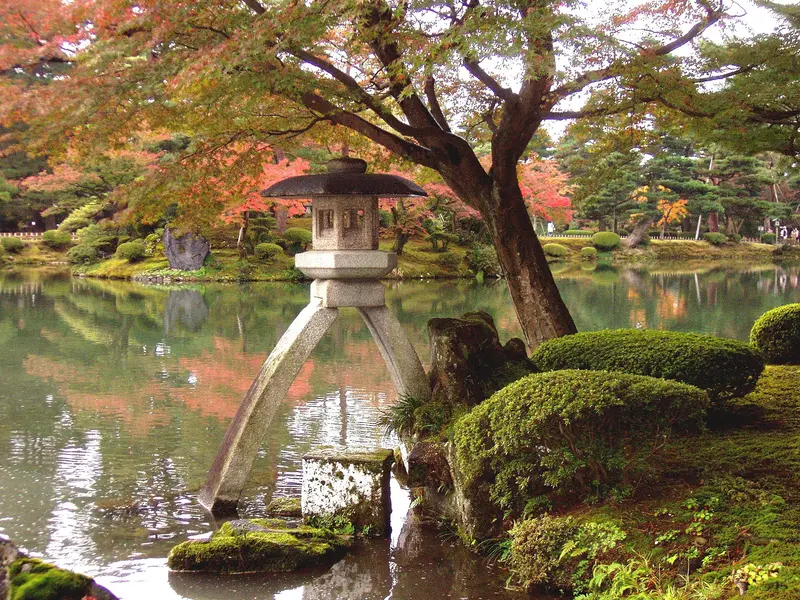
Kenroku-en
Für seine Schönheit zu allen Jahreszeiten bekannter Park und einer der "Drei berühmten Gärten Japans".
City walks in Kanazawa
Curated walking tours through the city's highlights, handpicked by experienced travel journalists.
Kanazawa's Charm: A 2-Hour Discovery Tour Through Gardens, History and Culinary Delights
On this two-hour walk, discover the soul of Kanazawa. From the timeless beauty of Kenrokuen Garden through the historic samurai district to the lively Omicho Market, experience the diversity of this cultural city. Immerse yourself in Japan's rich history and vibrant local life.
Stops (5)
Essen & Trinken
Food & Drink in Kanazawa
Kanazawa's culinary scene is famous for its fresh seafood and refined Kaga cuisine. At Omicho Market, you'll find first-class sushi and sashimi; restaurants like Kourin Sushi uphold the artistic regional culinary tradition.
Marine Delicacies from the Sea of Japan
Kanazawa is known for fresh fish, sweet shrimp (Amaebi), and in winter for snow crabs, whose smaller females are called Kōbako-gani here. At Ōmichō Market, you can get Kaisendon, a rice bowl with raw fish.
Jibuni
A traditional Kaga cuisine dish: duck or chicken, rolled in flour and stewed with vegetables and wheat gluten in a lightly thickened broth.
Gold Leaf
Kanazawa produces the vast majority of Japan's gold leaf. Especially in Higashi Chaya, you'll find soft-serve ice cream and sweets topped with edible gold leaf.
Wagashi and Tea
The city has a long tradition of the tea ceremony and is considered one of the centers for traditional Japanese sweets. In the teahouses of the Chaya districts, they are served with Matcha.
Cultural Heritage and Arts
Kanazawa, having remained untouched by the bombings of World War II, preserves to this day a rich cultural and historical identity deeply rooted in the Edo period. Under the rule of the powerful Maeda clan of the Kaga domain, the city developed into one of Japan's most significant cultural centers, comparable to Kyoto and Edo. This era shaped Kanazawa as a stronghold of arts and crafts.The city is renowned for its unique architecture, including the magnificent Kenroku-en Garden, considered one of Japan's most beautiful, as well as the preserved samurai residences in the Nagamachi district and historical teahouse districts like Higashi Chaya. Traditional crafts such as gold leaf production, for which Kanazawa produces almost all of Japan's supply, and the intricate Kaga Yuzen silk dyeing remain vibrant today. These unique features reflect the city's artistic heritage and uninterrupted cultural development.
Exploring on-site
Kanazawa is easy to explore, even without a subway, which the city doesn't have. Buses, especially the tourist Kanazawa Loop Bus and regular lines, form the backbone of public transport, connecting all major sights. For visitors, day passes are the most practical option; it's best to check locally whether your IC card is accepted on the buses.While e-scooters are still rare, renting a bicycle offers an alternative to discover the city at your own pace, especially along the canals and in the flatter neighborhoods. Taxis are readily available and a good choice for short distances or evening trips, although app-based ride services are less common. The compact city center with its gardens, markets, and samurai districts is also very pedestrian-friendly and invites extended strolls.
Accommodations in Kanazawa
Find perfect stay in Kanazawa
Booking.com* (Affiliate link)
Search Hotels
Agoda* (Affiliate link)
Search Hotels
Airbnb
Vacation Rentals
* Affiliate link: if you book through it, we earn a small commission. The price stays the same for you.
Plan your trip to Kanazawa
Save places, build a route and plan your city trip, all in one place.
- 1
- 2
Plan your trip
The planner sorts stops, days and budget. Plan together in real time.
- 3
Use it on the road
Download the guide to your phone and use it on site, even offline.