Fernweh: Home
    ExploreTravel GuidesPlan a tripMy tripLast visited
    de|en
    All Places & RegionsAll highlightsAbout FernwehFAQPrivacy PolicyImprint
    ExploreTravel GuidesPlan a tripMy tripLast visited
    Tioman Island

    Malaysia

    Tioman Island

    Island

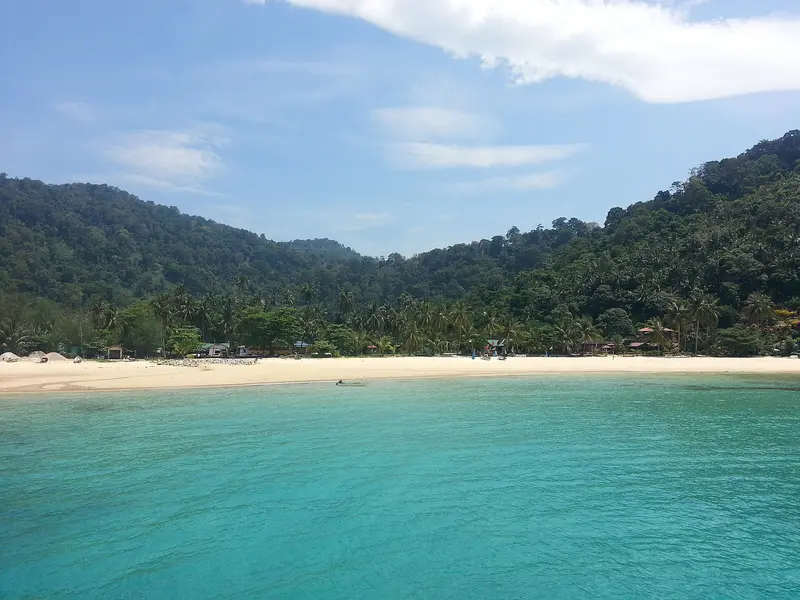
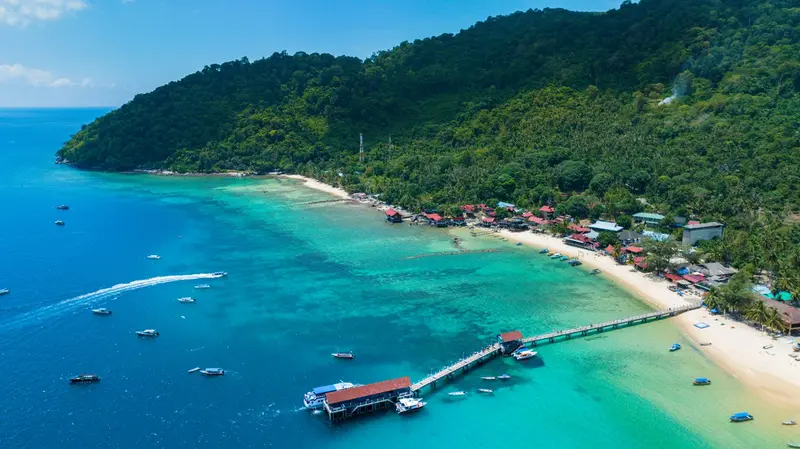
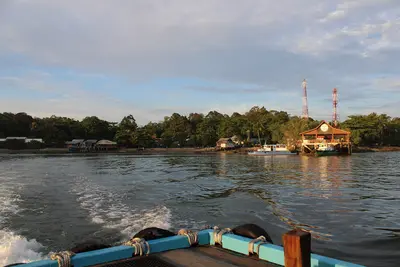
    Pulau Tioman lies off the coast of Pahang and is one of the most famous islands on Malaysia's east coast. Steep, densely forested mountains descend to bays with fishing villages and chalets.

    by Felix Gillen

    1. Home
    2. Destinations
    3. Malaysia
    4. East Coast
    5. Tioman Island
    Pulau Tioman lies off the coast of Pahang and is one of the most famous islands on Malaysia's east coast. Steep, densely forested mountains descend to bays with fishing villages and chalets. Coral reefs, part of a marine park, surround the island.Each bay has its own character: Tekek is the main town with a harbour, ABC and Salang are popular with backpackers and divers, Juara on the east coast is the quietest. The island is a duty-free zone, making some goods cheaper than on the mainland.

    Sehenswürdigkeiten

    Discover the most important sights and attractions

    Tioman Marine Park Centre

    1Tioman Marine Park Centre

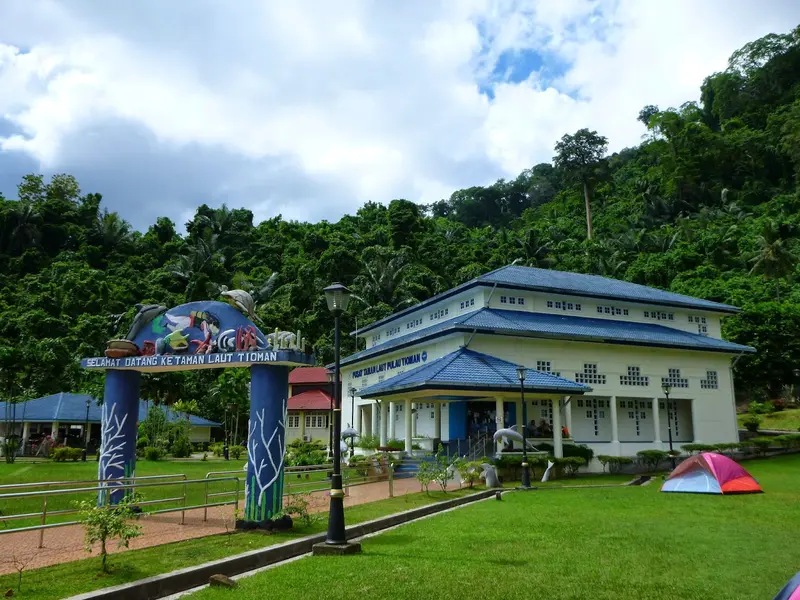
    The Marine Park's Information Centre is at Tekek. Small exhibitions explain Tioman's reefs and marine life. A conservation fee is collected for the Marine Park upon arrival.
    Open in Google Maps
    Juara
    Beach

    2Juara

    The wide bay in the middle of the east coast is the quietest part of the island. Along the beach are simple chalets and some larger accommodations. At the south end of the beach, the Juara Turtle Project operates a sea turtle hatchery that welcomes visitors.
    Open in Google Maps
    Salang
    Beach

    3Salang

    The village in the northwest is popular with divers and snorkelers. Corals lie directly off the beach; dive schools go from here to the reefs of the neighbouring islands. Evenings, you sit in beach bars with sunset views.
    Open in Google Maps
    Air Batang (ABC)
    Beach

    4Air Batang (ABC)

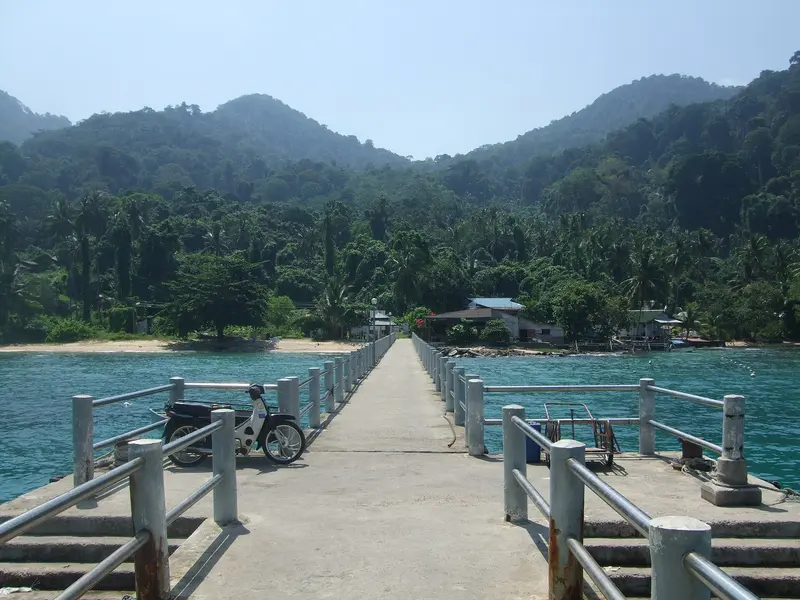
    The laid-back bay north of Tekek is popular with backpackers. A concrete footpath connects chalets, small eateries and the boat jetty. From here, you can walk to Monkey Bay and Salang via jungle trails.
    Open in Google Maps
    Monkey Bay
    Attraction

    5Monkey Bay

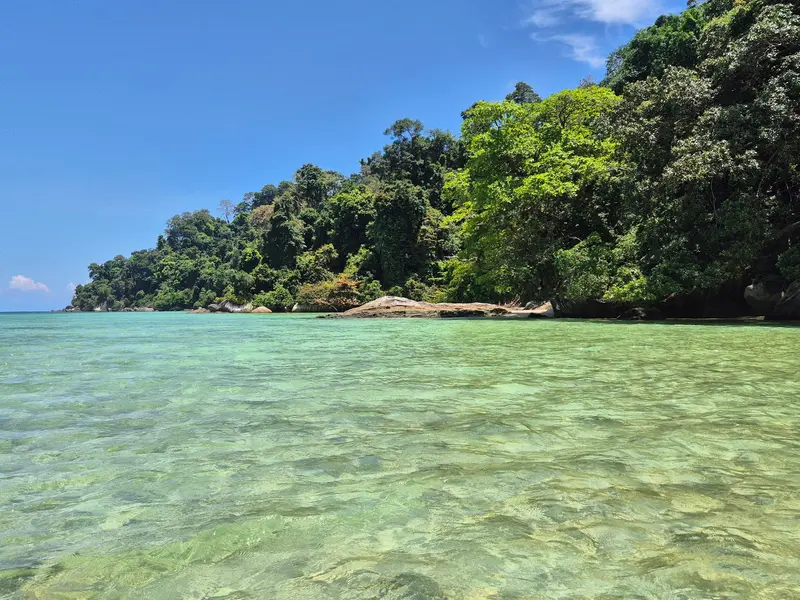
    You can only reach the small cove between ABC and Salang on foot via a jungle path or by boat. There are no accommodations, but a quiet beach and good spots for snorkeling. Bring water and provisions.
    Open in Google Maps

    Essen & Trinken

    Juara Beach Resort

    Restaurant in Lot 375.
    Show on Google Maps

    Life on the Island

    The villages on Tioman are Malay-Muslim and long lived from fishing, today primarily from tourism. While swimwear is normal in accommodations, you should cover up in the village.On Juara beach, the Juara Turtle Project operates a hatchery for sea turtles; visitors are welcome.

    Getting There and About

    FerriesFerries run from Mersing in Johor and Tanjung Gemok (further north in Pahang) to Tioman, stopping at west coast jetties: Genting, Paya, Tekek, Air Batang (ABC), Salang. Specify your destination when buying your ticket. Crossing takes 1.5 to 2 hours, depending on destination. Schedules depend on weather and tides, change daily; fewer boats run during monsoon. Marine Park fee (RM 30 for adults without Malaysian ID) is paid before departure.On the IslandThe small airport near Tekek currently has no regular scheduled flights. Water taxis connect bays on the island; a mountain track runs from Tekek to Juara.

    Accommodations in Tioman Island

    Find perfect stay in Tioman Island

    Booking.com* (Affiliate link)
    Search Hotels
    Agoda* (Affiliate link)
    Search Hotels
    Airbnb
    Vacation Rentals

    * Affiliate link: if you book through it, we earn a small commission. The price stays the same for you.
    Nearby

    Pulau Ubin

    Pulau Ubin

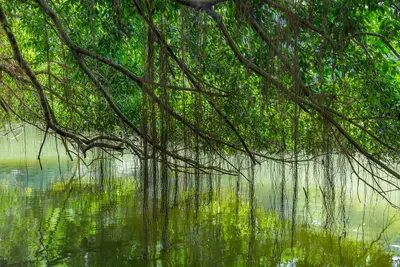
    Pulau Ubin is an island of just over ten square kilometers off Singapore's northeast coast, and one of the country's last kampongs, or traditional villages. You come to cycle a rented bike through forests and past flooded quarries to the mangroves and mudflats of Chek Jawa. Its Malay name means 'Granite Island': From the 19th century onwards, its quarries supplied granite for projects including the Johor Causeway and Horsburgh Lighthouse. In the 1970s, several thousand people still lived here; most moved away after the quarries closed.You can rent bikes in the village at the jetty. From there, paths lead to Chek Jawa in the east and to the mountain bike park at Ketam Quarry. The crossing by bumboat from Changi Point Ferry Terminal takes about ten minutes.
    Mandai

    Mandai

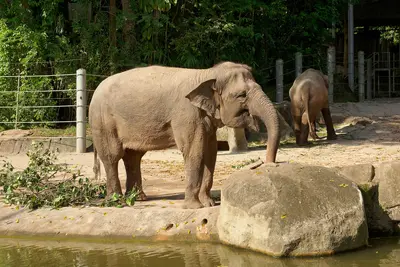
    Mandai in northern Singapore is the city-state's hub for zoological parks. On the edge of the Upper Seletar Reservoir, in the Central Catchment area, there are now five parks: the Singapore Zoo (opened 1973), Night Safari (1994), River Wonders, Bird Paradise (moved from Jurong in 2023), and the newest park, Rainforest Wild Adventure. They are operated by the Mandai Wildlife Group, known as Wildlife Reserves Singapore until 2021.With the opening of Rainforest Wild Adventure's eastern section in May 2026, the roughly ten-year transformation into Mandai Wildlife Reserve is complete. You can spend a full day here and switch to the Night Safari in the evening. The Mandai Wildlife West and East entrance areas, with restaurants, are accessible without a ticket. You can reach Mandai by MRT and shuttle buses.
    Katong and Joo Chiat

    Katong and Joo Chiat

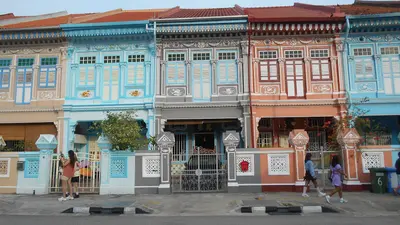
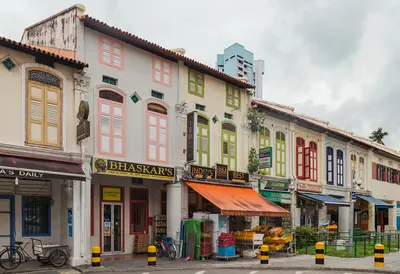
    Katong and Joo Chiat form Singapore's eastern Peranakan district, a residential area of vibrantly decorated shophouses, old coffee houses, and small family businesses. You come here to see the shophouses along Koon Seng Road and eat Peranakan cuisine like Katong Laksa and Nyonya rice dumplings right where it originated.Until the 19th century, this area housed coconut and cotton plantations. Entrepreneur Chew Joo Chiat, dubbed the 'King of Katong,' acquired vast tracts of land, gifted the city the street now bearing his name in 1917, and sold plots to developers. In the early 20th century, wealthy Peranakan families settled, constructing the district's characteristic houses. In 2011, Joo Chiat was designated Singapore's first 'Heritage Town'. Since 2024, you can easily reach the district via the Thomson-East Coast Line.
    Little India

    Little India

    Little India along Serangoon Road is Singapore's historic Indian quarter. You come for the Hindu temples, the biryani eateries, the Tekka Centre, and the 24-hour Mustafa Centre. It began as a cattle trading district: Indian immigrants, many of them cattle farmers, settled here, and in 1915, the Kandang Kerbau Market, named after the cattle trade, was established. The area was only named Little India in the 1980s at the initiative of the Singapore Tourism Board; in 1989, it was heritage listed. Many Singaporeans still call it Tekka today.Between the temples, eat at the Tekka Centre or Bismillah Biryani on Dunlop Street; afterwards, the Indian Heritage Centre is worth a visit. During Deepavali and Thaipusam, the district becomes a festival ground. The Little India MRT station is located on the North East Line and the Downtown Line.
    Singapore Botanic Gardens

    Singapore Botanic Gardens

    The Botanic Gardens in the Tanglin district is an approximately 82-hectare park featuring lakes, themed gardens, and the National Orchid Garden. Since July 4, 2015, it has been listed as the first and, to date, only tropical botanical garden on the UNESCO World Heritage list. It was established in 1859 by an Agricultural and Horticultural Society at its current location. Under Director Henry Nicholas Ridley, who took office in 1888, research into rubber cultivation was conducted here; his methods helped Malaya become the world's largest natural rubber producer.The Gardens are freely accessible daily from 5 AM to midnight. You can stroll from Swan Lake at Tanglin Gate across lawns and themed gardens to the National Orchid Garden, which is the only paid-admission area. Two MRT stations are located directly at the entrances: Botanic Gardens in the north and Napier in the south.

    Sources & method

    • Photos: Wikimedia Commons, Pexels, Google Maps. Each photo carries its credit.
    • Place data such as addresses and ratings comes from Google Maps.
    • The content is based on web research from public, traceable sources. How the content is made · The role of AI