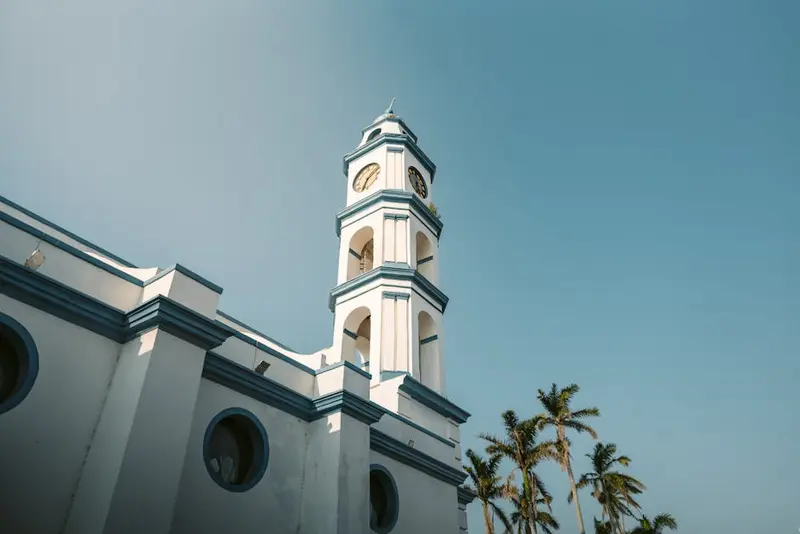
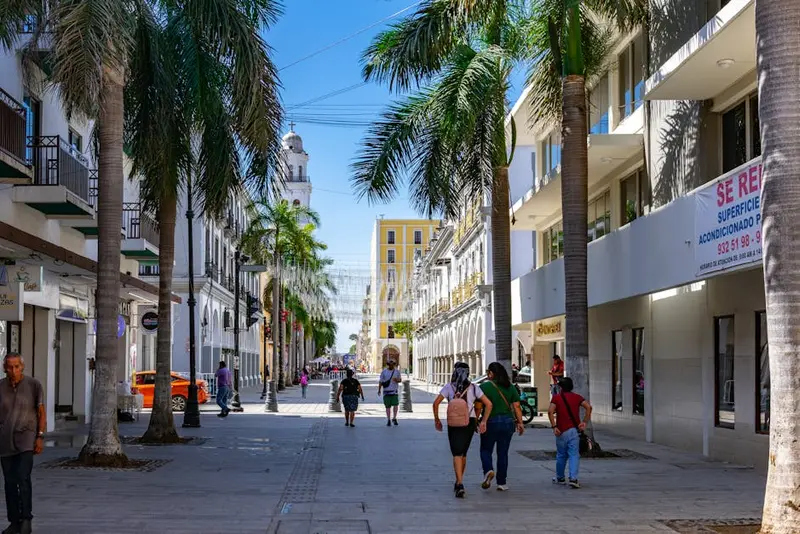
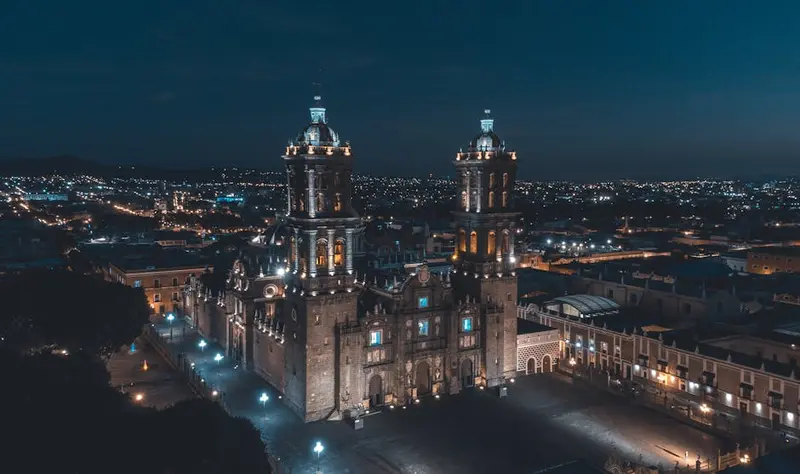
The heart of Veracruz beats in the Centro Histórico, where you can experience magnificent colonial buildings, lively squares, and the city's characteristic musical atmosphere.
Sehenswürdigkeiten
Discover the most important sights and attractions
1Quiosco Zamora
The Quiosco Zamora, nestled in the heart of the Centro Histórico, is a classic example of the ornate bandstands erected in many Mexican cities during the late 19th and early 20th centuries. Its delicate iron structure and often richly decorated domed roof reflect the European aesthetic of that era, which blended with local elements. Historically, it served as a central meeting point and stage for public concerts, where the community gathered. Today, it's a tranquil anchor point amidst the city's bustling activity, inviting you to observe local life. Our Tip: Visit the Quiosco in the early morning to peacefully admire its architectural details and capture the best photos without large crowds. It's also an ideal spot to observe the plaza's dynamic atmosphere.
The Museo Naval México, in the heart of the Centro Histórico, provides you with a comprehensive insight into Mexico's maritime history. Here you'll find an impressive collection of exhibits, ranging from pre-Columbian seafaring to the modern navy. The exhibitions include detailed ship models, historic navigation instruments, uniforms, and weapons. Particularly noteworthy are the interactive displays that illustrate the development of the Mexican Navy and its role in significant historical events. The museum also highlights the importance of seafaring for the country's trade, defense, and cultural exchange. A visit provides you with a deep understanding of Mexico's connection to the sea. Practical Tip: Plan your visit in the morning to avoid the largest crowds and view the exhibits in peace. Look out for the detailed dioramas that bring sea battles and port views to life.
The Zócalo de Veracruz is the vibrant heart of the city and a historically significant place in the Centro Histórico. As a central meeting point, it has reflected the social and cultural life of Veracruz, one of Mexico's most important port cities, for centuries. Here you'll find a lively atmosphere, surrounded by the characteristic arcades, known as the Portales, which provide shade and house numerous cafés and restaurants. In the evenings, the square comes alive with live music, particularly Danzón and Marimba, offering a unique cultural experience. Here you can soak in the city's authentic flair and observe the vibrant hustle and bustle. Our Tip: Visit the Zócalo in the late afternoon to experience its transformation from a bustling daytime hub to a lively evening meeting spot. For a quieter experience and to appreciate the architecture in peace, an early morning visit is recommended. Pay attention to the details of the surrounding buildings, such as the **Palacio Municipal**, which tells the city's story.
4Catedral de Nuestra Señora de la Asunción de Veracruz
The Catedral de Nuestra Señora de la Asunción de Veracruz, a central edifice in the heart of the Centro Histórico, is the city's main church and a significant testament to its colonial past. Its origins trace back to the early 17th century, yet the current neoclassical structure was largely erected in the late 18th and early 19th centuries. You can recognize it by its simple but elegant facade, the distinctive dome, and the bell tower, which rises above the bustling Zócalo.Inside, an atmosphere of tranquility awaits you, forming a stark contrast to the lively hustle and bustle outside. Pay attention to the main altar and the colorful stained-glass windows, which depict biblical scenes and capture the light in a special way. The cathedral serves not only as a religious center but also as a cultural anchor point, reflecting the deep-seated roots of Catholicism in Mexican society.Our Tip: It's best to visit the cathedral in the early morning. The light is then ideal for photos of the facade from the Zócalo, and you can enjoy the stillness inside before the largest crowds arrive. Please respect any services if you are present during them.
The Casa Salvador Díaz Mirón in the heart of the Centro Histórico is dedicated to the life and work of the important Mexican poet Salvador Díaz Mirón (1859-1928). Here you will find a carefully curated collection of manuscripts, personal items, and photographs, offering deep insights into his literary creation and his era. The building itself is a beautiful example of colonial architecture, authentically reflecting the atmosphere of the late 19th and early 20th centuries. Díaz Mirón was a key figure of Modernismo in Mexico, and his poetry significantly influenced subsequent generations of writers. A visit allows you to experience Mexico's intellectual history firsthand and better understand the development of Spanish-language literature. Our Tip: Visit the Casa on a weekday morning to enjoy the tranquility and view the exhibits undisturbed. Pay special attention to the original editions of his works, which often offer rare insights into the creation process of his most famous poems. It is a quiet, culturally rich place amidst the bustling center.
The Árbol Del Bikini, a charming and often overlooked detail in the heart of the Centro Histórico, owes its name to its unique growth form. You'll find this special tree on a quiet side street or a small square, where its branches form a distinctive silhouette lovingly associated with a bikini by locals. It's less a historical monument and more a living piece of city history, reflecting the creativity and humor of the local population. This tree offers a welcome break from the hustle and bustle of the major sights and invites you to pause for a moment. Its presence reminds us that even the small, often unnamed details shape the character of a place. Our Tip: Visit the Árbol Del Bikini in the morning, when the light is soft and the shadows best accentuate its special form. It's an ideal spot for an unusual souvenir photo, away from the usual tourist paths. Combine your visit with a stroll through the surrounding alleys to experience the authentic atmosphere of the neighborhood and perhaps discover one of the many small galleries or cafés.
These places are nearby — perfect for additional days or a day trip.
Veracruz
Welcome to Veracruz, a city bursting with life and history! Here on Mexico's Gulf Coast, you will discover a unique melting pot of Caribbean rhythms, Spanish colonial architecture, and the warm hospitality of the 'Jarochos'. Let yourself be enchanted by the musicality, the spirited dance, and the exquisite seafood cuisine of this port city, which ranks among Mexico's oldest and most vibrant.
Malecón and Harbor
Stroll along the Malecón, the lively waterfront promenade, with views of the bustling port activity and the vast Gulf of Mexico.
Los Sapos
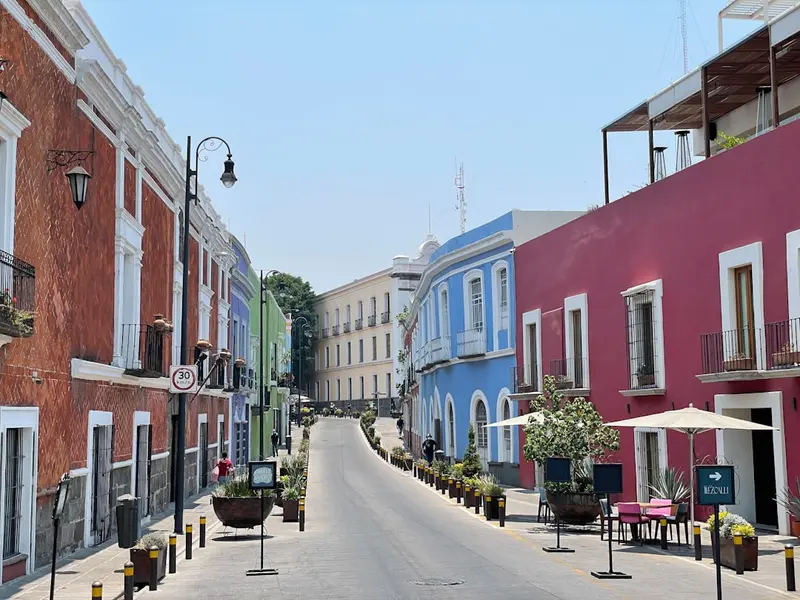
The Barrio de Los Sapos in Puebla is a lively district, known for its picturesque antique market and colorful colonial architecture. Here you'll find an impressive selection of antiques, handicrafts, traditional Talavera pottery, old books, and furniture. The district's name, 'The Frogs', possibly refers to former watering holes or the many small shops that have set up here. Especially on weekends, the Plazuela de los Sapos transforms into a bustling open-air market, inviting visitors to browse and discover. Ideally, plan your visit for a **Saturday or Sunday** to experience the full market hustle and find the best selection; haggling is common and expected here.
Barrio del Artista
Ein charmantes Viertel, bekannt für seine Ateliers, Kunstgalerien und die Möglichkeit, lokale Künstler bei der Arbeit zu beobachten, um einzigartige Werke zu entdecken.
Centro Histórico
The Centro Histórico is Mexico's historic heart, where you discover Aztec roots and colonial splendor. At the vast *Zócalo*, the **Metropolitan Cathedral** and the **National Palace** dominate, featuring Diego Rivera's famous murals. Right next door, the **Templo Mayor** reveals the ruins of Tenochtitlán; not far away stands the magnificent **Palace of Fine Arts** as an important cultural center. The lively streets offer numerous museums, shops, and authentic restaurants. Explore the district and the pedestrian zone **Calle Madero** ideally *early in the morning* or during the week to avoid the crowds.