Fernweh
    ExploreTravel GuidesMy Trips
    de|en
    About FernwehImprintFAQPrivacy Policy
    ExploreTravel GuidesMy Trips
    Los Sapos

    Los Sapos

    CityCulture
    1. Home
    2. Destinations
    3. Mexico
    4. Los Sapos
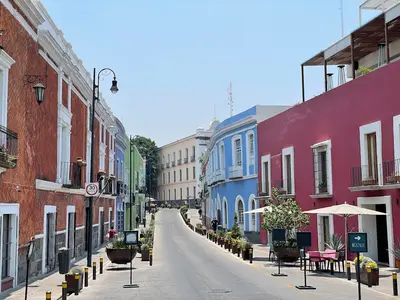
    The Barrio de Los Sapos in Puebla is a lively district, known for its picturesque antique market and colorful colonial architecture. Here you'll find an impressive selection of antiques, handicrafts, traditional Talavera pottery, old books, and furniture. The district's name, 'The Frogs', possibly refers to former watering holes or the many small shops that have set up here. Especially on weekends, the Plazuela de los Sapos transforms into a bustling open-air market, inviting visitors to browse and discover. Ideally, plan your visit for a **Saturday or Sunday** to experience the full market hustle and find the best selection; haggling is common and expected here.
    • Neighborhoods & highlights
    • Walking tours
    • Eat & drink
    • Culture
    • Getting around
    • Accommodation
    • Plan trip
    • Nearby
    • Neighborhoods & highlights
    • Walking tours
    • Eat & drink
    • Culture
    • Getting around
    • Accommodation
    • Plan trip
    • Nearby

    Overview

    The Barrio de Los Sapos in Puebla is a historic district known for its colorful colonial architecture and lively antique market. Especially well-known is the Plazuela de los Sapos, which transforms into a bustling open-air market on weekends. Here you'll find a diverse selection of antiques, handicrafts, traditional Talavera ceramics, old books, and unique furniture pieces. The name 'The Frogs' possibly derives from former water sources or the abundance of small shops that settled here. To experience the full market hustle and find the widest selection, ideally plan your visit on a Saturday or Sunday. Bargaining is common here and an integral part of the shopping experience.

    Places in Los Sapos

    Discover the most important sights and attractions

    Sights in Los Sapos

    Catedral de Puebla

    The Catedral de Puebla, a masterpiece of colonial architecture, dominates the city's main square. Its construction began in 1575 and was only completed in 1649, making it one of Mexico's oldest and most significant cathedrals. You'll notice its impressive Renaissance and Baroque facade, as well as the two tall towers, which are among the highest in the country. Inside, magnificent altars await you, including the Altar de los Reyes, ornate choir stalls, and numerous chapels with valuable paintings. The Cathedral is a central element of Puebla's UNESCO World Heritage site and testifies to the region's rich religious and artistic history. Our tip: Visit the Cathedral early in the morning to enjoy the tranquility and admire the architectural details without large crowds. For an optimal photo of the entire facade, it's best to position yourself on the Zócalo opposite the main entrance.
    Open in Google Maps

    Zócalo de Puebla

    The Zócalo de Puebla forms the historical and cultural heart of the city and is a central meeting point for locals and visitors alike. This spacious main square, surrounded by impressive colonial architecture, testifies to Puebla's rich past. Here you'll find the majestic Cathedral of Puebla, a masterpiece of Baroque and Neoclassicism, as well as the Palacio Municipal and the characteristic Portales, beneath which cafés and shops line up. The square is a vibrant meeting place where you can observe the bustling activity and soak in the local atmosphere. In the center of the Zócalo stands the Fuente de San Miguel, a Baroque fountain that is a popular photo motif. Practical Tip: Visit the Zócalo in the late afternoon to enjoy the more pleasant temperature and experience the awakening of the evening life. For a quieter experience and the best light for photos of the cathedral, a visit in the early morning is recommended.
    Open in Google Maps

    Museo Amparo

    The Museo Amparo in Puebla is one of Mexico's most significant art institutions, housing an impressive collection of pre-Columbian, colonial, and contemporary Mexican art. It is located in two meticulously restored 17th and 18th-century colonial buildings that once served as a hospital and a women's college. This historic architecture provides a fitting setting for the exhibits, offering a deep insight into Mexico's rich cultural history.The permanent exhibitions guide you chronologically through various eras, from the Olmec and Maya up to works from the 20th century. Especially noteworthy is the pre-Columbian art collection, considered one of the best in the country. In addition to the permanent exhibits, the museum regularly presents changing exhibitions by international and national artists.Practical Tip: Ideally, visit the museum on a weekday morning to fully enjoy the tranquility of the spaces and avoid the crowds. From the museum's rooftop terrace, you can also enjoy an excellent view over the rooftops of Puebla and the Los Sapos district – an ideal spot for a short break and photos.
    Open in Google Maps

    Biblioteca Palafoxiana

    The Biblioteca Palafoxiana in Puebla is a historical gem, considered the first public library in the Americas. It was founded in 1646 by Bishop Juan de Palafox y Mendoza, who made his personal collection of over 5,000 books accessible to the public. Today, the library houses over 45,000 volumes, including valuable incunabula and manuscripts dating back to the 15th century. You'll find it in the heart of the Casa de la Cultura, just a few steps from the Zócalo.Upon entering, you'll discover an impressive Baroque hall with three levels of intricately carved cedar wood shelves lining the walls. A magnificent altarpiece in the center emphasizes its spiritual significance. The atmosphere is imbued with reverence and history as you admire the centuries-old works behind glass. UNESCO inscribed the Biblioteca Palafoxiana into its Memory of the World Register in 2005, underscoring its global importance as a treasury of knowledge.Our Tip: Visit the library ideally shortly after opening in the morning to enjoy the tranquility and unique light, and to avoid larger crowds. Be sure to take photos without flash; the central aisle offers excellent perspectives.
    Open in Google Maps

    Museo Casa de Alfeñique

    The Museo Casa de Alfeñique in Puebla is an outstanding example of civil Baroque architecture and an architectural landmark of the city. It owes its name to the filigree stucco façade, reminiscent of the traditional sugar paste Alfeñique. Built in the 18th century, it was originally a magnificent residence and reflects the wealth and craftsmanship of the colonial era. Today, the museum houses an impressive collection that offers a deep insight into Puebla's history and culture. Here you can admire furniture, artworks, ceramics, and everyday objects from various epochs, illustrating the life of the elites of that time. It is an important testament to regional development. Our Tip: It's best to visit the museum on a weekday morning to explore the exhibits at your leisure and enjoy the unique architecture without large crowds. For the best photo of the detailed façade, position yourself on the opposite side of the street.
    Open in Google Maps

    City walks in Los Sapos

    Curated walking tours through the city's highlights — handpicked by experienced travel journalists.

    Pueblas Charme: Antike Schätze und Künstlerflair in Los Sapos

    Entdecken Sie den lebhaften Geist von Puebla auf diesem zweistündigen Spaziergang durch das historische Zentrum. Tauchen Sie ein in das malerische Viertel Los Sapos, berühmt für seine Antiquitäten und farbenfrohen Fassaden. Von Kunsthandwerk bis zu historischen Kirchen – erleben Sie die Seele dieser faszinierenden Stadt.

    ~2 Std.
    In Google Maps öffnen
    Stopps (8)

    Essen & Trinken

    Culture, Art, and History of Los Sapos

    The culture of Los Sapos is deeply rooted in its history, which dates back to pre-Columbian times. Originally a settlement of indigenous peoples known for their highly developed ceramic art, the site was refounded in the 16th century by Spanish Conquistadors, who were drawn by local mineral deposits.This dual origin continues to shape the cityscape and local customs to this day. The architecture of the historic center is characterized by well-preserved colonial buildings, including baroque church facades and arcaded squares, testifying to the Spanish colonial era. Narrow cobblestone streets lead through neighborhoods where traditional craftsmanship still plays a central role.Local traditions include colorful festivals such as the annual "Festival del Sapo," a tribute to the namesake animal, which plays a symbolic role in many local legends and artworks. Artisans are renowned for their detailed pottery and textiles, which often combine pre-Columbian patterns with colonial influences, thus reflecting the rich cultural synthesis of Los Sapos.

    Getting Around Here

    Getting around Los Sapos is surprisingly straightforward, thanks to a well-developed public transport system. Its core is the efficient metro system, connecting the most important city districts; a rechargeable “Tarjeta Sapo” is essential for this and also usable on buses. This is complemented by a dense network of city buses that serve even more remote neighborhoods, where cash payment to the driver can be common. A special tip: purchase a multi-journey ticket for longer stays.For shorter distances and in the historic old town, rental bikes and e-scooters, which can be rented via local apps like “SapoRide,” are a popular and eco-friendly option. Taxis and ride-sharing services such as Uber or DiDi are available at all times, offering convenient door-to-door service, especially a safe choice at night. While Los Sapos’ charming center can be excellently explored on foot, in the more expansive areas, it's advisable to use public transport or ride services and plan journeys outside of peak hours to avoid traffic jams.

    Accommodations in Los Sapos

    Accommodations in Los Sapos

    Find perfect stay in Los Sapos

    Booking.com
    Search Hotels
    Agoda
    Search Hotels
    Airbnb
    Vacation Rentals
    Hotels.com
    Hotels Worldwide
    Hostelworld
    Hostels

    Plan your trip to Los Sapos

    Save places, build a route and plan your city trip — all in one place.

    Save places

    Bookmark sights, restaurants and neighborhoods you're interested in.

    Build your route

    Turn your bookmarks into a route — define order, days and budget.

    Refine with AI

    Let Mein Fernweh suggest experiences and put together a tailored daily plan.

    Start trip planningOpen bookmarks

    Locations nearby

    These places are nearby — perfect for additional days or a day trip.

    Centro Histórico

    Centro Histórico

    The Centro Histórico is Mexico's historic heart, where you discover Aztec roots and colonial splendor. At the vast *Zócalo*, the **Metropolitan Cathedral** and the **National Palace** dominate, featuring Diego Rivera's famous murals. Right next door, the **Templo Mayor** reveals the ruins of Tenochtitlán; not far away stands the magnificent **Palace of Fine Arts** as an important cultural center. The lively streets offer numerous museums, shops, and authentic restaurants. Explore the district and the pedestrian zone **Calle Madero** ideally *early in the morning* or during the week to avoid the crowds.
    Barrio del Artista

    Barrio del Artista

    Ein charmantes Viertel, bekannt für seine Ateliers, Kunstgalerien und die Möglichkeit, lokale Künstler bei der Arbeit zu beobachten, um einzigartige Werke zu entdecken.
    Puebla

    Puebla

    Puebla, a UNESCO World Heritage city, captivates with its well-preserved colonial architecture and vibrant urban landscape. You'll find a wealth of churches here, including the impressive Cathedral on the Zócalo and the ornate Capilla del Rosario within the Santo Domingo Church. The city is renowned for its unique Talavera pottery, whose intricate products you can discover in numerous galleries and workshops in the Barrio del Artista. Culinary-wise, Puebla offers specialties such as Mole Poblana and Chiles en Nogada; try these in traditional restaurants or on the Calle de los Dulces. A stroll through the historic center reveals colorful facades and charming courtyards that reflect its rich history. The dry season from October to May is ideal for explorations, as the climate is particularly pleasant then. Also visit the Loreto y Guadalupe Fort, the historical site of the Battle of Cinco de Mayo.
    Cholula

    Cholula

    Cholula, one of Mexico's oldest continuously inhabited cities, captivates with its rich history and unique architecture. The city is dominated by the Great Pyramid of Cholula, the largest structure of its kind worldwide by volume, topped by the colonial church Nuestra Señora de los Remedios. You can explore the archaeological zone and wander through tunnels inside the pyramid to understand its layers. The cityscape is also shaped by numerous churches and chapels reflecting its colonial past. The lively Zócalo and traditional market offer insights into local life and regional gastronomy. For a comprehensive experience, a morning visit is recommended to avoid crowds and enjoy views of the volcanoes Popocatépetl and Iztaccíhuatl in clear weather.
    Coyoacán

    Coyoacán

    Ein charmantes Kolonialviertel im Süden der Stadt, das mit seinen Kopfsteinpflasterstraßen, Plazas und dem berühmten Frida Kahlo Museum eine einzigartige, künstlerische Ausstrahlung besitzt.