Fernweh: Home
    ExploreTravel GuidesPlan a tripMy tripLast visited
    de|en
    All Places & RegionsAll highlightsAbout FernwehFAQPrivacy PolicyImprint
    ExploreTravel GuidesPlan a tripMy tripLast visited
    Waitomo
    Bgabel / Wikimedia Commons / CC BY-SA 3.0

    New Zealand

    Waitomo

    District

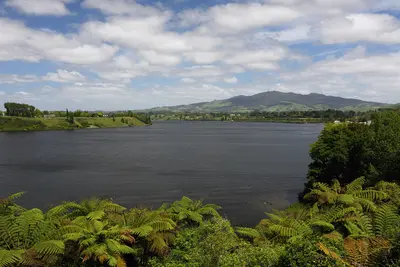
    Waitomo is a small village in the hilly karst country of the King Country, and beneath the pastures lies a network of limestone caves.

    by Felix Gillen

    1. Home
    2. Destinations
    3. New Zealand
    4. Central North Island
    5. Waitomo
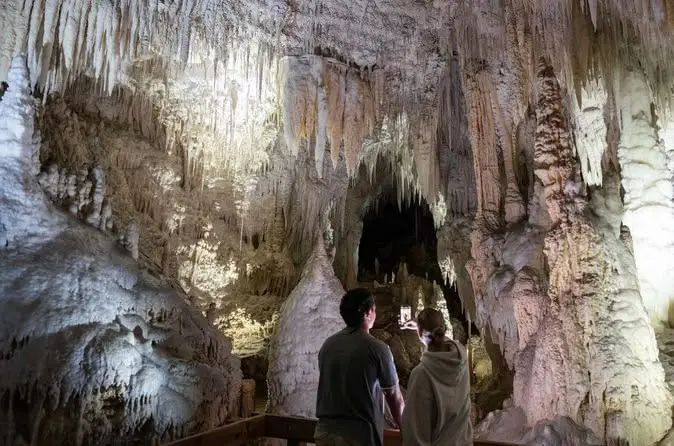
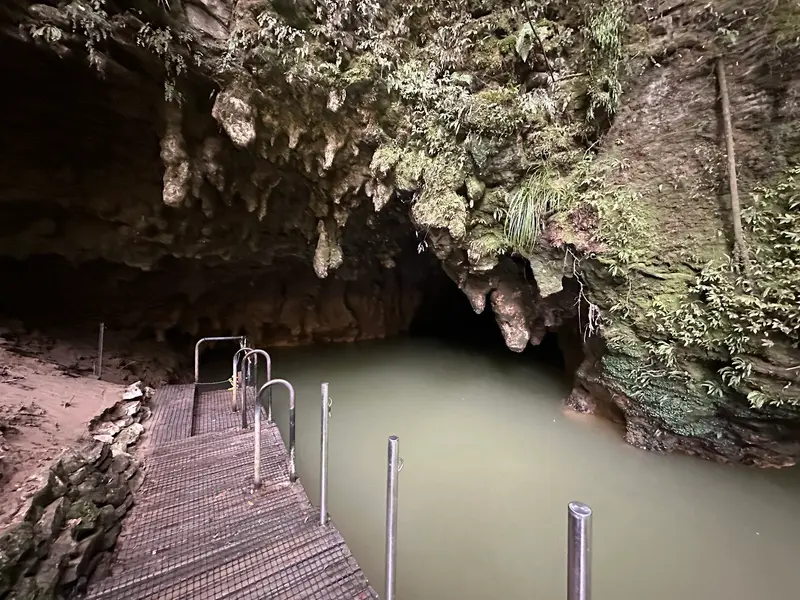
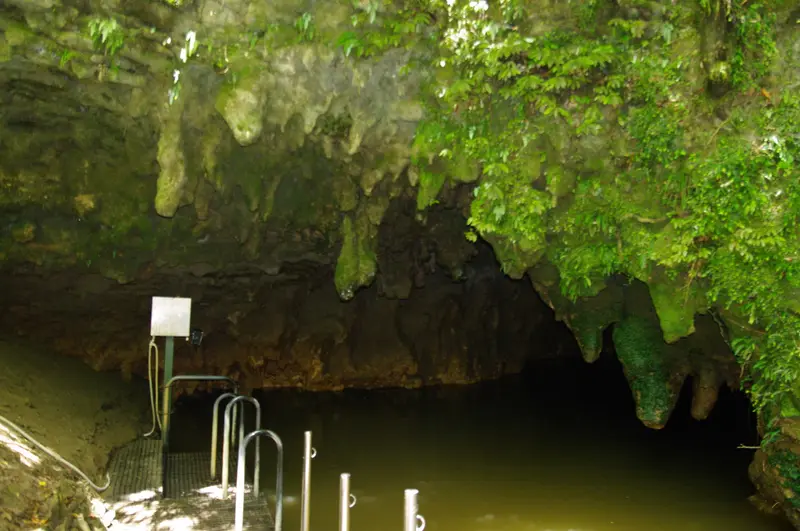
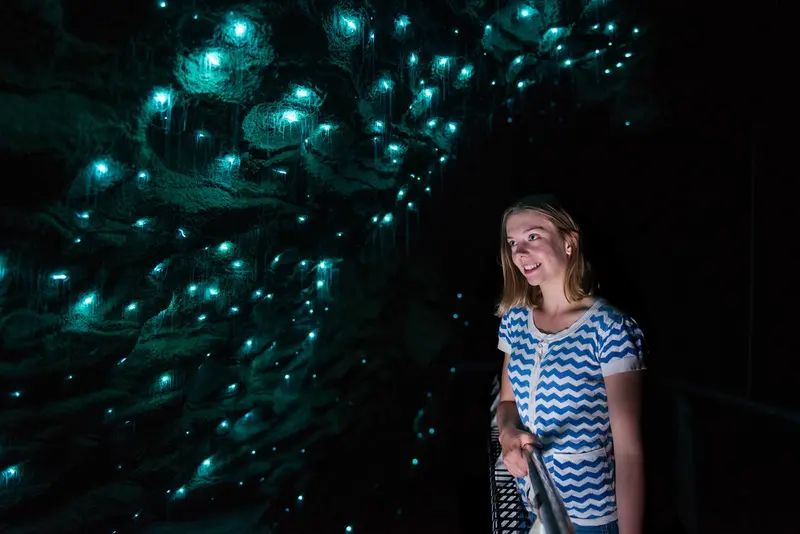
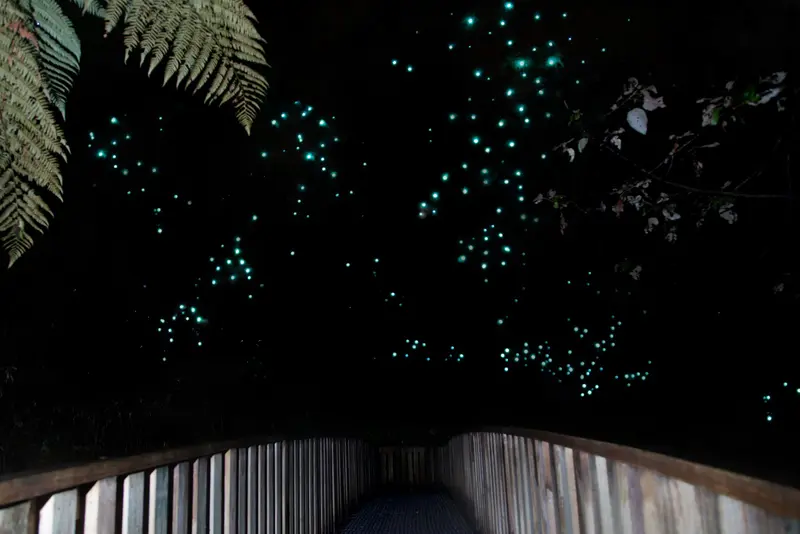
    Waitomo is a small village in the hilly karst country of the King Country, and beneath the pastures lies a network of limestone caves. The name combines wai (water) and tomo (hole, shaft) and describes a stream that disappears into the ground. In the Waitomo Glowworm Cave you glide by boat beneath thousands of glowworm lights, you reach the Ruakuri Cave through a spiral entrance, and the dry Aranui Cave shows stalactites and stalagmites. During the day, the Ruakuri Walk is worthwhile, as is a detour along Te Anga Road to the Mangapohue Natural Bridge and the 35-metre-high Marokopa Falls.

    Sehenswürdigkeiten

    Discover the most important sights and attractions

    Ruakuri Cave

    1Ruakuri Cave

    Guided cave tour lasting approximately one and a half hours, leading into the mountain via a spiral entrance. This was created during the 2005 reopening to ensure the original entrance, a burial site (wāhi tapu), remains undisturbed. The name is derived from rua (cave, den) and kurī (dog).
    Open in Google Maps
    Ruakuri Walk

    2Ruakuri Walk

    Approx. 45-minute DOC loop track through a forested gorge along Waitomo Stream, with limestone arches and a viewing platform at the Ruakuri Natural Bridge. At night, you'll see glowworms along the path; bring a flashlight. Many steps, partly slippery. Start at Ruakuri Car Park on Tumutumu Road, approx. 4 kilometers from Waitomo Village.
    Open in Google Maps
    Aranui Cave

    3Aranui Cave

    Dry stalactite cave with no glow-worms, but featuring light brown, pink, and white stalactites and stalagmites. The guided tour lasts about an hour.
    Open in Google Maps
    Waitomo Glowworm Caves
    Historic Landmark

    4Waitomo Glowworm Caves

    The area's most famous cave: The guided tour lasts approximately 45 minutes and concludes with a short boat ride under the glowworm ceiling. Māori chief Tāne Tinorau and surveyor Fred Mace explored the cave in 1887 on a raft; from 1889, Tāne Tinorau and his wife Huti began guiding visitors. In 1989, the land and cave were returned to the descendants of the original owners.
    Open in Google Maps
    Mangapohue Natural Bridge
    Attraction

    5Mangapohue Natural Bridge

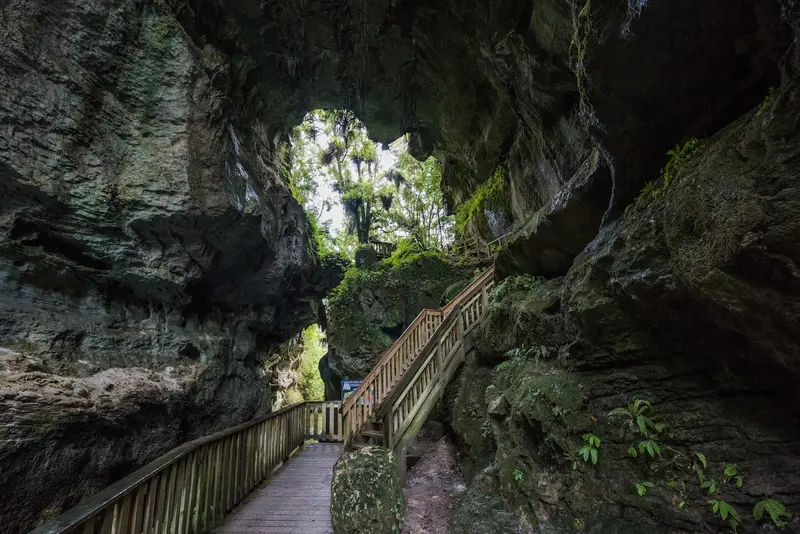
    A 17-meter high limestone arch on Te Anga Road, approximately 25 kilometers west of Waitomo Village. According to DOC, the walk through the gorge and under the arch takes about 20 minutes.
    Open in Google Maps

    Essen & Trinken

    1

    HUHU Cafe

    Cafe on Waitomo Caves Road in town, ideal for breakfast or lunch before or after a cave tour.
    Show on Google Maps
    2

    Tomo Bar & Eatery

    Bar and restaurant in the heart of Waitomo Village, with pub food.
    Show on Google Maps
    3

    Twelve Table Bar & Eatery

    Bar and restaurant in the General Store on Waitomo Village Road, right in the village.
    Show on Google Maps
    4

    Stoked Eatery

    Restaurant on Rora Street in neighbouring Te Kūiti, south of Waitomo on State Highway 3.
    Show on Google Maps

    History and Māori Heritage

    Legend has it that a young Māori hunter discovered Ruakuri Cave 400 to 500 years ago, when wild dogs attacked him at the entrance. Hence the name: rua (cave, den) and kurī (dog). The original entrance is a burial site (wāhi tapu), so tours today use a specially constructed spiral entrance.In 1887, Chief Tāne Tinorau and English surveyor Fred Mace explored the Glowworm Cave by raft. From 1889, Tāne Tinorau and his wife Huti guided visitors through it for a small fee. In 1906, the state took over management, and in 1989, the land and cave reverted to the descendants of the original owners.

    Getting there and around

    Waitomo is off the main roads; travelling by car is most convenient. The caves and Ruakuri Walk are near the village; for Mangapohue Natural Bridge (25 km) and Marokopa Falls (31 km), you drive west on the winding Te Anga Road.Without a car: InterCity runs from Rotorua to Waitomo Caves; the journey takes around two and a half hours. The Northern Explorer train between Auckland and Wellington stops in Ōtorohanga, the nearest station. Book cave tours in advance, especially during holidays.

    Accommodations in Waitomo

    Find perfect stay in Waitomo

    Booking.com* (Affiliate link)
    Search Hotels
    Agoda* (Affiliate link)
    Search Hotels
    Airbnb
    Vacation Rentals

    * Affiliate link: if you book through it, we earn a small commission. The price stays the same for you.

    Nearby

    Raglan

    Raglan

    Raglan is on Whāingaroa Harbour, on the west coast of the North Island, about 48 km west of Hamilton. The town, with a population of just under 4,000, is especially popular with surfers: At Manu Bay, a long left-hand wave breaks, which was featured in the 1966 surf film The Endless Summer, and on the black sand beach Ngarunui, many learn their first waves.Around Bow Street, you'll find cafés, galleries, and small shops, and at the harbour, the old wharf dating back to 1921. In the hinterland, the 55 m high Wairēinga waterfall and the forested Karioi await.
    Waikato

    Waikato

    The Waikato, south of Auckland in the north of the North Island, is primarily green pasture and dairy land, traversed by the Waikato River, New Zealand's longest river. Hamilton is the main city, with the Hamilton Gardens. To the west, Raglan attracts with surf beaches on the Tasman Sea; to the east are Cambridge and Matamata, home to the Hobbiton Movie Set from the Lord of the Rings films. In the south of the region, you'll find the Waitomo Glowworm Caves.For hiking, the Hakarimata Range near Ngāruawāhia, the fenced mountain forest of Maungatautari, and the Karangahake Gorge, with its gold mining traces, are ideal. Most of these destinations are reachable from Hamilton as a day trip.
    Cambridge

    Cambridge

    Cambridge is located on the Waikato River, approximately 24 km southeast of Hamilton, and with around 22,700 inhabitants, it is the largest town in the Waipā District. The town calls itself the Town of Trees & Champions: Old avenue trees line the streets, and the surrounding area is home to numerous thoroughbred stud farms, which have earned Cambridge its reputation as New Zealand's horse capital.In the compact center around Victoria Street, you'll find cafés, boutiques, and buildings from the late 19th and early 20th centuries. Outside, the Te Awa River Ride along the river awaits, as well as the rowing area on Lake Karāpiro and the Maungatautari wildlife sanctuary.
    Hamilton

    Hamilton

    Hamilton, known in Māori as Kirikiriroa, is New Zealand's fourth-largest city, situated on both sides of the Waikato River – at 425 km, the country's longest river. Most visitors are drawn to the Hamilton Gardens and their thematic displays. Other worthwhile attractions include the Waikato Museum by the river, the riverside paths, and Hamilton Lake. The city is ideally placed as a base for excursions to Raglan, Cambridge, Hobbiton, or the Waitomo Caves.
    Matamata and Hobbiton

    Matamata and Hobbiton

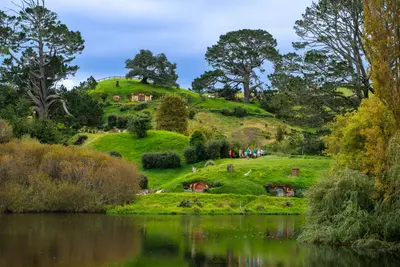
    Matamata is a rural town in the east of Waikato, surrounded by pastureland and horse studs at the foot of the Kaimai Range. It is known for the Hobbiton Movie Set on a sheep and beef farm southwest of the town, where The Shire from Peter Jackson's films is preserved and can only be visited on a guided tour. In the town itself, the Information Centre, styled like a gatehouse, and the Firth Tower Museum recall the film and settler history.

    Sources & method

    • Photos: Wikimedia Commons, Google Maps. Each photo carries its credit.
    • Place data such as addresses and ratings comes from Google Maps.
    • The content is based on web research from public, traceable sources. How the content is made · The role of AI