Fernweh: Home
    ExploreTravel GuidesPlan a tripMy tripLast visited
    de|en
    All Places & RegionsAll highlightsAbout FernwehFAQPrivacy PolicyImprint
    ExploreTravel GuidesPlan a tripMy tripLast visited
    • Overview
    • Places in the region
    • Culture
    • Getting around
    • Round trips
    • Nearby
    Central North Island

    New Zealand

    Central North Island

    Region

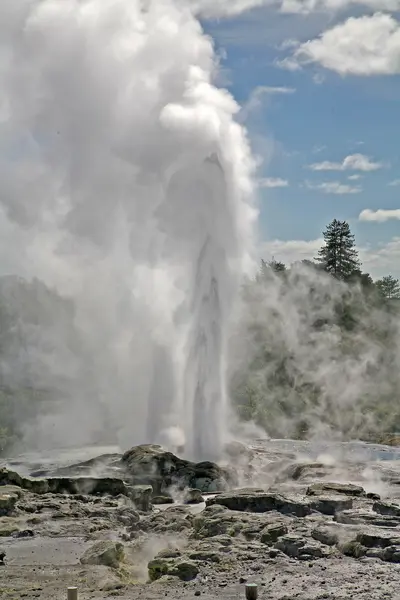
    The Central North Island is New Zealand's volcanic country. Between Rotorua, Lake Taupō, and Tongariro National Park, the ground steams, mud pools bubble, and geysers erupt into the air.

    by Felix Gillen

    1. Home
    2. Destinations
    3. New Zealand
    4. Central North Island
    The Central North Island is New Zealand's volcanic country. Between Rotorua, Lake Taupō, and Tongariro National Park, the ground steams, mud pools bubble, and geysers erupt into the air. Also in the west are the Waitomo Glowworm Caves.Here you'll find hiking trails over volcanic craters, thermal baths, lakes for fishing and paddling, as well as places where Māori culture, especially that of the Te Arawa in Rotorua, is visible in everyday life.
    The Central North Island lies on the Taupō Volcanic Zone, and you'll notice it almost everywhere. In Rotorua, you can visit geothermal parks with geysers and mud pools and experience Māori culture at cultural evenings with Hāngī. Further south lies Lake Taupō, New Zealand's largest lake, with the Huka Falls just outside the city. The Tongariro National Park, with its three volcanoes, is a UNESCO World Heritage site and the destination for the Tongariro Alpine Crossing. To the west, boat trips lead through the glowworm caves of Waitomo. Highland hikes are best planned between November and April; cultural evenings and cave tours should be booked in advance.Geothermal and volcanic areas carry their own risks: Stay on marked paths and inform yourself before your trip in the travel and safety advisories of the Federal Foreign Office (linked on the country page).
    Rotorua

    Place 1 of 4

    Rotorua

    Rotorua smells of sulfur, and that's part of the experience: The city on the southern shore of Lake Rotorua lies in the middle of a geothermal area.

    Discover
    Taupō

    Place 2 of 4

    Taupō

    Taupō is located on the northeastern shore of Lake Taupō, New Zealand's largest lake. The lake fills a caldera formed by massive volcanic eruptions; the last major eruption occurred around 232 AD.

    Discover
    Tongariro Nationalpark Gebiet

    Place 3 of 4

    Tongariro Nationalpark Gebiet

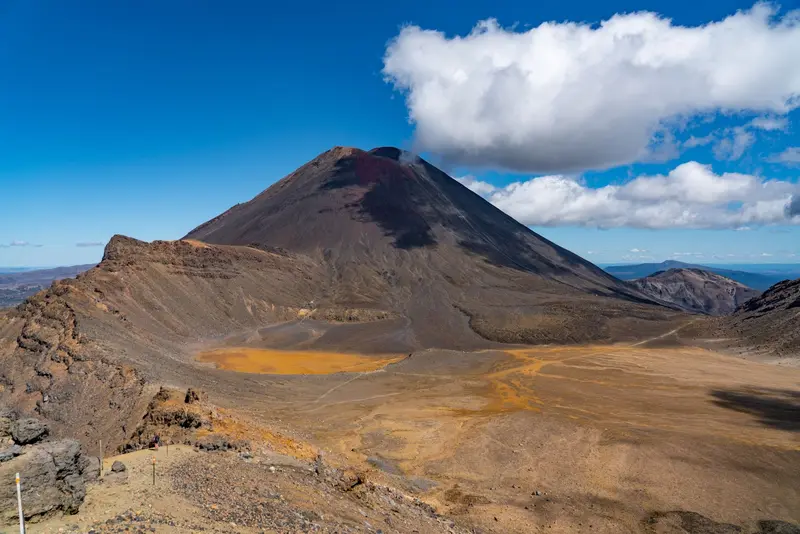
    Three active volcanoes dominate the Tongariro National Park: Tongariro, Ngāuruhoe, and Ruapehu.

    Discover
    Waitomo
    Bgabel / Wikimedia Commons / CC BY-SA 3.0

    Place 4 of 4

    Waitomo

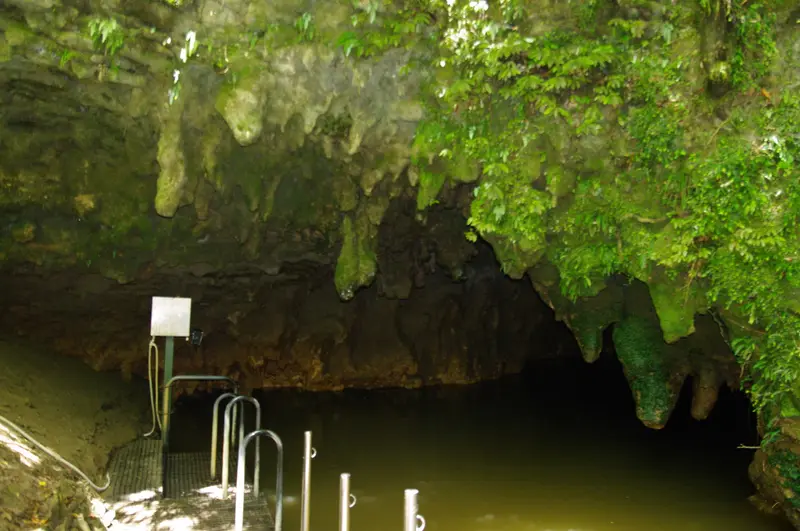
    Waitomo is a small village in the hilly karst country of the King Country, and beneath the pastures lies a network of limestone caves. The name combines wai (water) and tomo (hole, shaft) and describes a stream that disappears into the ground.

    Discover

    Sights in Central North Island

    Discover the most important sights and attractions

    Wai-O-Tapu Thermal Wonderland
    Attraction

    Wai-O-Tapu Thermal Wonderland

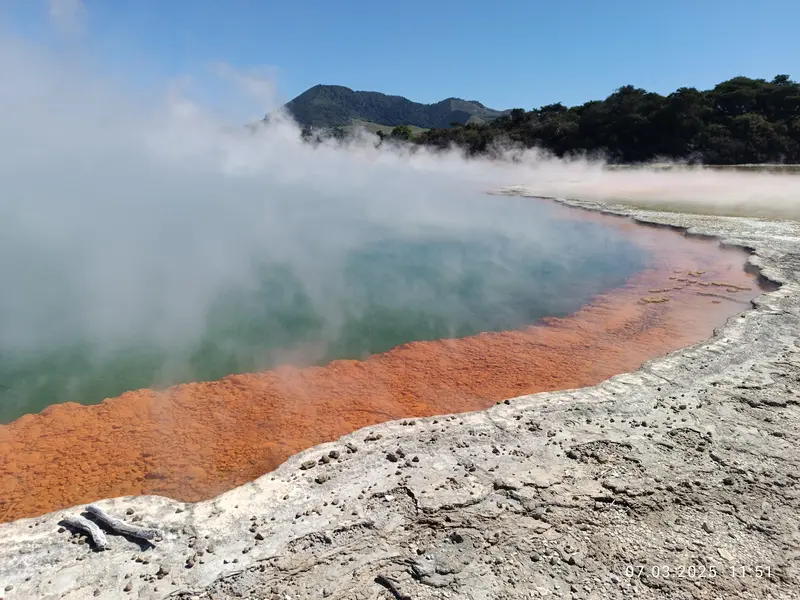
    Geothermal park south of Rotorua with colourful thermal pools like the Champagne Pool, mud pools and the Lady Knox Geyser. A walking trail leads through the site; stay on the marked paths.
    Open in Google Maps
    Waimangu Volcanic Valley
    Park

    Waimangu Volcanic Valley

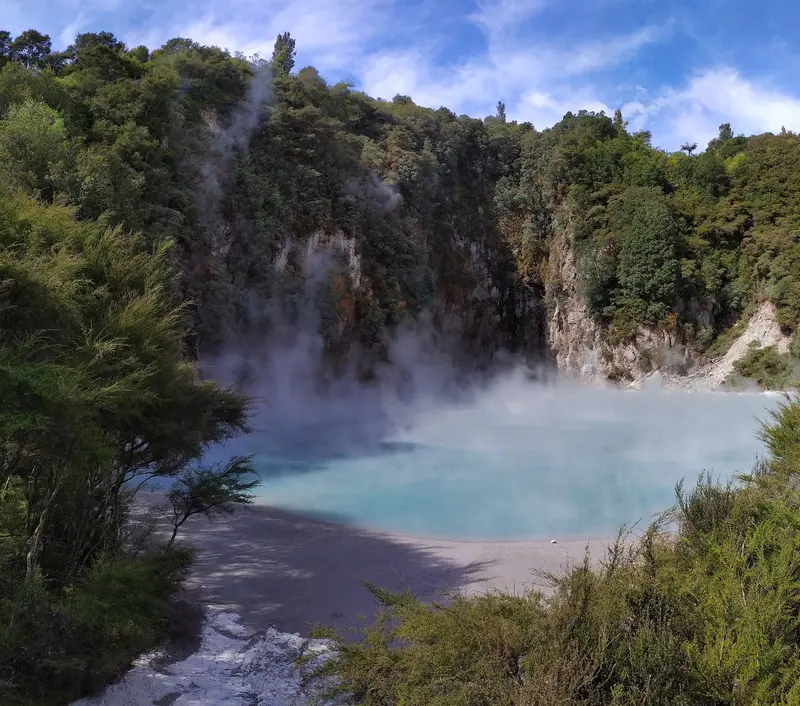
    Volcanic valley southeast of Rotorua, formed by the 1886 eruption of Mount Tarawera. A walking trail leads downhill past the steaming Frying Pan Lake to Lake Rotomahana.
    Open in Google Maps

    Māori Culture and Volcano Land

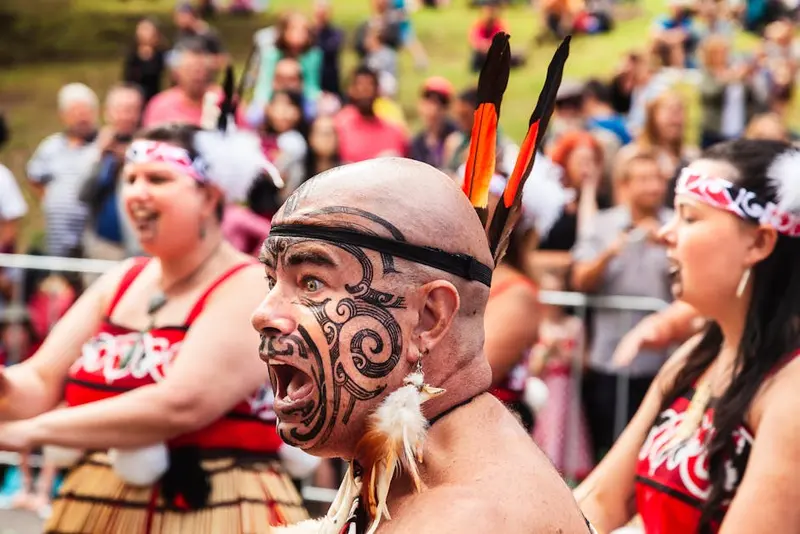
    Around Rotorua live the Iwi of Te Arawa, who for centuries have used geothermal heat for cooking, bathing, and heating. In villages like Ohinemutu and Whakarewarewa, this is still part of daily life. Cultural evenings with Haka, Waiata, and an earth oven-cooked Hāngī are among the region's most famous offerings.Tongariro's volcanic peaks are sacred to the Ngāti Tūwharetoa. In 1887, their Ariki Horonuku Te Heuheu Tukino IV handed the peaks over to the Crown for protection; in 1894, New Zealand's first national park was created. In 1993, it was recognized as the first UNESCO World Heritage site under new cultural landscape criteria.

    Exploring the Region

    The most flexible way to get around is by rental car or campervan: Rotorua, Taupō, Tongariro National Park, and Waitomo are all one to two hours' drive apart. Intercity buses connect the larger towns, and the Northern Explorer long-distance train runs through the National Park between Auckland and Wellington, stopping at National Park and Ohakune.You'll generally need a shuttle for the Tongariro Alpine Crossing: At the Mangatepopo starting car park, there are no spaces for Crossing hikers during peak season. Shuttles operate from Taupō, Tūrangi, and National Park Village, among other locations.

    Round trips through this region

    New Zealand Classics North & South

    New Zealand Classics North & South

    The route leads from Auckland via Rotorua to Wellington, by ferry across the Cook Strait to Picton, and then across the South Island to Lake Tekapo. The ferry takes a good three hours, and the drive from Picton via Kaikōura and Christchurch to Tekapo takes around seven hours.

    12 Days
    5 stops
    Leisurely New Zealand by Camper

    Leisurely New Zealand by Camper

    From Auckland, the camper travels via Rotorua and Taupō to Wellington, with multiple nights at each place. The longest drive, from Taupō to Wellington, takes around five hours, passing Tongariro National Park.

    11 Days
    4 stops
    New Zealand: Comfy without a camper

    New Zealand: Comfy without a camper

    The route focuses on three fixed hotel locations: Auckland, Rotorua, and Wanaka on the South Island. From Auckland to Rotorua, it's about a three-hour drive. To Wanaka, you fly via Auckland to Queenstown and then drive just over an hour from there.

    11 Days
    3 stops
    New Zealand Beach Nature Mix

    New Zealand Beach Nature Mix

    From Auckland, you drive about three hours north to the Bay of Islands, then head back south via Auckland to the geothermal fields of Rotorua. The journey from the Bay of Islands to Rotorua takes a good six hours and can be split with a stop in Auckland.

    10 Days
    3 stops
    New Zealand Family-Friendly Roadtrip

    New Zealand Family-Friendly Roadtrip

    On the North Island, you'll travel from Auckland to Rotorua and Taupō, then switch to the South Island for Lake Tekapo and Wanaka. Travel between these stations usually takes one to three hours; for the switch to the South Island via domestic flight or the Wellington–Picton ferry, plan at least a full day.

    17 Days
    5 stops

    Nearby

    Rotorua

    Rotorua

    Rotorua smells of sulfur, and that's part of the experience: The city on the southern shore of Lake Rotorua lies in the middle of a geothermal area. Between pavements and front gardens, steam rises from the ground; in Te Puia, the Pōhutu Geyser erupts; and in Kuirau Park, mud pools bubble without an entrance fee.Rotorua is also the center of the Te Arawa and one of the best places in New Zealand to experience Māori culture, whether in the living village of Whakarewarewa, in lakeside Ohinemutu, or at a cultural evening with Hāngī.
    Government Gardens

    Government Gardens

    The Government Gardens are Rotorua's largest city park, located directly on the shore of Lake Rotorua. Its centerpiece is the half-timbered building of the old Bath House, which houses the Rotorua Museum. Surrounding it, you'll find lawns, rose gardens, bowling and croquet greens, and steaming earth in several spots.The Ngāti Whakaue provided the land in the 19th century for the establishment of a health resort. Right next door are the Polynesian Spa and the lakeside path to Sulphur Point.
    Ohinemutu Māori Dorf

    Ohinemutu Māori Dorf

    Ohinemutu is an inhabited Māori village on the northern edge of Rotorua's city centre, directly on the lakeshore. Families of the Ngāti Whakaue live here, and steam rises from the ground between the houses.Highlights include the carved meeting house Tamatekapua and the Anglican St. Faith's Church, whose interior is adorned with Māori carvings and woven artworks. Please remember you are visiting a residential community here.
    Whakarewarewa (Redwood Forest Area)

    Whakarewarewa (Redwood Forest Area)

    South of Rotorua, two very different worlds lie directly next to each other: the steaming geothermal valley of Whakarewarewa with Te Puia and the inhabited Māori village, and the Whakarewarewa Forest with its tall Californian coastal redwoods.In the forest, you can hike short and long trails, go mountain biking, or cross the suspension bridges of the Redwoods Treewalk. Early morning is the quietest time here.
    Bay of Plenty

    Bay of Plenty

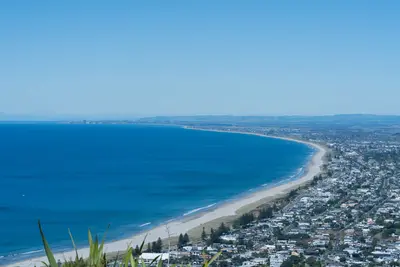
    The Bay of Plenty stretches along the North Island's northern coast from the foot of the Coromandel Peninsula to Cape Runaway. Long sandy beaches, the port city of Tauranga, and the volcanic cone Mauao in Mount Maunganui characterize its western part; inland, mainly kiwifruit and avocados are grown. Off the coast near Whakatāne lies the active volcanic island Whakaari (White Island); tours have not taken place there since the December 2019 eruption.When engaging in activities in volcanic and geothermal areas, as well as when swimming in the sea, always adhere to local warnings and restrictions. General information can be found in the travel and safety advisories of the Auswärtiges Amt, linked on the New Zealand page.

    Sources & method

    • Photos: Pexels, Google Maps. Each photo carries its credit.
    • Place data such as addresses and ratings comes from Google Maps.
    • The content is based on web research from public, traceable sources. How the content is made · The role of AI