Fernweh: Home
    ExploreTravel GuidesPlan a tripMy tripLast visited
    de|en
    All Places & RegionsAll highlightsAbout FernwehFAQPrivacy PolicyImprint
    ExploreTravel GuidesPlan a tripMy tripLast visited
    Crocodile Bridge Rest Camp

    South Africa

    Crocodile Bridge Rest Camp

    Point of Interest

    Crocodile Bridge is a small camp directly at the eponymous gate in the southeast of Kruger National Park, on the north bank of the Crocodile River. The open savanna north of the camp is known for buffalo, rhinos, and lions.

    by Felix Gillen

    1. Home
    2. Destinations
    3. South Africa
    4. Kruger National Park
    5. Crocodile Bridge Rest Camp
    Crocodile Bridge is a small camp directly at the eponymous gate in the southeast of Kruger National Park, on the north bank of the Crocodile River. The open savanna north of the camp is known for buffalo, rhinos, and lions.

    Sehenswürdigkeiten

    Discover the most important sights and attractions

    Crocodile Bridge

    1Crocodile Bridge

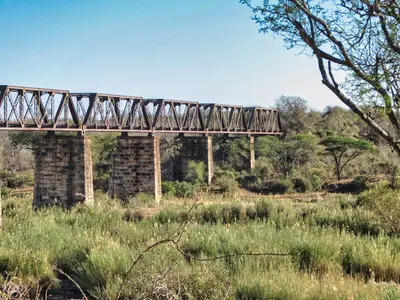
    Bridge over the Crocodile River, at the park's southeast edge, by the gate and camp. Here you often see hippos and crocodiles in the water, and elephants on the bank.
    Open in Google Maps
    Jackalberry Viewpoint

    2Jackalberry Viewpoint

    Viewpoint over Crocodile River west of camp, named for large Jackalberry trees on its bank. Quiet spot for hippos, crocs, waterfowl.
    Open in Google Maps

    Essen & Trinken

    History and Cultural Heritage at the Crocodile River

    The Crocodile Bridge Rest Camp, strategically located on the southeastern edge of Kruger National Park, is closely linked to the park's founding history and development. It is part of the infrastructure established by Paul Kruger since the designation of the Sabie Game Reserve in 1898 to protect South Africa's unique wildlife. The camp's name derives from the Crocodile River, a natural border river that not only serves as a crucial water source but has also been an element of local geography and settlement for centuries.The camp's architecture is characterized by a practical, yet landscape-integrated bushveld aesthetic. Structures made from local materials such as stone and thatched roofs dominate, blending harmoniously into the surroundings and focusing on the natural experience. This construction style reflects early conservation principles, where functionality and respect for the wilderness were paramount.Although the camp itself primarily serves wildlife viewing tourism, the broader region around the Crocodile River has historically been inhabited by the Tsonga people. Their cultural traditions and the oral histories about the area's flora and fauna shape the intangible heritage of this landscape. Crocodile Bridge Rest Camp thus indirectly contributes to the preservation and transmission of a broader understanding of South Africa's cultural and natural history by enabling visitors access to this unique environment.

    Getting Around Here

    At Crocodile Bridge Rest Camp in Kruger National Park, getting around differs fundamentally from urban environments; urban transport like metro, bus, or tram are not relevant here. The primary means of transport for exploring the park is your own vehicle or a rented 4x4, with which you can navigate the expansive roads independently.Alternatively, guided game drives in open safari vehicles offer an excellent opportunity to experience the wildlife under professional guidance, often with access to areas that remain hidden from self-drivers. Within the camp, walking on paved paths is safe and permitted, but outside the fenced area, this is strictly prohibited due to wildlife.For arrivals and departures, private transfers or pre-booked shuttles from nearby airports such as Skukuza or Kruger Mpumalanga (KMIA) are the most common choice, as ride-sharing services do not operate here. Always observe park opening times and speed limits to ensure your safety and that of the wildlife – an important prerequisite for an unforgettable safari experience.

    Accommodations in Crocodile Bridge Rest Camp

    Find perfect stay in Crocodile Bridge Rest Camp

    Booking.com* (Affiliate link)
    Search Hotels
    Agoda* (Affiliate link)
    Search Hotels
    Airbnb
    Vacation Rentals

    * Affiliate link: if you book through it, we earn a small commission. The price stays the same for you.
    Nearby

    Lower Sabie Rest Camp

    Lower Sabie Rest Camp

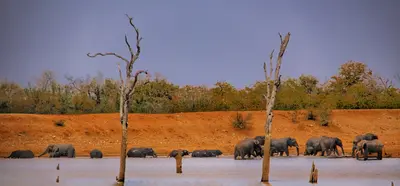
    Lower Sabie is located in the southeast of Kruger National Park directly on the Sabie River. From the camp's terrace, you look out onto the river, where elephants, buffalo, and hippos are on the move. The area around the camp is one of the richest in wildlife in the park.
    Kruger National Park

    Kruger National Park

    At nearly 20,000 square kilometers, Kruger National Park in northeastern South Africa is the country's largest wildlife sanctuary, roughly the size of Rhineland-Palatinate. It's home to the Big Five, plus giraffes, zebras, wild dogs, and over 500 bird species. The best part: You can explore the park on paved and gravel roads with your own rental car.
    Skukuza Rest Camp

    Skukuza Rest Camp

    Skukuza is the largest camp and administrative headquarters of Kruger National Park, on the south bank of the Sabie River. With restaurants, a shop, a petrol station, an ATM, and its own airfield, it is more like a small village than a camp.
    Nelspruit

    Nelspruit

    Nelspruit, officially Mbombela, is the capital of Mpumalanga and for many the gateway to the southern Kruger National Park. Nearby attractions include the Botanical Garden, the Sudwala Caves, and Chimp Eden.
    Mpumalanga

    Mpumalanga

    Mpumalanga means "place where the sun rises". The province connects the viewpoints of the Panorama Route with the southern part of the Kruger National Park.

    Sources & method

    • Photos: Unsplash, Pexels. Each photo carries its credit.
    • The content is based on web research from public, traceable sources. How the content is made · The role of AI