Fernweh: Home
    ExploreTravel GuidesPlan a tripMy tripLast visited
    de|en
    All Places & RegionsAll highlightsAbout FernwehFAQPrivacy PolicyImprint
    ExploreTravel GuidesPlan a tripMy tripLast visited
    • Overview
    • Places in the region
    • Eat & drink
    • Recommendations
    • Food culture
    • Culture
    • Getting around
    • Round trips
    • Nearby
    Douro Valley

    Portugal

    Douro Valley

    Region

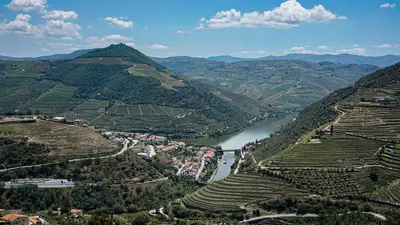
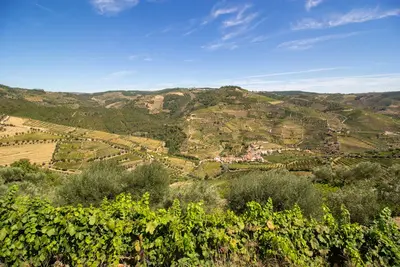
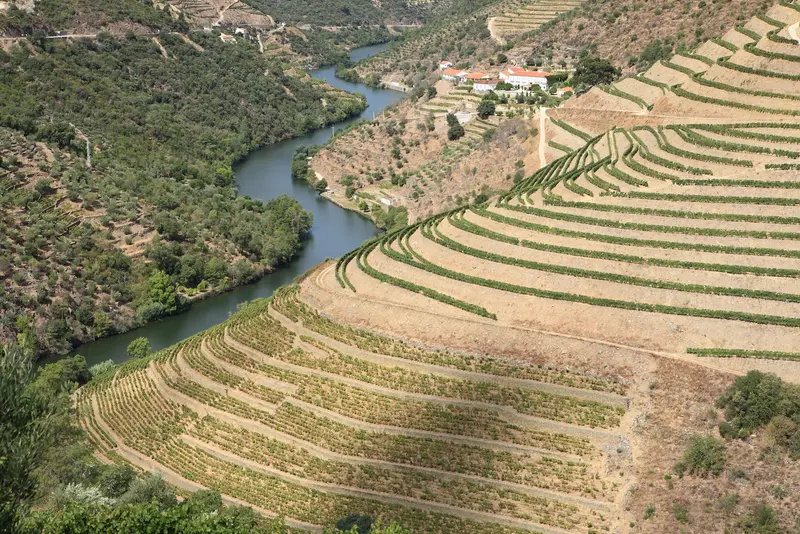
    The Douro Valley east of Porto is the home of Port wine. Steep vineyard terraces climb both banks of the river, interspersed with wineries, the Quintas, and small towns like Peso da Régua and Pinhão.

    by Felix Gillen

    1. Home
    2. Destinations
    3. Portugal
    4. Douro Valley
    The Douro Valley east of Porto is the home of Port wine. Steep vineyard terraces climb both banks of the river, interspersed with wineries, the Quintas, and small towns like Peso da Régua and Pinhão. The Alto Douro wine region was legally demarcated in 1756 and has been a UNESCO World Heritage site since 2001.
    The valley stretches for about a hundred kilometers to the Spanish border. Most visitors focus on the section between Peso da Régua and Pinhão, where train, road, and boat tours are close by. Further upstream it gets more secluded, with Stone Age rock art sites in the Côa Valley. Many Quintas offer guided tours with tastings, which you should usually book in advance. September and October are grape harvest season; it's bustling and accommodations are in demand. In high summer, it gets very hot in the valley.
    Peso da Régua

    Place 1 of 3

    Peso da Régua

    Peso da Régua is the largest city on the middle Douro and the gateway to the wine region. Since the 18th century, it has been a center of the Port wine trade; today, the Museu do Douro explains the history and landscape of the valley.

    Discover
    Pinhão

    Place 2 of 3

    Pinhão

    Pinhão is a small town at the confluence of the Pinhão and Douro rivers, amidst the vineyards of the Upper Douro Valley. It's home to some of the most renowned Port wine Quintas, many situated right on the river.

    Discover
    Lamego

    Place 3 of 3

    Lamego

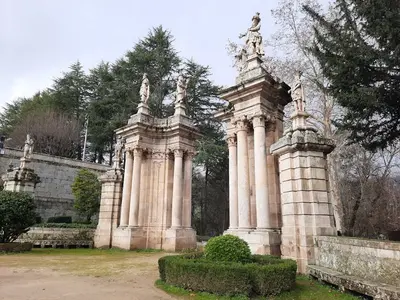
    Lamego is located in the hills south of the Douro, about twelve kilometers from Peso da Régua. Its landmark is the Sanctuary of Nossa Senhora dos Remédios, ascended by a long baroque staircase with azulejos and fountains.

    Discover

    Sights in Douro Valley

    Discover the most important sights and attractions

    Quinta da Pacheca

    Quinta da Pacheca

    Traditional winery between Régua and Lamego, with tours, tastings, restaurant, and hotel. Known for its unique overnight barrels among the vines. Easily reached and often busy; advance booking recommended.
    Open in Google Maps

    Restaurants & Cafés

    DOC – Degustar Ousar Comunicar

    Direkt am Flussufer bei Folgosa gelegen, ist das DOC Restaurant von Chef Rui Paula ein kulinarisches Highlight des Douro-Tals. Hier genießt Du raffinierte Interpretationen der portugiesischen Küche mit regionalen Produkten, begleitet von einer beeindruckenden Weinkarte. Die moderne Atmosphäre und der atemberaubende Blick auf den Douro machen jeden Besuch zu einem unvergesslichen Erlebnis.
    Show on Google Maps

    Toca da Raposa

    Wenn Du ein authentisches und unkompliziertes kulinarisches Erlebnis suchst, ist Toca da Raposa in Ervedosa do Douro die richtige Adresse. Dieses gemütliche Restaurant ist bekannt für seine hausgemachte, traditionelle portugiesische Küche mit lokalen Zutaten. Die herzliche Gastfreundschaft und die rustikale Atmosphäre vermitteln Dir ein Gefühl von Echtheit und Gemütlichkeit, perfekt, um die wahre Douro-Küche zu entdecken.
    Show on Google Maps

    Cozinha da Clara (Quinta de la Rosa)

    Das Restaurant Cozinha da Clara auf der renommierten Quinta de la Rosa in Pinhão bietet eine exquisite regionale Küche mit einem modernen Touch. Mit frischen Produkten aus dem eigenen Garten und den umliegenden Regionen kreiert das Küchenteam Gerichte, die perfekt zu den Weinen der Quinta passen. Die Terrasse bietet zudem einen fantastischen Blick auf den Douro und die Weinberge, was das Essen zu einem ganz besonderen Erlebnis macht.
    Show on Google Maps

    Food and Drink in the Douro Valley

    Port wine

    Fortified and sweet, as Ruby, Tawny, White or Vintage. Taste it directly at the Quintas.

    Douro Red Wine

    Dry red wines from grape varieties like Touriga Nacional, which have gained significant prestige in recent decades.

    Cabrito assado

    Oven-roasted kid, a typical festive dish of the region.

    Culture and History

    Wine has been grown in the Douro since Roman times. Exports to England surged in the 17th and 18th centuries. In 1756, Marquês de Pombal demarcated the region and regulated trade, making it one of the world's oldest legally regulated wine regions. For centuries, flat Rabelo boats carried barrels downstream to Vila Nova de Gaia, until rail and road transport took over.The terraces were hand-carved into the slate for generations. During the autumn harvest, grapes on some estates are still traditionally trodden by foot in stone tanks (Lagares).

    Exploring the Douro Valley

    The Linha do Douro railway line runs from Porto São Bento along the river via Régua and Pinhão to Pocinho. From Régua, it's best to sit on the right side in the direction of travel to see the river. By car, you are more flexible, especially for viewpoints and Quintas away from the river. The N222 road between Régua and Pinhão is considered a particularly scenic route. Boat trips start in Régua, Pinhão, and as a day trip also in Porto.

    Round trips through this region

    Porto & Douro Valley

    Porto & Douro Valley

    From Porto upstream into the Douro Valley: via Lamego with its pilgrimage staircase to Peso da Régua and Pinhão, amidst the UNESCO World Heritage wine terraces. Short stages allow time for wineries, viewpoints, and a boat trip on the Douro. With ten overnight stays, about one and a half weeks.

    11 Days
    4 stops

    Nearby

    Peso da Régua

    Peso da Régua

    Peso da Régua is the largest city on the middle Douro and the gateway to the wine region. Since the 18th century, it has been a center of the Port wine trade; today, the Museu do Douro explains the history and landscape of the valley. The city itself is rather functional, but very practical as a starting point for boat trips, Quintas, and viewpoints.
    Pinhão

    Pinhão

    Pinhão is a small town at the confluence of the Pinhão and Douro rivers, amidst the vineyards of the Upper Douro Valley. It's home to some of the most renowned Port wine Quintas, many situated right on the river. Its train station is famous for its Azulejo tile panels illustrating winemaking. Pinhão is quiet and an excellent base for winery visits, boat tours, and walks through the terraced vineyards.
    Lamego

    Lamego

    Lamego is located in the hills south of the Douro, about twelve kilometers from Peso da Régua. Its landmark is the Sanctuary of Nossa Senhora dos Remédios, ascended by a long baroque staircase with azulejos and fountains. Other attractions include a cathedral with a Romanesque tower, a good art museum, and a small castle. The region is also known for its sparkling wine.
    Guimarães

    Guimarães

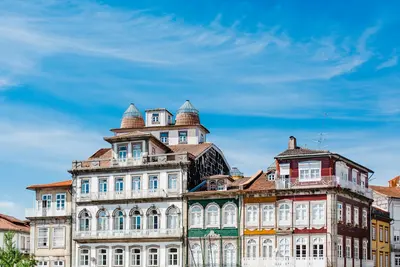
    Guimarães is considered the birthplace of Portugal: Here, in the 12th century, Afonso Henriques began his journey to become the country's first king. Therefore, the inscription 'Aqui nasceu Portugal' stands on the old city wall. Its well-preserved old town, with granite houses, wooden balconies, and small squares, has been a UNESCO World Heritage site since 2001. Above it lie the castle and the Ducal Palace.
    Braga

    Braga

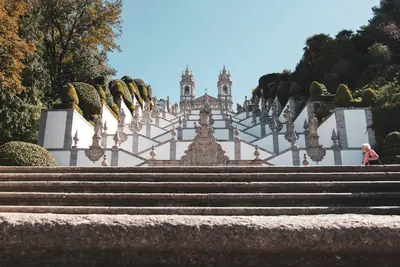
    Braga, one of Portugal's oldest, an archiepiscopal see since the Middle Ages. With the country's oldest cathedral and many churches and monasteries, Braga is dubbed "Portuguese Rome." Most famous: the Bom Jesus do Monte pilgrimage sanctuary, east of the city, a UNESCO World Heritage site since 2019. At the same time, Braga is a university city, full of young people and a vibrant center.

    Sources & method

    • Photos: Unsplash, Google Maps. Each photo carries its credit.
    • The content is based on web research from public, traceable sources. How the content is made · The role of AI