Fernweh: Home
ExploreGuideDestinationsMy tripsMy trip
de|en
All Places & RegionsRound tripsNight trains in EuropeAll highlightsAbout FernwehFAQPrivacy PolicyImprint
Download on the App StoreGet it on Google Play
ExploreGuideDestinationsMy tripsMy trip
    • Places & highlights
    • Recommendations
    • Tours
    • Eat & drink
    • Culture
    • Getting around
    • Accommodation
    • Round trips
    • Nearby
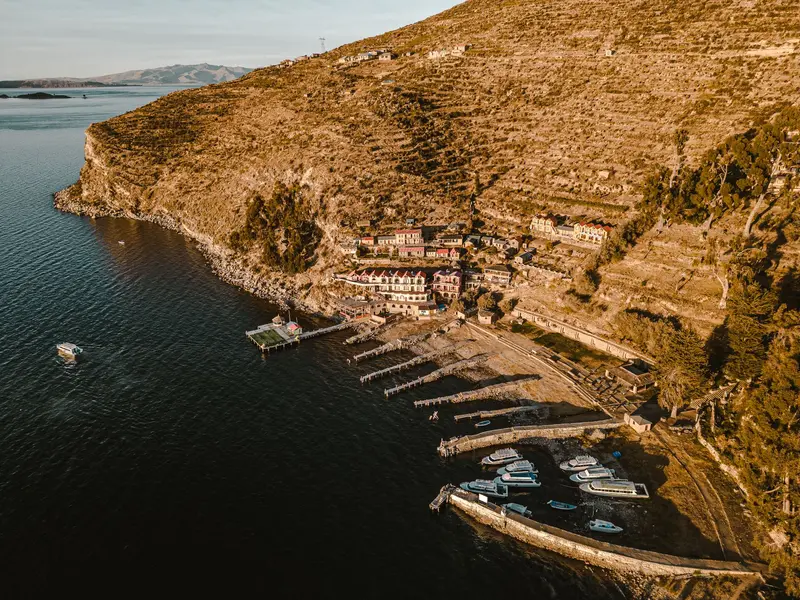
    Isla del Sol

    Photo by Gabriel Ramos on Pexels

    Bolivia

    Isla del Sol

    Point of Interest

    In Inca myth, Isla del Sol in Lake Titicaca is considered the origin place of the sun and moon.

    by Felix Gillen

    1. Home
    2. Destinations
    3. Bolivia
    4. Copacabana
    5. Isla del Sol
    In Inca myth, Isla del Sol in Lake Titicaca is considered the origin place of the sun and moon. The island, approximately 9 by 6 km, lies about 12 km northwest of Copacabana and has three settlements: Yumani in the south, Challa in the middle, and Challapampa in the north.You ascend the steep Inca staircase from Yumani, visit the ruins of Pilkokaina, and hike ancient paths across the island. The northern part with the Chincana Labyrinth has been repeatedly closed in recent years; inquire in Copacabana about its current status.
    Bolivia travel guideSee the round tripPlan a trip with Isla del Sol

    Contents

    • Places & highlights
    • Recommendations
    • Tours
    • Eat & drink
    • Culture
    • Getting around
    • Accommodation
    • Round trips
    • Nearby

    Sights in Isla del Sol

    Discover the most important sights and attractions

    Attraction

    1Chincana

    The ceremonial Inca Labyrinth is in the north of the island. It's only accessible when the northern part is open; ask in Copacabana beforehand.
    Open in Google Maps
    Natural Feature

    2Isla de la Luna

    On the small neighboring island east of Isla del Sol are remains of an Inca sanctuary. Boat trips connect both islands.
    Open in Google Maps

    Tours & experiences in Isla del Sol

    Search tours for Isla del Sol on GetYourGuide* (Affiliate link)On GetYourGuide, with reviews from other travellers

    * Affiliate link: if you book through it, we earn a small commission. The price stays the same for you.

    Restaurants in Isla del Sol

    Myth and Communities

    Sacred Island of the IncaAccording to Inca myth, the sun and moon ascended on the Isla del Sol. The ceremonial site Chincana in the north and the Titi Kharka rock near Challapampa belong to this legacy; on the neighboring Isla de la Luna, ruins of an Inca sanctuary stand.Communities and AdmissionThe island is administered by its communities, each collecting a small entry fee at their checkpoints. Have small bills and coins ready for this. Conflicts between the communities have repeatedly led to the closure of the northern part in recent years.

    Arrival and Hiking

    BoatBoats from Copacabana usually depart mornings and afternoons, first to Yumani (approx. 1.5 hours), then continue to Challapampa. Times vary, confirm locally.On FootThe island is over 3,800 m high, the Inca Staircase in Yumani is steepLeave large luggage in CopacabanaThose staying overnight on the island can hike early morning before day-trippers.Bring cash, there are no ATMs

    Accommodations in Isla del Sol

    Find perfect stay in Isla del Sol

    Booking.com* (Affiliate link)
    Search Hotels
    Agoda* (Affiliate link)
    Search Hotels
    Airbnb
    Vacation Rentals

    * Affiliate link: if you book through it, we earn a small commission. The price stays the same for you.

    Round trips with Isla del Sol

    Classic Bolivia: Lake Titicaca, Salar de Uyuni and Colonial Cities

    Classic Bolivia: Lake Titicaca, Salar de Uyuni and Colonial Cities

    The route connects the major destinations of the Bolivian highlands: La Paz with cable car and Tiwanaku, Lake Titicaca with Copacabana and the Isla del Sol, the Salar de Uyuni with the Lagoon Route, and finally the World Heritage cities Potosí and Sucre. All stages are traveled by bus, boat, or guided 4x4.

    13 Days
    8 stops
    Open jaw

    Nair Cristopher Sánchez Muñoz·Pexels

    Nearby

    Copacabana

    Copacabana

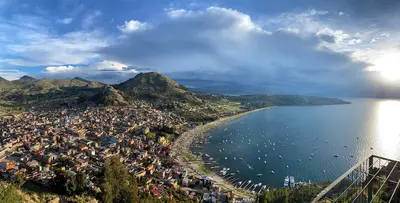
    Copacabana, on the shores of Lake Titicaca, is Bolivia's most important Catholic pilgrimage site and the port for boats to Isla del Sol. The lake lies at about 3,810 m and is considered the highest commercially navigable lake in the world.At its heart stands the Basilica of the Virgen de Copacabana, whose figure was carved around 1576. From Cerro Calvario, you look out over the bay; in the evenings, the sun colors the lake. The town is about four to five bus hours from La Paz.

    EEJCC·CC BY-SA 4.0

    Lake Titicaca

    Lake Titicaca

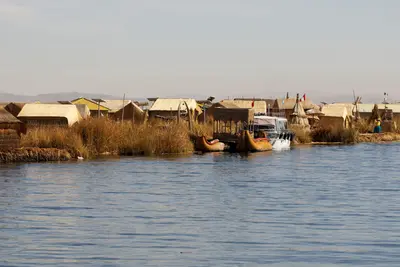
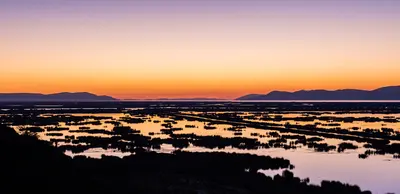
    Lake Titicaca lies at an altitude of approximately 3,810 meters in the Altiplano and is shared by Peru and Bolivia. It is considered the world's highest navigable lake. From Puno, boats depart for the Uros, islands that the inhabitants build and constantly renew from layers of totora reeds. Their boats are also made from the same reeds.Further out lies the natural island of Taquile, whose inhabitants speak Quechua and are renowned for their woven and knitted textiles. UNESCO recognizes Taquile's textile art as intangible cultural heritage. On the neighboring island of Amantaní, you can stay with families.Day trips to Uros and Taquile start in the morning from Puno's harbor.On the water, it is sunny and windy; bring warm clothing and sun protection.

    Gu Bra·Pexels

    Tiwanaku

    Tiwanaku

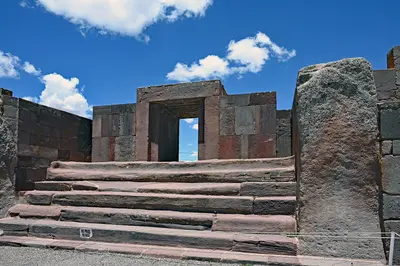
    Tiwanaku was the capital of a pre-Hispanic empire which, according to UNESCO, flourished on the Altiplano roughly between 400 and 900 AD, long before the Incas. The archaeological site, approximately 70 km west of La Paz, has been a UNESCO World Heritage site since 2000 and is a classic day trip from the capital.At around 3,850 m you will see the Akapana stepped pyramid, the Kalasasaya Temple with the Puerta del Sol, and the precisely carved stone blocks of Puma Punku. For the Aymara New Year on June 21, Tiwanaku is the scene of the central solstice ceremony.

    P. Hughes·CC BY 4.0

    Puno and Lake Titicaca

    Puno and Lake Titicaca

    In the Altiplano on the border with Bolivia lies Lake Titicaca at an altitude of approximately 3,810 meters, the highest navigable lake in the world. The city of Puno on the west shore is the starting point for boat tours to the floating reed islands of the Uros and to Taquile Island, whose textile art UNESCO has recognized as intangible cultural heritage. In February, Puno celebrates the Fiesta de la Candelaria, also a UNESCO cultural heritage. The region is accessible by flight to Juliaca, by bus, or by train from Cusco.

    Diego Delso·CC BY-SA 4.0

    Puno

    Puno

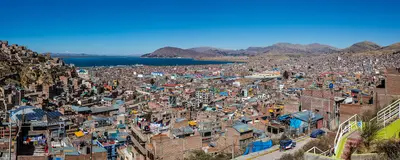
    Puno is located at about 3,800 meters on the western shore of Lake Titicaca and is the starting point for boat trips on the lake. The city calls itself the “Folklore Capital of Peru”: Every February, it celebrates the Fiesta de la Virgen de la Candelaria with thousands of dancers and musicians, an intangible UNESCO cultural heritage since 2014.On the Plaza de Armas stands the baroque cathedral, completed in 1757. From the hill with the monument to Manco Cápac, the legendary first Inca, you overlook the city and the lake. About 30 kilometers outside, on Lago Umayo, are the funerary towers of Sillustani, built by the Colla before Inca rule.The nearest airport is Inca Manco Cápac Airport in Juliaca. You can also reach Puno by bus or with the PeruRail Titicaca train from Cusco.After arrival, allow yourself time to acclimatize before going on excursions.

    Diego Delso·CC BY-SA 4.0

    Your next steps

    Isla del Sol is in Bolivia. Ways to carry on from here.

    • More in Bolivia

      Highlights, areas, routes and the best time to travel for all of Bolivia.

      Bolivia travel guide
    • Round trips with Isla del Sol

      One route passes through Isla del Sol, with stops, nights and a map.

      See the round trip
    • Plan a trip with Isla del Sol

      The Guide asks about season, length and who is coming, and suggests a trip with Isla del Sol.

      Plan the trip
    Sources & method

    • Photos: Pexels. Each photo carries its credit.
    • Place data such as addresses and ratings comes from Google Maps.
    • The content is based on web research from public, traceable sources. How the content is made · The role of AI