Fernweh: Home
ExploreGuideDestinationsMy tripsMy trip
de|en
All Places & RegionsRound tripsNight trains in EuropeAll highlightsAbout FernwehFAQPrivacy PolicyImprint
Download on the App StoreGet it on Google Play
ExploreGuideDestinationsMy tripsMy trip
    • Places & highlights
    • Tours
    • Eat & drink
    • Culture
    • Getting around
    • Accommodation
    • Nearby
    Tiwanaku

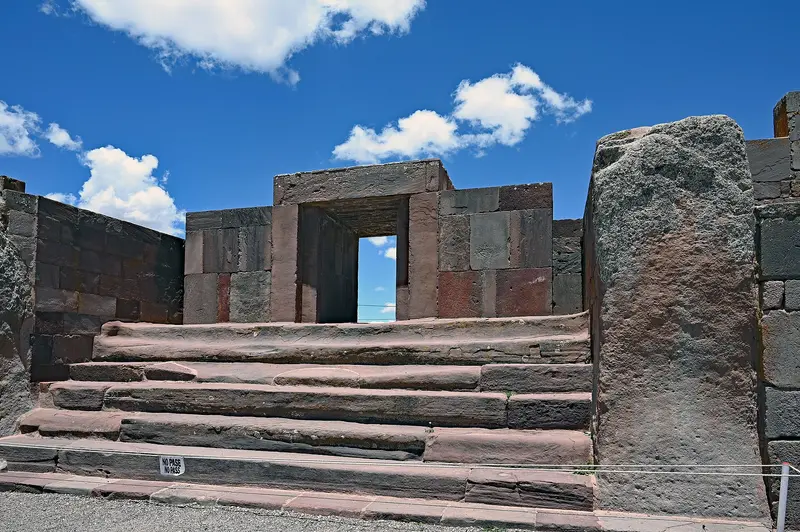
    P. Hughes / Wikimedia Commons / CC BY 4.0, mod.

    Bolivia

    Tiwanaku

    Point of InterestUNESCOCulture

    Tiwanaku was the capital of a pre-Hispanic empire which, according to UNESCO, flourished on the Altiplano roughly between 400 and 900 AD, long before the Incas.

    by Felix Gillen

    1. Home
    2. Destinations
    3. Bolivia
    4. Tiwanaku
    Tiwanaku was the capital of a pre-Hispanic empire which, according to UNESCO, flourished on the Altiplano roughly between 400 and 900 AD, long before the Incas. The archaeological site, approximately 70 km west of La Paz, has been a UNESCO World Heritage site since 2000 and is a classic day trip from the capital.At around 3,850 m you will see the Akapana stepped pyramid, the Kalasasaya Temple with the Puerta del Sol, and the precisely carved stone blocks of Puma Punku. For the Aymara New Year on June 21, Tiwanaku is the scene of the central solstice ceremony.
    Bolivia travel guideRound trips in BoliviaPlan a trip with Tiwanaku

    Contents

    • Places & highlights
    • Tours
    • Eat & drink
    • Culture
    • Getting around
    • Accommodation
    • Nearby

    Sights in Tiwanaku

    Discover the most important sights and attractions

    Attraction

    1Akapana

    The Step Pyramid with seven platforms is, according to UNESCO, over 18 m high.
    Open in Google Maps
    Attraction

    2Kalasasaya and Puerta del Sol

    According to UNESCO, the open temple Kalasasaya likely served as an observatory. Here stands the Puerta del Sol, a monolithic gate of Andesite with the relief of a deity holding staffs, interpreted as an agricultural calendar.
    Open in Google Maps
    Attraction

    3Puma Punku

    The temple ruin southwest of the main complex is known for its precisely carved stone blocks. Admission is included in the Tiwanaku ticket.
    Open in Google Maps

    Tours & experiences in Tiwanaku

    Search tours for Tiwanaku on GetYourGuide* (Affiliate link)On GetYourGuide, with reviews from other travellers

    * Affiliate link: if you book through it, we earn a small commission. The price stays the same for you.

    Restaurants in Tiwanaku

    History and Significance

    A Pre-Inca EmpireUNESCO describes Tiwanaku as the capital of a powerful pre-Hispanic empire on the southern shore of Lake Titicaca. The Puerta del Sol, a monolithic gate made of Andesite, depicts a deity with staffs; its relief is interpreted as an agricultural calendar.Vibrant CeremoniesSince 2009, June 21st has been a public holiday as Año Nuevo Andino Amazónico. The central winter solstice ceremony takes place in Tiwanaku, with buses from La Paz departing as early as 4 AM.

    Getting There & Tips

    Getting ThereTiwanaku is located about 71 km from La Paz. Minibuses take approximately 90 minutes and depart from the Cemetery (Cementerio), which you can reach via the red cable car line.Practical TipsEntry for foreigners is 100 Bolivianos, including Kalasasaya, Puma Punku, and both museumsHalf a day is enough for the ruinsThe site may temporarily close for restoration, inquire beforehand at the tourism officeAt 3,850 m, it's windy and cold; bring sun protection and warm clothing

    Accommodations in Tiwanaku

    Find perfect stay in Tiwanaku

    Booking.com* (Affiliate link)
    Search Hotels
    Agoda* (Affiliate link)
    Search Hotels
    Airbnb
    Vacation Rentals

    * Affiliate link: if you book through it, we earn a small commission. The price stays the same for you.

    Nearby

    La Paz

    La Paz

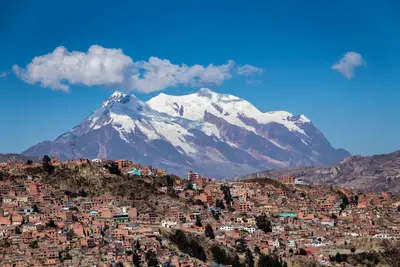
    La Paz is Bolivia's seat of government and lies at around 3,650 m in a deep valley, above whose rim the city of El Alto spreads out at over 4,000 m. You float with the Mi Teleférico cable car over rooftops and markets, visit the Witches' Market and the colonial street Calle Jaén, and experience the enormous Feria 16 de Julio market in El Alto.The city is a starting point for excursions to Tiwanaku, Lake Titicaca, and down into the Yungas. In recent years, a young culinary scene has also developed, working with ingredients from the Andes and the Amazon.

    Nair Cristopher Sánchez Muñoz·Pexels

    Copacabana

    Copacabana

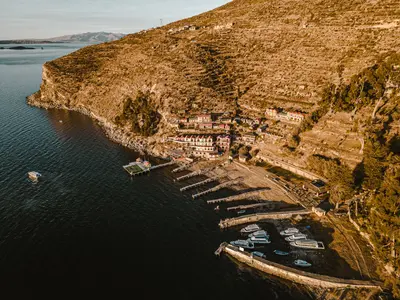
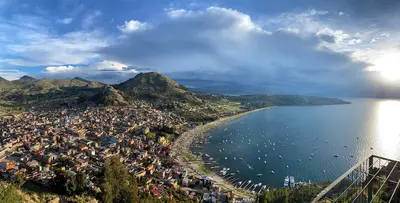
    Copacabana, on the shores of Lake Titicaca, is Bolivia's most important Catholic pilgrimage site and the port for boats to Isla del Sol. The lake lies at about 3,810 m and is considered the highest commercially navigable lake in the world.At its heart stands the Basilica of the Virgen de Copacabana, whose figure was carved around 1576. From Cerro Calvario, you look out over the bay; in the evenings, the sun colors the lake. The town is about four to five bus hours from La Paz.

    EEJCC·CC BY-SA 4.0

    Isla del Sol

    Isla del Sol

    In Inca myth, Isla del Sol in Lake Titicaca is considered the origin place of the sun and moon. The island, approximately 9 by 6 km, lies about 12 km northwest of Copacabana and has three settlements: Yumani in the south, Challa in the middle, and Challapampa in the north.You ascend the steep Inca staircase from Yumani, visit the ruins of Pilkokaina, and hike ancient paths across the island. The northern part with the Chincana Labyrinth has been repeatedly closed in recent years; inquire in Copacabana about its current status.

    Gabriel Ramos·Pexels

    Coroico and the Yungas

    Coroico and the Yungas

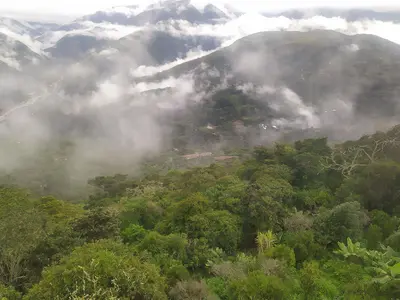
    Coroico is located at around 1,500 to 1,700 m in the Yungas, the subtropical valleys on the eastern slopes of the Andes, and is just two to four hours' drive from La Paz. Here, you exchange the cold highland air for green slopes and a mild climate.Famous is the old Yungas Road, also known as Camino de la Muerte (Death Road): approximately 64 km of gravel track that descends over 3,000 vertical meters from La Cumbre Pass at about 4,650 m. Since the opening of a paved bypass, it is primarily used by cyclists for guided descents.

    Alhen·CC BY-SA 4.0

    Lake Titicaca

    Lake Titicaca

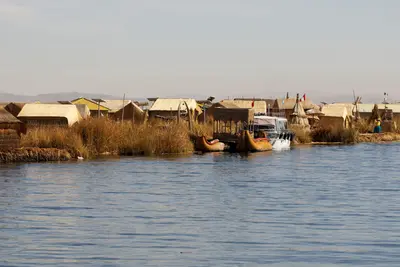
    Lake Titicaca lies at an altitude of approximately 3,810 meters in the Altiplano and is shared by Peru and Bolivia. It is considered the world's highest navigable lake. From Puno, boats depart for the Uros, islands that the inhabitants build and constantly renew from layers of totora reeds. Their boats are also made from the same reeds.Further out lies the natural island of Taquile, whose inhabitants speak Quechua and are renowned for their woven and knitted textiles. UNESCO recognizes Taquile's textile art as intangible cultural heritage. On the neighboring island of Amantaní, you can stay with families.Day trips to Uros and Taquile start in the morning from Puno's harbor.On the water, it is sunny and windy; bring warm clothing and sun protection.

    Gu Bra·Pexels

    Your next steps

    Tiwanaku is in Bolivia. Ways to carry on from here.

    • More in Bolivia

      Highlights, areas, routes and the best time to travel for all of Bolivia.

      Bolivia travel guide
    • Round trips in Bolivia

      Ready-made routes through Bolivia, with stops, nights and a map.

      See the routes
    • Plan a trip with Tiwanaku

      The Guide asks about season, length and who is coming, and suggests a trip with Tiwanaku.

      Plan the trip
    Sources & method

    • Photos: Wikimedia Commons. Each photo carries its credit.
    • Place data such as addresses and ratings comes from Google Maps.
    • The content is based on web research from public, traceable sources. How the content is made · The role of AI