Fernweh: Home
ExploreGuideDestinationsMy tripsMy trip
de|en
All Places & RegionsRound tripsNight trains in EuropeAll highlightsAbout FernwehFAQPrivacy PolicyImprint
Download on the App StoreGet it on Google Play
ExploreGuideDestinationsMy tripsMy trip
    • Neighborhoods & highlights
    • Recommendations
    • Tours
    • Eat & drink
    • Culture
    • Getting around
    • Accommodation
    • Plan trip
    • Round trips
    • Nearby
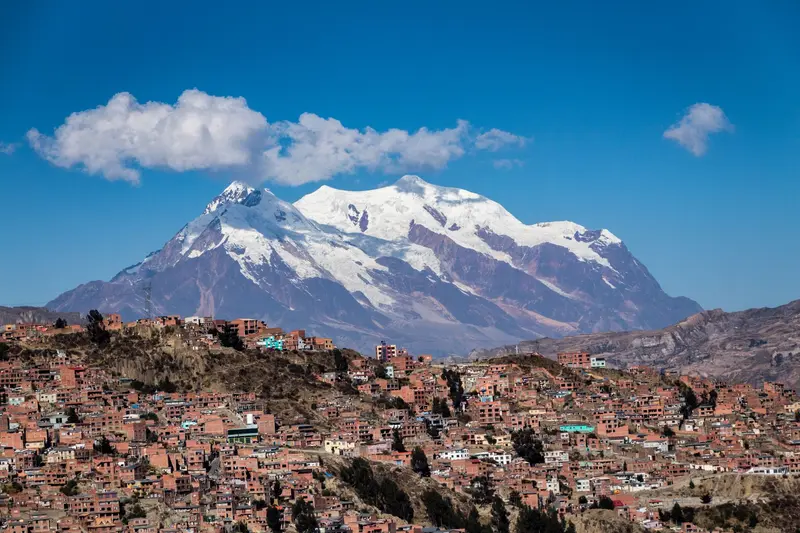
    La Paz

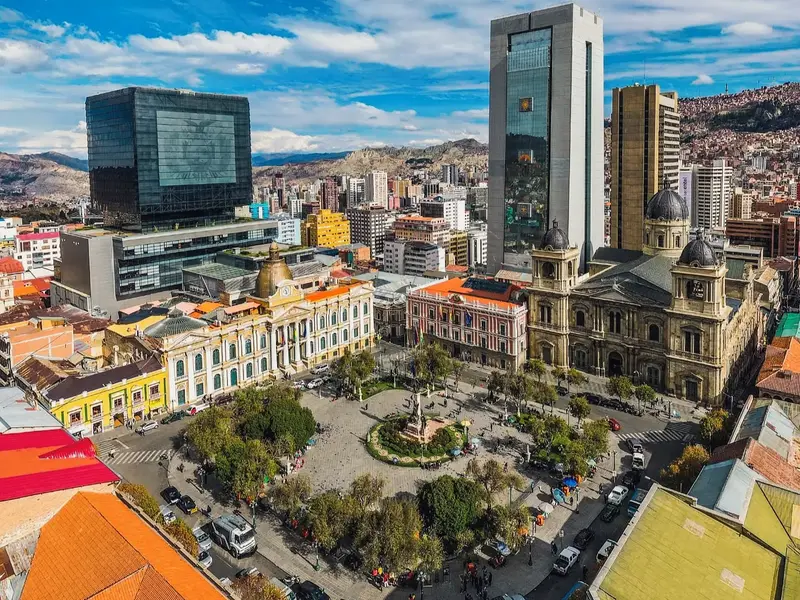
    Photo by Nair Cristopher Sánchez Muñoz on Pexels

    Bolivia

    La Paz

    CityCulture

    La Paz is Bolivia's seat of government and lies at around 3,650 m in a deep valley, above whose rim the city of El Alto spreads out at over 4,000 m.

    by Felix Gillen

    1. Home
    2. Destinations
    3. Bolivia
    4. La Paz
    La Paz is Bolivia's seat of government and lies at around 3,650 m in a deep valley, above whose rim the city of El Alto spreads out at over 4,000 m. You float with the Mi Teleférico cable car over rooftops and markets, visit the Witches' Market and the colonial street Calle Jaén, and experience the enormous Feria 16 de Julio market in El Alto.The city is a starting point for excursions to Tiwanaku, Lake Titicaca, and down into the Yungas. In recent years, a young culinary scene has also developed, working with ingredients from the Andes and the Amazon.
    Bolivia travel guideSee the round tripPlan a trip with La Paz

    Contents

    • Neighborhoods & highlights
    • Recommendations
    • Tours
    • Eat & drink
    • Culture
    • Getting around
    • Accommodation
    • Round trips
    • Nearby

    Sights in La Paz

    Discover the most important sights and attractions

    Point of Interest

    1Mi Teleférico (Central Station)

    The cable car has connected La Paz and El Alto since 2014 with its now ten lines, offering a bird's-eye view over the valley basin. A ride costs 3 Bolivianos, each transfer 2 Bolivianos. The red line takes you to the Feria 16 de Julio market in El Alto.
    Open in Google Maps
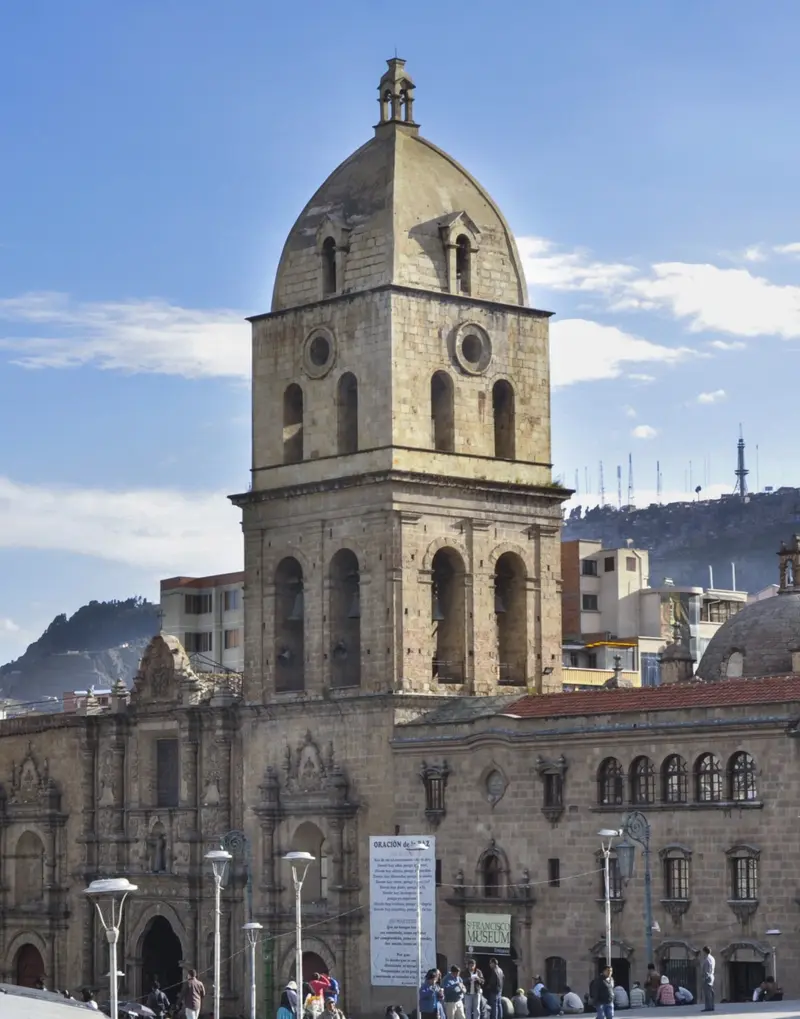
    Basilica of San Francisco

    EEJCC / Wikimedia Commons / CC BY-SA 4.0, mod.

    Church

    2Basilica of San Francisco

    The basilica, built between the 16th and 18th centuries, is the city's most famous church. A guided tour also takes you to the catacombs and up the bell tower.
    Open in Google Maps

    3Calle Jaén

    The cobbled alley is known as the best-preserved colonial street of La Paz. Its houses contain four small museums.
    Open in Google Maps
    Plaza Murillo

    Parallelepiped09 / Wikimedia Commons / CC BY-SA 4.0, mod.

    Historic Landmark

    4Plaza Murillo

    The square is Bolivia's political center, home to the Government Palace, Parliament, and Cathedral.
    Open in Google Maps
    Attraction

    5Mirador Killi Killi

    From the viewpoint on a hill east of the Old Town, you gaze over the city center and the valley basin.
    Open in Google Maps
    Valle de la Luna

    PsamatheM / Wikimedia Commons / CC BY-SA 4.0, mod.

    Park

    6Valle de la Luna

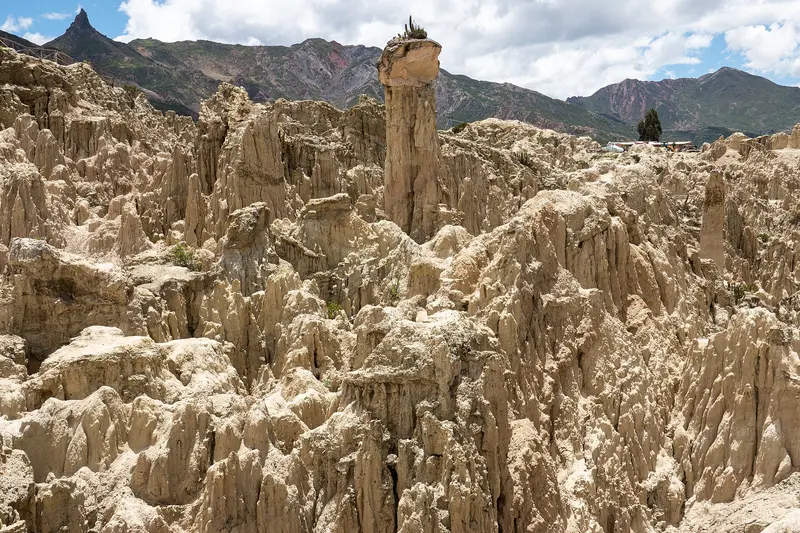
    Southeast of downtown, erosion carved a landscape of spires and gullies. You reach it in under an hour from the center, walking short paths.
    Open in Google Maps

    Tours & experiences in La Paz

    Search tours for La Paz on GetYourGuide* (Affiliate link)On GetYourGuide, with reviews from other travellers

    * Affiliate link: if you book through it, we earn a small commission. The price stays the same for you.

    Restaurants in La Paz

    1

    Gustu

    Fine dining with Bolivian ingredients in Calacoto. In 2024, Gustu ranked 38th on Latin America's 50 Best Restaurants and was named Bolivia's best restaurant. Lonely Planet calls it the catalyst for La Paz's culinary renewal.
    Show on Google Maps
    2

    Ali Pacha

    Purely plant-based tasting menus in Casco Viejo, recommended by Lonely Planet.
    Show on Google Maps
    3

    Arami

    Opened Nov 2024, the restaurant merges Amazonian and Andean ingredients, placing 48th on Latin America's 50 Best Restaurants in 2025.
    Show on Google Maps

    Culture & Daily Life

    Aymara City of El AltoEl Alto is shaped by Aymara culture. Striking are the Cholets by architect Freddy Mamani, dozens of colorful buildings in the "Neo-Andino" style. On Sundays, Cholita wrestling takes place in El Alto.Rituals and FestivalsAt the Mercado de las Brujas, vendors sell amulets, herbs, and offerings, and Yatiris read from coca leaves. Starting January 24, the city celebrates Alasita with miniatures for the god of fortune Ekeko, and in May or June, Gran Poder parades through the streets with thousands of dancers. Both festivals are UNESCO World Heritage sites.Young CuisineThe restaurant Gustu is considered the catalyst for the city's culinary renewal and, like Arami, is on the list of Latin America's 50 Best Restaurants.

    Getting There and Around

    ArrivalThe international airport in El Alto sits over 4,000 m high. Long-distance buses depart from the bus station and Terminal Villa Fátima (Yungas, Amazonas). The Foreign Office warns of bogus taxis and fake police at the station and airport, advising only pre-booked radio taxis.Mi Teleférico10 lines connect La Paz and El Alto3 Bolivianos for the first line, 2 Bolivianos per transferOperates Monday to Saturday approximately 6:30 to 22:30, Sundays 7 to 21AltitudeTake it easy for the first few days, as many paths lead steeply uphill. Information on altitude sickness can be found at the Foreign Office.

    Accommodations in La Paz

    Find perfect stay in La Paz

    Booking.com* (Affiliate link)
    Search Hotels
    Agoda* (Affiliate link)
    Search Hotels
    Airbnb
    Vacation Rentals

    * Affiliate link: if you book through it, we earn a small commission. The price stays the same for you.

    Plan your trip to La Paz

    Save places, build a route and plan your city trip, all in one place.

    1. 1
      Sunrise over alpine peaks and a sea of clouds
      1234

      Round trip

      12 days · 4 stops

      Saved

      Pick a route

      Pick a ready-made one or save places and plan your own.

      Open bookmarks
    2. 2

      Trip to La Paz

      Live
      • 1Mi Teleférico (Central Station)3 days
      • 2Basilica of San Francisco4 days
      • 3Calle Jaén5 days
      Budget

      Plan your trip

      The planner sorts stops, days and budget. Plan together in real time.

      Start trip planning
    3. 3
      9:41 No signal
      La Paz
      Available offline

      Photo by Nair Cristopher Sánchez Muñoz on Pexels

      Use it on the road

      Download the guide to your phone and use it on site, even offline.

    Round trips with La Paz

    Classic Bolivia: Lake Titicaca, Salar de Uyuni and Colonial Cities

    Classic Bolivia: Lake Titicaca, Salar de Uyuni and Colonial Cities

    The route connects the major destinations of the Bolivian highlands: La Paz with cable car and Tiwanaku, Lake Titicaca with Copacabana and the Isla del Sol, the Salar de Uyuni with the Lagoon Route, and finally the World Heritage cities Potosí and Sucre. All stages are traveled by bus, boat, or guided 4x4.

    13 Days
    8 stops
    Open jaw

    Nair Cristopher Sánchez Muñoz·Pexels

    Nearby

    Coroico and the Yungas

    Coroico and the Yungas

    Coroico is located at around 1,500 to 1,700 m in the Yungas, the subtropical valleys on the eastern slopes of the Andes, and is just two to four hours' drive from La Paz. Here, you exchange the cold highland air for green slopes and a mild climate.Famous is the old Yungas Road, also known as Camino de la Muerte (Death Road): approximately 64 km of gravel track that descends over 3,000 vertical meters from La Cumbre Pass at about 4,650 m. Since the opening of a paved bypass, it is primarily used by cyclists for guided descents.

    Alhen·CC BY-SA 4.0

    Tiwanaku

    Tiwanaku

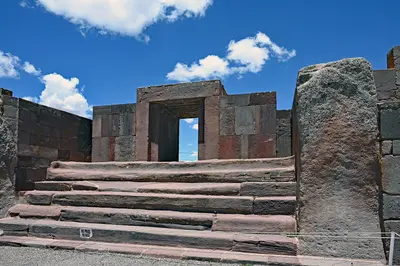
    Tiwanaku was the capital of a pre-Hispanic empire which, according to UNESCO, flourished on the Altiplano roughly between 400 and 900 AD, long before the Incas. The archaeological site, approximately 70 km west of La Paz, has been a UNESCO World Heritage site since 2000 and is a classic day trip from the capital.At around 3,850 m you will see the Akapana stepped pyramid, the Kalasasaya Temple with the Puerta del Sol, and the precisely carved stone blocks of Puma Punku. For the Aymara New Year on June 21, Tiwanaku is the scene of the central solstice ceremony.

    P. Hughes·CC BY 4.0

    Copacabana

    Copacabana

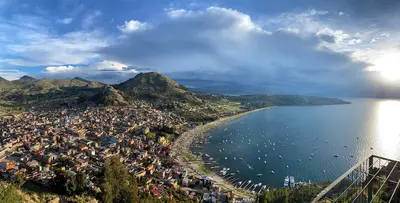
    Copacabana, on the shores of Lake Titicaca, is Bolivia's most important Catholic pilgrimage site and the port for boats to Isla del Sol. The lake lies at about 3,810 m and is considered the highest commercially navigable lake in the world.At its heart stands the Basilica of the Virgen de Copacabana, whose figure was carved around 1576. From Cerro Calvario, you look out over the bay; in the evenings, the sun colors the lake. The town is about four to five bus hours from La Paz.

    EEJCC·CC BY-SA 4.0

    Isla del Sol

    Isla del Sol

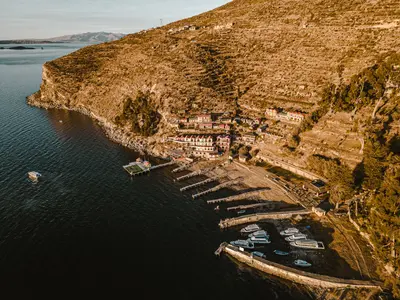
    In Inca myth, Isla del Sol in Lake Titicaca is considered the origin place of the sun and moon. The island, approximately 9 by 6 km, lies about 12 km northwest of Copacabana and has three settlements: Yumani in the south, Challa in the middle, and Challapampa in the north.You ascend the steep Inca staircase from Yumani, visit the ruins of Pilkokaina, and hike ancient paths across the island. The northern part with the Chincana Labyrinth has been repeatedly closed in recent years; inquire in Copacabana about its current status.

    Gabriel Ramos·Pexels

    Lake Titicaca

    Lake Titicaca

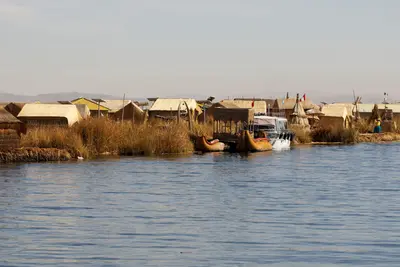
    Lake Titicaca lies at an altitude of approximately 3,810 meters in the Altiplano and is shared by Peru and Bolivia. It is considered the world's highest navigable lake. From Puno, boats depart for the Uros, islands that the inhabitants build and constantly renew from layers of totora reeds. Their boats are also made from the same reeds.Further out lies the natural island of Taquile, whose inhabitants speak Quechua and are renowned for their woven and knitted textiles. UNESCO recognizes Taquile's textile art as intangible cultural heritage. On the neighboring island of Amantaní, you can stay with families.Day trips to Uros and Taquile start in the morning from Puno's harbor.On the water, it is sunny and windy; bring warm clothing and sun protection.

    Gu Bra·Pexels

    Your next steps

    La Paz is in Bolivia. Ways to carry on from here.

    • More in Bolivia

      Highlights, areas, routes and the best time to travel for all of Bolivia.

      Bolivia travel guide
    • Round trips with La Paz

      One route passes through La Paz, with stops, nights and a map.

      See the round trip

    Sources & method

    • Photos: Wikimedia Commons, Pexels. Each photo carries its credit.
    • Place data such as addresses and ratings comes from Google Maps.
    • The content is based on web research from public, traceable sources. How the content is made · The role of AI