Fernweh: Home
    ExploreTravel GuidesPlan a tripMy tripLast visited
    de|en
    All Places & RegionsAll highlightsAbout FernwehFAQPrivacy PolicyImprint
    ExploreTravel GuidesPlan a tripMy tripLast visited
    Aconcagua Provincial Park
    Mariordo Mario Roberto Duran Ortiz / Wikimedia Commons / CC BY 3.0

    Argentina

    Aconcagua Provincial Park

    Point of Interest

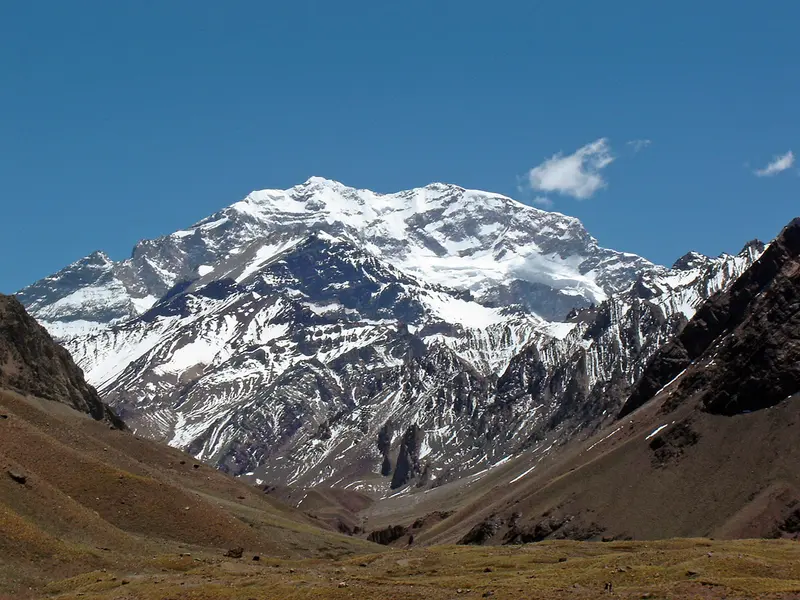
    Aconcagua, at 6,961 meters, is the highest mountain in the Americas.

    by Felix Gillen

    1. Home
    2. Destinations
    3. Argentina
    4. Mendoza and the Andes
    5. Aconcagua Provincial Park
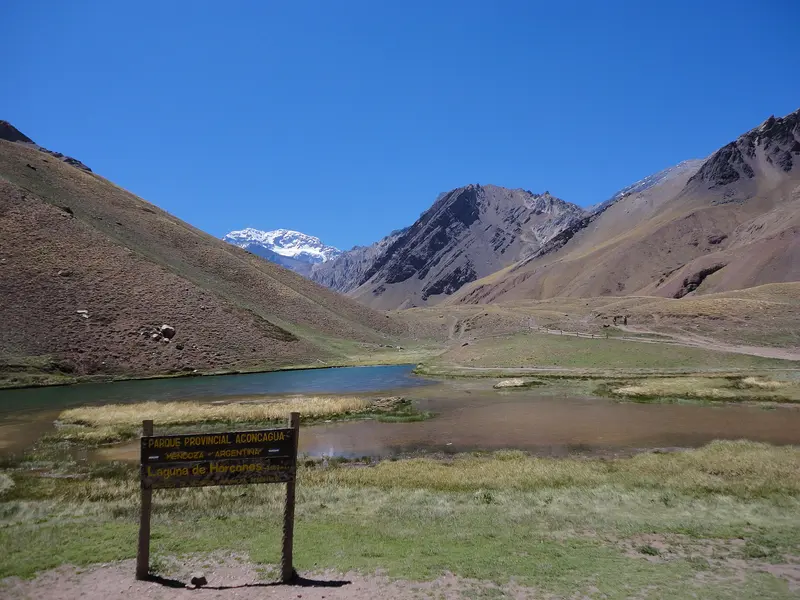
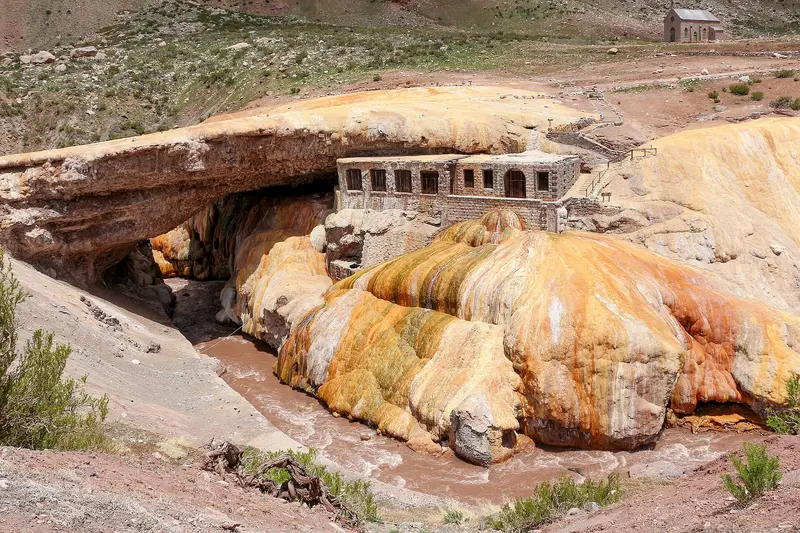
    Aconcagua, at 6,961 meters, is the highest mountain in the Americas. The provincial park protecting it is located about 180 kilometers west of Mendoza on Ruta Nacional 7 towards Chile, just past Puente del Inca and approximately 15 kilometers before the border. The drive there passes the Potrerillos reservoir and through the Andean village of Uspallata.Even without summit ambitions, a visit is worthwhile: A short circular trail leads to Laguna de Horcones with views of the massive south face; those with more time can hike in a day to the first base camp, Confluencia. For all trails, you need a permit, which you acquire in advance. The main season for trekking and ascents runs from mid-November to mid-March. Just before the park, a stop at Puente del Inca, a natural rock bridge over the river, is recommended.

    Sights in Aconcagua Provincial Park

    Discover the most important sights and attractions

    Laguna de Horcones

    1Laguna de Horcones

    The short, easy loop trail from the park's visitor center leads in about an hour to a small lagoon with views of Aconcagua's immense south face. It is the most popular hike for day visitors from Mendoza. A permit is also required for this.
    Open in Google Maps
    Puente del Inca

    2Puente del Inca

    Just a few kilometers before the park entrance, a natural rock bridge spans the river, steeped in legend. The small town on Ruta Nacional 7 is also the park's closest supply point. Almost all excursions from Mendoza to Aconcagua stop here.
    Open in Google Maps
    Hiking Trip to Confluencia

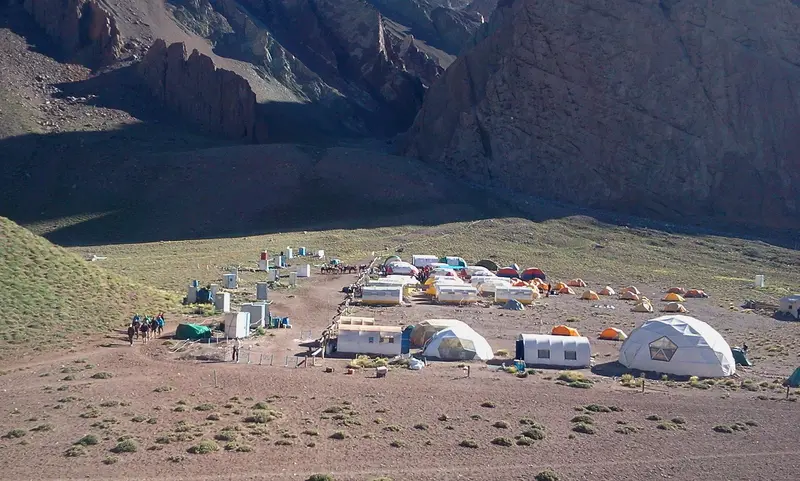
    3Hiking Trip to Confluencia

    With more time, hike from entrance past Laguna de Horcones through Horcones Valley to Confluencia, first base camp on summit path. It's a long return trip; permit required beforehand. Kids under 14 only to Quebrada del Durazno (approx. 3100m).
    Open in Google Maps

    Restaurants in Aconcagua Provincial Park

    Accommodations in Aconcagua Provincial Park

    Find perfect stay in Aconcagua Provincial Park

    Booking.com* (Affiliate link)
    Search Hotels
    Agoda* (Affiliate link)
    Search Hotels
    Airbnb
    Vacation Rentals

    * Affiliate link: if you book through it, we earn a small commission. The price stays the same for you.

    Nearby

    Mendoza and the Andes

    Mendoza and the Andes

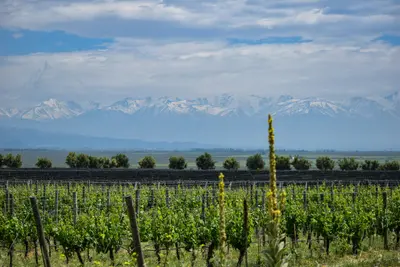
    Mendoza Province at the foot of the Andes is Argentina's most significant wine region: This is where most of the country's grapes grow, primarily Malbec. In a dry valley where only a small part of the soil is cultivable, irrigation channels make the landscape green. West of the capital, the road to Chile ascends to Aconcagua, the highest mountain in the Americas.The region is most pleasant in autumn, when the grape harvest runs from late February to April, and in spring from September to November.
    Providencia

    Providencia

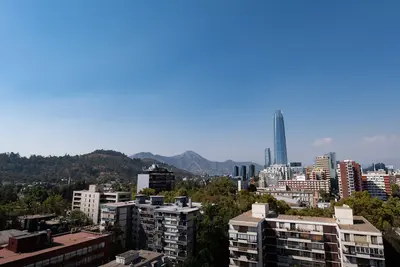
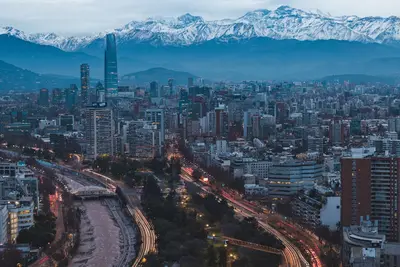
    Providencia is an independent commune east of the city center and one of Santiago's most pleasant residential and commercial districts. Tree-lined streets, parks along the Mapocho, numerous restaurants and excellent Metro connections make it a practical base for visitors.
    Bellavista

    Bellavista

    The district at the foot of Cerro San Cristóbal, north of the Río Mapocho, is known for colorful house facades, murals, and a bustling bar and restaurant scene. Here are Pablo Neruda's house La Chascona and the lower station of the funicular up the city hill.
    Barrio Lastarria

    Barrio Lastarria

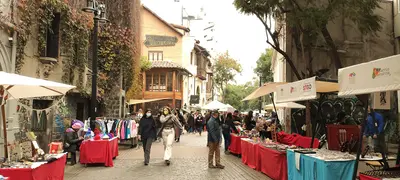
    This small historic district between Cerro Santa Lucía and Parque Forestal is one of Santiago's most popular going-out neighborhoods. The streets around the cobblestone Calle José Victorino Lastarria are lined with cafés, wine bars, bookstores, and cultural institutions such as GAM and MAVI.
    Historic Center

    Historic Center

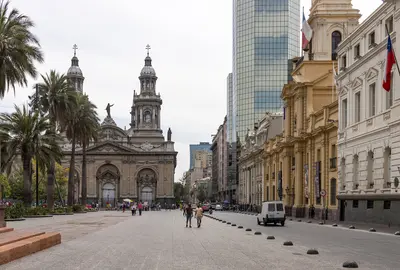
    The historic center is Santiago's oldest part, founded in 1541 around the Plaza de Armas. Here, the Cathedral, Presidential Palace, main museums, and Mercado Central are tightly clustered, connected by pedestrian streets like Paseo Ahumada.

    Sources & method

    • Photos: Wikimedia Commons. Each photo carries its credit.
    • The content is based on web research from public, traceable sources. How the content is made · The role of AI