Fernweh: Home
    ExploreTravel GuidesPlan a tripMy tripLast visited
    de|en
    All Places & RegionsAll highlightsAbout FernwehFAQPrivacy PolicyImprint
    ExploreTravel GuidesPlan a tripMy tripLast visited
    Sigiriya

    Sri Lanka

    Sigiriya

    Point of Interest

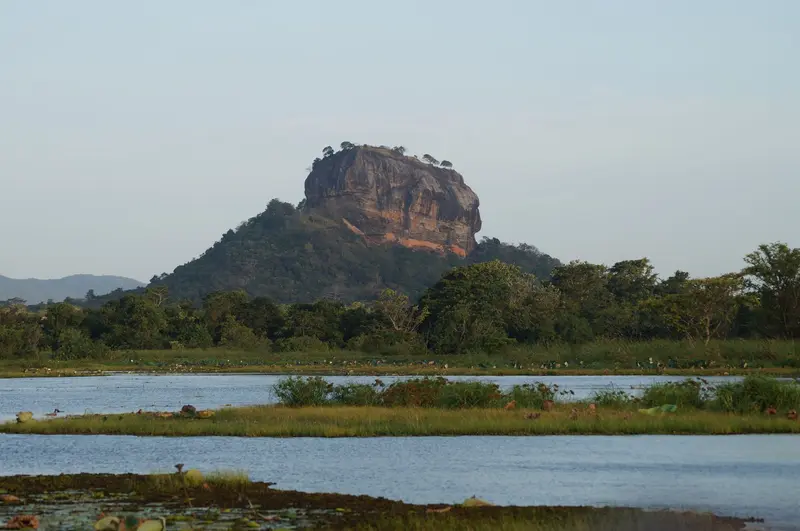
    Sigiriya is an approximately 180-meter-high granite rock in the Cultural Triangle, on whose summit plateau King Kashyapa had his palace built in the 5th century.

    by Felix Gillen

    1. Home
    2. Destinations
    3. Sri Lanka
    4. Culture Triad
    5. Sigiriya
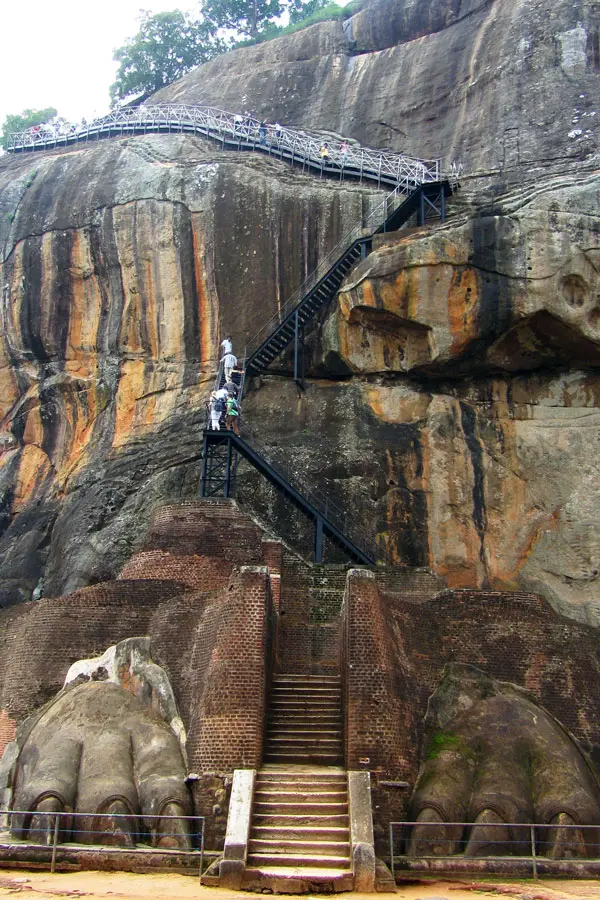
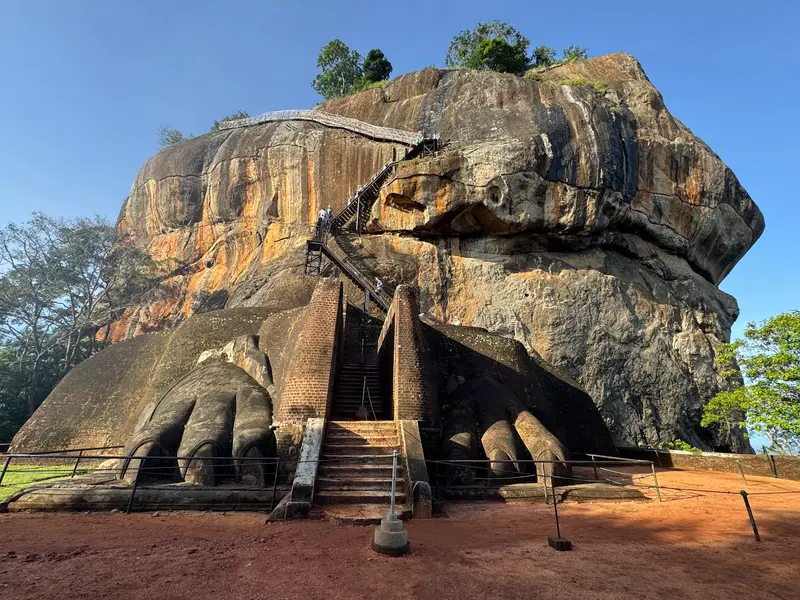
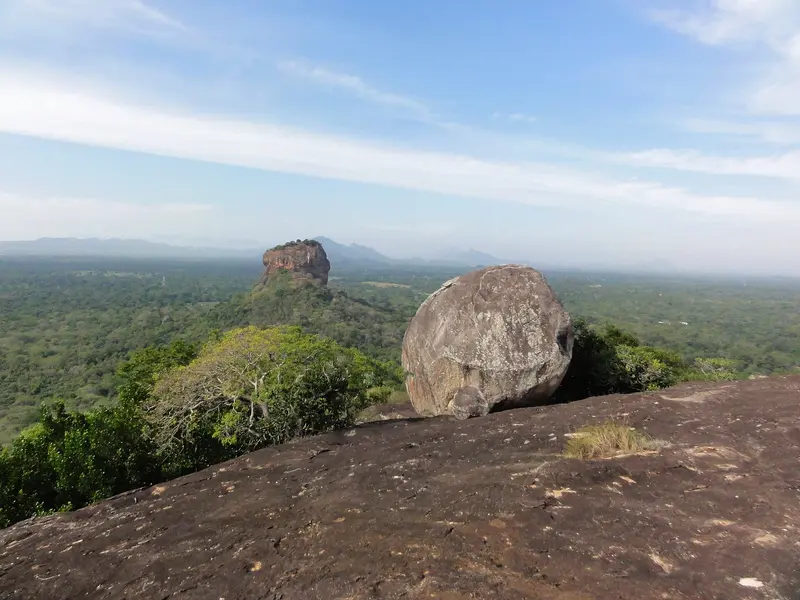
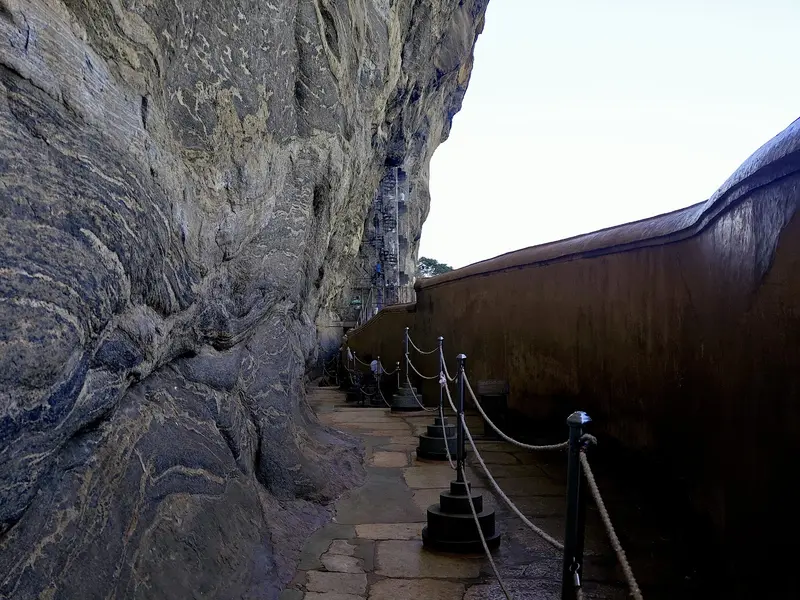
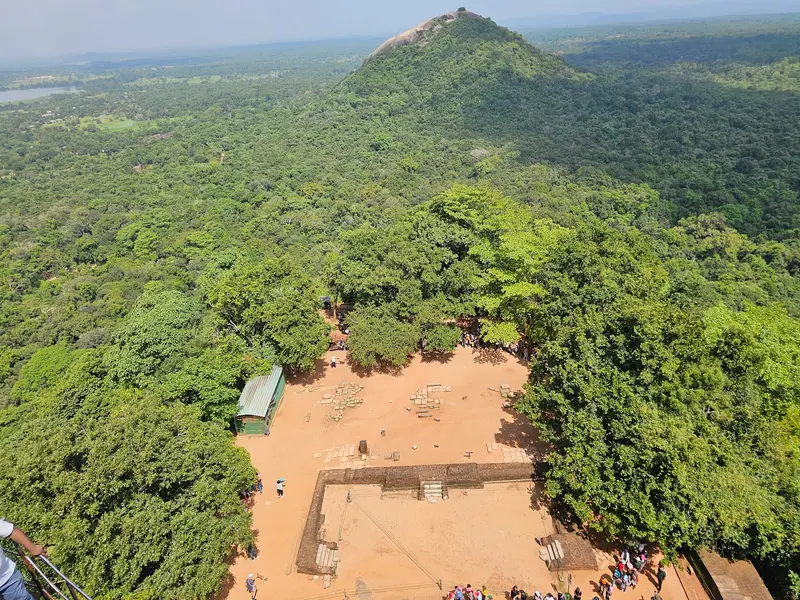
    Sigiriya is an approximately 180-meter-high granite rock in the Cultural Triangle, on whose summit plateau King Kashyapa had his palace built in the 5th century. The rock fortress, with water gardens, frescoes, and the Lion Gate, is one of Sri Lanka's most famous archaeological sites and has been on the UNESCO World Heritage List since 1982.The rock is located near the city of Dambulla. At the foot of the complex lies Sigiriya village, with accommodations and restaurants along a main road. Just under a kilometer north rises Pidurangala Rock, from which you can look out over Sigiriya.Kashyapa reigned, according to common dating, from 477 to 495 and made the rock both his palace and capital. The ascent leads through garden and terrace complexes, past the Mirror Wall and the Fresco Gallery to the Lion Gate, and from there up stairs to the plateau.

    Sights in Sigiriya

    Discover the most important sights and attractions

    Sigiriya Rock Fortress
    Attraction

    1Sigiriya Rock Fortress

    The granite rock rises approximately 180 meters above the plain; on its plateau lie the foundations of Kashyapa's 5th-century palace. Since 1982, the site has been on the UNESCO World Heritage List as the Ancient City of Sigiriya.
    Open in Google Maps
    Liongate
    Historic Landmark

    2Liongate

    On a plateau approximately halfway up stood a gate shaped like a lion, from which the rock gets its name. Preserved are the mighty paws, between which the staircase to the summit begins.
    Open in Google Maps
    Pidurangala Rock
    Historic Landmark

    3Pidurangala Rock

    The rock lies about one kilometre north of Sigiriya. The Pidurangala Vihara monastery was expanded under Kashyapa when he moved the monks from Sigiriya here. The climb takes 30 to 45 minutes, and the last stretch is a scramble over boulders. The ticket counter is staffed from 5 am to 6 pm; admission is 1,000 LKR (as of 2026).
    Open in Google Maps
    Mirror Wall
    Attraction

    4Mirror Wall

    The wall was originally coated with polished lime plaster. Visitors carved verses into the surface between the 6th and 14th centuries, which are today considered early examples of Sinhalese poetry.
    Open in Google Maps
    Frescoes of Sigiriya
    Attraction

    5Frescoes of Sigiriya

    According to the Central Cultural Fund, 22 female figures survive in a sheltered rock niche on the west face; originally hundreds of paintings decorated the rock wall. Further, different frescoes are found on the ceiling of the Cobra Hood Cave at the foot of the rock.
    Open in Google Maps
    Water Gardens
    Point of Interest

    6Water Gardens

    In the western district, three gardens lie symmetrically along an east-west axis. They are among the world's oldest landscaped gardens and merge into boulder and terraced gardens at the foot of the rock.
    Open in Google Maps

    Restaurants in Sigiriya

    1

    Little Hut

    One of the most popular spots on the village's main street, serving curries, roti, and fried rice, plus soups and desserts like chocolate roti. Spice levels adjusted upon request.
    Show on Google Maps
    2

    Kenoli Restaurant

    Family-run restaurant in the village with Sri Lankan classics, noodles and fried rice. Recommended: Egg Kottu, Biryani, Coconut Roti and fresh juices.
    Show on Google Maps
    3

    Moats Cafe

    One of the few cafés in the village, specializing in breakfast and brunch with avocado toast, waffles, omelets and shakshuka, plus cappuccino and matcha latte.
    Show on Google Maps

    Tickets, Opening Hours and Visitor Tips

    Admission for foreign adults (non-SAARC) is USD 35; SAARC nationals, USD 20 (per Central Cultural Fund, as of Oct 2026). The ticket includes museum entry and is payable in Rupees at the daily rate. Children under six enter free.Tickets are available online via the Central Cultural Fund portal (e-services.ccf.gov.lk) or on-site.Opening hours vary by source, but the ticket counter consistently closes around 5 PM.Pidurangala is temple-managed and costs LKR 1,000 (as of 2026). At the temple base, cover shoulders and knees; a cloth is provided.

    Getting Here & Around

    Buses from the state-run company depart approximately every 15 minutes from the Bastian-Mawatha-Terminal in Colombo to Dambulla, taking around four hours. From Dambulla, buses run approximately every 30 minutes to Sigiriya, taking around 40 minutes, with the last one around 6 PM. By tuk-tuk or taxi, the journey takes about 25 minutes.From Colombo Fort, you can reach Habarana by train in four to five hours; from there, it’s about 30 minutes by taxi.In the village, restaurants, the rock entrance, and Pidurangala are easily accessible by tuk-tuk.

    Accommodations in Sigiriya

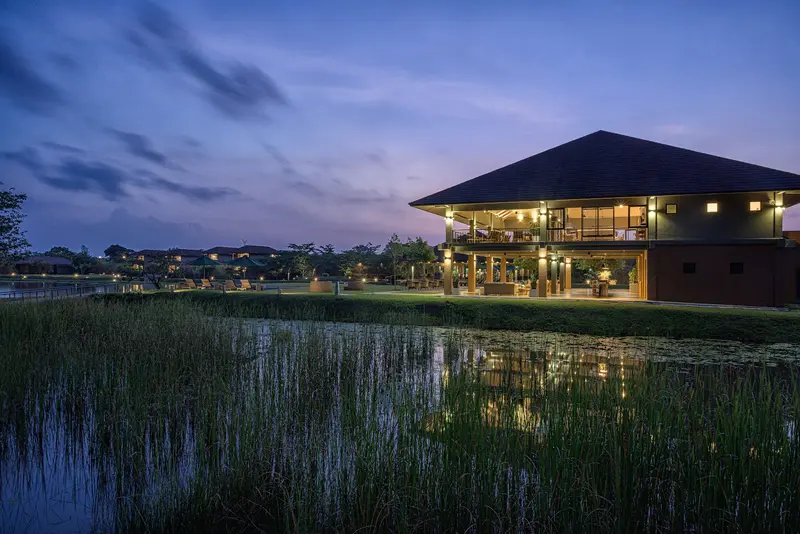
    Find perfect stay in Sigiriya

    Booking.com* (Affiliate link)
    Search Hotels
    Agoda* (Affiliate link)
    Search Hotels
    Airbnb
    Vacation Rentals

    * Affiliate link: if you book through it, we earn a small commission. The price stays the same for you.

    Nearby

    Culture Triad

    Culture Triad

    The Cultural Triangle in the dry central north of the island brings together Sri Lanka's most significant ancient cities and sanctuaries, nestled between Anuradhapura, Polonnaruwa, and Dambulla. Those interested in early Sinhalese history will find several UNESCO World Heritage Sites here in a compact area, alongside national parks featuring large elephant herds.The region lies north of Kandy, with Anuradhapura approximately 205 kilometres north of Colombo. Sigiriya and Dambulla, owing to their central position, serve as convenient starting points for day trips.
    Minneriya National Park

    Minneriya National Park

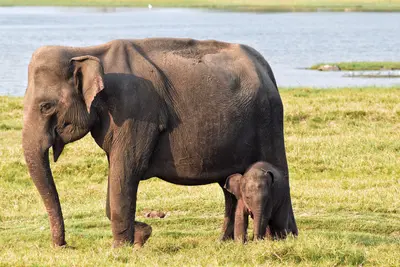
    Minneriya National Park, located in the Cultural Triangle, protects the catchment area of an ancient reservoir and is famous for the so-called Gathering: during the dry season, large numbers of elephants gather on its banks. Estimates range from 150 to 200 animals, with some reports mentioning up to 700.The park is situated approximately 182 kilometres from Colombo, between Sigiriya and Polonnaruwa, and covers nearly 8,900 hectares. King Mahasena commissioned the Minneriya Reservoir in the 3rd century.Declared a protected area in 1938, Minneriya became a National Park in 1997. Besides elephants, Sambar deer, White-bearded langurs, Toque macaques, and rarely leopards live here; additionally, around 160 bird species are recorded, including Grey Pelicans and Painted Storks.
    Dambulla

    Dambulla

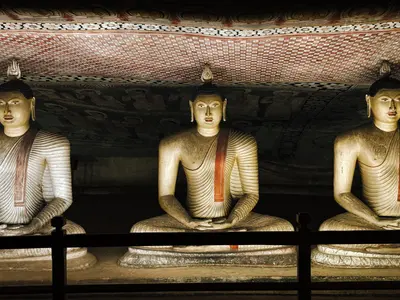
    Dambulla is a market town in the heart of the Cultural Triangle, renowned for its cave temple featuring 153 Buddha statues and approximately 2,100 square meters of wall paintings. Situated on the main road to Anuradhapura and close to Sigiriya, the town also serves as a convenient transport hub for the region.The cave temple is located at the foot and on the flank of a rock that rises 150 to 160 meters above the plain. Below it stands the golden Buddha statue of the newer temple and museum complex, separate from the historic site. The town center, with its bus station and shops, stretches along the main thoroughfares, while to the southwest, on the road to Kurunegala, lie the megalithic tombs of Ibbankatuwa.According to tradition, King Valagamba found refuge in the caves for 15 years in the 1st century BCE and later had them converted into a temple. Since 1991, the complex has been a UNESCO World Heritage site.
    Polonnaruwa

    Polonnaruwa

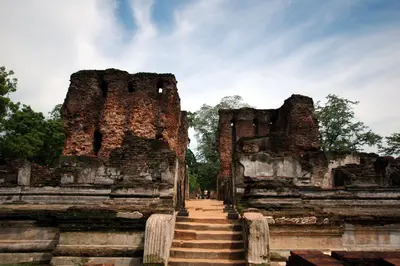
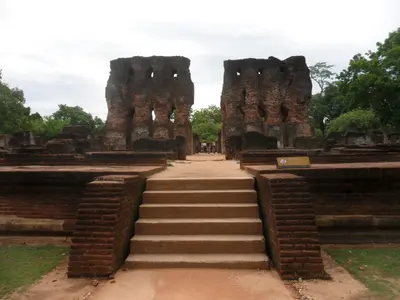
    Polonnaruwa, Sri Lanka's second great royal city after Anuradhapura, boasts an extensive ruined city, a UNESCO World Heritage site since 1982. Palace complexes, temples, and the rock sculptures of Gal Vihara can be easily explored by bike in a day.The city lies east of the Cultural Triangle, by the Parakrama Samudra reservoir. Its archaeological zone stretches north of the current city, while the modern center with train and bus stations is about three kilometers south in the Kaduruwela district.After Vijayabahu I captured the city in 1070, it flourished under Parakramabahu I in the 12th century. From this era derive the Royal Palace, the Sacred Quadrangle with the Vatadage, and irrigation systems surpassing those of the Anuradhapura period.
    Anuradhapura

    Anuradhapura

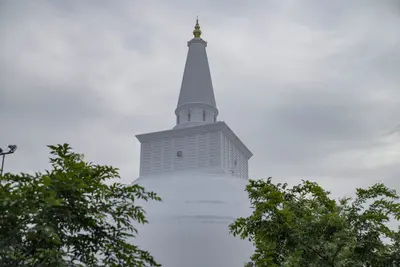
    Anuradhapura was the capital of the Sinhalese kings for over a millennium and remains to this day one of the holiest cities of Buddhism in Sri Lanka. Huge dagobas, monastery ruins, and the Sri Maha Bodhi, considered the oldest human-planted tree with a known planting date, attract pilgrims and travelers alike.The city lies about 205 kilometers north of Colombo, at the northern edge of the Cultural Triangle. Since the 1949 protection plan, the sacred Old Town with its ruins and the New Town to its east, with government offices, the railway station, and most accommodations, have been separated.The city was the royal seat from the 4th century BC until the end of the 10th century. Since 1982, the Sacred City of Anuradhapura is on the UNESCO World Heritage List. East of the city lies the pilgrim mountain Mihintale.

    Sources & method

    • Photos: Wikimedia Commons, Pexels, Google Maps. Each photo carries its credit.
    • Place data such as addresses and ratings comes from Google Maps.
    • The content is based on web research from public, traceable sources. How the content is made · The role of AI