Fernweh: Home
    ExploreTravel GuidesPlan a tripMy tripLast visited
    de|en
    All Places & RegionsAll highlightsAbout FernwehFAQPrivacy PolicyImprint
    ExploreTravel GuidesPlan a tripMy tripLast visited
    • Neighborhoods & highlights
    • Eat & drink
    • Culture
    • Getting around
    • Accommodation
    • Plan trip
    • Nearby
    Dambulla

    Sri Lanka

    Dambulla

    City

    Dambulla is a market town in the heart of the Cultural Triangle, renowned for its cave temple featuring 153 Buddha statues and approximately 2,100 square meters of wall paintings.

    by Felix Gillen

    1. Home
    2. Destinations
    3. Sri Lanka
    4. Culture Triad
    5. Dambulla
    Dambulla is a market town in the heart of the Cultural Triangle, renowned for its cave temple featuring 153 Buddha statues and approximately 2,100 square meters of wall paintings. Situated on the main road to Anuradhapura and close to Sigiriya, the town also serves as a convenient transport hub for the region.The cave temple is located at the foot and on the flank of a rock that rises 150 to 160 meters above the plain. Below it stands the golden Buddha statue of the newer temple and museum complex, separate from the historic site. The town center, with its bus station and shops, stretches along the main thoroughfares, while to the southwest, on the road to Kurunegala, lie the megalithic tombs of Ibbankatuwa.According to tradition, King Valagamba found refuge in the caves for 15 years in the 1st century BCE and later had them converted into a temple. Since 1991, the complex has been a UNESCO World Heritage site.

    Sights in Dambulla

    Discover the most important sights and attractions

    Golden Temple and golden Buddha statue
    Place of Worship

    1Golden Temple and golden Buddha statue

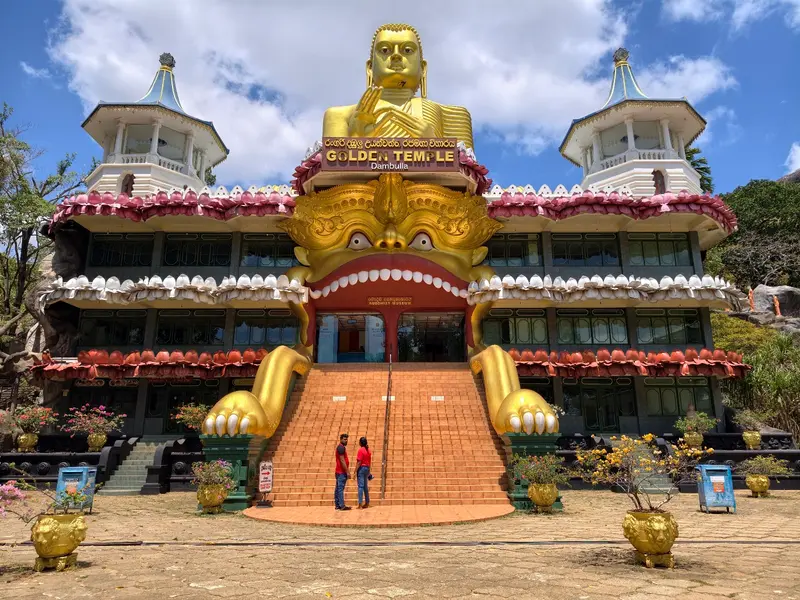
    Below the cave temple stands a newer temple and museum building with a large golden Buddha figure. It was deliberately built away from the historic complex.
    Open in Google Maps
    Megalithic Tombs of Ibbankatuwa
    Point of Interest

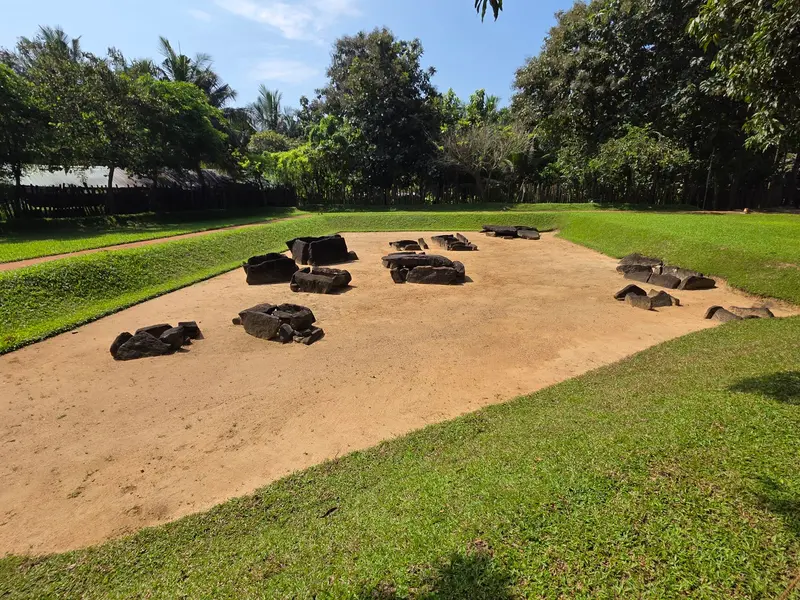
    2Megalithic Tombs of Ibbankatuwa

    Prehistoric burial site approximately five kilometers southwest of the city on the road to Kurunegala, with 42 groups of cist graves. Dates range from about 700 to 400 BC; pottery and beads were found.
    Open in Google Maps
    Popham Arboretum
    Park

    3Popham Arboretum

    A small forest reserve on the city's edge, known for the rare Slender Loris. Guided night walks offer a chance to spot this nocturnal creature, while by day, you'll encounter butterflies and birds.
    Open in Google Maps
    Cave Temples of Dambulla
    Place of Worship

    4Cave Temples of Dambulla

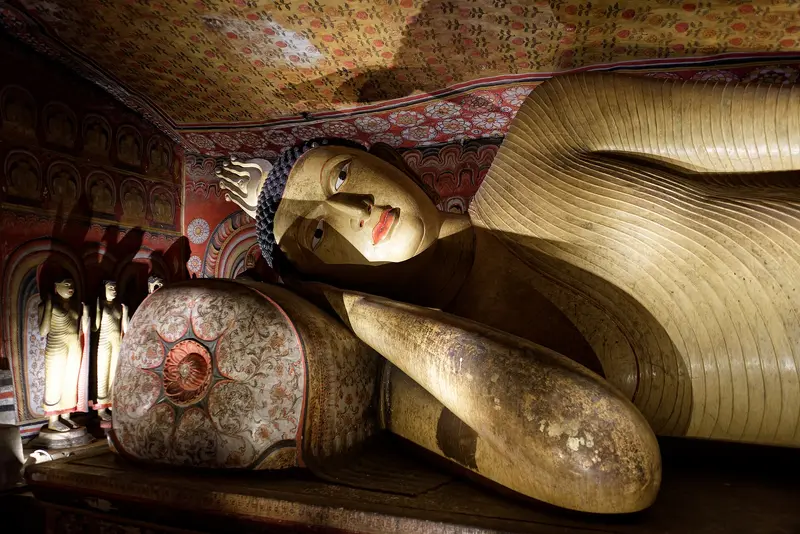
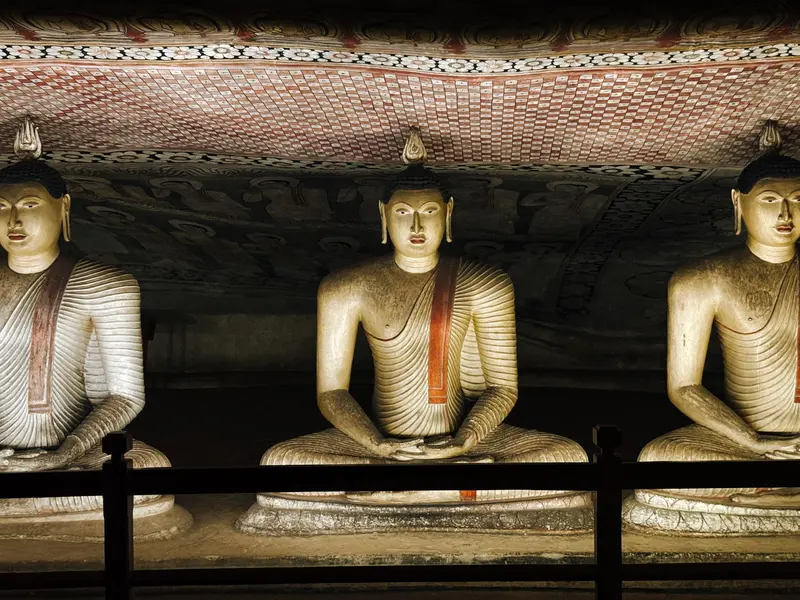
    Five main caves house 153 Buddha statues, three royal and four deity statues, along with approximately 2,100 square meters of murals. The complex has been a UNESCO World Heritage site since 1991 and, according to tradition, dates back to King Valagamba in the 1st century BC.
    Open in Google Maps

    Restaurants in Dambulla

    1

    Rithu Restaurant

    Located on the road to Sigiriya, popular with locals and travelers for its moderately priced curries.
    Show on Google Maps

    Temple visit and admission

    The Cave Temple is an active sanctuary. Cover your shoulders and knees. You can leave your shoes at the shoe storage for a small fee.Admission for foreign visitors: figures range between 2,000 and 3,000 LKR (as of 2026), payable in rupees.According to guidebooks, open from 7 AM to 7 PM; the ticket counter closes around 5 PM.The path from the ticket counter to the caves is a stair climb up the rock face.

    Getting There and Around

    Buses depart approximately every 15 minutes from Bastian-Mawatha-Terminal in Colombo to Dambulla; the journey takes around four hours. Express buses are faster. To Anuradhapura, you'll need two to three hours by bus.Buses to Sigiriya depart every 30 minutes, taking about 40 minutes; by taxi, it's approximately 25 minutes.Bus line 48 to Polonnaruwa departs from the main bus station from 7 AM onwards every 20 to 30 minutes, with a journey time of 1.5 to 2 hours.By train from Colombo Fort, you can reach Habarana or the surrounding area in four to five hours; the rest of the route is covered by bus or taxi.

    Accommodations in Dambulla

    Find perfect stay in Dambulla

    Booking.com* (Affiliate link)
    Search Hotels
    Agoda* (Affiliate link)
    Search Hotels
    Airbnb
    Vacation Rentals

    * Affiliate link: if you book through it, we earn a small commission. The price stays the same for you.

    Plan your trip to Dambulla

    Save places, build a route and plan your city trip, all in one place.

    1. 1
      Sunrise over alpine peaks and a sea of clouds
      1234

      Round trip

      12 days · 4 stops

      Saved

      Pick a route

      Pick a ready-made one or save places and plan your own.

      Open bookmarks
    2. 2

      Trip to Dambulla

      Live
      • 1Golden Temple and golden Buddha statue3 days
      • 2Megalithic Tombs of Ibbankatuwa4 days
      • 3Popham Arboretum5 days
      Budget

      Plan your trip

      The planner sorts stops, days and budget. Plan together in real time.

      Start trip planning
    3. 3
      9:41 No signal
      Dambulla
      Available offline

      Use it on the road

      Download the guide to your phone and use it on site, even offline.

    Nearby

    Sigiriya

    Sigiriya

    Sigiriya is an approximately 180-meter-high granite rock in the Cultural Triangle, on whose summit plateau King Kashyapa had his palace built in the 5th century. The rock fortress, with water gardens, frescoes, and the Lion Gate, is one of Sri Lanka's most famous archaeological sites and has been on the UNESCO World Heritage List since 1982.The rock is located near the city of Dambulla. At the foot of the complex lies Sigiriya village, with accommodations and restaurants along a main road. Just under a kilometer north rises Pidurangala Rock, from which you can look out over Sigiriya.Kashyapa reigned, according to common dating, from 477 to 495 and made the rock both his palace and capital. The ascent leads through garden and terrace complexes, past the Mirror Wall and the Fresco Gallery to the Lion Gate, and from there up stairs to the plateau.
    Culture Triad

    Culture Triad

    The Cultural Triangle in the dry central north of the island brings together Sri Lanka's most significant ancient cities and sanctuaries, nestled between Anuradhapura, Polonnaruwa, and Dambulla. Those interested in early Sinhalese history will find several UNESCO World Heritage Sites here in a compact area, alongside national parks featuring large elephant herds.The region lies north of Kandy, with Anuradhapura approximately 205 kilometres north of Colombo. Sigiriya and Dambulla, owing to their central position, serve as convenient starting points for day trips.
    Minneriya National Park

    Minneriya National Park

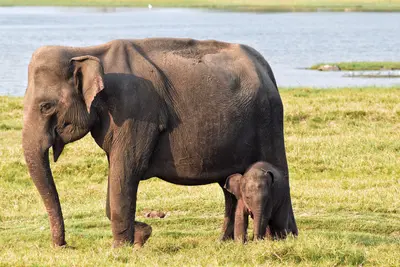
    Minneriya National Park, located in the Cultural Triangle, protects the catchment area of an ancient reservoir and is famous for the so-called Gathering: during the dry season, large numbers of elephants gather on its banks. Estimates range from 150 to 200 animals, with some reports mentioning up to 700.The park is situated approximately 182 kilometres from Colombo, between Sigiriya and Polonnaruwa, and covers nearly 8,900 hectares. King Mahasena commissioned the Minneriya Reservoir in the 3rd century.Declared a protected area in 1938, Minneriya became a National Park in 1997. Besides elephants, Sambar deer, White-bearded langurs, Toque macaques, and rarely leopards live here; additionally, around 160 bird species are recorded, including Grey Pelicans and Painted Storks.
    Polonnaruwa

    Polonnaruwa

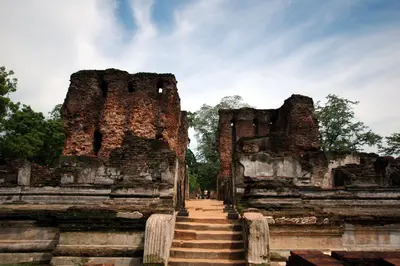
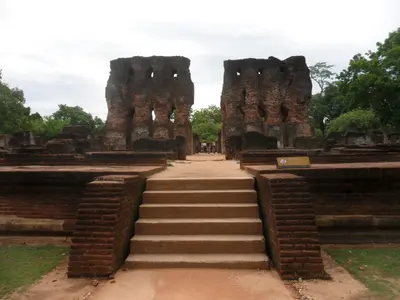
    Polonnaruwa, Sri Lanka's second great royal city after Anuradhapura, boasts an extensive ruined city, a UNESCO World Heritage site since 1982. Palace complexes, temples, and the rock sculptures of Gal Vihara can be easily explored by bike in a day.The city lies east of the Cultural Triangle, by the Parakrama Samudra reservoir. Its archaeological zone stretches north of the current city, while the modern center with train and bus stations is about three kilometers south in the Kaduruwela district.After Vijayabahu I captured the city in 1070, it flourished under Parakramabahu I in the 12th century. From this era derive the Royal Palace, the Sacred Quadrangle with the Vatadage, and irrigation systems surpassing those of the Anuradhapura period.
    Kandy & Highlands

    Kandy & Highlands

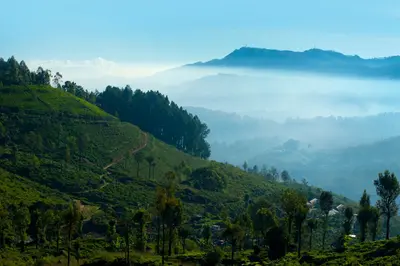
    The central highlands are Sri Lanka's cool heart: From the ancient royal city of Kandy, roads and railway lines ascend into tea country, cloud forests, and plateaus at around 2,000 meters. For those seeking a change from beaches and the Cultural Triangle, this area offers hiking trails, tea factories, and one of Asia's most famous railway lines.Kandy, with its Temple of the Tooth, is the religious center of Sinhalese Buddhism. Further south are colonial Nuwara Eliya, the hiking towns of Ella and Haputale, Horton Plains National Park with World's End cliff, and the pilgrim mountain Adam's Peak.The railway connection through the highlands was interrupted for months after Cyclone Ditwah. Since June 2026, trains have been running again between Nanu Oya and Badulla, but from Kandy, the journey currently still goes by road (as of October 2026).

    Sources & method

    • Photos: Wikimedia Commons, Pexels, Google Maps. Each photo carries its credit.
    • Place data such as addresses and ratings comes from Google Maps.
    • The content is based on web research from public, traceable sources. How the content is made · The role of AI