Fernweh: Home
    ExploreTravel GuidesPlan a tripMy tripLast visited
    de|en
    All Places & RegionsAll highlightsAbout FernwehFAQPrivacy PolicyImprint
    ExploreTravel GuidesPlan a tripMy tripLast visited
    • Overview
    • Places in the region
    • Food culture
    • Culture
    • Getting around
    • Nearby
    Tennessee
    Rhododendrites / Wikimedia Commons / CC BY-SA 4.0

    United States

    Tennessee

    Region

    Tennessee is the long, narrow state stretching from the Appalachians to the Mississippi River, about 440 miles end to end.

    by Felix Gillen

    1. Home
    2. Destinations
    3. United States
    4. Tennessee
    Tennessee is the long, narrow state stretching from the Appalachians to the Mississippi River, about 440 miles end to end. People come for the music, from country in Nashville to blues and soul in Memphis, and for Great Smoky Mountains, the most visited national park in the country.The state splits into three Grand Divisions, the same three represented by the stars on the state flag: East Tennessee, with Knoxville, Chattanooga and the Smokies; Middle Tennessee, with Nashville and rolling whiskey country; and flat West Tennessee, with Memphis on the Mississippi. I-40 ties all three together.
    Most Tennessee road trips run along I-40, which covers about 455 miles from Memphis through Nashville and Knoxville to the North Carolina line. The Memphis-to-Nashville stretch is officially signed as the Music Highway. Ten days is enough for the three big stops:Nashville (2 to 3 days): the honky-tonks on Lower Broadway, the Ryman, the Grand Ole Opry and the Country Music Hall of Fame.Great Smoky Mountains (2 to 3 days): Cades Cove, Newfound Gap and Kuwohi, usually with Gatlinburg or Townsend as your base.Memphis (2 days): Graceland, the National Civil Rights Museum at the former Lorraine Motel, blues on Beale Street and barbecue.Chattanooga and Knoxville are on the way from Nashville to the Smokies, and the whiskey country around Lynchburg, home of Jack Daniel's, is southeast of Nashville. Spring (April and May) and October are the most comfortable times to go, with mild weather and fall color in the mountains. October is also when the Smokies are at their busiest.RV travelGreat Smoky Mountains: Cades Cove and Elkmont: The two big NPS campgrounds on the Tennessee side of the park. Cades Cove is open year-round and has a dump station; Elkmont is seasonal and has none. Neither has hookups or showers, and reservations on Recreation.gov are required. Any vehicle parked for more than 15 minutes also needs a parking tag.Nashville KOA Resort: 2626 Music Valley Drive near Opryland, about 20 minutes' drive from downtown. Plenty of full-hookup sites and a paid shuttle downtown, so the RV can stay parked.
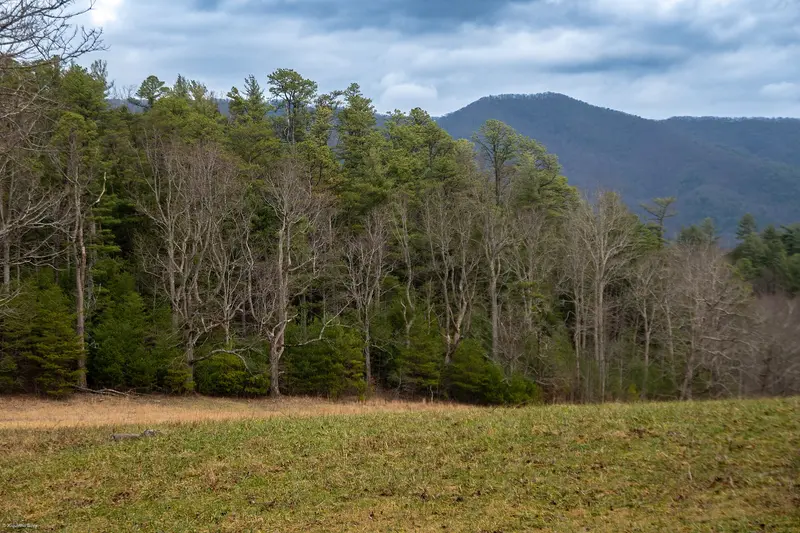
    Great Smoky Mountains National Park
    xiquinhosilva / Wikimedia Commons / CC BY 4.0

    Place 1 of 2

    Great Smoky Mountains National Park

    Great Smoky Mountains National Park straddles the Tennessee–North Carolina line in the Appalachians, split roughly half and half between the two states, about an hour southeast of Knoxville.

    Discover
    Nashville
    Jschnake / Wikimedia Commons / CC BY-SA 4.0

    Place 2 of 2

    Nashville

    Nashville is Tennessee's capital and the center of the country music world, about three hours east of Memphis by car.

    Discover

    Food and Drink

    Tennessee food is hearty and Southern. In Nashville the lines are for hot chicken, in Memphis for ribs.
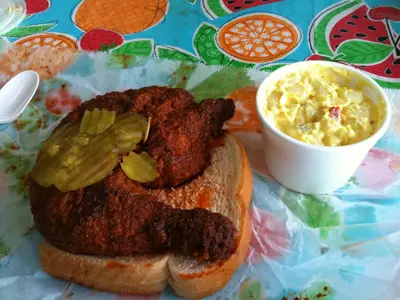
    Nashville Hot Chicken

    Nashville Hot Chicken

    Fried chicken brushed with a cayenne-heavy spice paste after it comes out of the fryer. The dish traces back to Thornton Prince in the 1930s, and his family still runs Prince's Hot Chicken. Start with a medium heat level the first time; "hot" is plenty for most people.

    Memphis Barbecue

    Memphis Barbecue

    Memphis barbecue is all about pork, slow-cooked in a pit. Ribs come "dry," with a spice rub and no sauce, or "wet," mopped with sauce, and pulled pork is everywhere. Rendezvous (since 1948) and Central BBQ are the classics. The World Championship Barbecue Cooking Contest takes over the riverfront every May during Memphis in May.
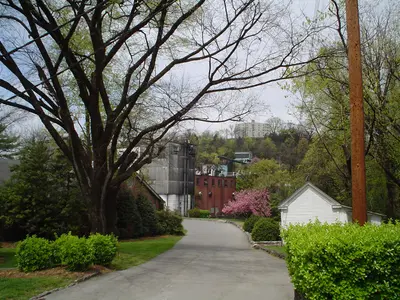
    Tennessee Whiskey

    Tennessee Whiskey

    Since 2013, state law has required anything labeled Tennessee whiskey to be made in the state and filtered through maple charcoal before aging, the Lincoln County Process. The best-known distilleries are Jack Daniel's in Lynchburg and George Dickel near Tullahoma, and both offer tours. Book Jack Daniel's online ahead of time for weekends.
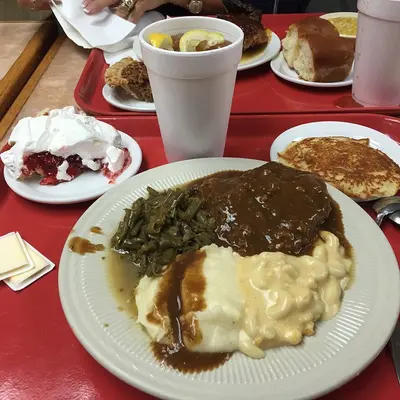
    Meat and Three

    Meat and Three

    The classic Southern lunch: one meat and three sides such as mac and cheese, collard greens or candied yams, with cornbread and sweet tea. In Nashville, Arnold's Country Kitchen is the standard-bearer, recommended by the Michelin Guide and open for lunch only.

    Culture and History

    Few states have shaped American popular music the way Tennessee has. The radio show that became the Grand Ole Opry first went on the air in Nashville in 1925 and is still broadcasting. Elvis lived in Memphis, where Graceland is now a museum, and Beale Street is one of the places the blues grew up.The civil rights movement is close to the surface here too. Dr. Martin Luther King Jr. was assassinated at the Lorraine Motel in Memphis in 1968, and the National Civil Rights Museum now occupies the site.In the east, Appalachian culture sets the tone: bluegrass, crafts and the log cabins you'll see in Cades Cove. Watch the time zones. Most of East Tennessee is on Eastern Time, while Nashville and Memphis are on Central, an hour behind.Many rural counties still restrict alcohol sales. Lynchburg, home of the Jack Daniel's distillery, has been dry since Prohibition.

    Getting Around

    You'll need a car. Intercity buses only link the big cities, and there's no public transit inside the national park.Flying in: Nashville (BNA) is the main airport. Memphis and Knoxville have smaller ones, and Knoxville is about 40 miles from Gatlinburg and the Smokies.Drive times: Memphis to Nashville is about 3 hours on I-40, Nashville to Knoxville roughly 2.5 to 3 hours, and Knoxville to Gatlinburg about an hour. Expect weekday rush-hour backups around Nashville and Knoxville, and heavy traffic on holiday weekends.Time zone: Heading east from Nashville, you lose an hour on the Cumberland Plateau.National park: Any car parked in Great Smoky Mountains for more than 15 minutes needs a parking tag ($5 a day, $15 a week, $40 a year).

    Nearby

    Nashville

    Nashville

    Nashville is Tennessee's capital and the center of the country music world, about three hours east of Memphis by car. Come for a night of live music in a dozen bars with no cover, then spend the next one at the Grand Ole Opry or the Ryman Auditorium, where so much of the genre's history happened.NeighborhoodsLower Broadway (Downtown): The honky-tonks line Broadway from 1st to 5th Avenue, with bands playing from around 10 a.m. until 3 a.m. and no cover charge. The Ryman and the Country Music Hall of Fame are steps away. Friday and Saturday nights are the most crowded.The Gulch: On the southwest edge of downtown. Twenty years ago it was mostly parking lots; now it's apartment towers, restaurants and boutiques. For bluegrass, head to the Station Inn.East Nashville: Across the Cumberland River, less than a mile from downtown and walkable over the pedestrian bridge. Around Five Points you'll find small restaurants, record stores and bars that lean Americana and indie rather than honky-tonk.Germantown and Music Row: Germantown, just north of downtown, has some of the city's best-known restaurants, including Rolf and Daughters and City House. Music Row is home to record labels and historic RCA Studio B.
    Great Smoky Mountains National Park

    Great Smoky Mountains National Park

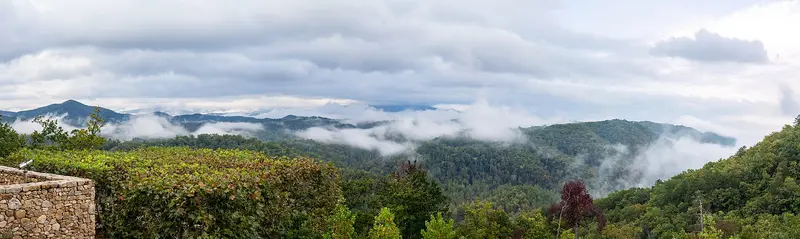
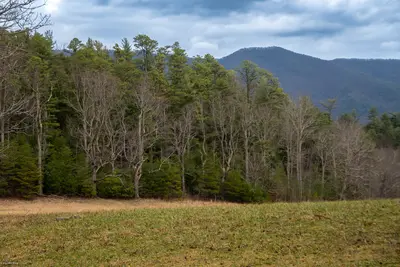
    Great Smoky Mountains National Park straddles the Tennessee–North Carolina line in the Appalachians, split roughly half and half between the two states, about an hour southeast of Knoxville. Come for forested ridges topping 6,600 feet, black bears and the log cabins of Cades Cove, all with no entrance fee.With more than 12 million visits in 2024, it's the most visited national park in the country and has been a UNESCO World Heritage Site since 1983. About 1,900 black bears live here.Before you goNo entrance fee, but you need a parking tag: Since 2023, any vehicle parked for more than 15 minutes needs a tag: $5 a day, $15 a week or $40 a year (as of October 2026). Tags must be printed and displayed on your dashboard; digital copies don't count. Buy daily and weekly tags on recreation.gov and print them, or get one at a visitor center or kiosk, but most trailheads don't have machines. America the Beautiful passes aren't accepted.Where to stay: On the Tennessee side, most people base themselves in Gatlinburg, about 2 miles from Sugarlands Visitor Center, or in quieter Townsend near Cades Cove. Cherokee is the gateway on the North Carolina side.Hurricane Helene (September 2024): The eastern, North Carolina side took the worst of it, especially Cataloochee and Big Creek. As of October 23, 2026, the NPS still lists several trails there as closed, including Caldwell Fork, Gunter Fork and Swallow Fork, and Big Creek Trail is open only for its first two miles. The main sights on the Tennessee side weren't affected. Check the park's Current Road, Facility, Trail Closures page before any hike.Other closures: Popular Laurel Falls Trail near Gatlinburg is closed for rehabilitation and expected to reopen in 2027.
    Georgia

    Georgia

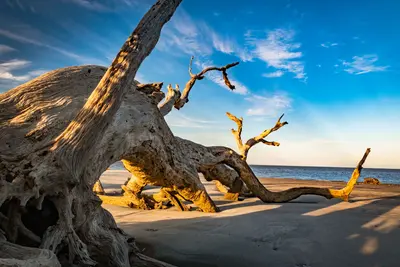
    Georgia runs from the southern tip of the Appalachians down to a quiet Atlantic coast of salt marsh and barrier islands. People come for Savannah, for Atlanta's civil rights history, and for wild places like the Okefenokee Swamp and undeveloped Cumberland Island.In Atlanta, the Martin Luther King Jr. National Historical Park preserves the neighborhood where King was born and preached. Down on the coast are the Golden Isles: Jekyll Island was the winter retreat of an exclusive millionaires' club from 1888 to 1942 and has belonged to the state since 1947, while Cumberland Island is home to 100 to 200 feral horses. In the southeast corner lies the Okefenokee, a vast wetland that feeds the Suwannee and St. Marys rivers.Georgia was one of the original 13 colonies and later joined the Confederacy. Slavery, the Civil War and the civil rights movement have left visible marks on many of the places you'll visit.
    Illinois

    Illinois

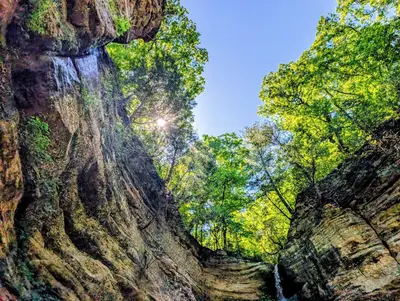
    Illinois runs from Lake Michigan in the northeast to the Ohio and Mississippi rivers in the south and west. Once you leave Chicago, the highlights are Abraham Lincoln's Springfield, the Mississippian earthworks across the river from St. Louis, and the sandstone canyons along the Illinois River.Springfield, the state capital, is the place for Lincoln: his home, his tomb and the Presidential Museum are all close together, and one full day covers the essentials. It sits on old Route 66, about a 3.5-hour drive from Chicago.Cahokia Mounds, near Collinsville and about 15 minutes from downtown St. Louis, was the largest city north of Mexico around 1100. You can climb the roughly 100-foot Monks Mound by a staircase. The grounds and parking are free and open daily from dawn to dusk.Starved Rock State Park, about 100 miles southwest of Chicago, has 18 sandstone canyons, eight with waterfalls that run best from March through June. In the northwest, the old lead-mining town of Galena has Ulysses S. Grant's home; down south, the hills of Shawnee National Forest are a different Illinois altogether.
    South Carolina

    South Carolina

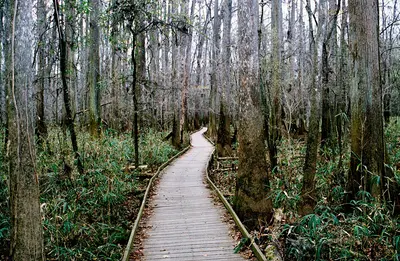
    South Carolina sits on the Atlantic between North Carolina and Georgia, and for most travelers it's all about the Lowcountry: flat salt marsh, sea islands with oak-lined lanes, and towns where Southern history is on every corner. People come for Charleston, for the beaches and for one of the most unusual national parks in the country.Near Columbia, the inland capital, Congaree National Park protects the largest remaining tract of old-growth bottomland hardwood forest in the U.S. The coast offers very different trips: the Grand Strand around Myrtle Beach up north, with its boardwalk and high-rise hotels; Hilton Head Island down south, with bike paths and golf; and in between, Beaufort, where a national park tells the story of Reconstruction.The state's history is tied to rice and slavery. Many plantations and museums now address that directly; in the Lowcountry, pick tours that put the lives of enslaved people at the center.

    Sources & method

    • Photos: Wikimedia Commons. Each photo carries its credit.
    • The content is based on web research from public, traceable sources. How the content is made · The role of AI