Fernweh: Home
ExploreGuideDestinationsMy tripsMy trip
de|en
  • Why go
  • Highlights
  • Regions
  • Round trips
  • Local food
  • Good to know
  • Best time to visit
  • Travel advice
Egypt

Photo by Abdelrhman Allam on Unsplash

Travel Guide Egypt

UK FCDO travel advice, updated 27 October 2026: the FCDO advises against all travel to North Sinai and within 20 km of the Libyan border (except El Salloum), and against all but essential travel to the northern part of South Sinai, the…

by Felix Gillen

Some regions of Egypt are under a travel warning from Germany's Federal Foreign Office. Read the travel advice

Why Go To Egypt?

In Egypt, you stand before the Pyramids of Giza, walk through Karnak's Hypostyle Hall, and descend into the pharaohs' tombs in the Valley of the Kings. Since November 2025, the Grand Egyptian Museum near Giza has been showcasing Tutankhamun's complete burial treasure, and coral reefs in the Red Sea beckon for snorkeling and diving.

Contents

  • Highlights
  • Regions
  • Round trips
  • Local food
  • Good to know
  • Best time to visit
  • Travel advice

Where in Egypt?

Pick an area. The highlights, road trips and places below follow your choice.

Highlights in Egypt

What you should have seen
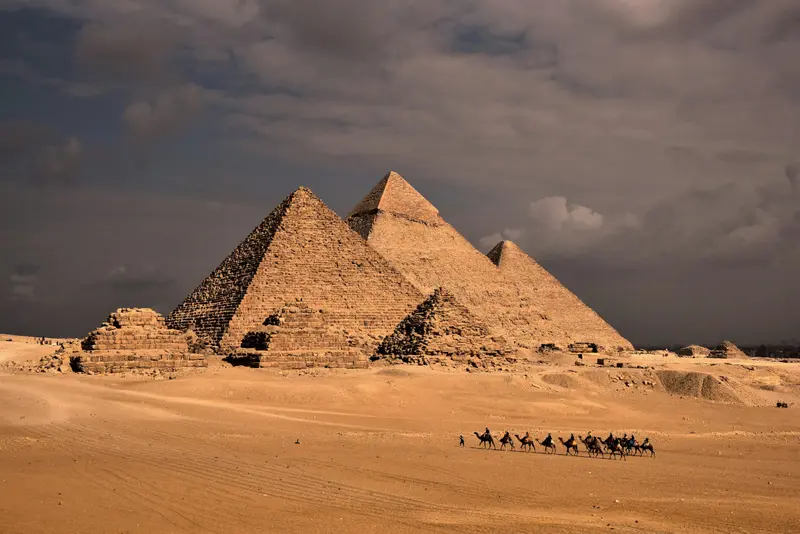
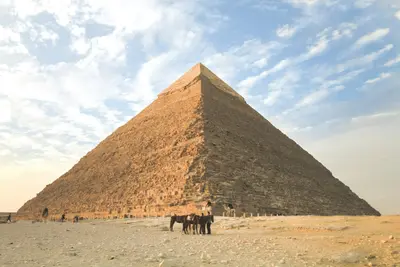
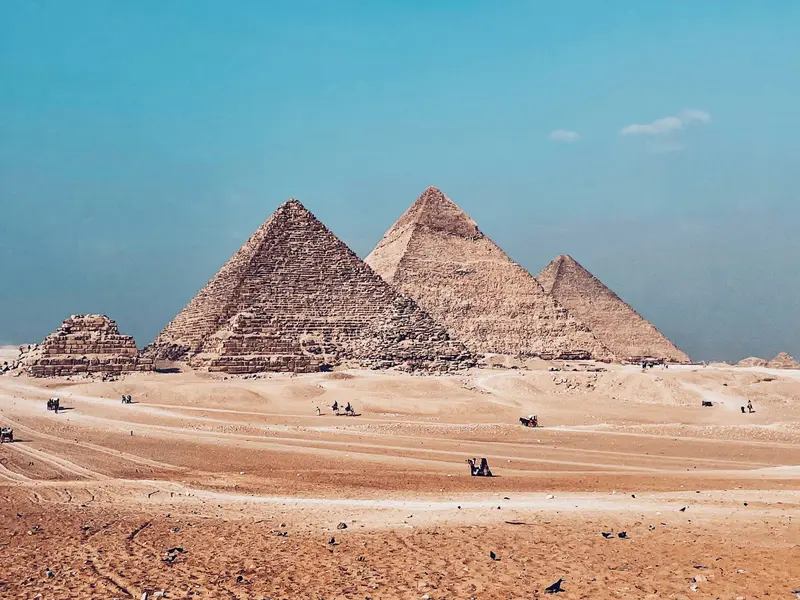
Giza: Pyramids and Grand Egyptian Museum

Photo by Moxin Wang on Unsplash

Highlight 1 of 4

Giza: Pyramids and Grand Egyptian Museum

On the Giza Plateau, on the western edge of Cairo, stand the three great pyramids of the pharaohs Khufu, Khafre, and Menkaure, and the Great Sphinx.

Discover
Cairo

Photo by Nora Amer on Unsplash

Highlight 2 of 4

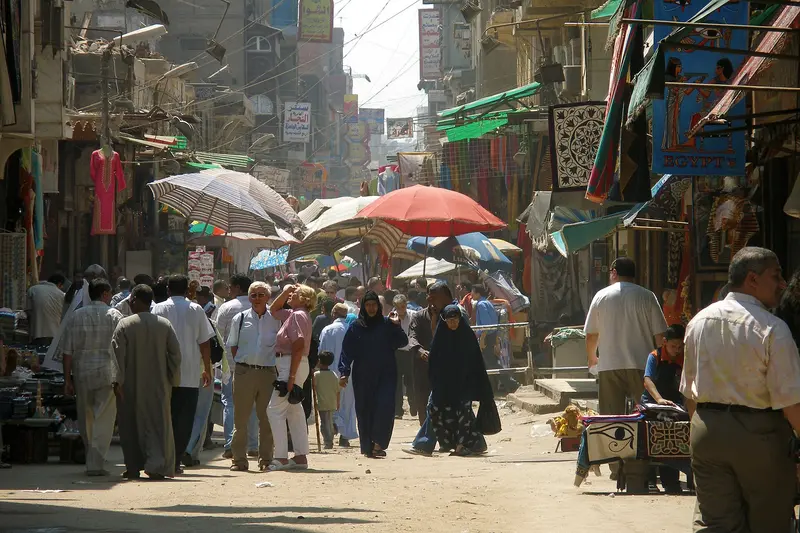
Cairo

The capital on the Nile is for most travelers the gateway to the Pyramids of Giza on the western outskirts.

Discover
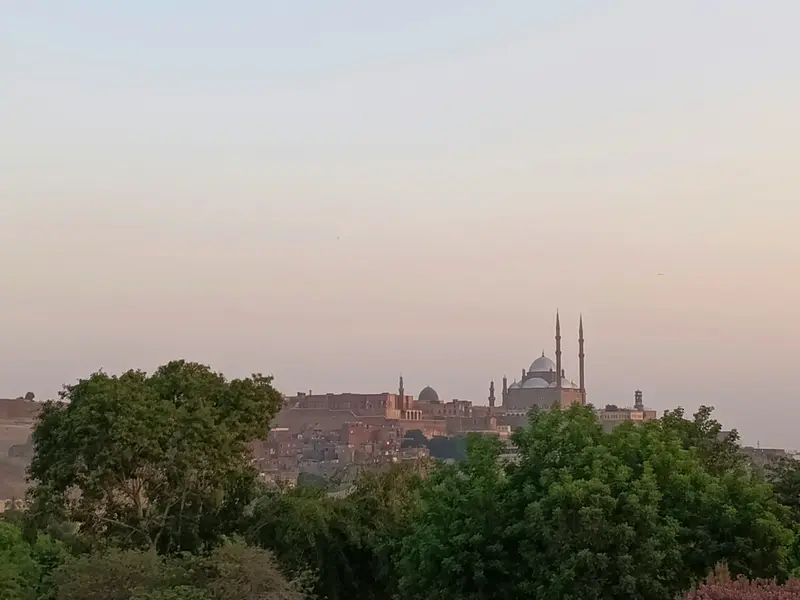
The Islamic Cairo

Vyacheslav Argenberg / Wikimedia Commons / CC BY 4.0, mod.
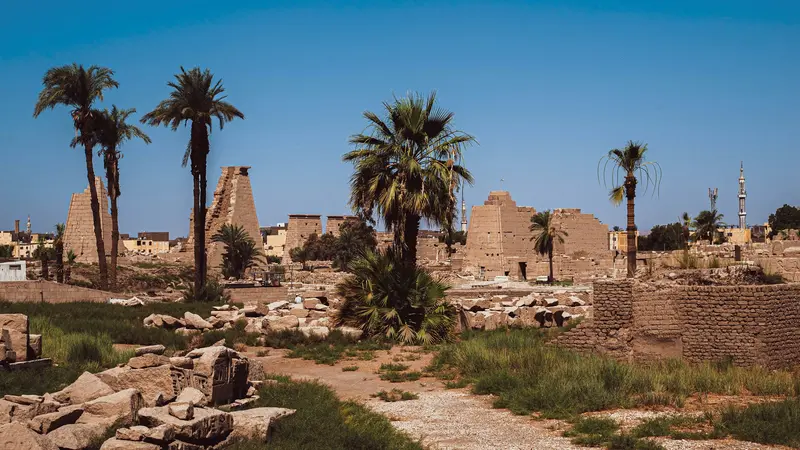
Highlight 3 of 4

The Islamic Cairo

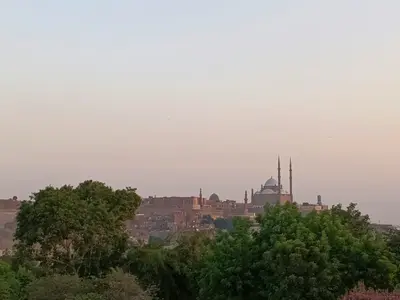
The Old Town, east of the city centre, is the core of historic Cairo, which UNESCO declared a World Heritage Site in 1979.

Discover
Luxor

Photo by 2H Media on Unsplash

Highlight 4 of 4

Luxor

The city on the Nile's east bank occupies the site of ancient Thebes and is often hailed as the world's largest open-air museum. At its heart are Luxor Temple and, connected by the almost three-kilometer-long Avenue of Sphinxes, the vast Karnak Temple Complex.

Discover

More highlights in Egypt

West Bank of Luxor (Thebes West)

West Bank of Luxor (Thebes West)

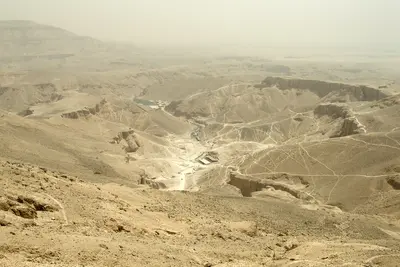
On the West Bank of the Nile opposite Luxor, the rulers of the New Kingdom built their tombs and mortuary temples. Over 60 tombs are known in the Valley of the Kings, including the tomb of Tutankhamun, discovered by Howard Carter in 1922. Also here are the Mortuary Temple of Hatshepsut, Medinet Habu, the Valley of the Queens, and the Colossi of Memnon. At sunrise, hot air balloons float over the landscape.

Vyacheslav Argenberg·CC BY 4.0

Aswan

Aswan

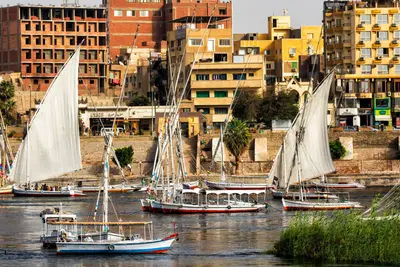
Aswan is located on the East Bank of the Nile at the First Cataract, the southernmost point of Egypt's railway network, and is the gateway to the Isis Temple of Philae and the rock temples of Abu Simbel. The city, with around 370,000 inhabitants, is quieter than Luxor; islands like Elephantine, granite rocks in the river, and the rock tombs on the West Bank define its character.

Eyup Sayar·Pexels

Abu Simbel

Abu Simbel

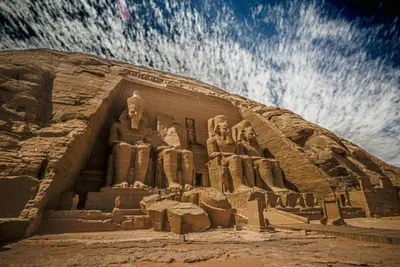
The two rock temples of Ramses II on the shore of Lake Nasser are among Egypt's most impressive structures: In front of the Great Temple sit four colossal statues of the pharaoh, approximately 20 meters high; alongside it is the temple of his consort Nefertari. To save them from the reservoir, both temples were dismantled in the 1960s and re-erected on a higher site by 1968. Abu Simbel is located approximately 300 road kilometers southwest of Aswan, near the border with Sudan.

Michael Starkie·Unsplash

Hurghada

Hurghada

From a fishing village, officially founded in 1905, it has become since the 1980s one of Egypt's most visited resorts, attracting over nine million annual visitors. The city spans 36-40 kilometers along the coast: north is the original El Dahar district with its bazaar; south, Sakkala with its marina; and behind, the long hotel zone. Off the coast lie the protected Giftun Islands with reefs for snorkeling.

Bahaa Mourad·Unsplash

Sharm el-Sheikh

Sharm el-Sheikh

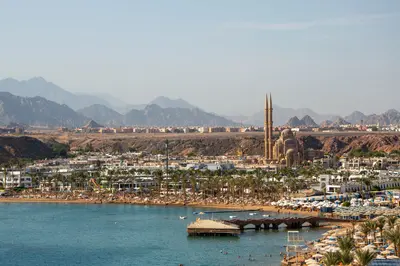
Sharm el-Sheikh lies in South Sinai, parts of which are covered by the UK FCDO travel advice for Egypt. Check the current FCDO advice before you travel. Sharm el-Sheikh at the southern tip of the Sinai Peninsula is the largest resort in the Sinai and the base for some of the best-known diving areas of the Red Sea. The town overlooks the Strait of Tiran at the mouth of the Gulf of Aqaba and is the administrative seat of South Sinai Governorate. The tourist centre is Naama Bay with many hotels and restaurants. Offshore lie the reefs of Tiran and the wreck of the Thistlegorm, to the south Ras Mohammed National Park.

Vika Glitter·Pexels

Catherine's Monastery and Mt Sinai

Catherine's Monastery and Mt Sinai

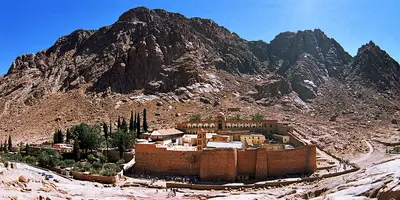
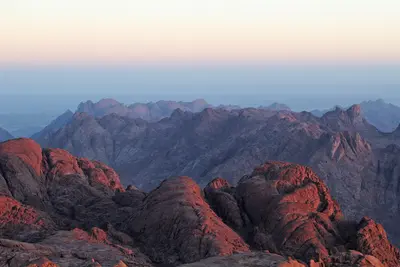
The monastery lies in the mountains of South Sinai on the St Catherine to Nuweiba road, which marks the boundary of an area covered by the UK FCDO travel advice for Egypt. Check the current FCDO advice before you travel. Saint Catherine's Monastery at the foot of Mount Sinai in the south of the Sinai Peninsula is considered one of the oldest continuously inhabited Christian monasteries in the world and is part of the UNESCO World Heritage Saint Catherine Area. Emperor Justinian I had it built between 548 and 565. Within its walls stand the Chapel of the Burning Bush, the Well of Moses and a mosque from the Fatimid period; its…

Dr. Ondřej Havelka·CC BY 4.0

Alexandria

Alexandria

Alexandria, on the Mediterranean coast, is Egypt's second-largest city and in antiquity was the capital of the Ptolemies, home to the Lighthouse of Pharos and the famed Library. Alexander the Great founded the city in 331 BC. Today, Alexandria stretches approximately 40 kilometers along the coast; its Corniche waterfront promenade is about 17 kilometers long. Much from antiquity lies beneath the sea or under the modern city; visible are Pompey's Pillar, the Catacombs of Kom el-Shukafa, and the Roman Theatre of Kom el-Dikka. The Bibliotheca Alexandrina has continued the legacy of the ancient library since 2002. The city owes its…

Moaz Ahmed Kamel·Pexels

How to plan your trip to Egypt

From the guide to the road: here is what comes next.

  1. 1
    Sunrise over alpine peaks and a sea of clouds
    1234

    Round trip

    12 days · 4 stops

    Saved

    Pick a route

    Pick a ready-made one or save places and plan your own.

    Browse routes
  2. 2

    Trip to Egypt

    Live
    • 1Giza: Pyramids and Grand Egyptian Museum3 days
    • 2Cairo4 days
    • 3The Islamic Cairo5 days
    Budget

    Plan your trip

    The planner sorts stops, days and budget. Plan together in real time.

    Go to My Trips
  3. 3
    9:41 No signal
    Egypt
    Available offline

    Photo by Abdelrhman Allam on Unsplash

    Use it on the road

    Download the guide to your phone and use it on site, even offline.

Regions to Discover

Explore the diverse regions of Egypt.
Alexandria and Mediterranean Coast

Alexandria and Mediterranean Coast

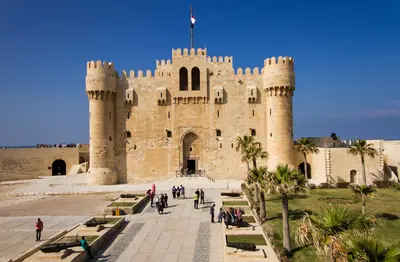
The Mediterranean coast in northwest Egypt has a milder climate than the Nile Valley and a unique history of its own. Its heart is Alexandria, the port city founded by Alexander the Great, featuring ancient catacombs, the Qaitbay Citadel, and the Bibliotheca Alexandrina.From Cairo, you can reach Alexandria by train in about two to three hours, making the city suitable for a one- to two-day trip.

Vyacheslav Argenberg·CC BY 4.0

Aswan and Nubia

Aswan and Nubia

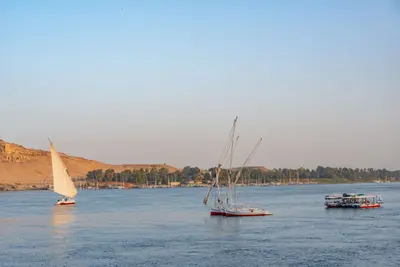
Southern Egypt begins at the First Nile Cataract near Aswan, where granite rocks and islands divide the river, and feluccas sail between Nubian villages. From here, you can reach the Temple of Isis at Philae and the rock temples of Abu Simbel on Lake Nasser, both part of the UNESCO World Heritage site "Nubian Monuments from Abu Simbel to Philae" (1979). On the way to Luxor, you'll find the Ptolemaic temples of Kom Ombo and Edfu.

Diego F. Parra·Pexels

Red Sea

Red Sea

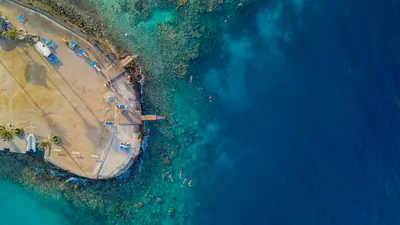
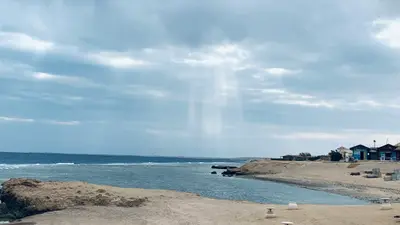
The Red Sea mainland coast is Egypt's foremost beach destination. Its center is Hurghada, stretching about 40 kilometers along the coast; to the north lies the lagoon city El Gouna, to the south follow Makadi Bay and Safaga. Clear waters and coral reefs make the region a popular spot for diving and snorkeling, with most reefs accessible by boat.

Mohamed Gehad·Unsplash

Luxor & Nile Region

Luxor & Nile Region

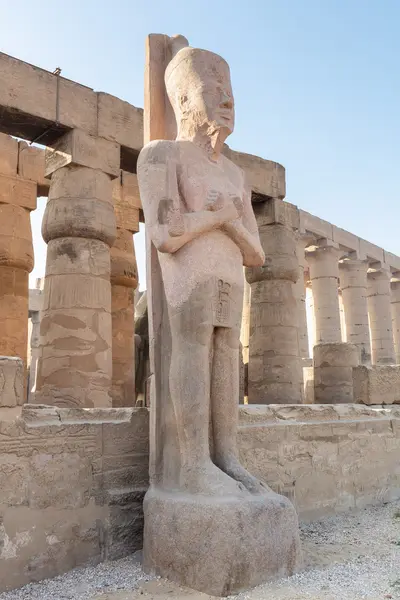
Ancient Thebes was located on the Nile in Upper Egypt. Its temples and necropolises have been a UNESCO World Heritage site since 1979, designated as 'Ancient Thebes with its Necropolises': on the East Bank, Karnak and Luxor Temple; on the West Bank, the Valley of the Kings, the Valley of the Queens, and the great mortuary temples. The city of Luxor is the starting point for all explorations.

Diego Delso·CC BY-SA 4.0

Cairo and Giza

Cairo and Giza

Greater Cairo, situated at the tip of the Nile Delta, serves as the gateway for most visitors to Egypt. On the city's western edge, the Giza Plateau hosts the Pyramids and the Sphinx, with the Grand Egyptian Museum, fully opening in 2025, located right beside them. Downtown, you'll find historic Cairo, featuring its bazaar, mosques, and citadel, along with the Egyptian Museum on Tahrir Square.

Jeremy Bishop·Unsplash

Sinai

Sinai

Parts of the Sinai are covered by the UK FCDO travel advice for Egypt, including the whole of North Sinai and the northern part of South Sinai beyond the St Catherine to Nuweiba road (coastal areas excepted). Check the current FCDO advice before you travel. The south of the Sinai Peninsula between the Gulf of Suez and the Gulf of Aqaba combines coral reefs on the Red Sea with the high mountains around Mount Sinai. Here lie Sharm el-Sheikh, the smaller Dahab and Saint Catherine's Monastery, one of the oldest continuously inhabited Christian monasteries. The underwater world of Ras Mohammed National Park and the Strait of Tiran is…

Ibrahim El-Mezayen·CC BY-SA 4.0

Recommended Itineraries

Discover the best routes through Egypt.

  • Night trains in Europe
Classic Egypt: Pyramids, Nile Valley and Red Sea

Classic Egypt: Pyramids, Nile Valley and Red Sea

The route connects the three major chapters of an Egypt trip: Pyramids and museums in Cairo and Giza, the temples of the Nile Valley from Aswan to Luxor, and finally, swimming and snorkeling in the Red Sea. Cairo and Aswan are linked by a sleeper train, Aswan and Luxor by a roughly three-hour day train, and from Luxor, a bus takes you to Hurghada in four to five hours.

13 Days
Open jaw
Stops at a glance
  1. 1.Cairo
  2. 2.Aswan
  3. 3.Luxor
  4. 4.Hurghada
View Route Details →

What you eat in Egypt

Koshari

Basma·CC BY-SA 4.0

Koshari

Rice, lentils and pasta

Rice, lentils, and macaroni with a spicy tomato sauce and garlic vinegar, garnished with chickpeas and crispy onions. This 19th-century street food is considered by many to be a national dish.
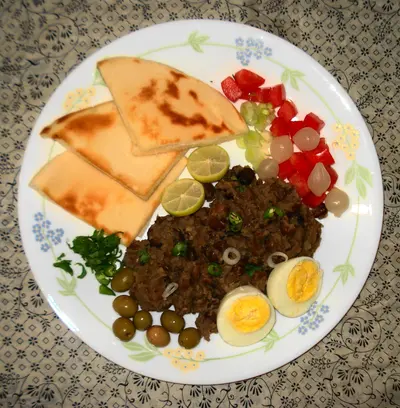
Ful medames

Miansari66·CC0

Ful medames

Cooked fava beans

Cooked fava beans with olive oil and cumin, always eaten with flatbread, as a sandwich or for dipping. A staple of Egyptian everyday life.
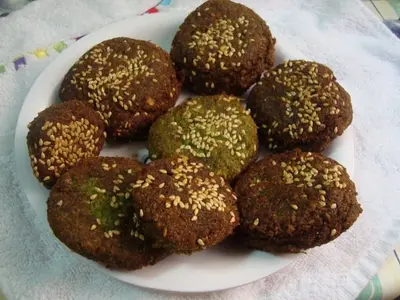
Ta'ameya

Mohammed khaleefa·CC BY-SA 4.0

Ta'ameya

Egyptian Falafel

Fried fava bean balls instead of chickpeas, plain or in flatbread with tahini and greens.
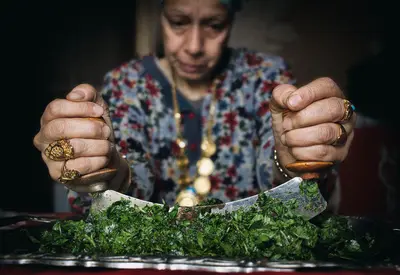
Molokhia

مصطفى الشربجى·CC BY-SA 4.0

Molokhia

Green soup from Jute leaves

Finely chopped molokhia leaves are cooked with garlic and coriander in broth, usually chicken broth. In Alexandria, it's also served with shrimp; in Port Said, with fish. You eat rice or flatbread with it.
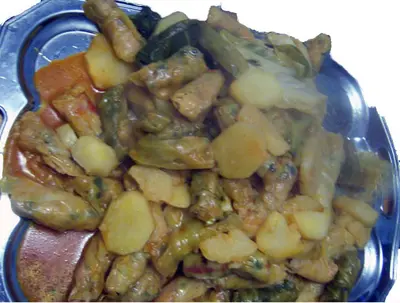
Mahshi

Level C·CC BY-SA 4.0

Mahshi

Stuffed Vegetables

Bell peppers, eggplants, zucchini, tomatoes, vine or cabbage leaves are filled with rice, tomatoes, onions, parsley, and dill, and cooked in broth. A festive variant is Hamam mahshi, pigeon stuffed with rice or green wheat.
Umm Ali

Miansari66·CC0

Umm Ali

Warm Bread Pudding

Warm puff pastry pudding, topped with milk, served with coconut flakes and raisins, hot from the oven.

Good to Know

Essential info for your trip planning.

Key facts

Cairo · 118.4 million (2025) · 1,001,449 km²

Land & People

Life on the NileEgypt spans approximately one million square kilometers; according to CAPMAS, the statistical agency,…

History & Society

PharaohsThe Giza pyramids were built for Pharaohs Cheops, Chephren, and Mykerinos.

Food & Drink

Street FoodKoshari, a mix of rice, lentils, and noodles with spicy tomato sauce, garlic vinegar, chickpeas, and fried…

Practical Info

For current and authoritative travel, safety and health advice, see the UK Foreign, Commonwealth and Development Office…

Getting Around

Arrival and Domestic FlightsThe main airports for tourists are Cairo (CAI), Sphinx International (SPX) in Greater…

Traveling with Kids

For current and authoritative health and safety advice, see the UK FCDO Travel Advice for Egypt (gov.

Best Time to Visit

When is the best time for your trip?

October
November
December
January
February
March
April
17–27°C
From October to April, the Nile Valley is pleasantly warm during the day, ideal for sightseeing in Cairo and Luxor. You can swim in the Red Sea all year round; in high summer, daytime temperatures there rise to around 37 degrees, and in Luxor, average over 40 degrees.
The monthly values are average temperatures for Hurghada on the Red Sea (climate normals 1991 to 2020). In Luxor, it is even hotter in summer; in winter, nights are significantly cooler, dropping below 10°C.
▶Show detailed monthly data
MonthTemp (°C)
January16.9
February18.0
March20.7
April24.3
May28.4
June31.2
July32.6
August32.8
September30.5
October27.2
November22.8
December18.6

By region

The best months to visit each region are highlighted.

By region
RegionJJanJanuaryFFebFebruaryMMarMarchAAprAprilMMayMayJJunJuneJJulJulyAAugAugustSSepSeptemberOOctOctoberNNovNovemberDDecDecember
Cairo and Gizabest time to visitbest time to visitbest time to visitbest time to visitbest time to visitbest time to visitbest time to visit
Luxor & Nile Regionbest time to visitbest time to visitbest time to visitbest time to visitbest time to visitbest time to visit
Red Seabest time to visitbest time to visitbest time to visitbest time to visitbest time to visit

Travel advice

Germany's Federal Foreign Office warns against travel to parts of Egypt. Read the latest official advice before you plan or book. The UK government publishes it in English on GOV.UK.

Go to GOV.UK

Sources & method

  • Photos: Wikimedia Commons, Unsplash, Pexels. Each photo carries its credit.
  • The content is based on web research from public, traceable sources. How the content is made · The role of AI
Felix at Kuirau Park in Rotorua, New Zealand

Who's behind Fernweh?

Hi, I'm Felix.

I love to travel, and I love planning even more. Fernweh.guide is my attempt at building a really good online travel guide.

About Fernweh

All places in Egypt

  • Abu Simbel
  • Alexandria
  • Alexandria and Mediterranean Coast
  • Aswan
  • Aswan and Nubia
  • Cairo
  • Cairo and Giza
  • Catherine's Monastery and Mt Sinai
  • Dahab
  • El Gouna
  • Giza: Pyramids and Grand Egyptian Museum
  • Hurghada
  • Luxor
  • Luxor & Nile Region
  • Marsa Alam
  • Red Sea
  • Sharm el-Sheikh
  • Sinai
  • The Coptic Cairo
  • The Islamic Cairo
  • West Bank of Luxor (Thebes West)

More about Egypt

  • Best Time to Visit Egypt
  • Egypt with Kids
All Places & RegionsRound tripsNight trains in EuropeAll highlightsAbout FernwehFAQPrivacy PolicyImprint
Download on the App StoreGet it on Google Play
ExploreGuideDestinationsMy tripsMy trip