DixMartin / Wikimedia Commons / CC BY-SA 4.0, mod.
Cruise · TUI Cruises · Mein Schiff 7
Mein Schiff 7: Europe's West Coast from Palma to Hamburg
by Felix Gillen
- 12 Days / 11 Nights
- Palma de Mallorca → Hamburg
- Sails Apr 18, 2027
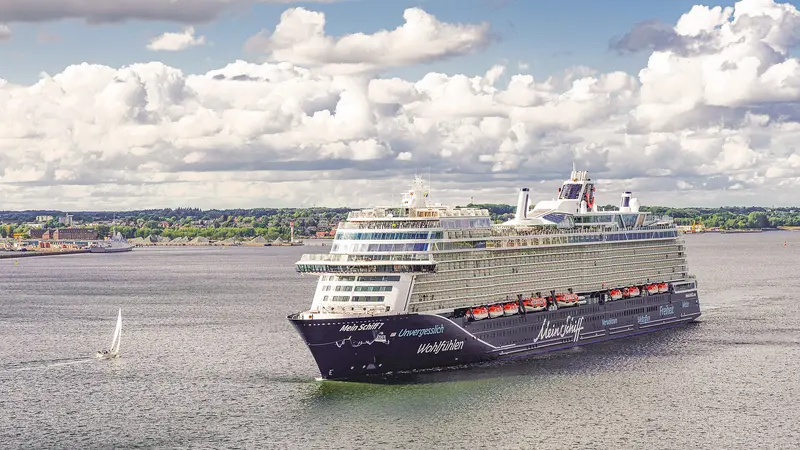
In eleven nights in spring, Mein Schiff 7 sails from Mallorca to Hamburg through six countries: Málaga on the Costa del Sol, Tangier on the African side of the Strait of Gibraltar, Porto via the port of Leixões, A Coruña in Galicia, Le Havre in Normandy and Zeebrugge on the Flemish coast. There are four sea days in between, and on port days you usually have about ten hours ashore. The route shows you how to explore each port on your own, on foot, by metro, train or bus, and where people there eat.
A cruise by TUI Cruises
- You book the trip with TUI Cruises. Fernweh does not sell trips.
- “Plan Trip” adds the ports, times in port and sea days to your trip planner, with the way there and back.
- For every port you find tips for going ashore on your own.
At a glance
- Duration
- 12 Days / 11 Nights
- Stops
- 8 · Palma de Mallorca → Hamburg
- Countries on the route
- Germany, Spain, Morocco, Portugal, France, Belgium
- Arrival
- Flight · Palma de Mallorca (PMI)
- Departure
- Train · Hamburg Hbf
- Ship
- Mein Schiff 7 (TUI Cruises)
- Sailings
- Apr 18, 2027
- Best Time to Go
- April, as a spring voyage from the Mediterranean to the north
More on when to go
Expect around 20 degrees and sun in the south, and wind, rain and cool evenings in the Bay of Biscay, the Channel and the North Sea
8 stops
Why This Route?
On this repositioning voyage from the Mediterranean to the North Sea you get spring in the south and rough Atlantic weather in the north on one trip. Almost all the ports lie close to the old towns, so you can do without an excursion coach: in Málaga, Tangier and A Coruña you walk into town, the metro runs to Porto and the train to Bruges. That way your money stays with the market halls, taverns and fish restaurants. The open-jaw journey is simple: fly to Palma, return by ICE from Hamburg.
Hidden Gems
- Mercat de l'Olivar in Palma: the market hall near Plaça d'Espanya, where people eat at the fish and tapas counters at lunchtime
- Espetos in El Palo: on the town beach east of Málaga, the beach restaurants grill sardines on skewers over charcoal
- Café Hafa in Tangier: since 1921 people have sat on its terraces above the cliffs drinking mint tea and looking across to Spain
- Rua Heróis de França in Matosinhos: the grill restaurants with fish from the harbour, right next to the cruise terminal
- Damme near Bruges: a village on the canal, half an hour away by rental bike
Getting there and back
Open jaw: start and end are in different places
- Arrival
- Flight · Palma de Mallorca (PMI)Don't fly in too late on the day of departure: the ship leaves at 22:00 and embarkation closes earlier. From the airport a taxi takes about 20 minutes to the cruise terminal; the EMT airport bus A1 runs into town, and city line 1 continues to the terminals at the Dic de l'Oest and the Estació Marítima. Check EMT Palma for the current routes. If you have a few hours, take a walk through the old town first.
- Departure
- Train · Hamburg HbfThe ship arrives in Hamburg on 29 April at 05:30, and disembarkation follows in the morning. Your booking documents say which cruise center it uses; the port's call list has not assigned the berth yet. From Altona take a bus or the S-Bahn from Königstraße, from HafenCity the U4 from Überseequartier, from Steinwerder a taxi, each about 15 to 30 minutes to the main station. From there ICE trains run in every direction, to Berlin in just under two hours and to Frankfurt in about four.
Itinerary
Palma de Mallorca
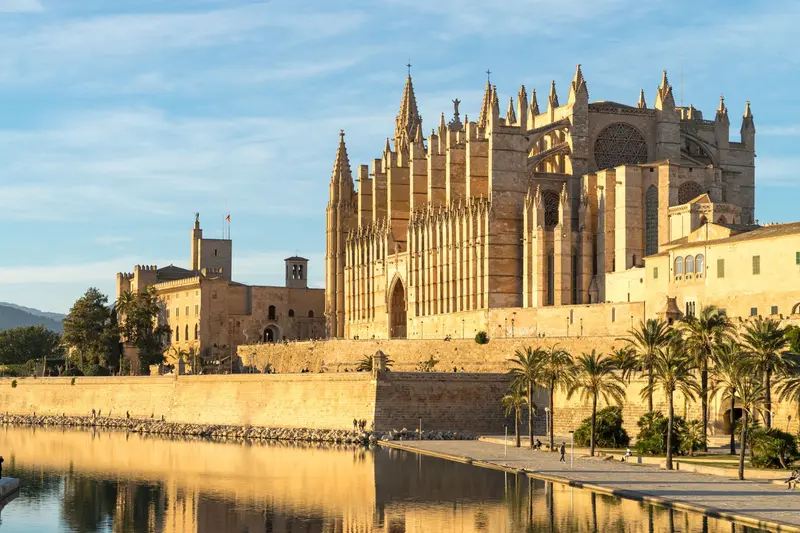
The capital of the Balearic Islands is situated on a wide bay in the southwest of Mallorca. Gothic churches and palaces, museums of modern art, and lively market halls make it much more than just an arrival point for a beach holiday.
Embarkation on 18 April, departure 22:00, followed by a sea day. Before boarding, have lunch at the Mercat de l'Olivar near Plaça d'Espanya, where locals eat fish, olives and tapas at the counters. Then walk through the old town lanes to La Seu cathedral and along the Parc de la Mar to the port. If you have time, head to Santa Catalina, the old fishermen's quarter with its own market hall.
11 Sights
5 Restaurants
Custom
Sant Sebastià: The City Patron's FestivalThe highlight of the festival calendar is the Feast of the Patron Saint Sant Sebastià on January 20th. On the night before, the Revetla, Foguerons (bonfires where people grill publicly) burn in many squares of the old town, accompanied by concerts. The program also includes a Correfoc with fire-devils, giant figures, and Xeremiers, musicians with the Mallorcan bagpipes.Miró and Contemporary ArtJoan Miró lived and worked in Palma from 1956 until his death in 1983. His studios are now part of the Fundació Pilar i Joan Miró, housing around 2,500 of his works. Modern and contemporary art is also displayed at Es Baluard, which opened in 2004 in a bastion of the Renaissance city wall.Market HallsThe market halls offer a great insight into daily life. The Mercat de l'Olivar, located between Plaça d'Espanya and Carrer Sant Miquel, has existed since 1951 and features fish, meat, and vegetable stalls, as well as tapas bars. The Mercat de Santa Catalina, in the district of the same name, is considered Palma's oldest municipal market.
Departs 22:00 · 1 day at sea after
Málaga
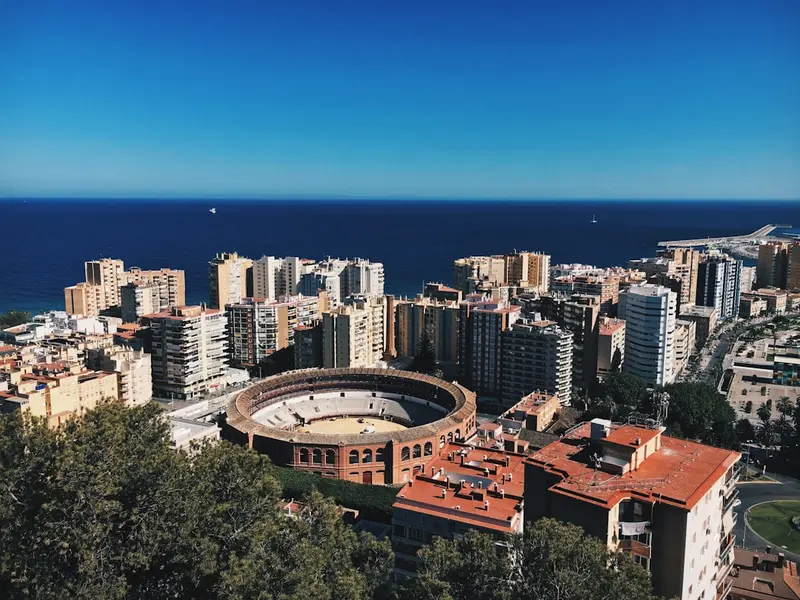
The provincial capital Málaga is the cultural center of the Costa del Sol and the arrival point for most travelers to the coast. Above the old town, the Moorish fortress Alcazaba with its Roman theater at its foot, and the castle Gibralfaro, are enthroned. In the old town stand the Cathedral "La Manquita" with its unfinished South Tower and the Iglesia de Santiago, where Picasso was baptized.Málaga is Picasso's birthplace: The Museo Picasso in the Palacio de Buenavista and his birthplace on Plaza de la Merced are just a few minutes apart. At the harbor, the Centre Pompidou in its colorful glass cube at Muelle Uno displays modern art. The pedestrian zone Calle Larios leads from Alameda Principal to Plaza de la Constitución, the center is compact and easy to explore on foot.
From the terminal you walk along the Muelle Uno into the old town in about 20 to 30 minutes. First visit the Mercado de Atarazanas, the market hall behind the Moorish gate, open Monday to Saturday until about 15:00. Then climb to the Alcazaba and on to the Castillo de Gibralfaro, with views over the port and the city. At lunchtime EMT lines 3 and 11 run from the Alameda Principal to El Palo, the old fishermen's quarter in the east, where the beach restaurants grill espetos, sardines on skewers over charcoal.
12 Sights
5 Restaurants
Feasts and Food
Feria de AgostoIn August, Málaga celebrates its nine-day Feria. It commemorates the city's capture by the Catholic Monarchs on August 18, 1487. During the day, the festival with music and dance fills the streets of the old town; in the evenings and at night, it moves to the Real de la Feria fairgrounds in the Cortijo de Torres district. Accommodation is scarce and expensive during this time.Espetos and WineEspetos: Sardines, skewered flat, salted, and grilled over olive wood fire on the beach. The season is from May to October, and beach bars (Chiringuitos) on city beaches like Malagueta offer them.Málaga Wine: Taste sweet wines like Moscatel and Pedro Ximénez at Antigua Casa de Guardia on Alameda Principal, the city's oldest still-operating bodega, founded in 1840. The wines are drawn directly from the barrel.
In port 08:00–19:00
Tangier
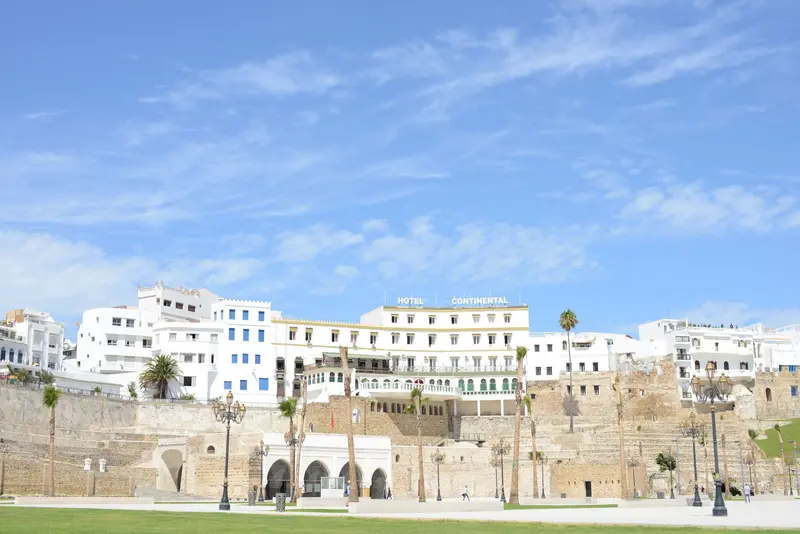
Tangier is situated on the Strait of Gibraltar, where the Mediterranean and Atlantic converge, and for many travelers from Spain, it is the gateway to Morocco. From 1923 to 1956, the city was an international zone, attracting writers and artists. Today, the Al Boraq connects Tangier with Casablanca in just over two hours.
The times 07:00 to 20:00 are the port times given by TUI Cruises. In April Morocco is one hour behind Spain (UTC+1); TUI lists the port as UTC+0 in its data, so local times may differ by an hour. Go by the ship's time in the daily programme. The Tanger Ville port lies right below the medina, and you walk in. Climb to the Kasbah with its museum in the old sultan's palace Dar el-Makhzen (closed on Tuesdays), then go to Café Hafa, where people have looked across the strait over mint tea since 1921; pay in cash there. If you want a guide, take an officially licensed one with an ID card, and in the medina cover your shoulders and knees. Then a sea day towards Portugal.
5 Sights
3 Restaurants
Culture & History
International ZoneTangier's origins date back to a Phoenician settlement. In the 20th century, several powers administered the city as an international zone. During this period, writers like William S. Burroughs lived here, writing Naked Lunch at the Tangerinn bar in the Hotel El Muniria.The KasbahPerched on the hill above the medina is the Kasbah, home to the Dar el-Makhzen palace, built by Sultan Moulay Ismail. Today, it houses the Kasbah Museum, featuring collections of Moroccan art and regional archaeology. The Hafa Cliff Café, dating back to 1921, is a traditional spot for mint tea with views of the strait.
In port 07:00–20:00 · 1 day at sea after
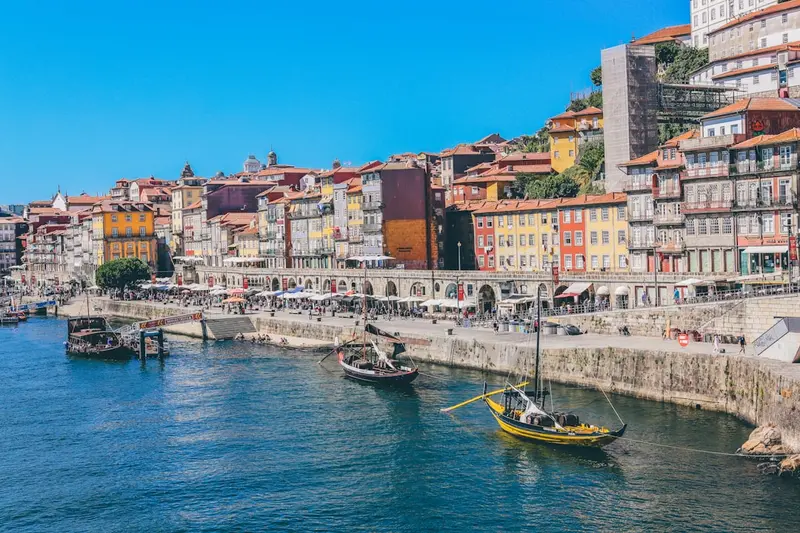
Leixões (Porto)
Porto is Portugal's second-largest city, on the steep banks of the Douro shortly before its mouth. Porto's Old Town, its Ribeira district, the Ponte Dom Luís I, and Serra do Pilar Monastery are UNESCO World Heritage since 1996. Opposite in Vila Nova de Gaia, Port wine houses store their wine. Plan time for the hills: Many paths lead steeply uphill.
The terminal is in Matosinhos, about 10 to 15 minutes on foot from Mercado metro station, where line A takes you to central Porto in just over 30 minutes. In Porto start at the Mercado do Bolhão, then walk down the lanes to the Ribeira on the Douro. Back at the port, Matosinhos itself is the best place to eat: on Rua Heróis de França the restaurants grill fish outside their doors that the boats brought in that morning.
14 Sights
3 Restaurants
Culture and History
Porto was a port and trading city, the country's name deriving from the Roman settlement Portus Cale. From the 17th century, the port wine trade with England shaped the city; many wineries still carry British names today. In the 18th century, Baroque master builder Nicolau Nasoni designed the Torre dos Clérigos, which became its landmark.The residents jokingly call themselves Tripeiros, tripe-eaters, after the dish Tripas à moda do Porto. The biggest festival is the Night of São João from June 23rd to 24th, when the city celebrates until morning, playfully taps heads with plastic hammers, and a fireworks display lights up the Douro at midnight. You'll find modern architecture in Rem Koolhaas' Casa da Música and in buildings by Álvaro Siza, such as the museum in Serralves.
In port 08:00–18:00
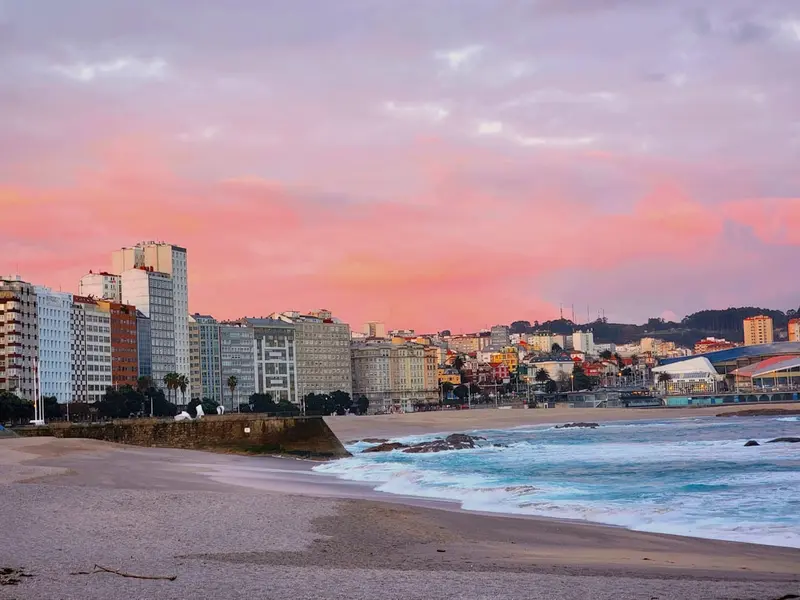
A Coruña
This vibrant port city on the Galician Atlantic coast is known for its Roman Tower of Hercules, which is considered the world's oldest continuously operating lighthouse and a UNESCO World Heritage site, as well as for its glazed balconies (Galerías).
The ship berths right in the city. Walk across the Plaza de María Pita into the Ciudad Vieja and on to the Torre de Hércules, the Roman lighthouse and UNESCO World Heritage Site, about two and a half kilometres or a good half hour. In the morning the Mercado de la Plaza de Lugo, the market hall for fish and seafood, is worth a visit; on Saturdays it is open until about 15:00. For lunch go to the taverns on Calle de la Estrella, the city's best-known tapas street, and order pulpo á feira, boiled octopus with paprika and olive oil. Then a sea day across the Bay of Biscay.
7 Sights
5 Restaurants
Culture, Arts, and Heritage
A Coruña boasts a rich and complex history, stretching from pre-Roman settlements like the Castro de Elviña to Roman rule. The Tower of Hercules, a UNESCO World Heritage site and the oldest operating lighthouse in the world, attests to the city's significance as the ancient settlement of Brigantium. Its coastal location shaped its development over centuries as a port and trade center.During the Middle Ages and early modern period, A Coruña was a vital defensive point and port, from where the Spanish Armada departed in July 1588. The Cidade Vella (Old Town) reflects these eras, with narrow streets and the Romanesque Collegiate Church of Santa María do Campo from the 12th and 13th centuries. The cityscape is characterized by the "Galerías," glass-enclosed balconies, especially along the Avenida de la Marina.The city is deeply rooted in Galician culture, reflected in the preservation of the Galician language and local traditions. Figures like María Pita, who distinguished herself in 1589 during the defense against the English fleet under Sir Francis Drake, are firmly embedded in the collective memory.
In port 08:00–18:00 · 1 day at sea after
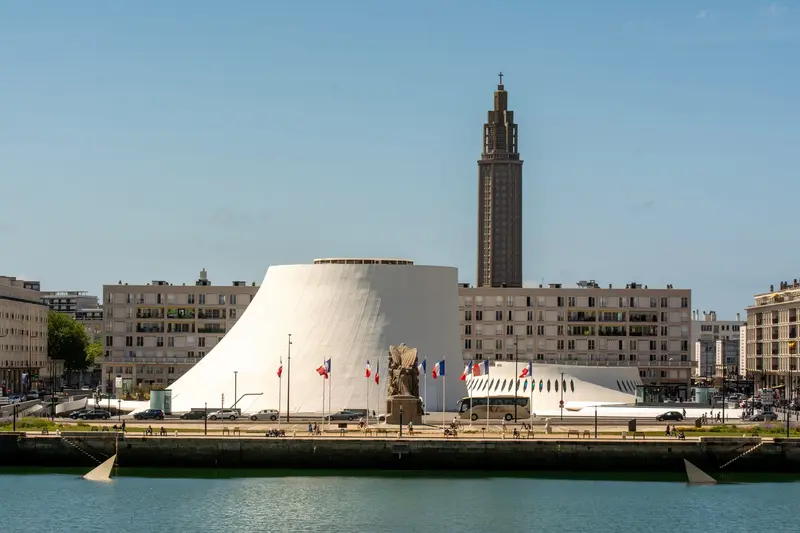
Le Havre
Le Havre, at the mouth of the Seine, is the counterpart to half-timbered Normandy: Its city centre, destroyed in World War II, was rebuilt from 1945 over nearly 20 years across some 150 hectares in reinforced concrete by architect Auguste Perret. Since 2005, this ensemble has been a UNESCO World Heritage site. A day is enough for Saint-Joseph Church, the City Hall, and a 1950s model apartment; Le Havre is also a starting point for Étretat on the Alabaster Coast.
TUI calls the port Le Havre (Paris), but with over two hours by train each way there is little time for Paris. Stay in Normandy instead: from the terminal it is about 20 to 30 minutes on foot to the centre. Auguste Perret's concrete city with the church of Saint-Joseph is a World Heritage Site, and the MuMa at the harbour entrance shows the Impressionists who painted here. From the stations (Le Havre Gares), LiA bus line 13 runs about hourly to the chalk cliffs of Étretat in around an hour, and the train to Rouen takes about an hour. For cheese, cider and seafood, try the Halles Centrales in the city centre.
3 Sights
2 Restaurants
Culture and History
Reconstruction After 1944Auguste Perret became Chief Architect of Reconstruction in spring 1945. His grid of reinforced concrete, wide axes like Avenue Foch, and uniform facades still defines the city center today; in 2005, UNESCO inscribed it on its World Heritage List.LandmarksThe Saint-Joseph Church, with its 107-meter-high lantern tower, is the city's landmark and visible far out at sea. The Town Hall Tower reaches 72 m.
In port 07:30–19:00
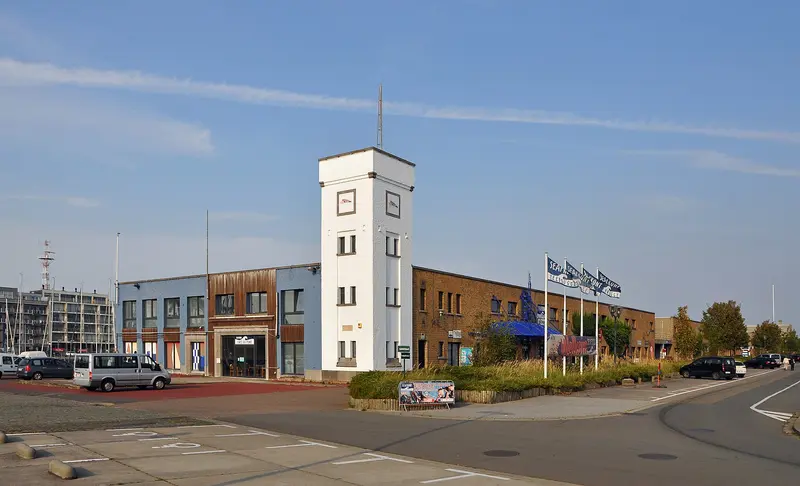
Zeebrugge
Zeebrugge is Bruges' seaport and also a small seaside resort on the Flemish coast, featuring a fishing port, wide beach, and a long harbour mole. Bruges' old town is located about 15 kilometres inland and can be reached by train in fifteen minutes.Along the coast runs the Kusttram, the longest tram line in the world, stretching from De Panne to Knokke.
The berths are far out in the port; a shuttle bus takes you to the terminal, and the cruise line usually offers a paid shuttle to Blankenberge station. Alternatively walk to the Kusttram stop Zeebrugge Kerk and ride a few stops to Blankenberge. There is no direct train between Zeebrugge and Blankenberge; from Blankenberge the train takes about 15 minutes to Bruges. In Bruges walk from the Markt through the lanes to the Béguinage and along the Minnewater, and eat fries from a frituur or Flemish beef stew in a restaurant away from the Markt. It is quieter to cycle along the canal to Damme on a rental bike. Or take the Kusttram along the coast to the Art Nouveau villas of De Haan. Then a sea day across the North Sea.
In port 08:00–18:00 · 1 day at sea after
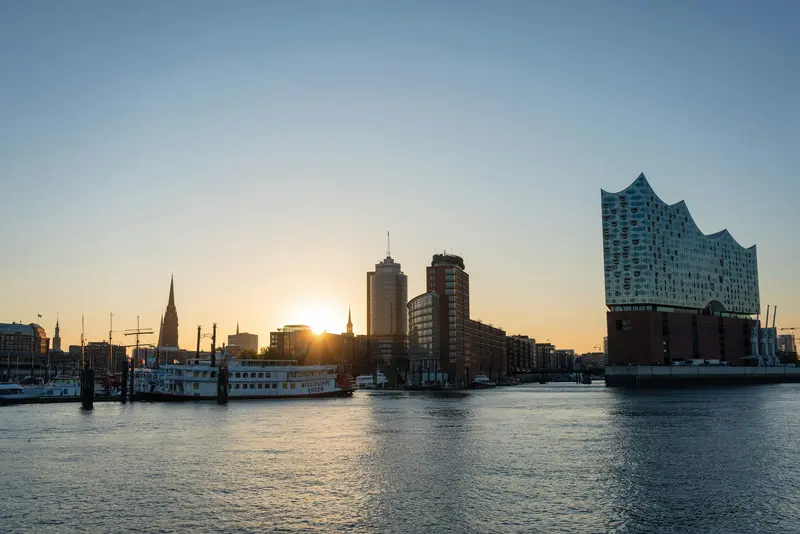
Hamburg
Hamburg, Germany's second-largest city at 1.9 million inhabitants, lies on the Lower Elbe, where the Alster is dammed in the city center to form Binnenalster and Außenalster. Its port, a global transshipment hub, shapes the cityscape from Landungsbrücken to HafenCity.Here you'll experience the neo-Gothic brick ensemble of the Speicherstadt, the Elbphilharmonie (opened 2017), the baroque Michel, and the magnificent Rathaus. Evenings, St. Pauli beckons: Reeperbahn, Große Freiheit, and Hans-Albers-Platz form the city's best-known entertainment hub.
Arrival on 29 April at 05:30; watch the trip up the Elbe past Blankenese and Övelgönne from the deck in the morning light. If you stay another day: a fish roll at the Landungsbrücken, then HADAG harbour ferry 62 to Övelgönne and a walk along the Elbe beach.
13 Sights
7 Restaurants
Hanseatic City of Stage Tradition
Hamburg was a leading member of the Hanseatic League and still officially bears the name Free and Hanseatic City of Hamburg. The first German opera premiered at Gänsemarkt in 1678, the Hamburgische Nationaltheater was founded in 1767, and the Ohnsorg-Theater still performs in Low German today.Around Spielbudenplatz on the Reeperbahn, you'll find the Operettenhaus, Schmidt Theater, Schmidts Tivoli, and the St. Pauli Theater. In the early 1960s, the Beatles performed in clubs like Kaiserkeller, Star-Club, and Indra, a fact commemorated today by Beatles-Platz.
Arrives 05:30
Plan this route as your trip
All stops, trains and nights go into your trip planner. You adjust dates and places to stay afterwards.
This route is a suggestion from our research. Please check timetables, times in port, opening hours and prices before you book – what your tour operator or carrier says is what counts.
Fernweh is a free travel guide and trip planner: routes researched by people, taken over in one click, used day by day on the road. More about Fernweh
8 stops
Route Summary
Duration12 Days
Stops8 Places
TypeMixed