From Vallon-Pont-d'Arc in the Gorges de l'Ardèche, you drive to Avignon and then westwards via Carcassonne and Toulouse to Bordeaux. Finally, you reach Arcachon on the Atlantic coast; for the approximately 700 kilometres, you should plan several longer driving days.
14 Days / 13 Nights
May–September
RV Friendly
6 stops
Why This Route?
For all who want to combine gorges, culture, wine, and sea in the South of France in two weeks.
Hidden Gems
Grotte Chauvet 2 near Vallon-Pont-d'Arc, the replica of the cave paintings
Île de la Barthelasse opposite Avignon with views of the Pope's Palace
Cap Ferret, by ferry from Arcachon
Itinerary
Stop 1 • 2 Nights
Vallon-Pont-d’Arc
Village
For adventure seekers. Stunning nature and outdoors and Rich in culture and history.
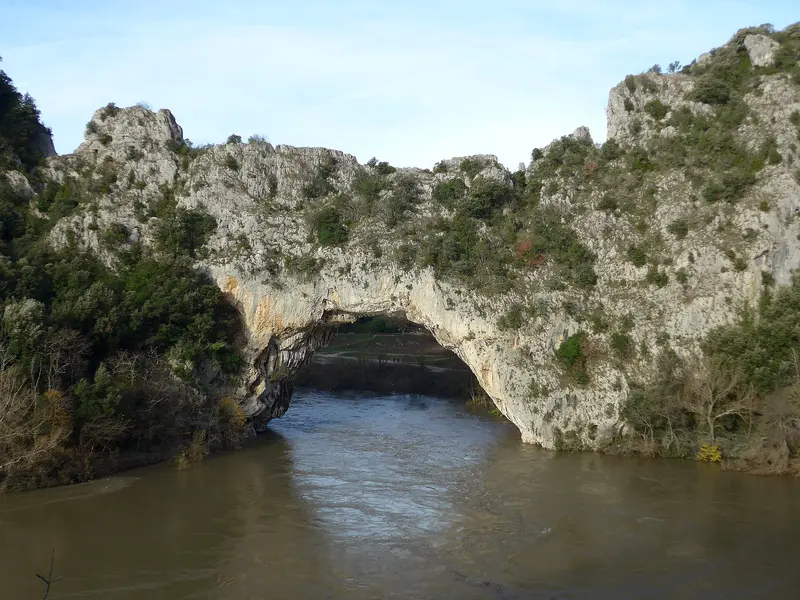
Vallon-Pont-d’Arc is a village in the southern Ardèche and the main starting point for the Ardèche Gorges. From here, you can reach the natural rock arch Pont d’Arc, canoe trips through the gorge, and Grotte Chauvet 2, the replica of the Chauvet Cave with its approximately 36,000-year-old paintings.
9 Sights
5 Restaurants
Cultural Heritage of the Ardèche
Vallon-Pont-d’Arc is located in an area already inhabited during the Paleolithic era. Nearby is the Chauvet Cave, discovered in 1994, whose paintings are around 36,000 years old and which has been a UNESCO World Heritage site since 2014.The original cave is closed to protect the paintings. The replica, opened in 2015, today Grotte Chauvet 2 Ardèche (formerly Caverne du Pont d'Arc), makes this heritage accessible to visitors.The village itself is characterized by stone houses and narrow alleys, typical of the rural southern Ardèche. Local traditions include markets with regional products and crafts.
Rich in culture and history. Perfect for an exciting city trip and Route highlight.
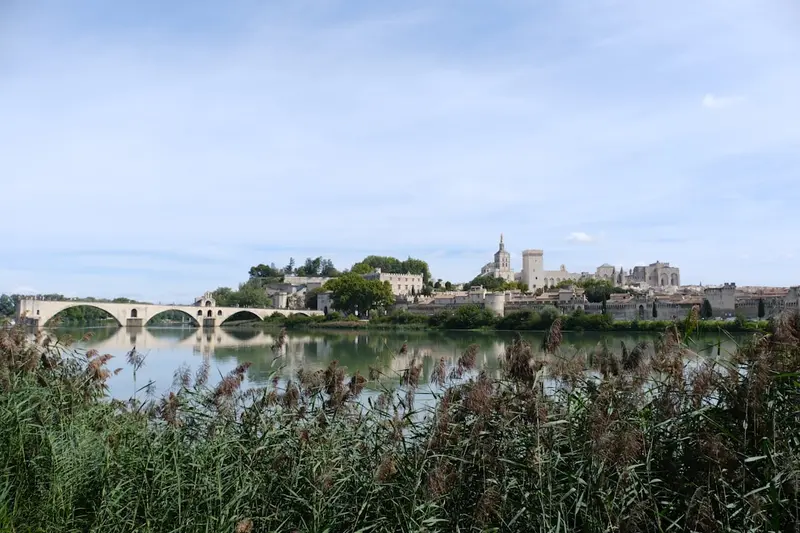
Historical Avignon in Provence is inextricably linked to its time as a papal seat in the 14th century. Its imposing city walls enclose an Old Town that is a UNESCO World Heritage site. You will be particularly impressed by the Palais des Papes, Europe's largest Gothic palace, and the famous Pont Saint-Bénézet bridge, known as the Pont d'Avignon. Stroll through the narrow streets and bustling squares to experience the city's authentic flair. From the Rocher des Doms rock, you can also enjoy a wide view over the city and the Rhône. For a more relaxed experience, a visit in spring or autumn is recommended to avoid the summer heat and peak tourist crowds.
5 Sights
8 Restaurants
Avignon: Culture, Art & History
Avignon is deeply embedded in the history of Provence and closely linked to the 14th-century Papacy. This period profoundly shaped the city, leading to the construction of imposing structures that still dominate its skyline today.Avignon's architectural centerpiece is the Palais des Papes, a UNESCO World Heritage site. This Gothic palace, once the papal residence, combines the characteristics of a fortress and a palace, bearing witness to the political and religious power of that era. Equally renowned is the Pont Saint-Bénézet, also known as the Pont d'Avignon, with only a few arches still extending into the river.Beyond these monuments, Avignon is renowned for its vibrant culture. The annual Festival d'Avignon, one of the world's oldest and largest theater festivals, transforms the city into a vibrant stage every summer. It highlights Avignon's role as a hub for contemporary art and tradition, while the Provençal way of life can be experienced through its local markets and regional cuisine.
Rich in culture and history. For adventure seekers and Perfect for an exciting city trip.
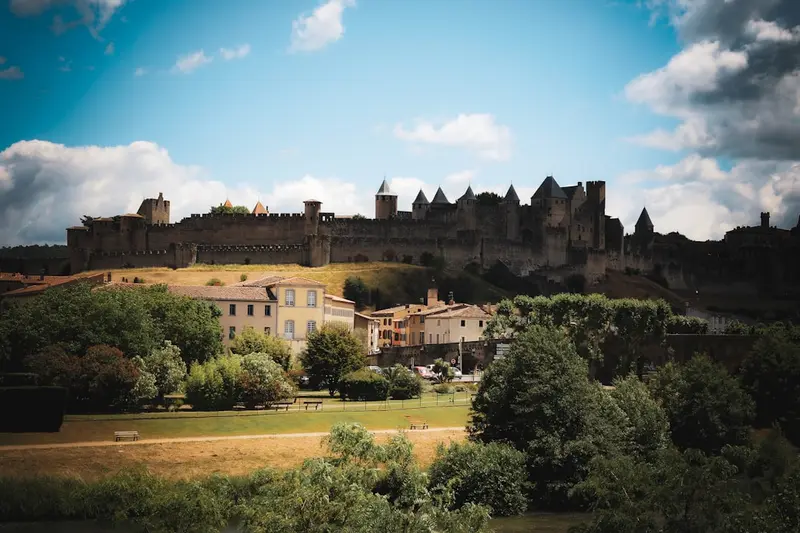
Carcassonne is renowned for its Cité de Carcassonne, an impressive, double-walled fortress city and a UNESCO World Heritage site. You can explore the imposing defensive structures, whose origins date back to Roman times and which were extensively restored in the 19th century by Viollet-le-Duc. At the heart of the Cité are the Château Comtal and the Gothic Basilica Saint-Nazaire, reflecting the region's rich history, particularly during the Cathar Wars. Beyond the historic walls, the Ville Basse, the lower town, offers insights into modern French city life. For a more relaxed experience, visiting during the off-season is recommended to avoid the crowds. A practical tip is to ascend the walls in the late afternoon to witness the sunset over the landscape.
5 Sights
5 Restaurants
Carcassonne: A journey through history
Carcassonne is primarily known for its Cité Médiévale, an imposing fortified city whose origins date back to Roman times. However, it largely acquired its current form in the Middle Ages, particularly during the Crusades against the Cathars in the 13th century. At that time, the city played a key role in the conflict between the French monarchy and the lords of Southern France and was annexed by the French king in 1247, subsequently serving as an important border fortress.Architecturally, the Cité impresses with its double fortification wall featuring 52 towers, a masterpiece of medieval military architecture. Inside are the Château Comtal, the count's castle, and the Basilica of Saint-Nazaire and Saint-Celse, which combines elements of Romanesque and Gothic architecture and is known for its impressive stained-glass windows. In the 19th century, the heavily dilapidated fortress was extensively restored under the direction of architect Eugène Viollet-le-Duc, a measure that saved it from complete decay and shaped its iconic present-day silhouette.Although the Cité itself functions as a living museum of its past, local traditions of the Languedoc-Roussillon region, such as an awareness of Occitan language and culture, are also palpable. Historical events and legends, like that of Dame Carcas, shape the cultural memory and are often featured in local events and guided tours.
Perfect for an exciting city trip. Rich in culture and history and Culinary highlights.
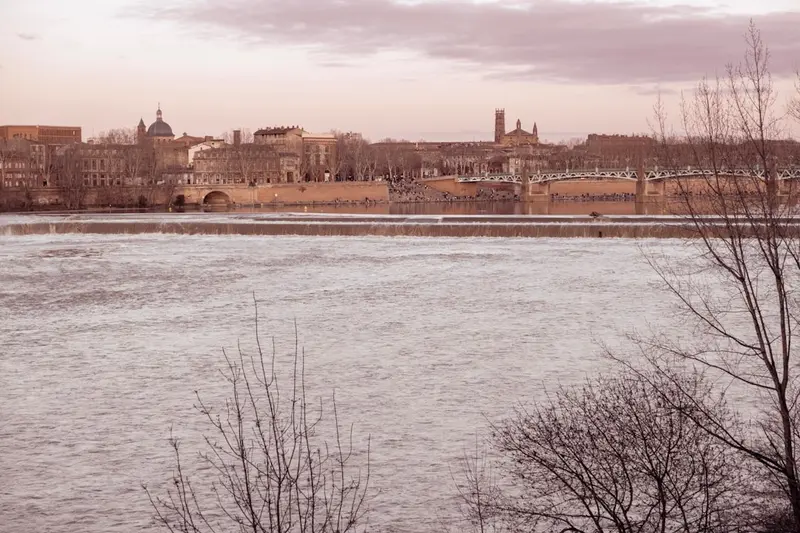
The capital of the Occitanie region is called 'La Ville Rose' because of its buildings made of pinkish-red brick. Toulouse is a lively university city and the centre of the European aerospace industry, with Airbus headquarters located just outside the city.
5 Sights
5 Restaurants
Toulouse: History, Art, and the Occitan Soul
Toulouse, the 'Ville Rose', is a vibrant mosaic of rich history and sparkling creativity. Its unique architecture tells stories from past centuries, while a dynamic art scene fills the city with contemporary flair. Immerse yourself in the cultural heart of Southern France and discover a city that honors its roots while boldly looking forward.
Ideal for city trips and urban experiences. Culinary highlights and Rich in culture and history.
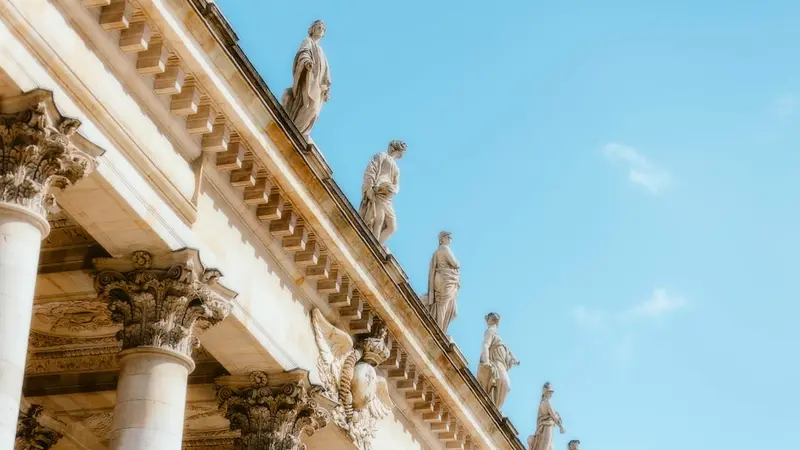
Bordeaux, situated on the Garonne, is the heart of one of the world's most renowned wine regions. The city is characterized by 18th-century classical architecture, and its historic port area has been a UNESCO World Heritage site since 2007. Complementing this are vibrant districts, wine bars, and a diverse culinary scene.
14 Sights
12 Restaurants
Bordeaux: Cultural Heritage and Architecture
Bordeaux, known as Burdigala in antiquity, looks back on a multifaceted history. As the capital of Aquitaine, the city was an important trading hub for centuries, closely linked with England in the Middle Ages, and later a center for the Atlantic wine and colonial trade, including the slave trade in the 18th century.Its architecture reflects these eras, from Roman remains like the Palais Gallien to the 18th-century Neoclassical style that shapes the city's appearance. The Place de la Bourse with its Miroir d'eau is the most famous example. Gothic structures such as the Cathédrale Saint-André and the Porte Cailhau date from the Middle Ages.Culturally, Bordeaux is closely tied to viticulture, which has been practiced here since antiquity. Alongside this, there is a vibrant cultural life with the Grand Théâtre and museums like the Musée des Beaux-Arts. In 2007, UNESCO inscribed the "Port de la Lune" harbor area as an outstanding urban and architectural ensemble on its World Heritage List.
Culinary highlights. Dreamy beaches and Stunning nature and outdoors.
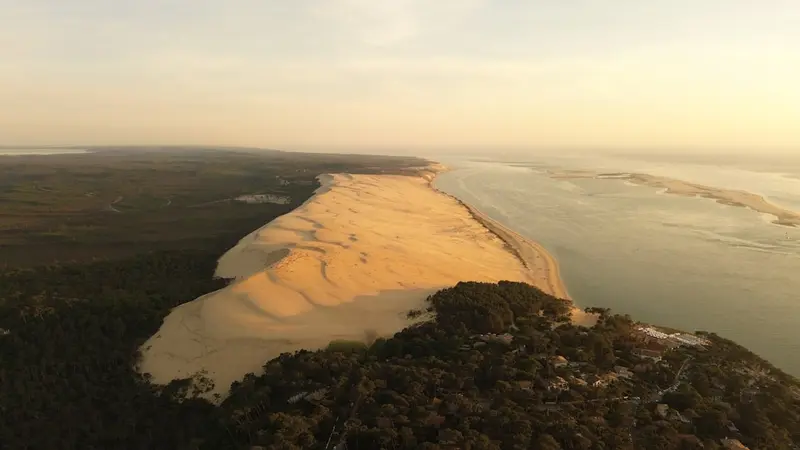
Arcachon is a seaside resort on the Bassin d'Arcachon on the Atlantic coast. The town combines the villas of the Ville d'Hiver from the 19th century, beaches, markets, and the bay's oyster farming. A few kilometers to the south rises the Dune du Pilat.
8 Sights
4 Restaurants
History and Architecture of Arcachon
Arcachon emerged in the 19th century from a small fishing village and became a seaside resort thanks to the arrival of the railway in 1857 and the dedication of the Pereire brothers. It developed into a winter health resort, especially for lung patients, and a summer destination for Bordeaux and Parisian society.The city is divided into four "Villes": Ville d'Été, Ville d'Automne, Ville de Printemps, and Ville d'Hiver. The Ville d'Hiver is known for its eclectic architecture, which primarily emerged between 1860 and 1890. Here stand around 300 villas in very diverse styles, from Neo-Gothic to Moorish-inspired to Swiss Chalets, often featuring turrets, balconies, and wooden embellishments.The Casino Mauresque burned down in 1977, but the preserved villas and urban planning continue to shape Arcachon's heritage today. Part of the local identity is oyster farming in the Bassin, which you can experience in numerous tasting venues.