From Avignon, you drive into the Luberon to Gordes and on to Moustiers-Sainte-Marie on the edge of the Verdon Gorge. After that, it's down to the coast to Saint-Tropez, Cannes, and finally Nice; no leg takes longer than about two and a half hours.
13 Days / 12 Nights
May–June and September
RV Friendly
6 stops
Why This Route?
For connoisseurs combining Provençal mountain villages, markets, and the Riviera in one trip.
Hidden Gems
Abbaye de Sénanque with lavender field, a few kilometers north of Gordes
Sunday market in L'Isle-sur-la-Sorgue, about 20 minutes from Gordes
Plage de l'Escalet near Ramatuelle south of Saint-Tropez
Itinerary
Stop 1 • 2 Nights
Avignon
City
Rich in culture and history. Perfect for an exciting city trip and Route highlight.
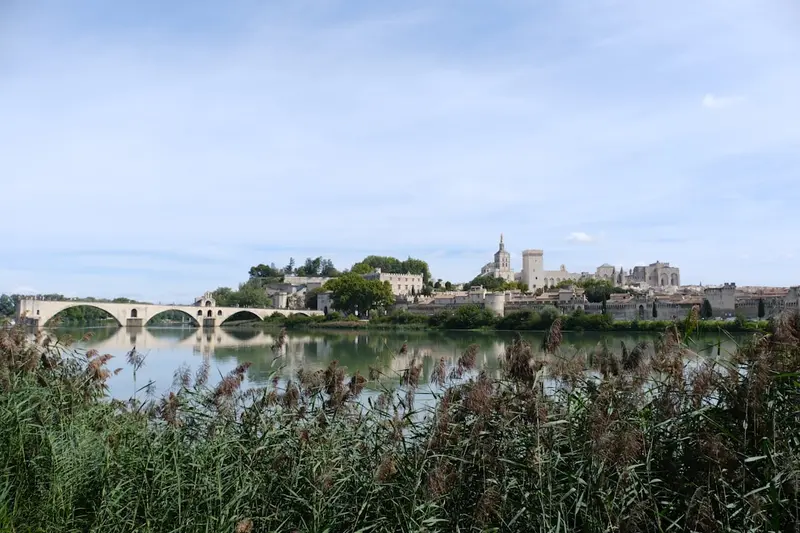
Historical Avignon in Provence is inextricably linked to its time as a papal seat in the 14th century. Its imposing city walls enclose an Old Town that is a UNESCO World Heritage site. You will be particularly impressed by the Palais des Papes, Europe's largest Gothic palace, and the famous Pont Saint-Bénézet bridge, known as the Pont d'Avignon. Stroll through the narrow streets and bustling squares to experience the city's authentic flair. From the Rocher des Doms rock, you can also enjoy a wide view over the city and the Rhône. For a more relaxed experience, a visit in spring or autumn is recommended to avoid the summer heat and peak tourist crowds.
5 Sights
8 Restaurants
Avignon: Culture, Art & History
Avignon is deeply embedded in the history of Provence and closely linked to the 14th-century Papacy. This period profoundly shaped the city, leading to the construction of imposing structures that still dominate its skyline today.Avignon's architectural centerpiece is the Palais des Papes, a UNESCO World Heritage site. This Gothic palace, once the papal residence, combines the characteristics of a fortress and a palace, bearing witness to the political and religious power of that era. Equally renowned is the Pont Saint-Bénézet, also known as the Pont d'Avignon, with only a few arches still extending into the river.Beyond these monuments, Avignon is renowned for its vibrant culture. The annual Festival d'Avignon, one of the world's oldest and largest theater festivals, transforms the city into a vibrant stage every summer. It highlights Avignon's role as a hub for contemporary art and tradition, while the Provençal way of life can be experienced through its local markets and regional cuisine.
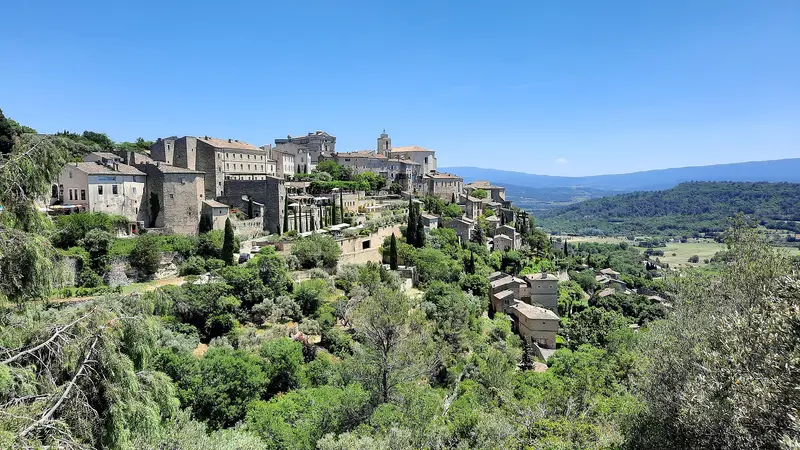
Gordes, a Luberon hill village, is among the "Plus Beaux Villages de France". Its stone houses rise on a rocky spur around the Renaissance castle. From the top, you overlook the valley to the Luberon mountains. Nearby are the Village des Bories and Sénanque Abbey with its lavender field.
4 Sights
3 Restaurants
History and Cultural Heritage of Gordes
Gordes, one of the "most beautiful villages in France," boasts a rich history and art tradition that still shapes its architecture and atmosphere today.The village's origins date back to Roman times, but its golden age began in the Middle Ages. Gordes developed into a strategically important fortress, a fact still reflected in its imposing appearance today. The architecture is characterized by massive stone houses and narrow, winding alleys, known as Calades, which snake their way up the hillside. At its center stands Gordes Castle, originally a medieval fortress that was rebuilt during the Renaissance.Local traditions focus heavily on preserving this historical heritage and rural way of life. The surrounding landscape, with its lavender fields and olive groves, has influenced local crafts and regional products for centuries. Gordes' cultural identity is thus inextricably linked to its stone architecture and the Provençal landscape.
Rich in culture and history. Stunning nature and outdoors and Breathtaking mountain views.
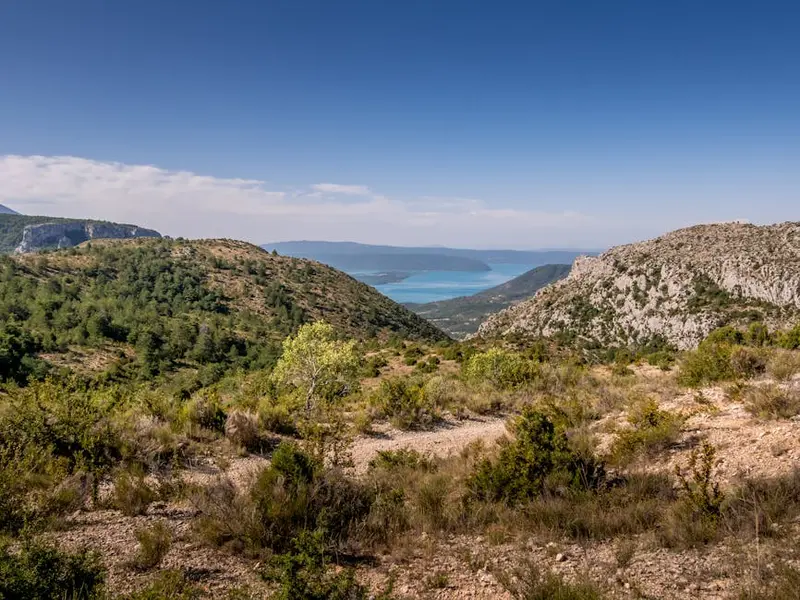
Moustiers-Sainte-Marie is situated on a rock face at the western end of the Gorges du Verdon and is one of the "Plus Beaux Villages de France". The village is known for the golden star that hangs on a chain high above the rooftops between two rocks, and for its faience tradition since the 17th century. You'll stroll through narrow streets, along a stream that rushes right through the village, and climb up to the Chapel Notre-Dame de Beauvoir.
10 Sights
4 Restaurants
Moustiers: A Heritage of Clay and Stars
Moustiers-Sainte-Marie is nestled in a gorge between two rock faces at the entrance to the Gorges du Verdon. The village's history dates back to the 5th century, when monks from the Lérins Islands founded a monastery here, from which its name derives. During the Middle Ages, the village developed into a regional center for trade and craftsmanship.Its architecture bears witness to this past, such as the Romanesque parish church of Notre-Dame-de-l'Assomption with its Lombard-style bell tower and the narrow streets lined with old stone houses. Its emblem is the golden star, suspended high above the village on a chain between the cliffs. According to legend, the knight Blacas had it placed there as a vow after returning home from captivity during the Crusades.Culturally, Moustiers is especially renowned for its faience. From the late 17th century, workshops emerged here, whose products were sought after throughout France and beyond in the 18th century, initially with blue patterns, later also multi-coloured. After a decline in the 19th century, the tradition was revived starting in 1927; today, several studios are once again operating in the village.
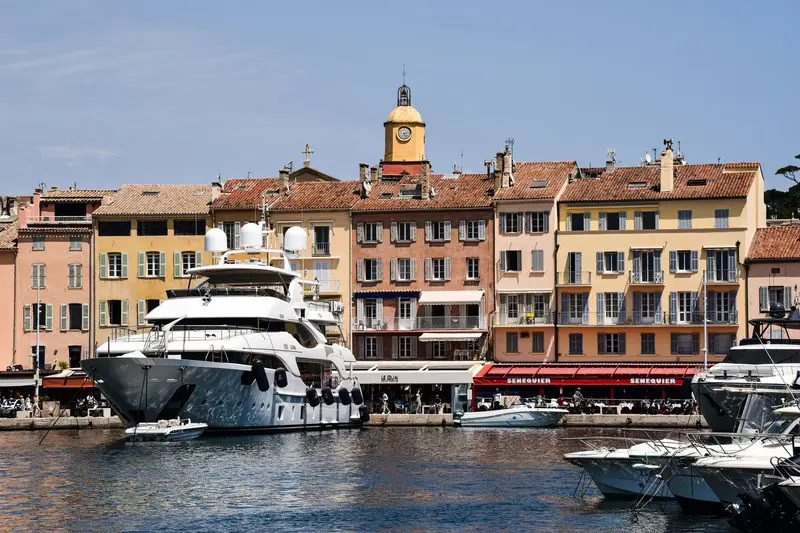
Saint-Tropez lies on the northern side of a peninsula in the Var département, where the Gulf of Saint-Tropez meets the Mediterranean Sea. The fishing village evolved into a gathering point for film and the jet set in the 1950s, sparked by the film 'And God Created Woman' starring Brigitte Bardot. Even earlier, painters such as Paul Signac had discovered the bay's unique light.Behind the harbour with its yachts lies a compact old town of ochre-coloured houses and narrow alleys. Overlooking the town is the 17th-century citadel, while the Musée de l'Annonciade showcases works by Pointillists and Fauves. Its famous sandy beaches, especially the Plage de Pampelonne, belong to the neighbouring commune of Ramatuelle.
3 Sights
3 Restaurants
Culture
Artists and LightPaul Signac arrived in Saint-Tropez in 1892 by sailboat and stayed. He drew other artists here, including Henri Matisse, who in 1904 worked on his 'Luxe, calme et volupté'. The Musée de l'Annonciade preserves this legacy.Film and MythBrigitte Bardot, and later the Gendarme comedies with Louis de Funès, made the town a film set. The Musée de la Gendarmerie et du Cinéma in the former police building tells this story.The BravadesEvery year in mid-May, Saint-Tropez celebrates its patron saint with the Bravades, a procession with musket shots and historical uniforms, a tradition maintained for centuries.
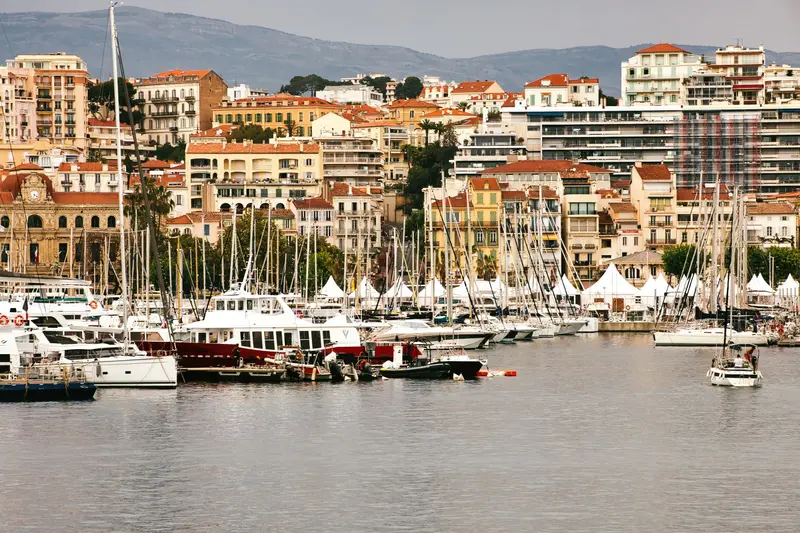
Cannes is world-renowned as the city of the Film Festival, which first took place in 1946 and is now held every May at the Palais des Festivals. The La Croisette promenade, with its palace hotels and private beaches, defines the city's image on the Golfe de la Napoule.Beyond the glamour, explore Le Suquet Old Town on the hill above the old port, offering views over the bay and the Esterel Mountains. Off the coast lie the Îles de Lérins: On Île Sainte-Marguerite stands Fort Royal, where the "Man in the Iron Mask" was imprisoned, while on Île Saint-Honorat, monks still live in an abbey.
3 Sights
3 Restaurants
Culture
The Film FestivalThe first film festival took place in Cannes in 1946, and since the 1950s, filmmakers from all over the world have gathered there, usually in May. The main prize is the Golden Palm. Many screenings are reserved for industry professionals, but the hustle and bustle around the Palais is visible to everyone.From Fishing Village to Seaside ResortThe British Lord Brougham settled in Cannes in the 1830s and made the town known among the European aristocracy. Many villas on the city's hills date from this period.The Monks of LérinsOn Saint-Honorat, Saint Honoratus founded a monastery in the early 5th century, which is among the oldest in the Western world and is still inhabited today.
Perfect for an exciting city trip. Rich in culture and history and Perfect for unwinding and relaxation.
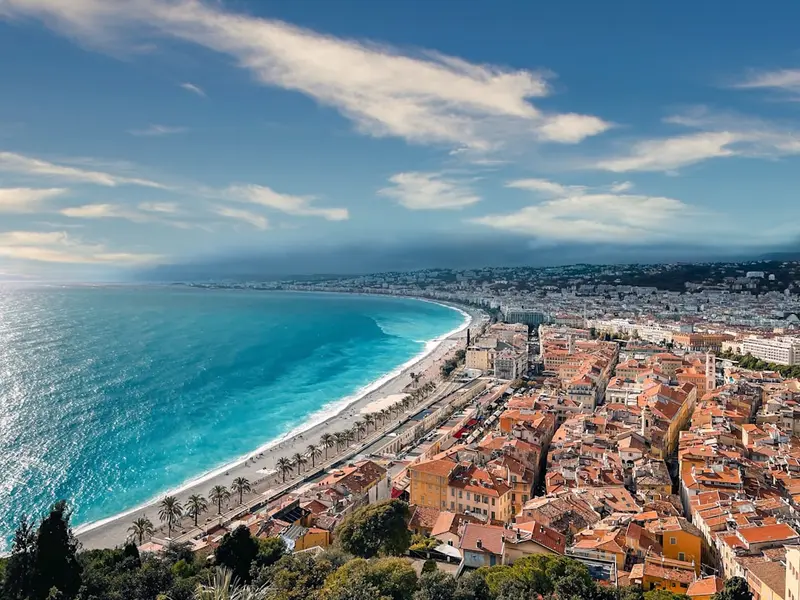
Nice is the largest city on the Côte d'Azur, situated on the Baie des Anges, about 30 kilometers from the Italian border. Stroll along the Promenade des Anglais by the sea; in the Old Town, Vieux Nice, you'll find baroque alleys and the flower market at Cours Saleya. From Colline du Château, you overlook the Old Town, port, and bay. The city has only been French since 1860 and has retained an Italian influence in its cuisine and culture; try Socca and visit the Musée Matisse or the Musée Marc Chagall. For mild weather and fewer crowds, April to June, as well as September and October, are ideal.
6 Sights
10 Restaurants
Culture, Art, and History
Nice was founded as the Greek settlement Nikaia; the Roman city Cemenelum was located on the Cimiez hill. From 1388, Nice belonged to the House of Savoy, later to the Kingdom of Sardinia-Piedmont, before it was annexed to France in 1860.This history continues to shape the city's character and traditions today. The Old Town, Vieux Nice, with its baroque churches and narrow streets, clearly shows Italian influences. The Belle Époque left behind grand hotels and villas along the Promenade des Anglais and in Cimiez, reflecting the boom in tourism in the late 19th and early 20th centuries. Nice has preserved its own identity, audible in Niçois (Nissart) and visible in festivals like the February Carnival. For a long time, the city has attracted artists, and museums commemorate Henri Matisse and Marc Chagall, who lived and worked here.