Fernweh: Home
    ExploreTravel GuidesPlan a tripMy tripLast visited
    de|en
    All Places & RegionsAll highlightsAbout FernwehFAQPrivacy PolicyImprint
    ExploreTravel GuidesPlan a tripMy tripLast visited
    Gordes

    France

    Gordes

    Village

    Gordes, a Luberon hill village, is among the "Plus Beaux Villages de France". Its stone houses rise on a rocky spur around the Renaissance castle.

    by Felix Gillen

    1. Home
    2. Destinations
    3. France
    4. Provence
    5. Gordes
    Gordes, a Luberon hill village, is among the "Plus Beaux Villages de France". Its stone houses rise on a rocky spur around the Renaissance castle. From the top, you overlook the valley to the Luberon mountains. Nearby are the Village des Bories and Sénanque Abbey with its lavender field.

    Sehenswürdigkeiten

    Discover the most important sights and attractions

    Château de Gordes

    Château de Gordes

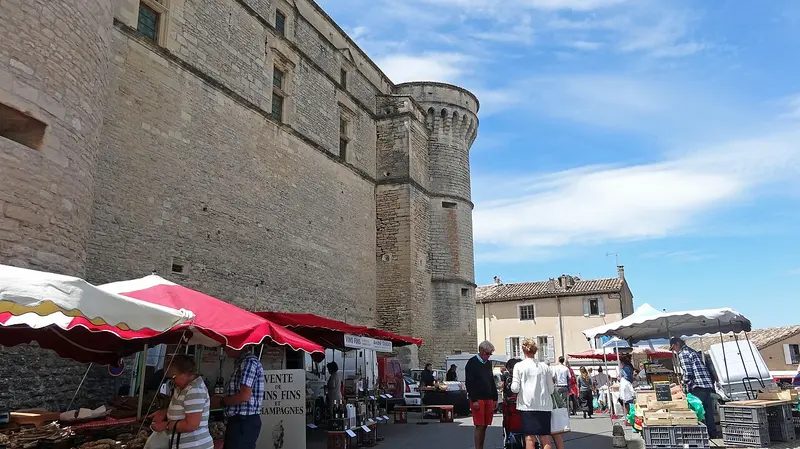
    The Château de Gordes dominates the village's main square. It dates back to an 11th-century castle and was rebuilt in the 16th century in Renaissance style. Today, it hosts changing exhibitions, and the tourist office is also housed here. The large Renaissance fireplace inside is a must-see. From the square in front, you have a view over the rooftops and the surrounding landscape.
    Open in Google Maps
    Village des Bories

    Village des Bories

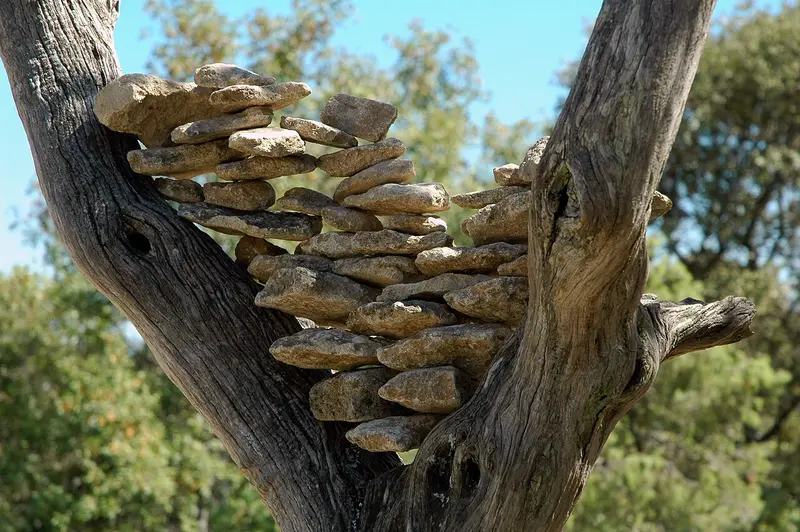
    The Village des Bories, a few kilometers southwest of Gordes, is a group of around 20 dry-stone huts, constructed without mortar from flat limestone slabs. Contrary to common belief, they are not prehistoric: the structures seen today predominantly date from the 18th and 19th centuries and served as dwellings, stables, barns, and a bakehouse. The restored ensemble is open as an open-air museum, illustrating how the rural population of Provence once lived and worked.
    Open in Google Maps
    Abbaye Notre-Dame de Sénanque

    Abbaye Notre-Dame de Sénanque

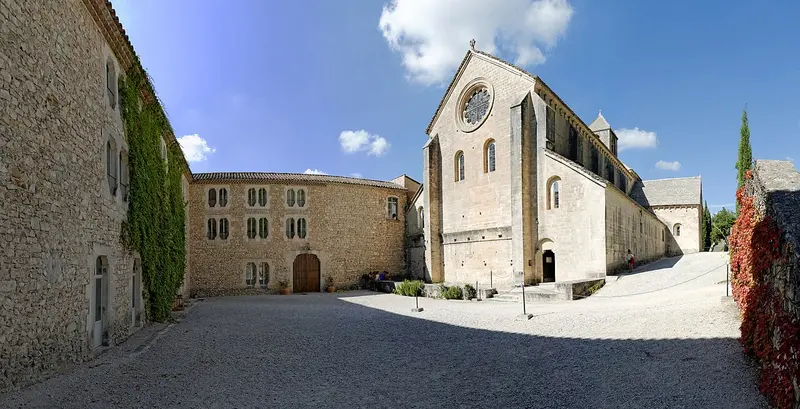
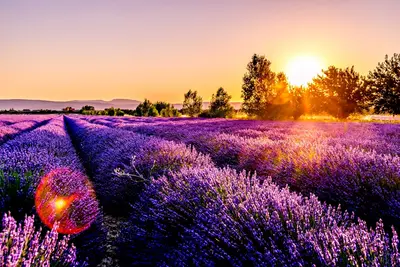
    A few kilometers north of Gordes, in a narrow valley, lies the Cistercian abbey of Notre-Dame de Sénanque, founded in 1148. This simple Romanesque complex, with its church, cloister, and dormitory, is still inhabited by monks today. The lavender field in front of the abbey is well-known, usually blooming from late June to mid-July and attracting many visitors. You can visit the interiors as part of a visitor program. Our Tip: Dress appropriately, as it is a working monastery. For the lavender bloom, you'll be most relaxed there in the early morning.
    Open in Google Maps
    Caves du Palais Saint Firmin

    Caves du Palais Saint Firmin

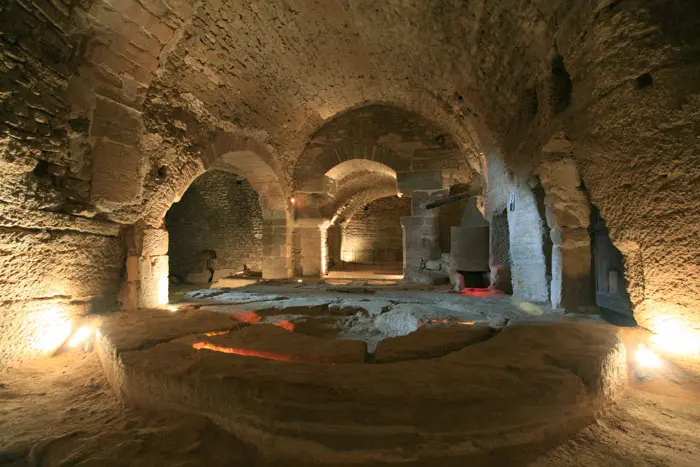
    Begib dich unter die Erde und entdecke die "Caves du Palais Saint Firmin", ein Netzwerk faszinierender troglodytischer Kammern und Gänge unterhalb des Dorfes. Diese im Fels gehauenen Räume dienten einst als Lagerräume, Ölpressen und Wohnstätten. Ein spannender Einblick in die verborgene Geschichte und die erstaunliche Anpassungsfähigkeit der Bewohner von Gordes.
    Open in Google Maps

    City walks in Gordes

    Curated walking tours through the city's highlights, handpicked by experienced travel journalists.

    Gordes: A Walk Through the Eagle's Nest of Provence

    Discover the beauty of Gordes, one of the most beautiful villages in France, on this 2-hour walk. Stroll through picturesque cobbled lanes, marvel at the historic castle and enjoy breathtaking panoramic views over the Luberon landscape.

    Open in Google Maps
    Stops (7)

    Restaurants & Cafés

    L'Orangerie (La Bastide de Gordes)

    Für ein exquisites kulinarisches Erlebnis auf höchstem Niveau solltest du unbedingt L'Orangerie in der luxuriösen Bastide de Gordes besuchen. Hier genießt du eine raffinierte provenzalische Küche mit frischen, saisonalen Zutaten und einem unvergleichlichen Panoramablick über das Tal. Eine Reservierung ist empfehlenswert, um dieses elegante Ambiente voll auszukosten.
    Show on Google Maps

    La Trinquette

    Inmitten der charmanten Gassen von Gordes findest du La Trinquette, ein kleines, authentisches Restaurant, das für seine herzliche Atmosphäre und traditionelle provenzalische Küche bekannt ist. Die Gerichte sind saisonal und mit viel Liebe zubereitet. Genieße ein typisch französisches Mahl auf der Terrasse und lass das Dorfleben an dir vorbeiziehen.
    Show on Google Maps

    L'Estaminet

    Für eine ungezwungene Mahlzeit in gemütlicher Umgebung ist L'Estaminet eine ausgezeichnete Wahl. Dieses charmante Bistro bietet eine Auswahl an klassischen französischen Gerichten und regionalen Spezialitäten, zubereitet mit frischen Zutaten aus der Umgebung. Es ist der perfekte Ort, um nach einem Erkundungstag in Gordes einzukehren und die entspannte Atmosphäre zu genießen.
    Show on Google Maps

    Food & Drink

    In the Luberon, one cooks with what summer provides: vegetables, herbs, goat cheese and olive oil. The restaurant density in Gordes is high, prices accordingly.

    Goat cheese from the Luberon

    The small cheeses, often ripened in herbs or ash, come from farms in the area. Several producers are at the Tuesday market in Gordes.

    Herbs of Provence

    Thyme, rosemary, and savory grow wild on the limestone slopes and, as herbes de Provence, go into almost every dish.

    Truffles from Vaucluse

    Between December and March, black winter truffles are sought in the surrounding area. The markets in Carpentras and Richerenches are the region's most famous venues for this.

    The Wines of Luberon

    The appellation produces fresh rosés and lighter red wines, because the sites are higher and cooler than in the Rhône Valley.

    History and Cultural Heritage of Gordes

    Gordes, one of the "most beautiful villages in France," boasts a rich history and art tradition that still shapes its architecture and atmosphere today.The village's origins date back to Roman times, but its golden age began in the Middle Ages. Gordes developed into a strategically important fortress, a fact still reflected in its imposing appearance today. The architecture is characterized by massive stone houses and narrow, winding alleys, known as Calades, which snake their way up the hillside. At its center stands Gordes Castle, originally a medieval fortress that was rebuilt during the Renaissance.Local traditions focus heavily on preserving this historical heritage and rural way of life. The surrounding landscape, with its lavender fields and olive groves, has influenced local crafts and regional products for centuries. Gordes' cultural identity is thus inextricably linked to its stone architecture and the Provençal landscape.

    Exploring Locally

    In the village, you're best off on foot; the cobbled lanes are steep. For getting there and exploring the villages of the Luberon, a car is virtually essential; public transport runs infrequently. Car parks on the outskirts are chargeable and in summer are already full by morning.

    Accommodations in Gordes

    Find perfect stay in Gordes

    Booking.com* (Affiliate link)
    Search Hotels
    Agoda* (Affiliate link)
    Search Hotels
    Airbnb
    Vacation Rentals

    * Affiliate link: if you book through it, we earn a small commission. The price stays the same for you.

    Campgrounds in Gordes

    Find perfect campground in Gordes

    Search via Google Maps
    Campgrounds nearby (15km)
    Camping.info
    Find Campgrounds
    Park4Night
    RV Parks & Camping

    Nearby

    Avignon

    Avignon

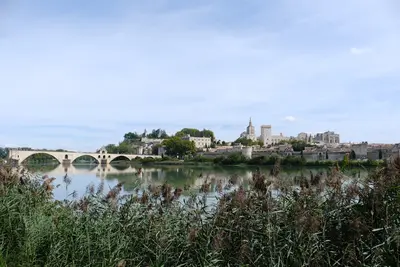
    Historical Avignon in Provence is inextricably linked to its time as a papal seat in the 14th century. Its imposing city walls enclose an Old Town that is a UNESCO World Heritage site. You will be particularly impressed by the Palais des Papes, Europe's largest Gothic palace, and the famous Pont Saint-Bénézet bridge, known as the Pont d'Avignon. Stroll through the narrow streets and bustling squares to experience the city's authentic flair. From the Rocher des Doms rock, you can also enjoy a wide view over the city and the Rhône. For a more relaxed experience, a visit in spring or autumn is recommended to avoid the summer heat and peak tourist crowds.
    Provence

    Provence

    The Provence in southeastern France stretches from the Rhône Valley into the Pre-Alps and to the coast near Marseille. Here you'll find Roman structures, medieval hilltop villages, lavender fields on the plateaus, the Verdon Gorges, and lively cities like Marseille, Avignon, and Aix-en-Provence. Additionally, there are markets, wine, and a cuisine rich in vegetables, olive oil, and herbs.
    Aix-en-Provence

    Aix-en-Provence

    Aix-en-Provence, the former capital of Provence, welcomes you with an elegant atmosphere, shaped by historic buildings and shade-giving plane trees. Stroll along the famous Cours Mirabeau, lined with magnificent mansions and numerous fountains that significantly define the cityscape. Discover charming alleyways and impressive 17th-century townhouses in the Quartier Mazarin, south of the Cours Mirabeau. Visit the Atelier de Cézanne, where the famous painter Paul Cézanne created many of his works, and gain insights into his artistry. The Cathédrale Saint-Sauveur combines Romanesque, Gothic, and Baroque elements, testifying to the city's rich history. For authentic impressions, it is recommended to visit the lively weekly markets, which offer fresh regional products and antiques. The best time to visit is spring or autumn, to explore the city at pleasant temperatures and with fewer tourists.
    Arles

    Arles

    Arles is a city with a deep-rooted history, shaped by its Roman heritage and the artistic presence of Vincent van Gogh. Here, you can explore impressive Roman structures such as the well-preserved amphitheater Arènes d'Arles and the ancient theater, both UNESCO World Heritage sites. The Roman cryptoporticus and the Alyscamps burial ground also bear witness to the city's former importance. The city significantly inspired Vincent van Gogh, whose traces can be found at places like Café la Nuit or in the garden of the Hôtel-Dieu. The Fondation Vincent van Gogh Arles presents his work in the context of contemporary art. For an authentic experience, a visit to the lively Saturday market is worthwhile. The best time to visit is spring or autumn, to enjoy the city with mild temperatures and fewer crowds.
    Pont du Gard

    Pont du Gard

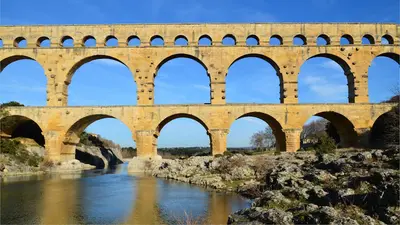
    The Pont du Gard is one of the best-preserved Roman aqueducts and has been a UNESCO World Heritage site since 1985. The approximately 49-meter-high bridge spans the Gardon and was part of a roughly 50-kilometer-long aqueduct system that brought spring water from Uzès to Nîmes in the 1st century AD. You can admire the three superimposed rows of arches up close and cross the river via the lower level. A museum and visitor center explain its construction and history. In the late afternoon, the light is warm and the crowds are smaller. In summer, you can swim in the Gardon below the bridge; a walk along the banks offers additional perspectives.

    Sources & method

    • Photos: Wikimedia Commons, Unsplash. Each photo carries its credit.
    • The content is based on web research from public, traceable sources. How the content is made · The role of AI