Fernweh
    ExploreTravel GuidesMy Trips
    de|en
    About FernwehImprintFAQPrivacy Policy
    ExploreTravel GuidesMy Trips
    Arles

    Arles

    CityCulture
    1. Home
    2. Destinations
    3. France
    4. Provence
    5. Arles
    Arles is a city with a deep-rooted history, shaped by its Roman heritage and the artistic presence of Vincent van Gogh. Here, you can explore impressive Roman structures such as the well-preserved amphitheater Arènes d'Arles and the ancient theater, both UNESCO World Heritage sites. The Roman cryptoporticus and the Alyscamps burial ground also bear witness to the city's former importance. The city significantly inspired Vincent van Gogh, whose traces can be found at places like Café la Nuit or in the garden of the Hôtel-Dieu. The Fondation Vincent van Gogh Arles presents his work in the context of contemporary art. For an authentic experience, a visit to the lively Saturday market is worthwhile. The best time to visit is spring or autumn, to enjoy the city with mild temperatures and fewer crowds.
    • Neighborhoods & highlights
    • Walking tours
    • Eat & drink
    • Culture
    • Getting around
    • Accommodation
    • Plan trip
    • Nearby
    • Neighborhoods & highlights
    • Walking tours
    • Eat & drink
    • Culture
    • Getting around
    • Accommodation
    • Plan trip
    • Nearby

    Overview

    Arles, a city in Provence, is deeply rooted in its Roman heritage and closely linked to the work of Vincent van Gogh. Here you'll discover impressive Roman structures like the well-preserved Amphitheater, the ancient theater, and the Roman cryptoportici, all of which are UNESCO World Heritage Sites. Van Gogh found numerous subjects in Arles; his traces are still visible today at the Café la Nuit or in the garden of the Hôtel-Dieu. The Fondation Vincent van Gogh Arles showcases his work in the context of modern art. For an authentic experience, visit the lively Saturday market. To explore the city at a relaxed pace, spring and autumn are ideal, with their mild temperatures and fewer tourists.

    Places in Arles

    Discover the most important sights and attractions

    Sights in Arles

    1Jouer de l'orgue Arles

    In Arles ist das Orgelspiel, oder „Jouer de l'orgue“, eine kulturelle Erfahrung, die tief in der religiösen und musikalischen Tradition der Stadt verwurzelt ist. Du wirst die Möglichkeit haben, die majestätischen Klänge dieser Instrumente in den historischen Kirchen der Stadt zu erleben, insbesondere in der Cathédrale Saint-Trophime. Die dortigen Orgeln sind oft kunstvolle Meisterwerke des Orgelbaus vergangener Jahrhunderte und ihr Klang erfüllt die romanischen Gewölbe auf eindrucksvolle Weise. Es ist eine Gelegenheit, die akustische Architektur und die spirituelle Atmosphäre Arles’ auf eine besondere Art zu erfahren. Um diese einzigartige Darbietung zu erleben, informiere dich am besten vorab über Gottesdienstzeiten oder spezielle Orgelkonzerte, die regelmäßig stattfinden. Unser Tipp: Nimm dir einen Moment Zeit, um die Resonanz des Instruments im Raum auf dich wirken zu lassen und die Details der Orgelprospekte zu bewundern. Beachte die Ruhe und den Respekt, der in diesen heiligen Stätten geboten ist.
    Open in Google Maps

    2Musée départemental Arles antique

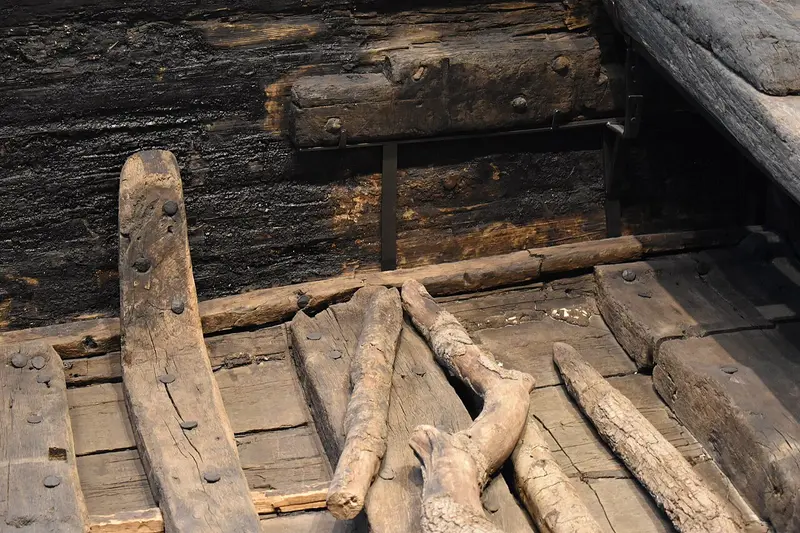
    The Musée départemental Arles antique is an indispensable starting point for comprehensively understanding Arles' Roman past. It houses an impressive collection of archaeological finds, mostly from the region, which powerfully underscore the city's importance as a Roman colony. Here you will find exquisite mosaics, elaborate sarcophagi, sculptures, and everyday objects that paint a vivid picture of Roman life in Arles.A particular highlight is the well-preserved wreck of the Roman barge Arles Rhône 3, recovered from the Rhône in 2004, offering a unique insight into ancient river navigation. The museum's own modern architecture, designed by Henri Ciriani, forms a striking contrast to the ancient exhibits. Our tip: Plan at least two to three hours for your visit to explore the extensive collections at your leisure. To avoid the largest crowds, a visit right after opening in the morning or in the late afternoon is recommended.
    Open in Google Maps

    3St-Trophime

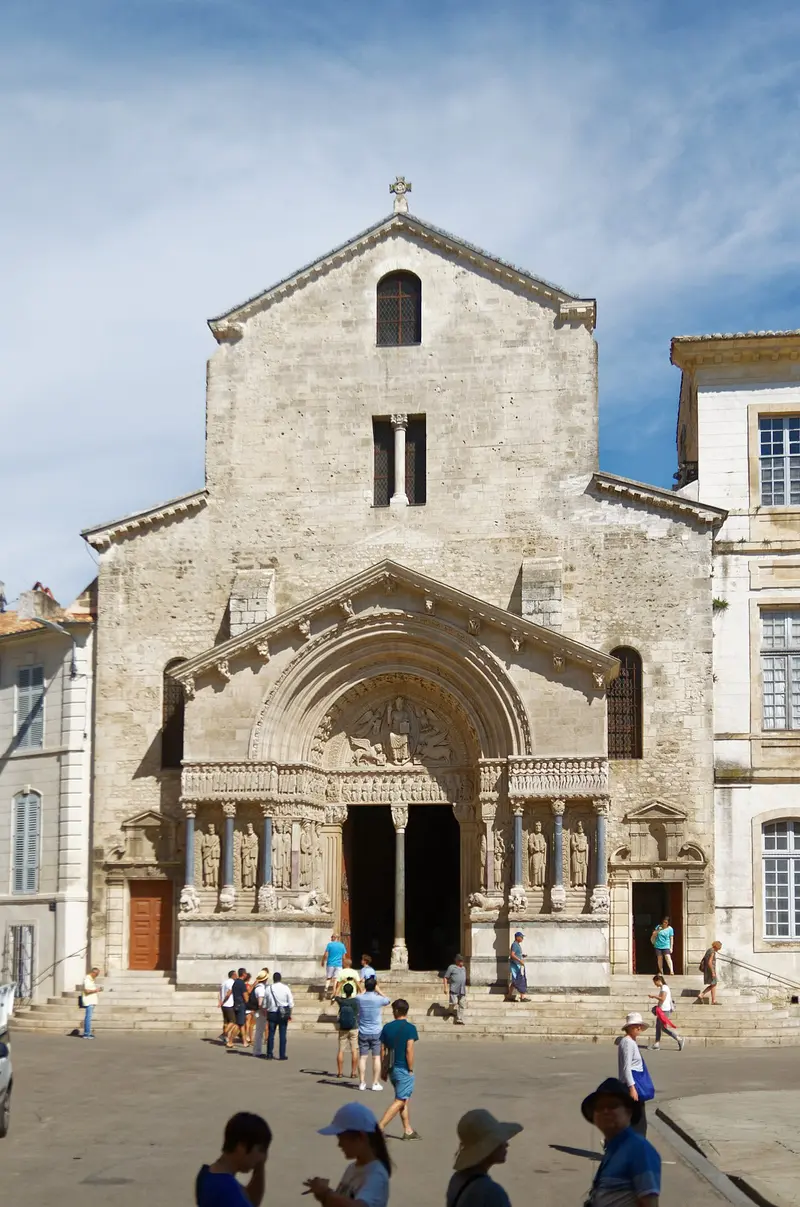
    The former cathedral St-Trophime in Arles is an outstanding example of Romanesque architecture and part of the UNESCO World Heritage site. You will immediately be fascinated by the impressive main portal, which depicts scenes of the Last Judgment. Here you will see Christ in Majesty, surrounded by the symbols of the Evangelists, as well as the Apostles and the Damned – a masterpiece of 12th-century Provençal Romanesque art. Inside, a three-aisled nave awaits you, featuring a blend of Romanesque and later Gothic elements that reflect the church's architectural history.An absolute highlight is the adjoining cloister, considered one of France's most beautiful Romanesque cloisters. Its capitals and pillars are richly adorned with biblical scenes, mythical creatures, and figures of saints, forming a fascinating narrative. Here, you can trace the evolution from Romanesque to Gothic sculpture. Our tip: It's best to visit the cloister right at opening time in the morning to admire the intricate details in peace and optimal light before the crowds arrive. For the main portal, morning light offers the best illumination for photos.
    Open in Google Maps

    4Manade Fernay - Mas des Jasses de la Ville - Arles Camargue

    Die Manade Fernay - Mas des Jasses de la Ville in der Camargue bei Arles bietet dir einen authentischen Einblick in die traditionsreiche Kultur der Region. Als typische Stierzucht (Manade) ist sie eng mit dem Leben der Gardians, den Camargue-Cowboys, und der halbwilden Stiere verbunden, die für die unblutige Course Camarguaise gezüchtet werden. Hier erlebst du die Bewahrung eines einzigartigen Erbes, das tief in der provenzalischen Identität verwurzelt ist.Bei einem Besuch kannst du oft einer Demonstration der Gardians bei ihrer Arbeit mit den Stieren beiwohnen, die auf Pferden die Herden zusammentreiben. Viele Manades bieten auch Fahrten im Planwagen durch die Weiden an, um die Stiere und Camargue-Pferde in ihrer natürlichen Umgebung zu beobachten. Dies vermittelt ein direktes Verständnis für die Bewirtschaftung dieser besonderen Landschaft und ihrer Tiere.Praktischer Tipp: Buche deinen Besuch im Voraus, da viele Manades spezifische Programme und Essensangebote haben, besonders in der Hochsaison. Die beste Zeit für einen Besuch ist das Frühjahr oder der Herbst, wenn die Temperaturen angenehmer sind und die Landschaft in voller Blüte steht oder sich herbstlich färbt. Achte auf festes Schuhwerk und gegebenenfalls Sonnenschutz.
    Open in Google Maps

    5Manuel Rivera-Ortiz Foundation

    Die Manuel Rivera-Ortiz Foundation in Arles widmet sich der Förderung der Fotografie und der dokumentarischen Kunst. Gegründet vom amerikanischen Fotografen Manuel Rivera-Ortiz, etablierte sich die Stiftung als wichtiger Akteur in der kulturellen Landschaft der Stadt, die weltweit für ihre jährlichen Fotofestivals bekannt ist. Du findest hier wechselnde Ausstellungen von aufstrebenden und etablierten Fotografen, deren Arbeiten oft soziale Themen aufgreifen und einen tiefgründigen Einblick in verschiedene Kulturen und Lebensrealitäten bieten.Die Ausstellungsräume sind bewusst auf die Präsentation von Fotokunst ausgelegt und bieten eine ruhige Atmosphäre, um die Werke zu betrachten. Die Stiftung trägt maßgeblich dazu bei, Arles' Ruf als Zentrum für Fotografie zu festigen und bietet eine Plattform für kritische Auseinandersetzung mit dem Medium. Unser Tipp: Überprüfe vor deinem Besuch die aktuelle Ausstellung, da das Programm regelmäßig wechselt. Während der Rencontres d'Arles ist die Stiftung oft ein zentraler Ort für bedeutende Präsentationen; plane dann zusätzliche Zeit ein, um die Ausstellungen in Ruhe genießen zu können.
    Open in Google Maps

    6Amphitheater von Arles

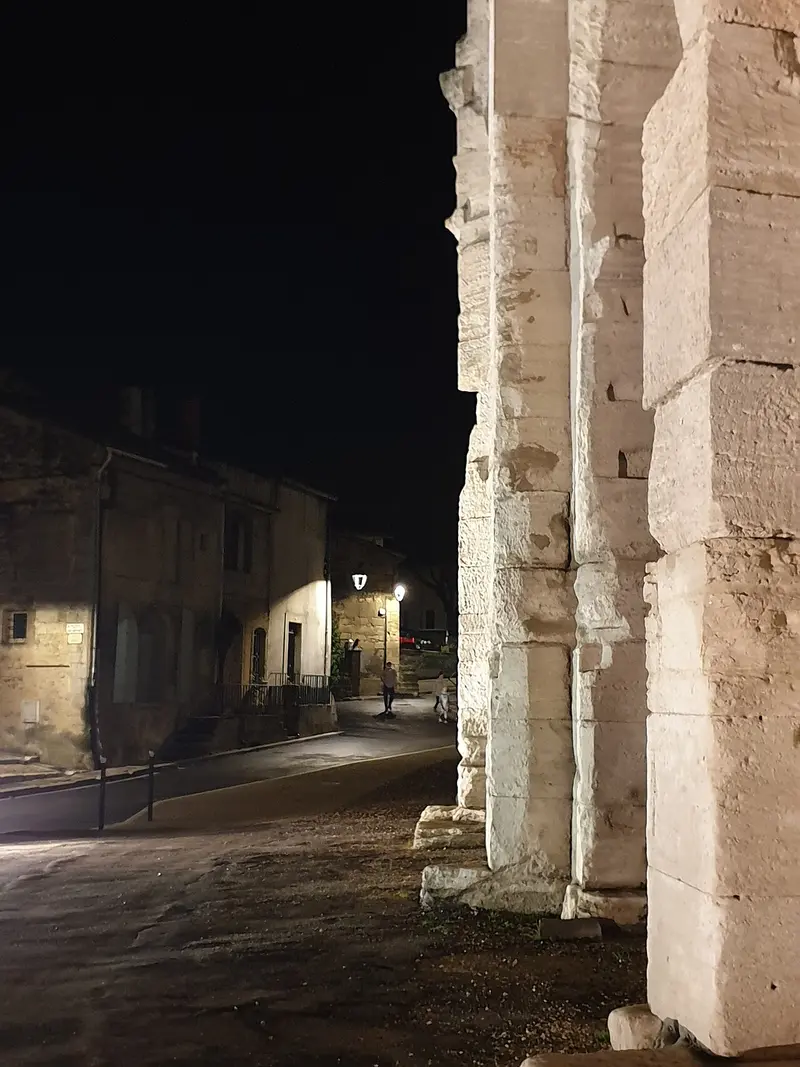
    The Arles Amphitheater, also known as Les Arènes d'Arles, is an impressive testament to Roman engineering and was built around 90 AD. Originally designed for gladiatorial combat and animal hunts, it accommodated over 20,000 spectators on two tiers with a total of 120 arches. You can explore the well-preserved structure, walk through its corridors, and climb to the upper tiers to imagine the ancient spectacles. From up there, you also enjoy a wide view over the rooftops of Arles. Today, the Amphitheater continues to serve as a venue for Camargue bullfights and other cultural events, thereby retaining its original function as a place of entertainment. It is a central component of the UNESCO World Heritage site of Arles' Roman and Romanesque monuments. Our Tip: Visit the Amphitheater early in the morning to avoid the largest crowds and peacefully enjoy the morning atmosphere. For an impressive perspective of the entire complex and the city, we recommend climbing to the uppermost seating rows.
    Open in Google Maps

    City walks in Arles

    Curated walking tours through the city's highlights — handpicked by experienced travel journalists.

    Arles: Auf den Spuren der Römer und Van Goghs

    Erleben Sie einen malerischen Spaziergang durch die historische Stadt Arles, die zum UNESCO-Weltkulturerbe gehört. Entdecken Sie beeindruckende römische Monumente und tauchen Sie ein in die Welt Vincent van Goghs, der sich hier von der einzigartigen Atmosphäre inspirieren ließ. Eine perfekte Mischung aus Geschichte, Kunst und südfranzösischem Flair.

    In Google Maps öffnen
    Stopps (7)

    Food and Drink

    Arles: Cultural Heritage and History

    Arles boasts a history spanning over 2,500 years and is deeply rooted in its rich cultural heritage. Once a significant Roman colony, the city still testifies to its glorious past through numerous well-preserved monuments, which are now UNESCO World Heritage sites.The Roman era profoundly shaped Arles, evident in the impressive Arena, the ancient Theater, and the Cryptoporticus. These structures are outstanding examples of Roman architecture and engineering, reflecting the power and influence of the empire. In the Middle Ages, Arles developed into an important religious center, with its Romanesque architecture reaching its peak in the Cathedral Saint-Trophime and its famous portal.The 19th century brought a new cultural flourishing to Arles, as Vincent van Gogh experienced his most productive creative period here, painting over 300 works that capture the unique light and landscape of Provence. Local traditions, such as those of the Gardians, the mounted cowboys of the Camargue, and festivals like the Fête des Gardians or the international Rencontres de la Photographie, reflect the lively connection between history, art, and regional life.

    Exploring Locally

    Arles is excellent to explore on foot, as most historical sights are close together in the compact city center. For longer distances or excursions into the surrounding area, local bus lines are available. A popular and eco-friendly alternative is also cycling, to discover the city and the picturesque Provençal landscape.

    Accommodations in Arles

    Accommodations in Arles

    Find perfect stay in Arles

    Booking.com
    Search Hotels
    Agoda
    Search Hotels
    Airbnb
    Vacation Rentals
    Hotels.com
    Hotels Worldwide
    Hostelworld
    Hostels

    Campgrounds in Arles

    Find perfect campground in Arles

    Search via Google Maps
    Campgrounds nearby (15km)
    Camping.info
    Find Campgrounds
    Park4Night
    RV Parks & Camping

    Plan your trip to Arles

    Save places, build a route and plan your city trip — all in one place.

    Save places

    Bookmark sights, restaurants and neighborhoods you're interested in.

    Build your route

    Turn your bookmarks into a route — define order, days and budget.

    Refine with AI

    Let Mein Fernweh suggest experiences and put together a tailored daily plan.

    Start trip planningOpen bookmarks

    Locations nearby

    These places are nearby — perfect for additional days or a day trip.

    Saint-Gilles

    Saint-Gilles

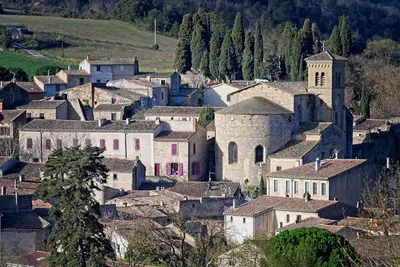
    Discover Saint-Gilles, a charming town in the heart of the Petite Camargue, where history meets Southern French lifestyle. You stand before the impressive UNESCO World Heritage Abbey Church, its detailed Romanesque facade transporting you to a bygone era. Be enchanted by the authentic ambiance of this place, welcoming you amidst historic streets and the flavors of local cuisine.
    Pont du Gard

    Pont du Gard

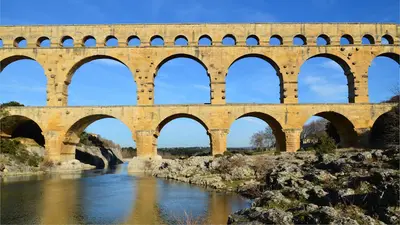
    The Pont du Gard is an outstanding testament to Roman engineering and ranks among the best-preserved ancient aqueducts worldwide. This impressive structure spans the Gardon River and was once part of a 50-kilometer-long aqueduct system that supplied the city of Nîmes with fresh water. You can extensively explore its three superimposed rows of arches, appreciating the impressive scale of this over 2000-year-old construction. The accompanying museum and visitor center offers you deep insights into the aqueduct's construction and history. For an undisturbed experience, a late afternoon visit is recommended to enjoy the golden hour and fewer visitors. In summer, the Gardon below the Pont du Gard invites you to swim and relax. A walk along the riverbank also reveals additional picturesque views of the monument.
    Avignon

    Avignon

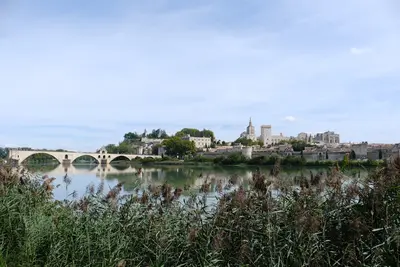
    Historical Avignon in Provence is inextricably linked to its time as a papal seat in the 14th century. Its imposing city walls enclose an Old Town that is a UNESCO World Heritage site. You will be particularly impressed by the Palais des Papes, Europe's largest Gothic palace, and the famous Pont Saint-Bénézet bridge, known as the Pont d'Avignon. Stroll through the narrow streets and bustling squares to experience the city's authentic flair. From the Rocher des Doms rock, you can also enjoy a wide view over the city and the Rhône. For a more relaxed experience, a visit in spring or autumn is recommended to avoid the summer heat and peak tourist crowds.
    Provence

    Provence

    The Provence is a region in southeastern France that captivates visitors with its unique blend of Roman history, medieval charm, and breathtaking natural landscapes. From its famous lavender fields to vibrant cities and picturesque coastal towns, Provence offers a wealth of experiences that perfectly combine culture, cuisine, and relaxation.
    Gordes

    Gordes

    Welcome to Gordes, one of France's most beautiful villages! This village, majestically perched on a rocky spur in the heart of the Luberon, will enchant you with its terraced stone houses that seem to rise organically from the rock. Stroll through the labyrinthine streets, enjoy the breathtaking panoramic view of the valley, and let yourself be captivated by the golden light of Provence in this iconic postcard setting.