Fernweh: Home
    ExploreTravel GuidesPlan a tripMy tripLast visited
    de|en
    All Places & RegionsAll highlightsAbout FernwehFAQPrivacy PolicyImprint
    ExploreTravel GuidesPlan a tripMy tripLast visited
    • Neighborhoods & highlights
    • Walking tours
    • Eat & drink
    • Food culture
    • Culture
    • Getting around
    • Accommodation
    • Plan trip
    • Nearby
    Saint-Gilles

    France

    Saint-Gilles

    City

    Saint-Gilles is a small town on the edge of the Petite Camargue in the Gard département, about 20 kilometres south of Nîmes.

    by Felix Gillen

    1. Home
    2. Destinations
    3. France
    4. Occitania (Occitanie)
    5. Saint-Gilles
    Saint-Gilles is a small town on the edge of the Petite Camargue in the Gard département, about 20 kilometres south of Nîmes. It is known for its abbey church, whose Romanesque west facade from the 12th century counts among the most important sculptural works of Romanesque art in France and is a UNESCO World Heritage Site as part of the Routes of Santiago de Compostela. There are also a small old town, a harbour on the Canal du Rhône à Sète and the bull and rice culture of the Camargue.

    Sights in Saint-Gilles

    Discover the most important sights and attractions

    Abbaye de Saint-Gilles

    1Abbaye de Saint-Gilles

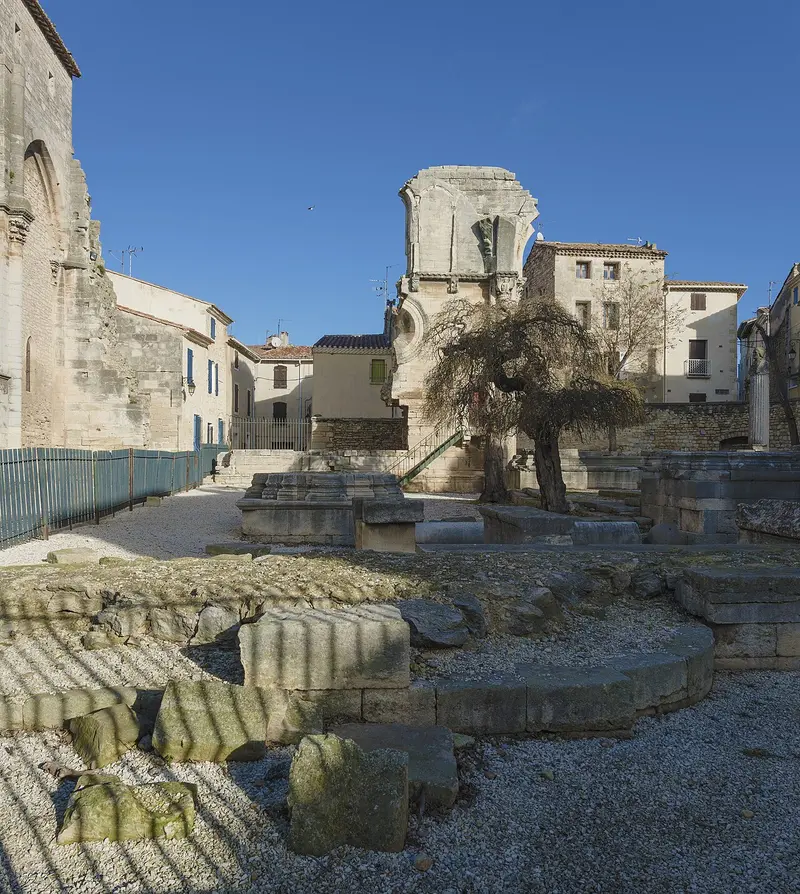
    The **Abbey Church of Saint-Gilles** is the town's most famous structure and a UNESCO World Heritage site since 1998, part of the Ways of St. James in France. Its 12th-century west facade, featuring three portals, is richly adorned with sculptures and reliefs depicting biblical themes and is considered one of the masterpieces of Romanesque sculpture. Also worth seeing are the large crypt with the tomb of Saint Giles and, in the choir area of the former church, the spiral staircase “Vis de Saint-Gilles”.

    Open in Google Maps

    2Maison Romane (Hôtel de Ville)

    Direkt neben der Abtei findest du die Maison Romane, ein weiteres beeindruckendes Zeugnis der mittelalterlichen Architektur. Heute als Rathaus genutzt, kannst du die romanische Fassade und die alten Gewölbe bewundern. Es ist ein schönes Beispiel für die weltliche Architektur dieser Epoche und bietet einen Einblick in das historische Stadtbild.
    Open in Google Maps

    3Le Vieux Saint-Gilles (Altstadt)

    The Old Town of Saint-Gilles, with its narrow streets, is located around the Abbey Church. Besides small squares and shops, you'll discover the Maison romane here, a 12th-century Romanesque residential building. It's a peaceful spot for a stroll, away from the major tourist crowds.
    Open in Google Maps

    4Port de Plaisance (Yachthafen)

    The marina of Saint-Gilles is located on the Canal du Rhône à Sète, which connects the Rhône with the Étang de Thau. Here, houseboats and sports boats moor, and by the water, you can take a stroll or sit in a café. The ViaRhona cycle path also runs along the canal.
    Open in Google Maps

    City walks in Saint-Gilles

    Curated walking tours through the city's highlights, handpicked by experienced travel journalists.

    Historic Gem on the Canal: A Walk Through Saint-Gilles

    On this 2-hour tour, discover the rich history and Provençal charm of Saint-Gilles. From the UNESCO World Heritage abbey church to the idyllic lanes and the lively canal bank, immerse yourself in the unique atmosphere of this town.

    Open in Google Maps
    Stops (7)

    Restaurants & Cafés

    Le Cours

    Im Herzen von Saint-Gilles gelegen, bietet 'Le Cours' eine authentische und raffinierte Küche mit lokalen Produkten. Du kannst hier traditionelle Gerichte aus der Camargue, wie Stierfleisch oder Reisgerichte, genießen, die mit einem modernen Twist serviert werden. Die angenehme Atmosphäre und der freundliche Service runden dein kulinarisches Erlebnis ab.
    Show on Google Maps

    Le Rhony

    Das Restaurant 'Le Rhony' ist bekannt für seine frische, saisonale Küche und eine besondere Wertschätzung regionaler Zutaten. Hier erwartet dich eine vielfältige Speisekarte, die sowohl Fleisch- als auch Fischliebhaber glücklich macht, oft mit Einflüssen aus der Provence und der Camargue. Die Terrasse ist im Sommer ein beliebter Ort, um die warme Abendluft zu genießen.
    Show on Google Maps

    La Table de Saint-Gilles

    Für eine gehobene kulinarische Erfahrung solltest du 'La Table de Saint-Gilles' besuchen. Dieses Restaurant legt Wert auf hochwertige Produkte und eine kreative Zubereitung, die klassische französische Küche neu interpretiert. Die elegante Atmosphäre und die sorgfältig ausgewählten Weine machen es zu einem idealen Ort für einen besonderen Anlass.
    Show on Google Maps

    Food & Drink

    Saint-Gilles nestles between vineyards, rice fields, and pastures. The menus feature bull meat, Camargue rice, and Costières de Nîmes wine.

    Bull Gardiane stew

    Slow-braised Camargue bull meat in red wine, served with red rice. A regional signature dish.

    Rice from the Camargue

    South of the village, the rice fields of the Rhône Delta begin. Red and black whole grain rice bear a Protected Geographical Indication.

    Wines of the Costières de Nîmes

    The pebble terraces around Saint-Gilles yield powerful red and rosé wines. Several estates are right on the country roads.

    Olives and Oil

    Table olives and olive oil of protected origin from Gard are both available at the weekly market.

    Saint-Gilles: History, Art and Traditions

    Saint-Gilles, on the edge of the Camargue, is closely linked to its abbey and the Way of St. James. The town developed around the tomb of Saint Giles (Saint Gilles), who died around 720, and became one of Western Christianity's most important pilgrimage destinations in the Middle Ages, as well as a stop on the Via Tolosana to Santiago de Compostela.The Abbey Church of Saint-Gilles has been a UNESCO World Heritage site since 1998, as part of the Routes of Santiago de Compostela in France. Its 12th-century west facade is particularly renowned, with sculptures considered masterpieces of Romanesque artistry. Also worth seeing are the large crypt and the “Vis de Saint-Gilles” spiral staircase, whose stonework was considered a masterpiece for centuries.The identity of Saint-Gilles is also shaped by its location in the Camargue. This is evident in traditions like bull herding and horse festivals, which keep alive the heritage of the Gardians, the mounted herdsmen.

    Exploring locally

    The center of Saint-Gilles is best explored on foot. There is no passenger train station, but regional buses connect the town with Nîmes and Arles. For excursions into the Camargue, a car is the most flexible option. By bike, you can continue on the ViaRhona towards Aigues-Mortes.

    Accommodations in Saint-Gilles

    Find perfect stay in Saint-Gilles

    Booking.com* (Affiliate link)
    Search Hotels
    Agoda* (Affiliate link)
    Search Hotels
    Airbnb
    Vacation Rentals

    * Affiliate link: if you book through it, we earn a small commission. The price stays the same for you.

    Campgrounds in Saint-Gilles

    Find perfect campground in Saint-Gilles

    Search via Google Maps
    Campgrounds nearby (15km)
    Camping.info
    Find Campgrounds
    Park4Night
    RV Parks & Camping

    Plan your trip to Saint-Gilles

    Save places, build a route and plan your city trip, all in one place.

    1. 1
      Sunrise over alpine peaks and a sea of clouds
      1234

      Round trip

      12 days · 4 stops

      Saved

      Pick a route

      Pick a ready-made one or save places and plan your own.

      Open bookmarks
    2. 2

      Trip to Saint-Gilles

      Live
      • 1Abbaye de Saint-Gilles3 days
      • 2Maison Romane (Hôtel de Ville)4 days
      • 3Le Vieux Saint-Gilles (Altstadt)5 days
      Budget

      Plan your trip

      The planner sorts stops, days and budget. Plan together in real time.

      Start trip planning
    3. 3
      9:41 No signal
      Saint-Gilles
      Available offline

      Use it on the road

      Download the guide to your phone and use it on site, even offline.

    Nearby

    Arles

    Arles

    Arles is a city with a deep-rooted history, shaped by its Roman heritage and the artistic presence of Vincent van Gogh. Here, you can explore impressive Roman structures such as the well-preserved amphitheater Arènes d'Arles and the ancient theater, both UNESCO World Heritage sites. The Roman cryptoporticus and the Alyscamps burial ground also bear witness to the city's former importance. The city significantly inspired Vincent van Gogh, whose traces can be found at places like Café la Nuit or in the garden of the Hôtel-Dieu. The Fondation Vincent van Gogh Arles presents his work in the context of contemporary art. For an authentic experience, a visit to the lively Saturday market is worthwhile. The best time to visit is spring or autumn, to enjoy the city with mild temperatures and fewer crowds.
    Pont du Gard

    Pont du Gard

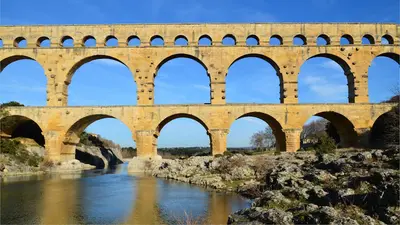
    The Pont du Gard is one of the best-preserved Roman aqueducts and has been a UNESCO World Heritage site since 1985. The approximately 49-meter-high bridge spans the Gardon and was part of a roughly 50-kilometer-long aqueduct system that brought spring water from Uzès to Nîmes in the 1st century AD. You can admire the three superimposed rows of arches up close and cross the river via the lower level. A museum and visitor center explain its construction and history. In the late afternoon, the light is warm and the crowds are smaller. In summer, you can swim in the Gardon below the bridge; a walk along the banks offers additional perspectives.
    Avignon

    Avignon

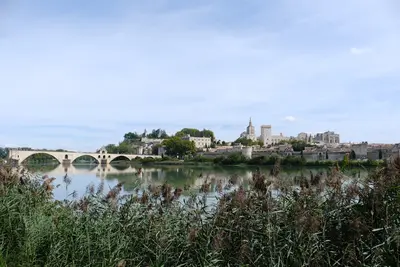
    Historical Avignon in Provence is inextricably linked to its time as a papal seat in the 14th century. Its imposing city walls enclose an Old Town that is a UNESCO World Heritage site. You will be particularly impressed by the Palais des Papes, Europe's largest Gothic palace, and the famous Pont Saint-Bénézet bridge, known as the Pont d'Avignon. Stroll through the narrow streets and bustling squares to experience the city's authentic flair. From the Rocher des Doms rock, you can also enjoy a wide view over the city and the Rhône. For a more relaxed experience, a visit in spring or autumn is recommended to avoid the summer heat and peak tourist crowds.
    Provence

    Provence

    The Provence in southeastern France stretches from the Rhône Valley into the Pre-Alps and to the coast near Marseille. Here you'll find Roman structures, medieval hilltop villages, lavender fields on the plateaus, the Verdon Gorges, and lively cities like Marseille, Avignon, and Aix-en-Provence. Additionally, there are markets, wine, and a cuisine rich in vegetables, olive oil, and herbs.
    Sète

    Sète

    Sète is often called the "Venice of Languedoc": Canals, an active fishing port, and Mont Saint-Clair shape this port city between the Mediterranean and Étang de Thau. You'll come for its maritime history, the water jousting on the canals, and a cuisine starring fish, oysters, and mussels from the lagoon.

    Sources & method

    • Photos: Wikimedia Commons, Unsplash. Each photo carries its credit.
    • The content is based on web research from public, traceable sources. How the content is made · The role of AI