Fernweh: Home
    ExploreTravel GuidesPlan a tripMy tripLast visited
    de|en
    All Places & RegionsAll highlightsAbout FernwehFAQPrivacy PolicyImprint
    ExploreTravel GuidesPlan a tripMy tripLast visited
    • Neighborhoods & highlights
    • Walking tours
    • Eat & drink
    • Food culture
    • Culture
    • Getting around
    • Accommodation
    • Plan trip
    • Nearby
    Sète

    France

    Sète

    CityCulinaryCultureBeachFor Families

    Sète is often called the "Venice of Languedoc": Canals, an active fishing port, and Mont Saint-Clair shape this port city between the Mediterranean and Étang de Thau.

    by Felix Gillen

    1. Home
    2. Destinations
    3. France
    4. Occitania (Occitanie)
    5. Sète
    Sète is often called the "Venice of Languedoc": Canals, an active fishing port, and Mont Saint-Clair shape this port city between the Mediterranean and Étang de Thau. You'll come for its maritime history, the water jousting on the canals, and a cuisine starring fish, oysters, and mussels from the lagoon.

    Sights in Sète

    Discover the most important sights and attractions

    Mont Saint-Clair

    1Mont Saint-Clair

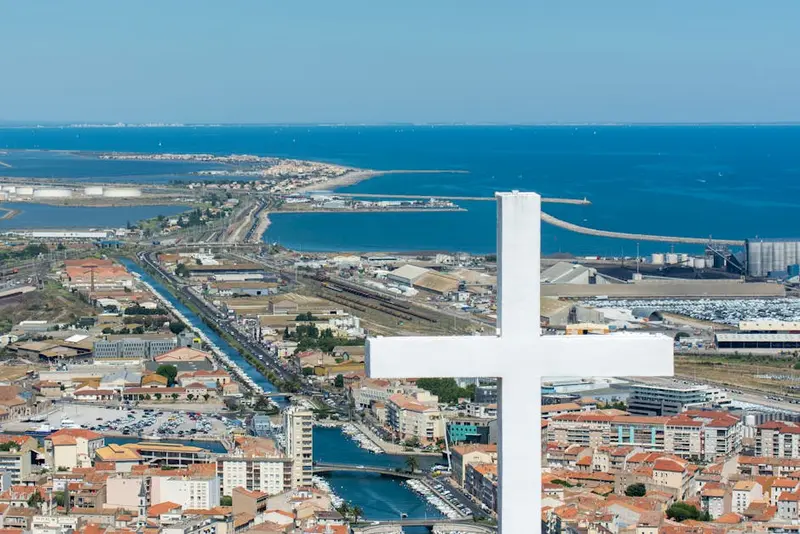
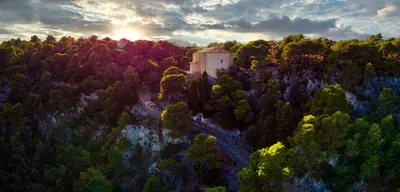
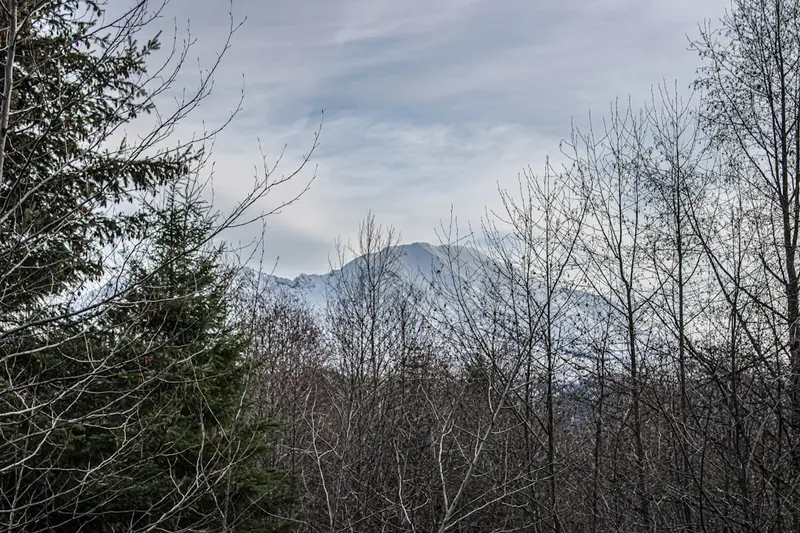
    The Mont Saint-Clair is the distinctive peak that dominates Sète and gives the city its unique silhouette. Rising 175 meters high, it offers comprehensive panoramic views, stretching from the Étang de Thau lagoon in the north, across the city of Sète itself, to the Mediterranean Sea and the coastline. Historically, this strategic point likely served as an observation post from early on. At its summit, you'll find the Chapelle Notre-Dame de la Salette, built in the 19th century, a modest yet atmospheric site. Alongside it stands the imposing Croix de Saint-Clair, a widely visible landmark. Access to Mont Saint-Clair is possible both by car and via hiking trails that wind through Mediterranean vegetation. Our Tip: Visit Mont Saint-Clair in the late afternoon to capture the golden light of the sunset over the lagoon and the sea. For undisturbed photos of the city and coastline, a weekday visit outside of peak season is recommended.
    Open in Google Maps
    Canal Royal & Les Quais

    2Canal Royal & Les Quais

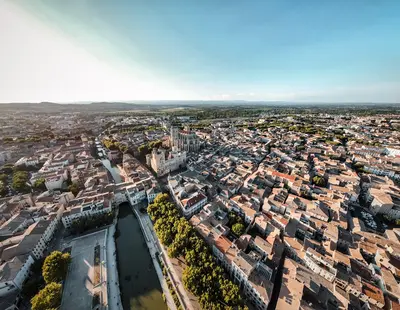
    The Canal Royal and its surrounding Quais form the pulsating heart of Sète, a city founded in 1666 under Louis XIV as the terminus of the Canal du Midi. This canal is not only a vital waterway but also the hub of urban life and Sète's maritime identity. Along the Quais, such as Quai Maximin Licciardi and Quai Général Durand, you'll find a lively mix of fish restaurants, cafés, and shops. Here, you can watch the bustling fishing boats unload their catch or simply soak in the maritime atmosphere. The architecture of the buildings along the canal reflects the port city's history. The Canal Royal is particularly known for the traditional "Joutes Nautiques," water-jousting competitions held in summer that offer a unique cultural spectacle. Our tip: Visit the Quais early in the morning to witness the arrival of fishing boats and the fresh fish market. For a picturesque perspective of the canal and the city, we recommend ascending Mont Saint-Clair.
    Open in Google Maps
    Le Cimetière Marin

    3Le Cimetière Marin

    The Cimetière Marin is terraced on the slope of Mont Saint-Clair above the Mediterranean Sea. It became famous through Paul Valéry's poem 'Le Cimetière marin' (1920); the poet, born in Sète, is also buried here. The bright stone graves, many with maritime symbols, and the view over the sea make the cemetery a peaceful place for a stroll. Georges Brassens, however, rests in Cimetière Le Py on the other side of town. Our tip: Come early in the morning, when the light is soft. Right next door is the Musée Paul Valéry.
    Open in Google Maps
    Halles de Sète

    4Halles de Sète

    The Halles de Sète are the city's central market hall, dating from the late 19th century, and a great place to experience daily life in Sète. Here you'll find fish and seafood from the port and lagoon, alongside cheese, olives, spices, and regional specialties.Beyond shopping, you can also eat directly at several stalls: fresh oysters from the Étang de Thau, the Tielle sétoise (a pie with octopus in tomato sauce), and other local dishes.Our tip: The Halles are usually open daily from morning until early afternoon. It's best to come on a weekday morning for the widest selection and smaller crowds. At one of the standing tables, you can observe the market buzz with a coffee or a glass of Picpoul.
    Open in Google Maps
    Mont Saint-Clair

    5Mont Saint-Clair

    The Mont Saint-Clair is the prominent peak that dominates Sète and offers a sweeping view of the region. This former island peak, now connected to the mainland, largely defines the city's skyline. At its summit, you'll find the Chapelle Notre-Dame de la Salette, renowned for its colourful frescoes and the statue of the Black Madonna. From here, you can enjoy a spectacular panoramic view, stretching over Sète's rooftops, the Étang de Thau, and far out to the Mediterranean Sea. Historically, the mountain served as an important landmark for seafarers and a strategic observation post. For optimal light conditions and to avoid peak crowds, an early morning or late afternoon visit is recommended. The viewpoint right by the chapel is ideal for stunning photos of the city and its harbour.
    Open in Google Maps
    Canal Royal & Les Quais

    6Canal Royal & Les Quais

    The Canal Royal is the historic and pulsating heart of Sète, a port city founded in the 17th century under Louis XIV to connect the Canal du Midi with the Mediterranean Sea. Along the Quais, especially at Quai Général Durand and Quai Maximin Licciardi, you'll experience a vibrant maritime atmosphere. Colourful fishing boats lie here next to leisure yachts, while restaurants and cafés line the quayside. You can watch the bustling activity, as fishermen unload their catch, or admire the characteristic architecture of the tall, colourful buildings standing directly by the water. Sète is also famous for its Joutes Nautiques, the traditional water tournaments that mainly take place in August and offer a unique cultural spectacle. Our Tip: Visit the Quais early in the morning to witness the arrival of the fishing boats and the start of the fish market. For a picturesque view over the canal and the colourful facades, the Pont de la Civette is an ideal photo spot, especially in the late afternoon when the light softens.
    Open in Google Maps

    City walks in Sète

    Curated walking tours through the city's highlights, handpicked by experienced travel journalists.

    Sète's Artistic Coast and the Village on the Étang de Thau

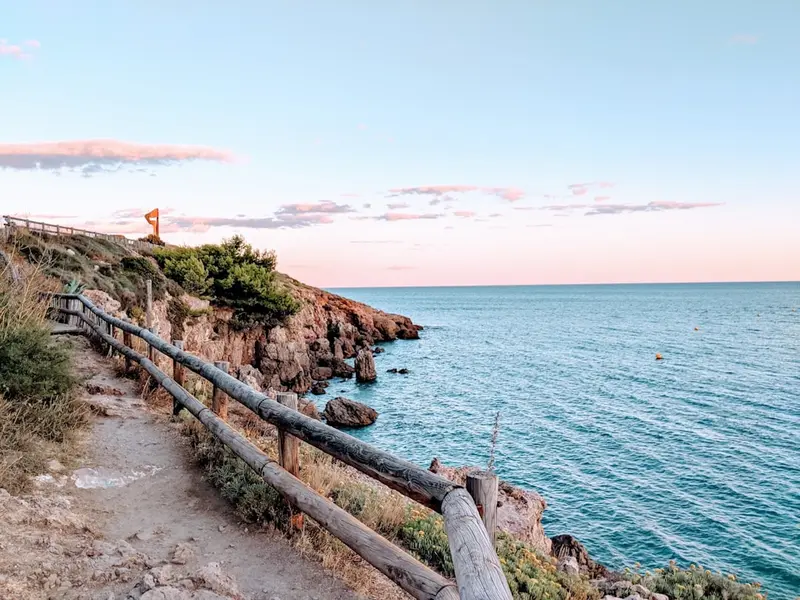
    This walk leads you away from the busy canals to the inspiring places that shaped Sète's famous artists. Discover the marine cemetery, a unique open-air theatre by the sea, wide beaches and the authentic fishing village of Pointe Courte on the Étang de Thau. A journey through Sète's creative soul and its unspoiled coastal landscape.

    ~2 Std. 45 Min.
    Open in Google Maps
    Stops (5)

    Restaurants & Cafes

    Restaurant Chez François

    Located right on Quai Maximin Licciardi, Chez François is an institution for lovers of authentic fish and seafood cuisine in Sète. Here, you'll savour classic dishes such as freshly caught fish or the famous Brasucade de Moules in a warm, relaxed atmosphere.
    Show on Google Maps

    La Coquerie

    For an upscale dining experience, La Coquerie is the ultimate choice, serving innovative and refined dishes crafted from the freshest seafood. Be captivated by the creative cuisine and elegant ambiance of this Michelin-starred restaurant.
    Show on Google Maps

    Tielle de la Pointe

    No visit to Sète is complete without trying a Tielle Sétoise, and Tielle de la Pointe is an excellent address for it. Discover here the traditional savory octopus pie, a true symbol of local cuisine, ideal for a quick, authentic snack on the go.
    Show on Google Maps

    Food and Drink

    Sète is a fishing town with a unique cuisine, where Italian influence is evident. Much of it is found nowhere else.

    Tielle sétoise

    A small pastry, filled with squid in spicy tomato sauce, brought by Italian immigrants from Gaeta. It is eaten lukewarm and sold in every bakery.

    Oysters and mussels from Thau

    Oysters and mussels grow in the lagoon behind the city. In Bouzigues and Mèze, producers serve them directly by the water, often gratinéed.

    Macaronade

    A hearty Sunday family dish of pasta with slowly braised meat in a rich tomato sauce, a dish also originally from Italy.

    Cuttlefish Rouille

    Squid in a sauce of garlic, saffron and chili, served with potatoes. A classic of portside eateries.

    Picpoul de Pinet

    The dry white wine from the lagoon area is considered a standard accompaniment to oysters and is drunk very cold.

    Sète's cultural heritage and history

    Sète, often called the “Venice of Languedoc,” lies on a narrow strip of land between the Étang de Thau and the Mediterranean Sea. This location has shaped the city and its identity.The port was founded in 1666 under Louis XIV, serving as the maritime outlet for the Canal du Midi, which was then under construction. To this day, the city's appearance is defined by its canals: 19th-century bourgeois houses stand alongside narrow, colourful homes in the fishing district.Over the centuries, Sète became an important Mediterranean port, especially for wine trade, while also remaining a fishing town. Its most famous tradition is the Joutes Nautiques, water jousting on the canals, culminating in the Fête de la Saint-Louis in August. Culturally, Sète is closely linked to the poet Paul Valéry and the chansonnier Georges Brassens, both of whom were born here. The Musée Paul Valéry, the Espace Georges Brassens, and numerous galleries showcase this connection. The local cuisine, featuring seafood and the Tielle, a squid pie, reflects the heritage of both the fishermen and Italian immigrants.

    On the go locally

    The best way to explore Sète's center, with its canals, Halles, and port, is on foot or by bike. The ascent to Mont Saint-Clair is steep; a bus or car will help here. Local bus lines connect the train station, center, and the beaches along the Corniche. During the summer season, shuttle boats also operate on the canals. The train station is located on the coastal route between Montpellier and Narbonne.

    Accommodations in Sète

    Find perfect stay in Sète

    Booking.com* (Affiliate link)
    Search Hotels
    Agoda* (Affiliate link)
    Search Hotels
    Airbnb
    Vacation Rentals

    * Affiliate link: if you book through it, we earn a small commission. The price stays the same for you.

    Campgrounds in Sète

    Find perfect campground in Sète

    Search via Google Maps
    Campgrounds nearby (15km)
    Camping.info
    Find Campgrounds
    Park4Night
    RV Parks & Camping

    Plan your trip to Sète

    Save places, build a route and plan your city trip, all in one place.

    1. 1
      Sunrise over alpine peaks and a sea of clouds
      1234

      Round trip

      12 days · 4 stops

      Saved

      Pick a route

      Pick a ready-made one or save places and plan your own.

      Open bookmarks
    2. 2

      Trip to Sète

      Live
      • 1Mont Saint-Clair3 days
      • 2Canal Royal & Les Quais4 days
      • 3Le Cimetière Marin5 days
      Budget

      Plan your trip

      The planner sorts stops, days and budget. Plan together in real time.

      Start trip planning
    3. 3
      9:41 No signal
      Sète
      Available offline

      Use it on the road

      Download the guide to your phone and use it on site, even offline.

    Nearby

    Agde

    Agde

    Agde is called the "black city" because of its dark basalt buildings. Its Old Town by the Hérault river dates back to a Greek foundation; a few kilometres further, the seaside resort Cap d'Agde offers sandy beaches and marinas. On the city's outskirts runs the Canal du Midi, a UNESCO World Heritage site, with the Agde Round Lock. Here, history and beach holidays combine.
    Béziers

    Béziers

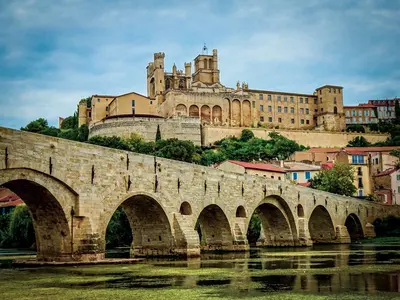
    Béziers is considered one of France's oldest cities. Its heritage spans from Roman roots to the Albigensian Crusade, which severely impacted the city in 1209. From Saint-Nazaire Cathedral on the hill, you look out over the Orb Valley and the Languedoc vineyards. On the city's edge, the Canal du Midi tackles a major elevation difference at the Fonserannes Locks. Additionally, there are plane tree avenues, a market hall, and a lively bar and festival culture.
    Canal du Midi

    Canal du Midi

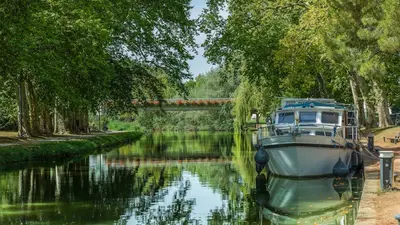
    The Canal du Midi is an approximately 240-kilometer-long 17th-century waterway between Toulouse and the Étang de Thau, and has been a UNESCO World Heritage site since 1996. Locks, bridges, and aqueducts line the way, which you can explore by houseboat or bicycle along its towpaths.
    Gruissan

    Gruissan

    Gruissan is a former fishing village on the Mediterranean coast of Languedoc, a few kilometers southeast of Narbonne. The old village center is laid out in a circle around the ruins of the Tour Barberousse, surrounded by lagoons, salt marshes, and the La Clape limestone massif. On the beach of Gruissan-Plage stand the famous wooden chalets on stilts, and the frequent wind makes the place a destination for wind and kitesurfers.
    Narbonne

    Narbonne

    Narbonne combines Roman history with the everyday life of a southern French town. Running through the heart of the old town is the Canal de la Robine, a branch of the Canal du Midi and part of its UNESCO World Heritage site. Here you'll find an unfinished Gothic cathedral, the Archbishop's Palace, a lively market hall, and Narbo Via, a modern Roman museum. The city is also a great base for excursions to the coast and the Corbières.

    Sources & method

    • Photos: Unsplash. Each photo carries its credit.
    • The content is based on web research from public, traceable sources. How the content is made · The role of AI