Fernweh: Home
    ExploreTravel GuidesPlan a tripMy tripLast visited
    de|en
    All Places & RegionsAll highlightsAbout FernwehFAQPrivacy PolicyImprint
    ExploreTravel GuidesPlan a tripMy tripLast visited
    • Neighborhoods & highlights
    • Walking tours
    • Eat & drink
    • Food culture
    • Culture
    • Getting around
    • Accommodation
    • Plan trip
    • Nearby
    Gruissan

    France

    Gruissan

    CityBeachNatureCultureCulinaryFor Families

    Gruissan is a former fishing village on the Mediterranean coast of Languedoc, a few kilometers southeast of Narbonne.

    by Felix Gillen

    1. Home
    2. Destinations
    3. France
    4. Occitania (Occitanie)
    5. Gruissan
    Gruissan is a former fishing village on the Mediterranean coast of Languedoc, a few kilometers southeast of Narbonne. The old village center is laid out in a circle around the ruins of the Tour Barberousse, surrounded by lagoons, salt marshes, and the La Clape limestone massif. On the beach of Gruissan-Plage stand the famous wooden chalets on stilts, and the frequent wind makes the place a destination for wind and kitesurfers.

    Sights in Gruissan

    Discover the most important sights and attractions

    Tour Barberousse

    1Tour Barberousse

    The Tour Barberousse is the remains of a medieval castle on a rocky hill above the old village of Gruissan. The site was built at the end of the 10th century to secure access to the port of Narbonne against attacks from the sea, and was expanded in the 12th century by the Archbishops of Narbonne. In the 17th century, Cardinal Richelieu had the castle razed, with primarily the round tower remaining. From the top, you overlook the circular village, the Étangs, the salt flats, and the sea. Our Tip: The short climb is especially worthwhile in the late afternoon when the light over the salt flats softens.
    Open in Google Maps
    Plage des Chalets

    2Plage des Chalets

    The Plage des Chalets is known for its approximately 1,300 wooden houses on stilts, which have been built in long rows behind the wide sandy beach since the 1930s. The film „Betty Blue: 37,2 Grad am Morgen“ was shot here in 1986. The beach is suitable for swimming and, due to the frequent wind, particularly for wind and kitesurfers. Our Tip: A stroll through the chalet streets is also rewarding outside the bathing season.
    Open in Google Maps
    Les Salins de Gruissan

    3Les Salins de Gruissan

    Sea salt is still extracted today in the Salins de Gruissan. The basins often shimmer pink in summer, and with a bit of luck, you'll spot flamingos and other water birds. An Ecomuseum and guided tours explain the history and extraction of salt and Fleur de Sel; you can buy the products in the shop, and a restaurant is also part of the complex. Our tip: The light over the basins is most beautiful in the early evening.
    Open in Google Maps
    Le Village Circulaire

    4Le Village Circulaire

    Gruissan's historic village center, the **Village Circulaire**, is laid out in concentric rings around the castle hill with the Tour Barberousse. You stroll through narrow streets with stone houses and colourful shutters, interspersed with small shops, galleries, and cafés. Our tip: Climb up to the tower; from above, the village's circular shape truly becomes visible.
    Open in Google Maps
    Tour Barberousse

    5Tour Barberousse

    The Tour Barberousse in Gruissan is the impressive remnant of a medieval fortress, erected in the 11th and 12th centuries. Originally, it served as a strategic watchtower and protection for the village and the surrounding salt pans. Climb the ruin and you'll be rewarded with a far-reaching panoramic view stretching over Gruissan, the Étang de Gruissan, the sparkling Mediterranean coast, and the Massif de la Clape. The tower's history is closely tied to the region; it bears witness to past conflicts and Gruissan's significance as a port and salt producer. A practical tip: Visit the tower early in the morning or late afternoon for the most pleasant temperatures and the best light for photos. This also helps you avoid the largest crowds. The climb is short but offers a rewarding perspective on the historical development of the site.
    Open in Google Maps

    City walks in Gruissan

    Curated walking tours through the city's highlights, handpicked by experienced travel journalists.

    Gruissan: Beach Houses on Stilts – A Walk to the Plage des Chalets

    Discover the iconic Plage des Chalets, famous for its unique wooden houses on stilts. This walk takes you to a world away from the historic village center, where the history of the seaside resort and relaxed beach culture meet fascinating architecture. Enjoy stunning views of the Mediterranean and learn more about how this special coastal settlement came to be.

    ~1 Std. 45 Min.
    Open in Google Maps
    Stops (7)

    Restaurants & Cafes

    L'Estagnol

    Situated right on the bustling harbor, L'Estagnol is an institution in Gruissan and renowned for its outstanding fish and seafood specialties. Here, you'll savor the freshest products, often delivered by local fishermen on the very same day, in a traditional yet elegant ambiance. A must for lovers of Languedoc cuisine.
    Show on Google Maps

    Le Salin Restaurant

    Savor a unique culinary journey at Le Salin Restaurant, set amidst Gruissan's impressive salt flats. It delights with creative dishes, innovatively showcasing regional products, especially salt from its own salt pans. Enjoy your meal in a spectacular natural setting, overlooking pink salt pans and flamingos.
    Show on Google Maps

    La Cambuse

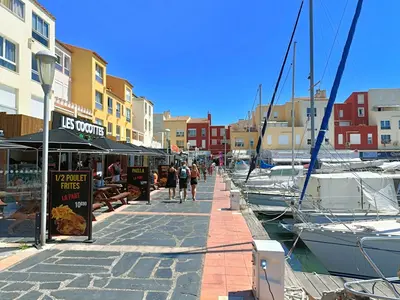
    Located on the harbor promenade, La Cambuse offers a relaxed yet lively atmosphere, perfect for lunch or dinner with views of the sailboats. The menu focuses on fresh fish and seafood, all prepared with great care. Let yourself be carried away by the maritime ambiance and enjoy a regional wine with your freshly caught dish.
    Show on Google Maps

    Dining & Drinks

    Gruissan thrives on its lagoon, salt, and wine. The cuisine is accordingly simple and salty, with much fish and mussels.

    Oysters and Mussels of the Lagoon

    Oysters and mussels are cultivated in the basins in front of the town. At the cultivators' stalls, they are served raw or grilled over vine wood.

    Salt from the salt pans

    Gruissan's salt pans, operating since antiquity, sell Fleur de Sel at their farm shop; a trail explains production.

    Wines from La Clape

    The limestone massif between Gruissan and Narbonne produces robust red wines and white wines with a salty character. Several estates are located right on the road.

    Bourride of anglerfish

    A monkfish stew with garlic mayonnaise, typical of the lagoon coast. It's especially featured on menus outside of high season.

    Gruissan's Historical Heritage and Culture

    Gruissan's history is closely tied to salt production and its location on the Mediterranean. Salt was extracted here as early as antiquity, with Roman traces attesting to early settlement. In the Middle Ages, Gruissan developed into a fortified fishing village. Its landmark is the Tour Barberousse, the remains of a castle from the late 10th century, which monitored access to the port of Narbonne and was expanded in the 12th century by the Archbishops of Narbonne.The circular village center, a so-called Circulade, developed around the castle. This form of settlement is found in several villages of the Languedoc and also served a protective function in the Middle Ages. A more recent chapter are the stilted chalets on the beach, which originated in the interwar period and are now an integral part of the town's image.To this day, the Salins de Gruissan, viticulture in the Massif de la Clape, and mussel and oyster farming shape the local identity. These traditions are reflected in the town's cuisine and festivals.

    On-site adventures

    Explore the old village, harbour, and beaches on foot or by bike. While a bus serves Narbonne, a car offers more flexibility for exploring the Massif de la Clape, wineries, and the region. The nearest train station is in Narbonne.

    Accommodations in Gruissan

    Find perfect stay in Gruissan

    Booking.com* (Affiliate link)
    Search Hotels
    Agoda* (Affiliate link)
    Search Hotels
    Airbnb
    Vacation Rentals

    * Affiliate link: if you book through it, we earn a small commission. The price stays the same for you.

    Campgrounds in Gruissan

    Find perfect campground in Gruissan

    Search via Google Maps
    Campgrounds nearby (15km)
    Camping.info
    Find Campgrounds
    Park4Night
    RV Parks & Camping

    Plan your trip to Gruissan

    Save places, build a route and plan your city trip, all in one place.

    1. 1
      Sunrise over alpine peaks and a sea of clouds
      1234

      Round trip

      12 days · 4 stops

      Saved

      Pick a route

      Pick a ready-made one or save places and plan your own.

      Open bookmarks
    2. 2

      Trip to Gruissan

      Live
      • 1Tour Barberousse3 days
      • 2Plage des Chalets4 days
      • 3Les Salins de Gruissan5 days
      Budget

      Plan your trip

      The planner sorts stops, days and budget. Plan together in real time.

      Start trip planning
    3. 3
      9:41 No signal
      Gruissan
      Available offline

      Use it on the road

      Download the guide to your phone and use it on site, even offline.

    Nearby

    Narbonne

    Narbonne

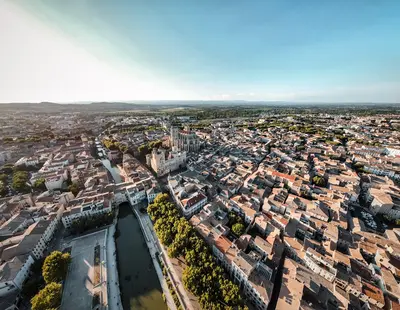
    Narbonne combines Roman history with the everyday life of a southern French town. Running through the heart of the old town is the Canal de la Robine, a branch of the Canal du Midi and part of its UNESCO World Heritage site. Here you'll find an unfinished Gothic cathedral, the Archbishop's Palace, a lively market hall, and Narbo Via, a modern Roman museum. The city is also a great base for excursions to the coast and the Corbières.
    Canal du Midi

    Canal du Midi

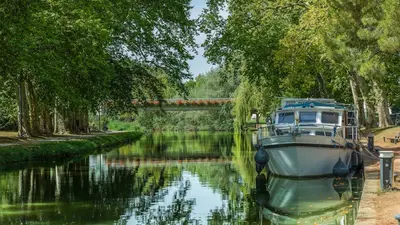
    The Canal du Midi is an approximately 240-kilometer-long 17th-century waterway between Toulouse and the Étang de Thau, and has been a UNESCO World Heritage site since 1996. Locks, bridges, and aqueducts line the way, which you can explore by houseboat or bicycle along its towpaths.
    Béziers

    Béziers

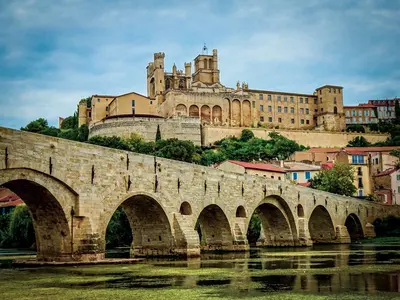
    Béziers is considered one of France's oldest cities. Its heritage spans from Roman roots to the Albigensian Crusade, which severely impacted the city in 1209. From Saint-Nazaire Cathedral on the hill, you look out over the Orb Valley and the Languedoc vineyards. On the city's edge, the Canal du Midi tackles a major elevation difference at the Fonserannes Locks. Additionally, there are plane tree avenues, a market hall, and a lively bar and festival culture.
    Agde

    Agde

    Agde is called the "black city" because of its dark basalt buildings. Its Old Town by the Hérault river dates back to a Greek foundation; a few kilometres further, the seaside resort Cap d'Agde offers sandy beaches and marinas. On the city's outskirts runs the Canal du Midi, a UNESCO World Heritage site, with the Agde Round Lock. Here, history and beach holidays combine.
    Sète

    Sète

    Sète is often called the "Venice of Languedoc": Canals, an active fishing port, and Mont Saint-Clair shape this port city between the Mediterranean and Étang de Thau. You'll come for its maritime history, the water jousting on the canals, and a cuisine starring fish, oysters, and mussels from the lagoon.

    Sources & method

    • Photos: Unsplash. Each photo carries its credit.
    • The content is based on web research from public, traceable sources. How the content is made · The role of AI