Fernweh
    ExploreTravel GuidesMy Trips
    de|en
    About FernwehImprintFAQPrivacy Policy
    ExploreTravel GuidesMy Trips
    Narbonne

    Narbonne

    CityCultureCulinaryNature
    1. Home
    2. Destinations
    3. France
    4. Occitania (Occitanie)
    5. Narbonne
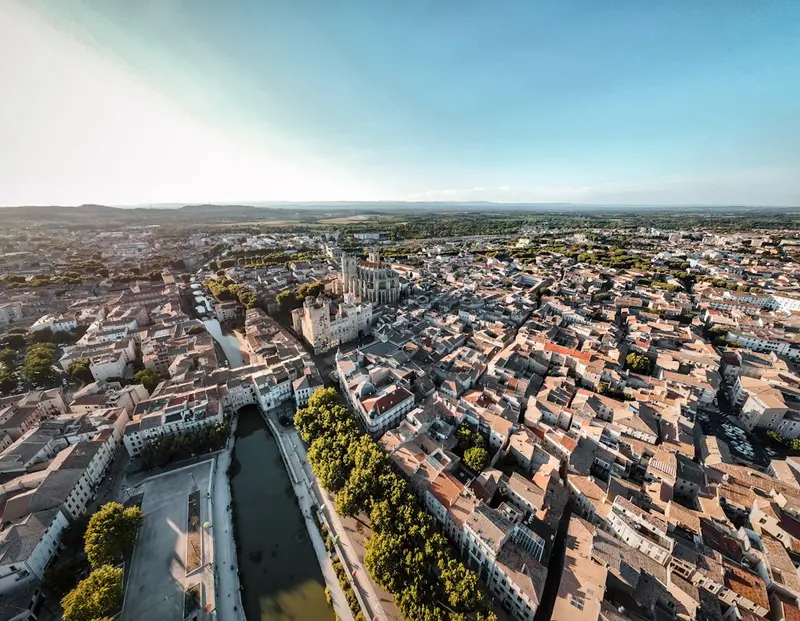
    Welcome to Narbonne, a city where Roman history and Southern French savoir-vivre uniquely blend! Discover this charming city on the banks of the Canal de la Robine, a UNESCO World Heritage site, and let yourself be enchanted by its rich heritage, lively markets, and relaxed atmosphere. Narbonne is the ideal starting point to explore the beauty of Languedoc and simultaneously experience authentic France away from the major tourist crowds.
    • Neighborhoods & highlights
    • Walking tours
    • Eat & drink
    • Culture
    • Getting around
    • Accommodation
    • Plan trip
    • Nearby
    • Neighborhoods & highlights
    • Walking tours
    • Eat & drink
    • Culture
    • Getting around
    • Accommodation
    • Plan trip
    • Nearby

    Overview

    Narbonne, once a significant Roman colony on the Via Domitia, today combines a rich heritage with Southern French lifestyle. The imposing Cathédrale Saint-Just-et-Saint-Pasteur impresses with its high choir, while the adjacent Palais des Archevêques houses several museums, including the Archaeological Museum. You can explore remnants of the Roman past in the underground Horreum Romain and at the Pont des Marchands, a unique bridge lined with houses. The Canal de la Robine, a UNESCO World Heritage site, flows through the city and invites you for waterside strolls. For an authentic experience, visit the vibrant Les Halles, a 19th-century market hall, ideal for local specialties and fresh produce in the morning. The lanes around the Canal also offer numerous restaurants showcasing the regional cuisine of Languedoc. The months of May, June, or September are particularly suitable for discovering Narbonne with pleasant temperatures and fewer crowds.

    Places in Narbonne

    Discover the most important sights and attractions

    Sights in Narbonne

    1Cathédrale Saint-Just et Saint-Pasteur

    The Cathédrale Saint-Just et Saint-Pasteur in Narbonne is an impressive example of unfinished Gothic architecture. Although never completed, its choir, towering over 40 meters high, is among France's tallest and testifies to the ambitious 13th-century plans. Construction began in 1272 on the foundations of an older church, intended to reflect the power and wealth of the Archbishopric of Narbonne.You'll notice the construction ends abruptly, as the city walls could not be demolished to expand the cathedral, and financial difficulties also arose. Nevertheless, the preserved section, particularly the choir with its magnificent stained-glass windows and the adjacent Gothic cloister, offers a fascinating experience. Inside, you'll find a rich treasury containing liturgical objects and relics.Our Tip: Visit the cathedral in the morning when the light streams through the high windows, bringing the choir's details particularly well to life. To avoid crowds and enjoy the tranquility of the place, a visit outside peak season is recommended. The cloister's inner courtyard is an excellent photo spot for the entire complex, offering a comprehensive view of its architectural splendor.
    Open in Google Maps

    2Palais des Archevêques

    The Palais des Archevêques in Narbonne is a monumental structure that underscores the city's former political and religious significance. For centuries, it served as the residence of the archbishops and combines architectural elements from the 12th to the 19th century. You'll clearly recognize its two main sections: the Romanesque Palais Vieux and the Gothic Palais Neuf. Today, the complex houses the Musée d'Art et d'Histoire and the Musée Archéologique, which offer a comprehensive insight into the region's rich history and art. A highlight is the ascent to the Donjon Gilles Aycelin, from whose summit you can enjoy sweeping views over Narbonne and the adjacent Cathédrale Saint-Just-et-Saint-Pasteur. Practical Tip: It's best to visit the Palace first thing in the morning after opening to enjoy the tranquility and explore the museums without large crowds. For an impressive overall view of the Palace and Cathedral, the Place de l'Hôtel de Ville is an ideal photo spot.
    Open in Google Maps

    3Les Halles de Narbonne

    The Les Halles de Narbonne has been the city's vibrant heart for over a century, an outstanding example of French market culture. Built between 1901 and 1905 in the Belle Époque style, this impressive building daily hosts an abundance of regional products. Here you'll find an authentic selection of fresh fruit and vegetables, artisanal cheeses, local charcuterie, fresh fish and seafood directly from the Mediterranean. The lively atmosphere and diverse stalls reflect Languedoc's rich culinary tradition. Numerous small bistros and Traiteurs also offer the chance to enjoy these specialties right there – from oysters with white wine to traditional dishes. Our Tip: Visit Les Halles preferably in the morning, especially on a weekend, to experience the full range of offerings and the most vibrant atmosphere. For an authentic lunch, you can assemble various delicacies from the stalls and enjoy them at one of the standing tables. Notice the ornate details of the iron structure that define the building.
    Open in Google Maps

    4Horreum Romain

    The Horreum Romain in Narbonne is a unique testament to the city's Roman past. As the former capital of the province Gallia Narbonensis, modern-day Languedoc, Narbo Martius was a significant trade hub. This underground Horreum served as a warehouse or granary, reflecting the city's economic importance. You enter a fascinating labyrinth of well-preserved corridors and chambers, once used for storing goods. The cool, constant temperature and massive stone walls convey an authentic sense of Roman construction and engineering. Particularly impressive are the sturdy vaults and the well-conceived structure of the complex, which has been preserved for centuries. Our Tip: A visit is particularly pleasant on hot summer days, as the underground spaces offer a welcome coolness. For the best experience and to appreciate the architectural details, plan about 45 minutes and wear comfortable shoes.
    Open in Google Maps

    5Canal de la Robine

    The Canal de la Robine, a UNESCO World Heritage site, is a vital waterway connecting Narbonne with the Canal du Midi and the Mediterranean Sea. Its origins date back to Roman times, when the Via Domitia ran through here. In the 17th century, it was developed as a branch of the Canal du Midi to connect Narbonne to the trade network and establish the city as an important inland port. Today, it significantly shapes the cityscape of Narbonne. You'll find picturesque quaysides here, lined with plane trees and historic buildings. Particularly worth seeing is the section that flows directly through the city centre, where the famous Pont des Marchands, an inhabited bridge, spans the canal. Along the quays, numerous cafés and restaurants invite you to linger. The canal is a lively meeting point, especially during the weekly markets, when the colourful hustle and bustle of traders and visitors animates the banks. It offers a relaxed atmosphere and is ideal for walks. Our Tip: Visit the canal in the morning to enjoy the tranquility and watch the fishing boats, or in the late afternoon, when the sun bathes the facades of the buildings in warm light. For a unique photo opportunity of the Pont des Marchands, position yourself best from the opposite bank.
    Open in Google Maps

    6Cathédrale Saint-Just et Saint-Pasteur

    Die Cathédrale Saint-Just et Saint-Pasteur in Narbonne ist ein beeindruckendes Beispiel hochgotischer Architektur und zeugt von der einstigen Bedeutung der Stadt als Erzbischofssitz. Obwohl sie unvollendet blieb, ragt der Chor mit seinen 41 Metern Höhe als einer der höchsten Frankreichs empor und vermittelt einen tiefen Einblick in die ambitionierten Baupläne des 13. und 14. Jahrhunderts. Du wirst von der Eleganz der Strebebögen und den filigranen Glasfenstern fasziniert sein, die das Innere in ein farbenprächtiges Licht tauchen.Die Kathedrale beherbergt zudem einen bemerkenswerten Schatz, der liturgische Gewänder und Goldschmiedearbeiten umfasst, sowie einen Kreuzgang, der römische Grabsteine und Skulpturen integriert. Dieser Kreuzgang verbindet die Kathedrale mit dem ehemaligen Erzbischöflichen Palast und bietet eine ruhige Oase. Unser Tipp: Besuche die Kathedrale am Vormittag, um die Menschenmassen zu vermeiden und das sanfte Morgenlicht zu erleben, das die Details der Architektur besonders hervorhebt. Für eine einzigartige Perspektive auf die imposante Höhe des Chores solltest du dich im Inneren bis zum Altar vorwagen und den Blick nach oben richten.
    Open in Google Maps

    City walks in Narbonne

    Curated walking tours through the city's highlights — handpicked by experienced travel journalists.

    Römisches Erbe und Verborgene Geschichten: Narbonnes antike Wurzeln neu entdecken

    Tauchen Sie ein in Narbonnes tiefgreifendes römisches Erbe und entdecken Sie versteckte architektonische Juwelen sowie weniger bekannte historische Facetten der Stadt. Dieser Spaziergang führt Sie abseits der ausgetretenen Pfade zu unterirdischen römischen Stätten, durch malerische Renaissance-Gassen und endet in einem Weltklasse-Museum, das das antike Narbonne wieder lebendig werden lässt.

    ~3 Std.
    In Google Maps öffnen
    Stopps (6)

    Restaurants & Cafes

    Narbonne's cultural legacy

    Narbonne, once founded as Colonia Narbo Martius, was the first Roman colony outside Italy and an important port city and capital of the province Gallia Narbonensis. Its strategic location on the Mediterranean made it a key hub for trade and culture, before later becoming the capital of the Visigothic Kingdom.The city's architectural heritage is testament to this rich history. The unfinished Cathédrale Saint-Just-et-Saint-Pasteur impresses with its High Gothic choir, which is among France's highest. Directly next to it stands the Palais des Archevêques, an imposing complex with medieval towers and a cloister, reflecting the power of the former archbishops.Beneath the city lies the Horreum Romain, a well-preserved Roman warehouse. The unique Pont des Marchands, an inhabited bridge, spans the Canal de la Robine and is a testament to medieval engineering. Narbonne also preserves its regional identity and traditions, deeply rooted in the Occitan culture of the Languedoc, including its distinct viticultural history and culinary specialties.

    Exploring the Area

    Narbonne invites visitors to explore the city primarily on foot, especially the charming center with the Canal de la Robine and the historic old town. There is no metro or tram network here; instead, the efficient Citibus network ensures good connectivity between the city districts. Single tickets or practical multi-journey cards, such as the Carnet de 10 voyages, are available directly from the driver or at machines, making exploration easier.For shorter distances and to enjoy the picturesque surroundings, rental bikes and e-scooters are available at various rental stations, serving as ideal means of transport along the canal or for excursions into nature. Taxis are present in the city, and the use of ride-sharing services is also possible to a limited extent, although traditional taxis are often easier to find and more reliable. Since parking in the center can be challenging, it is advisable to park your car on the outskirts of the city and enjoy the city car-free.

    Accommodations in Narbonne

    Accommodations in Narbonne

    Find perfect stay in Narbonne

    Booking.com
    Search Hotels
    Agoda
    Search Hotels
    Airbnb
    Vacation Rentals
    Hotels.com
    Hotels Worldwide
    Hostelworld
    Hostels

    Campgrounds in Narbonne

    Find perfect campground in Narbonne

    Search via Google Maps
    Campgrounds nearby (15km)
    Camping.info
    Find Campgrounds
    Park4Night
    RV Parks & Camping

    Plan your trip to Narbonne

    Save places, build a route and plan your city trip — all in one place.

    Save places

    Bookmark sights, restaurants and neighborhoods you're interested in.

    Build your route

    Turn your bookmarks into a route — define order, days and budget.

    Refine with AI

    Let Mein Fernweh suggest experiences and put together a tailored daily plan.

    Start trip planningOpen bookmarks

    Locations nearby

    These places are nearby — perfect for additional days or a day trip.

    Gruissan

    Gruissan

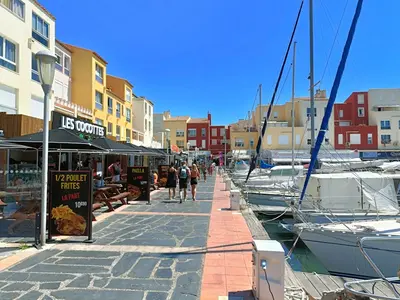
    Welcome to Gruissan, a charming former fishing village on the Mediterranean coast of Languedoc, which will immediately captivate you with its unique flair. Here you'll discover a fascinating blend of authentic French way of life, spectacular natural landscapes of the Salines and the Massif de la Clape, as well as a vibrant beach life that is particularly ideal for watersports enthusiasts. Explore the circular village center around the ruins of the Tour Barberousse and let yourself be captivated by the maritime atmosphere.
    Canal du Midi

    Canal du Midi

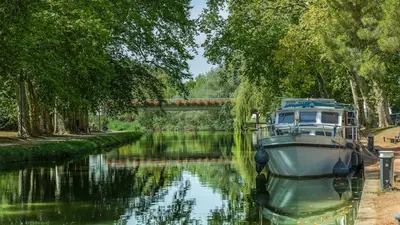
    The UNESCO World Heritage Canal du Midi is a historic waterway, lined with picturesque locks and plane trees, and ideal for relaxed boat trips and cycling tours.
    Béziers

    Béziers

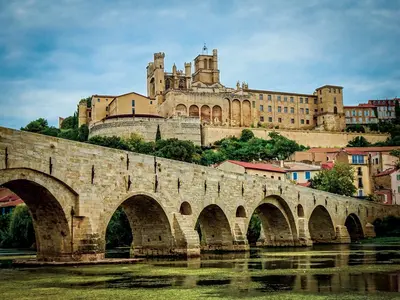
    Béziers, one of France's oldest cities, welcomes you with a **rich heritage** that stretches from Roman roots to the tumultuous history of the Cathars. From the imposing Saint-Nazaire Cathedral, you can enjoy breathtaking views over the vineyards of Languedoc and the glittering ribbon of the Canal du Midi, where its famous nine locks are located. Discover a city that uniquely combines **tradition and Southern French flair**, and let its authentic charm enchant you.
    Agde

    Agde

    Welcome to Agde, the fascinating 'black city' on the Mediterranean, where ancient Greek and Gallo-Roman history meets the vibrant life of a modern seaside resort. Discover a unique blend of historic architecture, picturesque streets, and the sun-drenched beaches of Cap d'Agde, crisscrossed by the UNESCO World Heritage Site Canal du Midi – a perfect destination for culture seekers and sun worshippers alike.
    Carcassonne

    Carcassonne

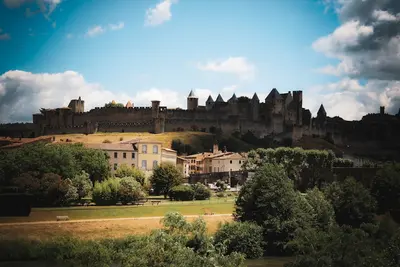
    Carcassonne is renowned for its Cité de Carcassonne, an impressive, double-walled fortress city and a UNESCO World Heritage site. You can explore the imposing defensive structures, whose origins date back to Roman times and which were extensively restored in the 19th century by Viollet-le-Duc. At the heart of the Cité are the Château Comtal and the Gothic Basilica Saint-Nazaire, reflecting the region's rich history, particularly during the Cathar Wars. Beyond the historic walls, the Ville Basse, the lower town, offers insights into modern French city life. For a more relaxed experience, visiting during the off-season is recommended to avoid the crowds. A practical tip is to ascend the walls in the late afternoon to witness the sunset over the landscape.