From Chania, head to the southwestern tip, Elafonissi, then east via Rethymno to Heraklion with the Palace of Knossos. After a detour to Matala on the south coast, the journey ends at Vai Palm Beach in the far east; this leg takes about three and a half hours.
15 Days / 14 Nights
April–June & September–October
RV Friendly
6 stops
Why This Route?
For all who want to combine beaches, gorges, and history in two weeks without a ferry.
Hidden Gems
Kedrodasos, beach with juniper trees about one kilometer from Elafonissi, on foot via the rocky coast
Red Beach (Kokkini Ammos), on foot over the hill from Matala
ancient site Itanos with small coves north of Vai
Itinerary
Stop 1 • 3 Nights
Chania
City
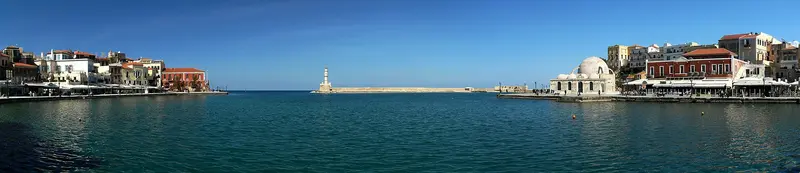
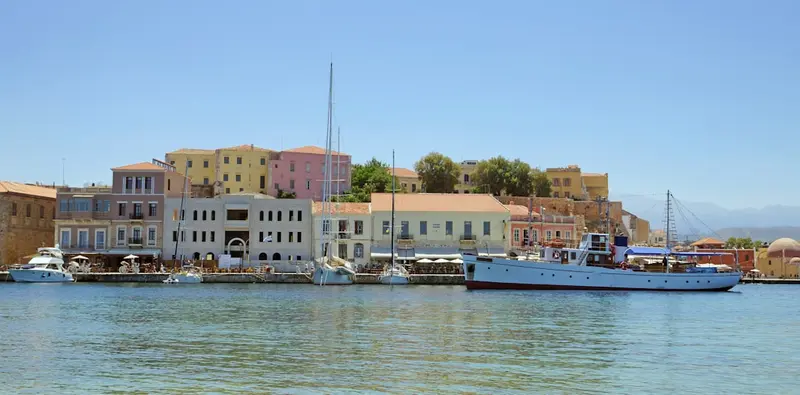
Chania is Crete's second-largest city and western capital. An Old Town with Venetian, Ottoman, and Jewish quarters side-by-side surrounds its Venetian harbour, featuring a lighthouse, arsenals, and the Mosque of Küçük Hasan Pascha.You come for the Old Town, the Market Hall, and as a base for western Crete's Balos, Falassarna, Elafonissi, and Samaria Gorge.
7 Sights
4 Restaurants
Chania's cultural heritage
Venetians and OttomansChania stands on the site of the ancient city of Kydonia, whose Minoan remains have been part of the UNESCO World Heritage of Minoan palace centres since 2025. Under Venetian rule, harbour basins, arsenals, and bastions were built from the 14th century onwards. In 1645, the Ottomans conquered the city; the Küçük Hasan Pasha Mosque by the harbour, the minaret in Splantzia, and many wooden bay windows date from their time. Under Egyptian administration, the lighthouse received its current form in the 19th century.Jewish Heritage and Unification with GreeceA Jewish community lived in Evraiki for centuries. In 1944, the German occupiers deported its members; the ship sank on its way to Piraeus. The restored Etz Hayyim Synagogue commemorates this. On December 1, 1913, the Greek flag was raised on the Firkas Bastion when Crete was officially united with Greece. Chania remained the island's capital until 1971.Music and CraftsYou can hear Cretan music with lyra and lute in some old town tavernas and at village festivals. Leather artisans still work in Skridlof Lane near the Market Hall today.
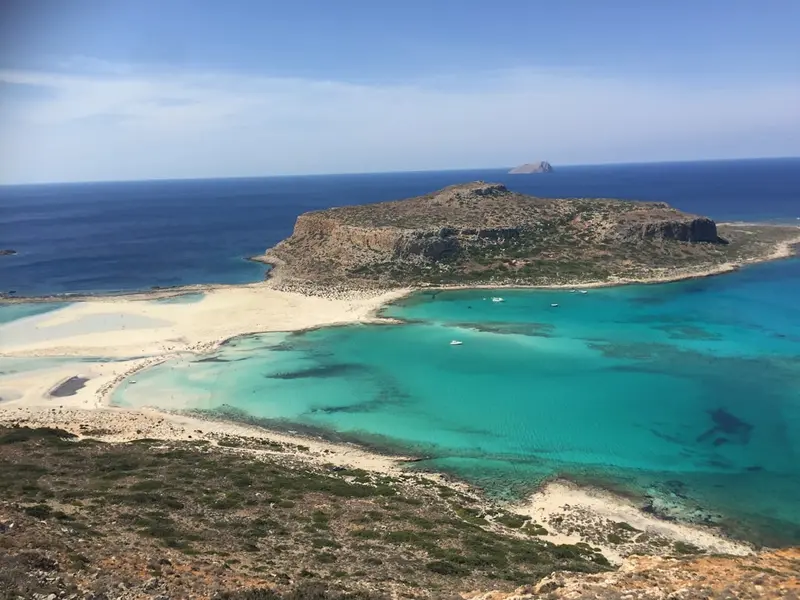
Elafonissi is situated on the southwest tip of Crete, where the island tapers off and the nearest road is far away. A shallow lagoon lies between the mainland and an offshore island, its sand appearing pink in places. The area is a Natura 2000 protected site; there's a car park, a canteen, and nothing else.
6 Sights
3 Restaurants
History and Protection Status
A Place with a Dark PastAs tranquil as the lagoon appears today, the name Elafonisi in Crete also signifies a massacre. On Easter Sunday, April 18, 1824, several hundred people from surrounding villages, predominantly women and children, fled to the island from Ottoman troops, believing the water would protect them. The soldiers crossed the shallow lagoon and killed most of them; the survivors were sold into slavery in Egypt. Estimates of the number of people on the island vary between 640 and 850. A memorial stone on the island commemorates this event. A few kilometers north stands the Chrisoskalitissa Monastery.Nature Conservation and UseElafonissi is part of the European Natura 2000 protected areas network. Protected are primarily the dunes with the sand lily Pancratium maritimum, the juniper stands, and the nesting sites of the loggerhead sea turtle. This leads to rules that are enforced locally: parts of the island are cordoned off, vehicles must remain in the car park, and taking sand is forbidden. Discussions regarding the number of sunbeds and vehicle access have been ongoing for years, as the high-season crowds visibly strain the area. Those who arrive early or travel outside the summer months will experience the area significantly quieter.
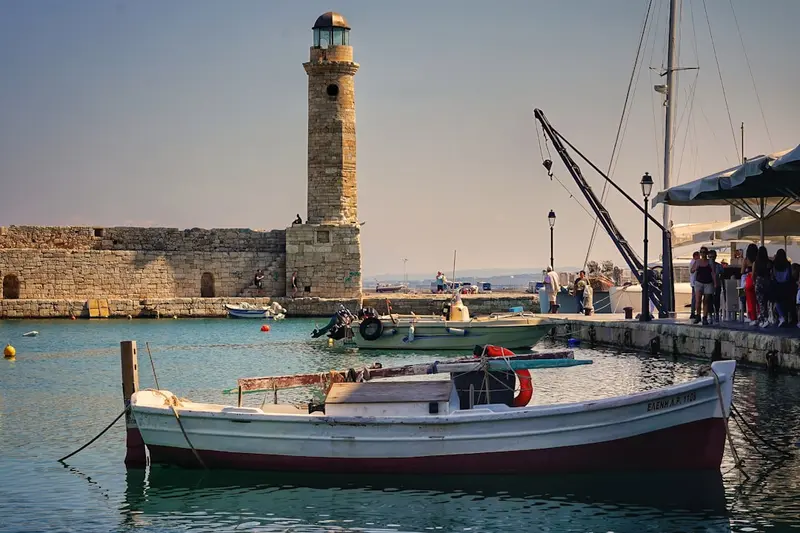
Rethymno is the third largest city on the north coast of Crete, located between Chania and Heraklion. Its Old Town, with Venetian portals, Ottoman wooden balconies and minarets, is one of the island's best preserved, topped by the Fortezza fortress.You come for the Old Town, the Venetian harbour, and the long sandy beach right in the centre. The university ensures that the city remains lively even off-season.
7 Sights
5 Restaurants
Rethymno's Cultural Heritage
Venetian CityAfter the Fourth Crusade, Crete came to Venice in the early 13th century. Rethymno became a trade hub; its Old Town is almost entirely Venetian. The Fortezza was built following corsair Uluç Ali's 1571 raid, and the Rimondi Fountain in 1626. Venetian stone portals with coats of arms still show where noble families lived.Ottoman TracesIn 1646, Ottomans conquered the city during the Cretan War. Churches were converted to mosques, including the Fortezza's cathedral and the Augustinian Church (now the Neratze Mosque), its minaret from 1890. Wooden bay windows over alleys and fountains date from this time. Crete united with Greece in 1913.University and MusicSince the 1970s, Rethymno has hosted the University of Crete, with about 8,000 students now at its Gallos campus. Cretan music, with lyra and laouto, is heard at festivals in hinterland villages and some Old Town eateries.
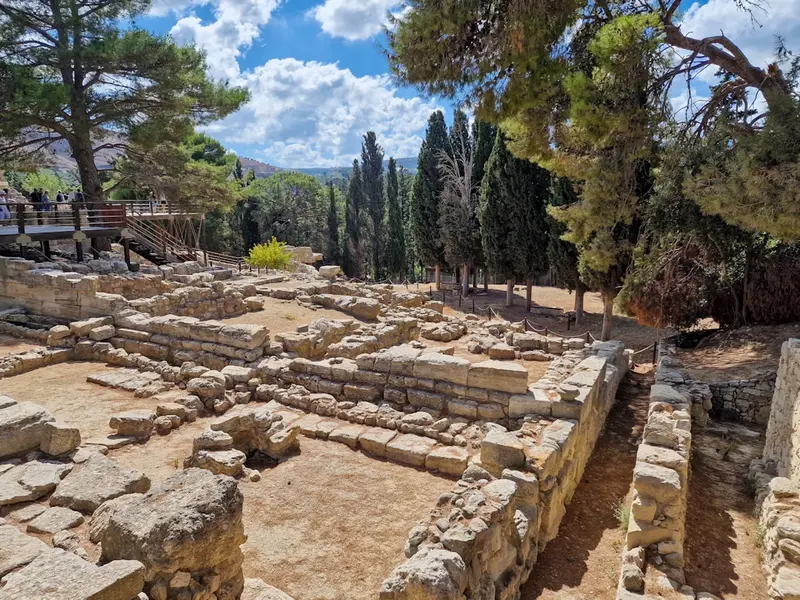
Heraklion is Crete's largest city and capital, and for most travelers, it's the island's arrival point. Behind the Venetian city walls lies a bustling city center, the harbor with Koules Fortress, and the Archaeological Museum, home to the most important collection of Minoan art.You come for the museum and the Palace of Knossos, a UNESCO World Heritage site for Minoan Palace Centres from 2025. The city itself is more for work than leisure, but a day is well spent on the old town, market, and city walls.
7 Sights
3 Restaurants
Cultural Heritage of Heraklion
Minoan RootsA few kilometers south of the city lay Knossos, the largest center of the Bronze Age Minoan culture. Since 2025, Knossos, along with Phaistos, Malia, Zakros, Zominthos, and Kydonia, has been part of the UNESCO World Heritage site “Minoan Palace Centers.” The finds from the excavations, led by Arthur Evans starting in 1900, are now housed in the Archaeological Museum of Heraklion.Venetians and OttomansVenice acquired Crete after the Fourth Crusade and held the city, then known as Candia, until 1669. Dating from this period are the city walls with seven bastions, the Koules Fortress, the Loggia (1626-1628), and the Morosini Fountain (1628). From 1648 to 1669, the Ottomans besieged the city for 21 years, one of the longest sieges in history. Under Ottoman rule, churches were converted into mosques, including Agios Titos.Kazantzakis and Cretan MusicHeraklion is the hometown of Nikos Kazantzakis, author of “Zorba the Greek” (Alexis Sorbas). His tomb is located on the Martinengo Bastion. You can hear Cretan music, featuring the lyra and lute, in some of the city's tavernas and at festivals in the surrounding villages.
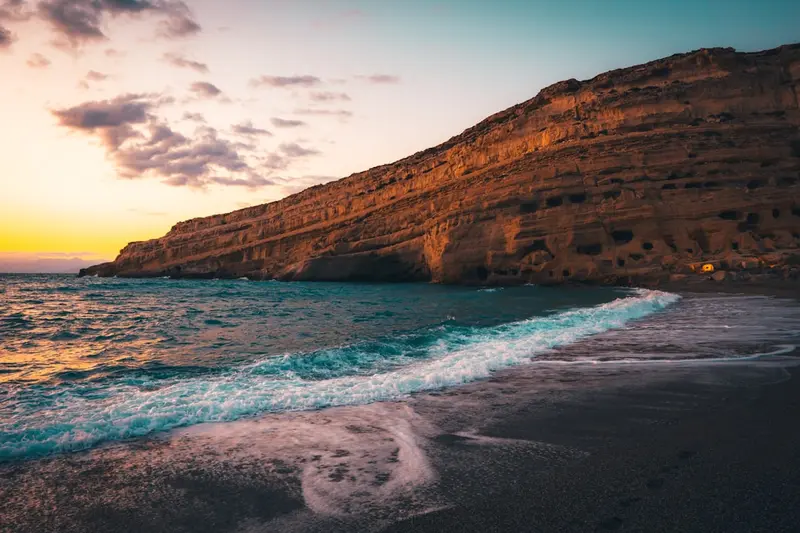
Matala is located on the south coast of Crete, at the edge of the Messara Plain, and consists of a bay, a handful of alleys, and the cliff face with its caves. The chambers carved into the sandstone date back to antiquity and were used as tombs in Roman and early Christian times; in the 1960s, dropouts moved in. From the village, the Minoan sites of the Messara and several quiet coves are reachable within a short drive.
8 Sights
4 Restaurants
History and Culture of Matala
Harbor and Rock TombsIn Roman times, Matala was a harbor for Gortys, the capital of the province of Crete and Cyrenaica. The artificially created caves in the sandstone cliff on the northern edge of the bay date back to antiquity. Their original function is disputed, but their use as tombs in Roman and early Christian times is considered certain. Important Minoan sites like Phaistos, Agia Triada, and Kommos are located in the surrounding area; Phaistos has been part of the UNESCO World Heritage of Minoan palace centers since 2025.The Hippie YearsIn the 1960s, dropouts from Europe and North America lived in the caves, making Matala internationally known. Joni Mitchell spent a few weeks here in early 1970; the songs “Carey” and “California” on her album “Blue” date back to this period. The church and military junta later expelled the cave dwellers. Since 2011, the three-day Matala Beach Festival has commemorated this era every June.
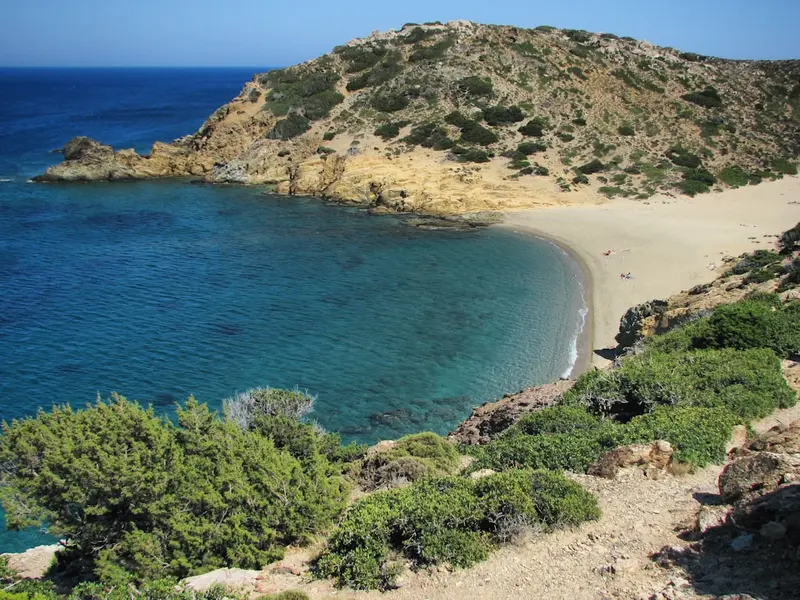
Vai, on the northeastern tip of Crete, is not a village but a beach backed by a palm grove. Several thousand Cretan Date Palms grow here in a narrow valley, which has been protected since the 1980s. Those staying overnight reside in Palekastro or Sitia and visit for the day.
7 Sights
2 Restaurants
History and Nature of Vai
The Palm GroveThe Cretan Date Palm (Phoenix theophrasti) is an eastern Mediterranean native, named after ancient naturalist Theophrastus. The Vai palm grove, once far larger, was greatly reduced in the 20th century; it is now a protected area within the Natura 2000 network. Since 2015, the region has belonged to the UNESCO Global Geopark Sitia. The tale of Phoenician seafarers bringing the palms is a legend.Antiquity and Local MonasteriesNortheastern Crete was settled in Minoan times; the Minoan city of Roussolakkos is near Palekastro. Just north of Vai lay the Doric city of Itanos, founded 8th/7th century BC, then abandoned. The fortified Toplou Monastery remains the area's largest landowner; its name comes from the Turkish for cannon.