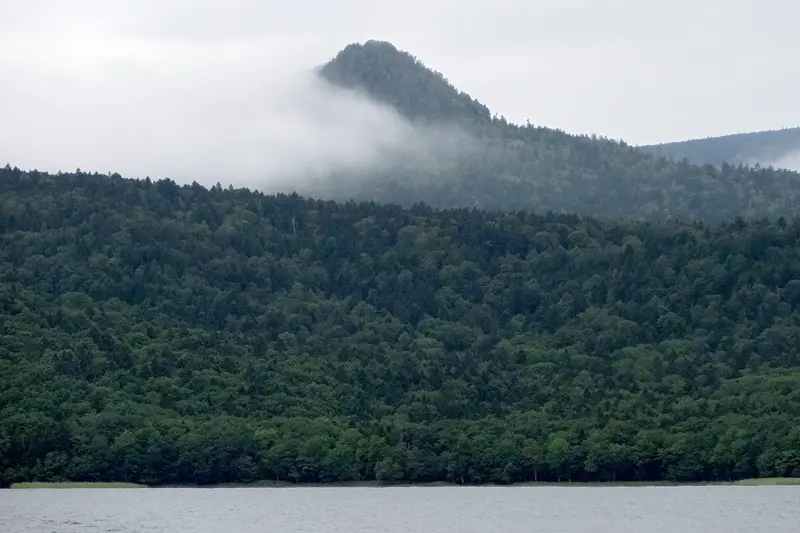
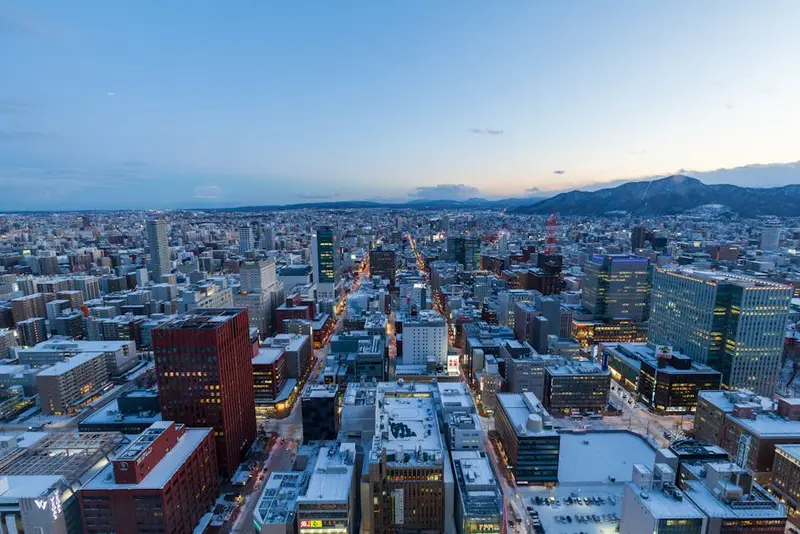
The route begins in Hakodate at the southern tip, which you reach from Tokyo via the Hokkaido-Shinkansen, and continues by train to Otaru and Sapporo. From Sapporo, you drive about four hours to Kushiro and then proceed by bus or rental car to Lake Akan.
8 Days / 7 Nights
Juni–September oder Januar–Februar für Schnee
4 stops
Why This Route?
For nature lovers seeking volcanic lakes, Ainu culture, and Hokkaido's seafood, with plenty of space and few crowds.
Hidden Gems
Bokke on the shore of Lake Akan, bubbling mud pots along a short forest path
Tenguyama in Otaru with views over the harbor and bay
Hachiman-zaka in Hakodate, a steep street in the Motomachi district overlooking the harbor
Itinerary
Stop 1 • 2 Nights
Hakodate
City
Rich in culture and history. Perfect for an exciting city trip.
The port city of Hakodate in southern Hokkaido fascinates with its unique mix of historic charm and maritime atmosphere. Particularly distinctive is the influence of Western cultures, visible in the elegant buildings of the Motomachi district and the former consulates. An absolute highlight is the ride up Mount Hakodate, whose spectacular night view counts among the three most beautiful in Japan. The star-shaped fortress Goryokaku, a national historic landmark, tells of the Boshin War period and is especially impressive during cherry blossom season. You can experience fresh fish and seafood at the lively Hakodate Morning Market (Asaichi), where you can try local specialties. The historic Kanemori Red Brick Warehouses by the harbor now house shops and restaurants in an atmospheric setting. For a relaxed visit, spring or autumn is recommended, to avoid the crowds and enjoy clear views.
7 Sights
4 Restaurants
Hakodate's multifaceted cultural heritage
Opened to foreign ships in 1854 under the Treaty of Kanagawa, Hakodate became one of Japan's first ports for international trade from 1859. This opening profoundly shaped the city, leading to its unique blend of Eastern and Western influences.Particularly in the historic Motomachi district, numerous buildings bear witness to this era. Here, examples of Western architecture can be found, including the Russian Orthodox Church, the Catholic Motomachi Church, an Anglican church, and former consulates, standing side by side with traditional Japanese structures.The city was also the site of the final hostilities of the Boshin War: in 1869, Tokugawa loyalist forces proclaimed the short-lived Republic of Ezo here, which ended with the Battle of Hakodate in the same year. This eventful past has shaped a distinct local identity, evident in Hakodate's efforts to preserve its cultural heritage.Local traditions often reflect the significance of the sea and trade. Restored districts and museums tell the story of this port city.
Rich in culture and history. Culinary highlights and Perfect for unwinding and relaxation.
Otaru on Hokkaido, a former port city, is known for its historic canal and Sakaimachi Street. The Otaru Canal with its red-brick warehouses bears witness to its heyday as an important trading hub. On Sakaimachi Street, you'll find specialty shops for glassware, music boxes, and local sweets. Visit the Otaru Music Box Museum and enjoy fresh seafood in the local sushi restaurants. An evening boat trip offers an atmospheric perspective of the canal under gas lamps. Otaru is particularly charming in winter during the Snow Light Festival or in colorful autumn.
4 Sights
5 Restaurants
Otaru's Historical Heritage and Craftsmanship
Otaru evolved from an Ainu settlement in the 19th century into a flourishing commercial port during the Meiji and Taishō periods. The city was once known as the “Wall Street of the North” and served as an important financial and distribution center for Hokkaido, particularly due to herring fishing and coal trade. This era of prosperity profoundly shaped the cityscape.Characteristic of Otaru is the preserved architecture from this era, including numerous historic warehouses along the canal and stone bank buildings in the former financial district. These structures reflect a blend of Western and traditional Japanese stylistic elements and attest to Otaru's economic importance. Culturally, Otaru is today particularly known for its craftsmanship. Its glass craftsmanship originates from the production of oil lamps for fishing and households, as produced by Kitaichi Glass from 1901; additionally, there are numerous music box shops and the Music Box Museum. These local specialties highlight Otaru's transformation from a commercial port to a center for arts and crafts and history.
Rich in culture and history. Culinary highlights and Perfect for an exciting city trip.
Sapporo, Hokkaido's capital, presents itself as a modern metropolis with wide avenues and unique European city planning. You'll discover a rich history of beer brewing here, extensively documented in the Sapporo Beer Garden & Museum. The central Odori Park forms the city's green heart and hosts the famous Snow Festival in winter, while the Sapporo TV Tower offers panoramic views. Hokkaido's historic Government Building, known as the "Red Brick Office," testifies to the city's early development. In the evening, the lively entertainment district of Susukino invites exploration. For a pleasant exploration, visiting in the summer months of July and August is recommended, when the climate is mild. Be sure to try the local specialty Soup Curry or the famous Miso-Ramen, offered in many small eateries.
6 Sights
3 Restaurants
Cultural Heritage and Art in Sapporo
Sapporo, although a comparatively young city, possesses a rich and unique cultural history deeply rooted in Hokkaido's development. Originally inhabited by the indigenous Ainu, modern urban development only began during the Meiji Restoration from 1869 onwards, under strong Western influence, particularly American city planning. This foundational phase shaped the city's grid-like street network and produced iconic buildings like the Clock Tower and the Former Hokkaido Government Office Building, which exhibit elements of European architecture.Sapporo's cultural identity is also closely linked to nature and the seasons. The world-renowned Sapporo Snow Festival in winter attracts millions and transforms the city into a temporary gallery of ice and snow sculptures, demonstrating a deep appreciation for the cold season. The city has also developed into a center for modern art and design, with numerous galleries and the Sapporo Art Park, which presents sculptures in a natural setting.Historically, Sapporo was a melting pot for pioneers and immigrants, leading to a distinctive food culture characterized by dishes like Miso Ramen and Soup Curry. The legacy of Ainu culture is increasingly recognized and preserved in the region through educational centers and initiatives, representing an an important aspect of Hokkaido's cultural diversity. The combination of colonial past, indigenous roots, and modern urbanity gives Sapporo its special cultural appeal.
Akan, nestled within the majestic landscape of Akan-Mashu National Park, invites you to immerse yourself in a world of untouched nature and rich indigenous culture. Here, on the shores of the mystical Lake Akan, you will find a unique blend of relaxation, adventure, and deep insights into the Ainu way of life.
4 Sights
3 Restaurants
Culture & History
Ainu Culture at Lake AkanOn the shore of Lake Akan lies the Akanko Ainu Kotan, one of Hokkaido's largest Ainu settlements. Around 200 people live here; along the main street, workshops and shops create wood carvings, embroidery, and jewelry with traditional Ainu patterns. Traditional Ainu dances, part of UNESCO's Intangible Cultural Heritage, are performed at the Ikor Theater.Nature and BeliefIn the Ainu worldview, animals, plants, mountains, and waters are inhabited by gods, the Kamuy. The Oakan and Meakan volcanoes, which frame the lake, play an important role in the region's traditions.Marimo FestivalThe lake's spherical Marimo algae have been protected as a Special Natural Monument since 1952. Every October, the Ainu community has celebrated the three-day Marimo Festival since 1950, ceremonially returning some Marimo to the lake during the event.National ParkThis area is part of the Akan-Mashu National Park, designated in 1934 as one of Japan's first national parks. The hot spring resort Akanko Onsen developed into one of Eastern Hokkaido's most important holiday destinations in the 20th century.