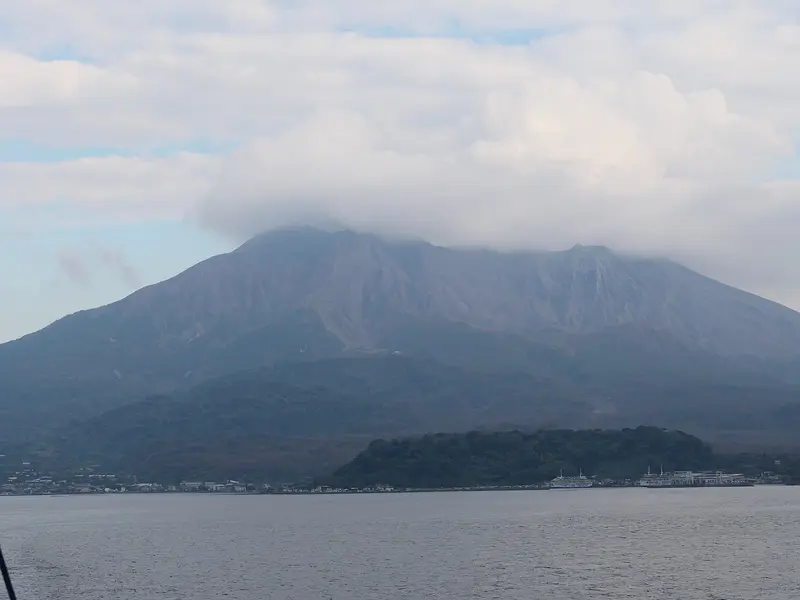
The route begins in Fukuoka, continues to Beppu's east coast hot springs, through the Aso-Caldera to Kumamoto, and ends in Kagoshima opposite Sakurajima. From Fukuoka to Beppu, the Limited Express Sonic takes about two hours; from Beppu to Kumamoto, a long-distance bus via Aso takes a good four hours. The Kyushu-Shinkansen connects Kumamoto and Kagoshima in just under an hour.
10 Days / 9 Nights
März–Mai und Oktober–November
4 stops
Why This Route?
For travelers seeking active volcanoes, hot springs, and castle towns in an off-the-beaten-path region of Japan.
Hidden Gems
Suizenji-Jojuen in Kumamoto, a landscape garden with a replicated Mini-Fuji
Myoban Onsen above Beppu with straw huts where bath salts are harvested from sulfur deposits
Sand bath in Ibusuki, about an hour south of Kagoshima
Itinerary
Stop 1 • 3 Nights
Fukuoka
City
Perfect for an exciting city trip. Culinary highlights.
Fukuoka, a vibrant port city on Kyushu, blends modern urbanity, rich history, and a relaxed atmosphere, distinguishing it from other Japanese metropolises. Renowned for its vibrant culinary scene, the city boasts Yatai food stalls along the Naka River in Nakasu, offering local specialties like Hakata Ramen by the water. Historical insights await at the Dazaifu Tenmangu Shrine in nearby Dazaifu, a significant cultural heritage dedicated to scholar Sugawara no Michizane. For relaxation and strolls, the expansive Ohori Park offers a large pond and an adjacent Japanese garden. Canal City Hakata's modern shopping district offers diverse entertainment and architecture. The best time to visit is spring or autumn, leveraging the pleasant climate and smaller crowds for relaxed city exploration.
6 Sights
5 Restaurants
Fukuoka's Cultural Heritage: History, Art, and Traditions
Fukuoka, once known as Hakata, is a city rich in history and cultural depth, drawing its identity from a millennia-old role as Japan's gateway to Asia. Since ancient times, the city was an important trading hub, early receiving influences from Korea and China that profoundly shaped its art, architecture, and customs.An architectural testament to these deep roots is Shofukuji Temple, Japan's first Zen temple, founded in 1195 and marking the introduction of Zen Buddhism to the country. The remnants of Fukuoka Castle, once one of the largest on Kyushu, also speak of the city's importance during feudal times. Local traditions such as the Hakata Gion Yamakasa, celebrated with colossal festival floats and an energetic procession, and part of UNESCO's intangible cultural heritage of Japanese float festivals, reflect the deeply rooted community spirit and time-honored rituals.Cultural specificities also manifest in traditional handicrafts, including the exquisite Hakata Dolls (Hakata Ningyo) and Hakata-Ori textiles, known for their delicate patterns and durability. These artisanal crafts are living testaments to Fukuoka's history and offer insights into the region's artistic heritage. The blend of historical depth, religious architecture, and vibrant festivals shapes Fukuoka's cultural landscape.
Perfect for unwinding and relaxation. Culinary highlights.
Beppu, an onsen town on Kyushu, is world-renowned for its diverse hot springs and the culture associated with them. Here you'll find over 2,000 hot springs, divided into eight main areas, each with its own character. A highlight is the "Jigoku Meguri", a tour of the seven Hells of Beppu, thermal springs unsuitable for bathing, featuring unusual colors and geysers. Particularly famous are the cobalt-blue "Umi Jigoku" (Sea Hell) and the blood-red "Chinoike Jigoku" (Blood Pond Hell). Take the opportunity for a traditional sand bath at Beppu Kaihin Sunayu or try Jigoku Mushi, dishes cooked in the steam of the hot springs. For a comprehensive experience, it's recommended to visit the Jigoku Meguri in the morning to avoid the afternoon crowds. A stroll through the various onsen districts, such as Kannawa, offers insights into local life and the steaming landscapes.
5 Sights
5 Restaurants
Beppu's History and Culture
Beppu, a city whose identity is inextricably linked to its hot springs, looks back on a long and rich history. Already in ancient chronicles like the "Bungo Fudoki" from the 8th century, references can be found to the therapeutic use of its mineral-rich Onsen.Its development into a significant spa town accelerated considerably during the Meiji and Taisho eras, as modern infrastructure and improved transport links promoted its rise to an internationally renowned travel destination. The city's architecture showcases a blend of traditional Ryokans and functional bathhouses, reflecting this evolution.Central to Beppu's culture is its deeply rooted Onsen tradition, manifesting not only in ritual bathing but also in culinary specialties like Jigoku Mushi, where food is cooked using hot spring steam. The seven "Hells" of Beppu (Jigoku Meguri) are natural phenomena that have long been admired and maintained as attractions. Moreover, the region's bamboo weaving art has a long tradition, influenced by local materials and the surrounding nature.
Rich in culture and history. For adventure seekers.
Kumamoto in Kyushu blends rich history with modern dynamism. Its landmark is the imposing Kumamoto Castle, a significant cultural property whose reconstruction after the 2016 earthquake demonstrates resilience. The picturesque Suizenji Jojuen Garden invites you to relax amidst its miniature landscapes. In the lively shopping streets like Kamitori and Shimotori, you'll discover local life and specialties like Kumamoto Ramen. For an optimal experience, a visit in spring during cherry blossom season or in autumn is recommended.
4 Sights
3 Restaurants
Kumamoto's Cultural Heritage
Kumamoto, deeply rooted in Japan's feudal history, is a city that has consistently preserved its cultural identity. Its origins are closely linked to the construction of Kumamoto Castle in the early 17th century by the prominent daimyō Katō Kiyomasa, a key figure of the Sengoku period. The castle served as a strategic center and stands as a testament to the military architecture of that era.Kumamoto's architecture is inextricably linked to the castle, which, despite its destruction during the Satsuma Rebellion in 1877 and subsequent earthquake damage, remains a masterpiece of defensive architecture to this day, with its characteristic curved stone walls and multi-tiered roofs. Beyond the castle, the city also features examples of traditional Japanese garden art, such as Suizenji Jōju-en, which incorporates elements of a typical 17th-century Momoyama garden.Local traditions reflect Kumamoto's rich heritage. This includes Higo Zogan, a damascene art that originated in the Edo period and was originally used to adorn samurai swords. Ancient crafts dating back to the Kofun period, such as pottery making, also shape the region's cultural profile. These elements offer insight into Kumamoto's deep historical and artistic soul.
For adventure seekers. Perfect for unwinding and relaxation.
Kagoshima, located in southern Kyushu, is inextricably linked to the active volcano Sakurajima, which dominates Kinko Bay. Here, you'll experience a unique atmosphere, shaped by a mild, humid climate and the constant presence of volcanic activity. Visit **Sengan-en Garden**, a historic residence featuring traditional landscapes and direct volcano views. A short ferry ride takes you to Sakurajima itself, where you can experience its volcanic nature firsthand and enjoy local Ashi-yu foot baths. In the lively shopping district of Tenmonkan, you'll find numerous restaurants offering local specialties like Kurobuta (black pork) and Kibinago (small round herring). For panoramic views of the city and Sakurajima at sunset, **Shiroyama Park** is highly recommended. The months of April to May and October to November often offer ideal weather for explorations.
4 Sights
5 Restaurants
Kagoshima's Historical Heritage and Cultural Identity
Kagoshima, formerly the heart of the powerful Satsuma domain, boasts a rich and influential history. Under the rule of the Shimazu Clan, who governed for over 700 years, the region played a crucial role in Japan's early contacts with the Western world through the visit of Francis Xavier in the 16th century. Its strategic location also fostered cultural exchange with the Ryukyu Islands and shaped a unique regional identity.In the 19th century, Satsuma was a driving force behind the Meiji Restoration, which fundamentally modernized Japan and led it into a new era. Traces of this turbulent period are still visible in the city, including at the site of the former Kagoshima Castle and in the Sengan-en Garden. The latter is a historic Shimazu residence with breathtaking garden artistry that cleverly incorporates the nearby Sakurajima volcano into its landscape design and represents an outstanding example of traditional Japanese aesthetics.Local culture is deeply rooted in craftsmanship and traditions. This includes exquisite Satsuma-Yaki ceramics, known for their fine details and elegant glazes, as well as the long history of Shochu production from sweet potatoes. These cultural expressions reflect the deep connection of the residents with their region and its unique raw materials, allowing Kagoshima to preserve a vibrant and distinctive cultural heritage.