Fernweh: Home
ExploreGuideDestinationsMy tripsMy trip
de|en
  • Why go
  • Highlights
  • Round trips
  • Local food
  • Good to know
  • Best time to visit
  • Travel advice
Cuba

Photo by Robin Canfield on Unsplash

Travel Guide Cuba

Germany's Federal Foreign Office strongly advises against travel to Cuba (as of 15 November 2026).

by Felix Gillen

Travel advice: Germany's Federal Foreign Office strongly advises against travel to Cuba. GOV.UK · More

Why Go To Cuba?

Cuba appeals with its colonial old towns (Habana Vieja, Trinidad, Cienfuegos, Camagüey, all UNESCO World Heritage Sites), the Viñales tobacco valley and its limestone cones, and a live music culture in squares and courtyards. But the Foreign Office strongly warns against travel now, as power, water, fuel, and payment systems massively fail; plan travel only after checking current advisories.

Contents

  • Highlights
  • Round trips
  • Local food
  • Good to know
  • Best time to visit
  • Travel advice

Where in Cuba?

Pick an area. The highlights, road trips and places below follow your choice.

Highlights in Cuba

What you should have seen
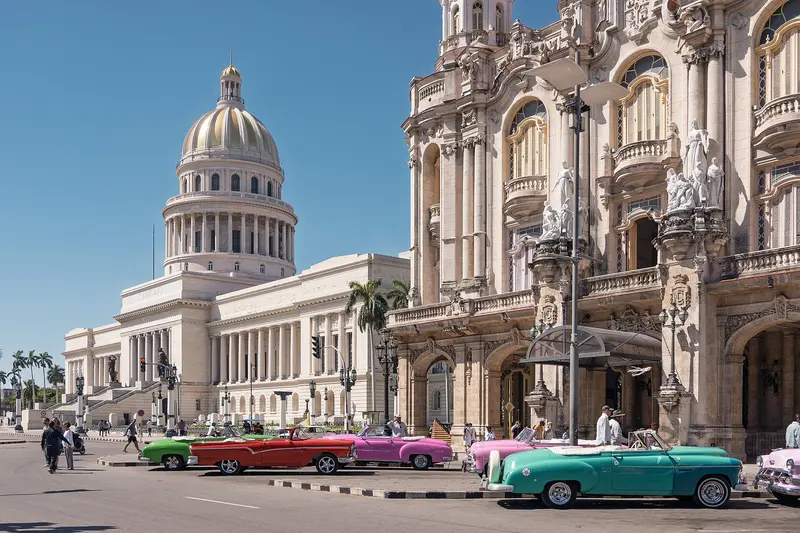
Havana

Fraganda / Wikimedia Commons / CC BY-SA 4.0, mod.
Highlight 1 of 4

Havana

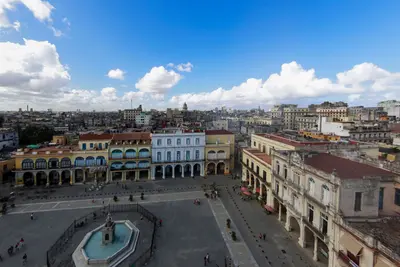
Havana, founded by the Spanish around 1519, is the capital of Cuba and its cultural center.

Discover
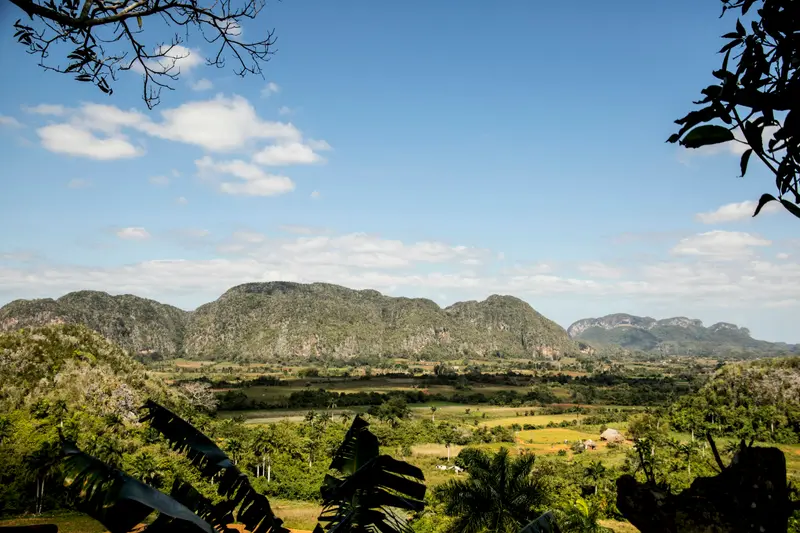
Viñales

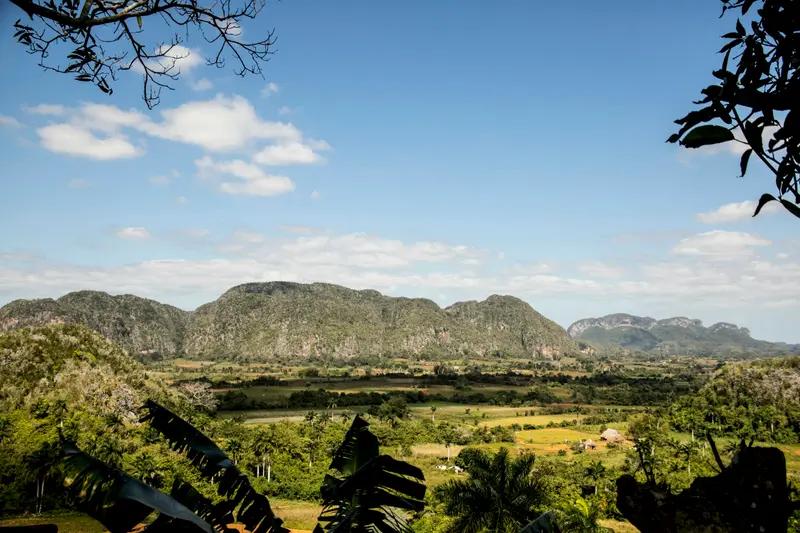
Photo by Robin Canfield on Unsplash

Highlight 2 of 4

Viñales

The Viñales Valley in western Cuba is a cultural landscape that UNESCO declared a World Heritage site in 1999. Steep limestone cones, known as Mogotes, rise up to 300 m from the red tobacco fields, many of which are still tilled with ox teams today.

Discover
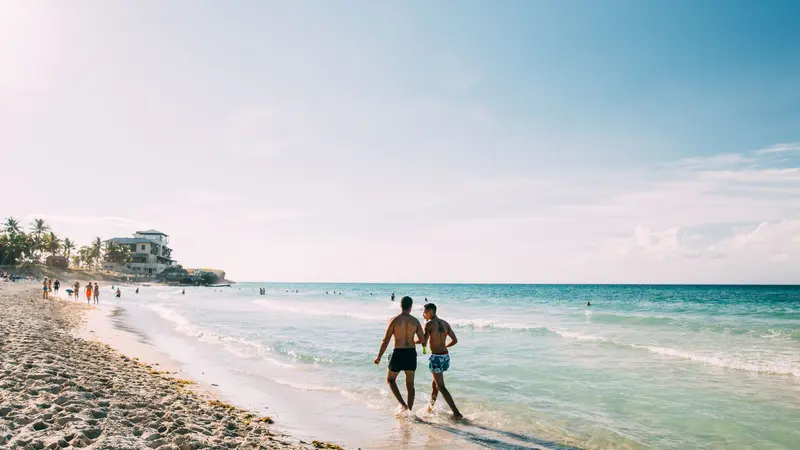
Varadero

Photo by Yuting Gao on Pexels

Highlight 3 of 4

Varadero

Varadero is located on the Hicacos Peninsula east of Havana, about two hours' drive from the capital. The peninsula is approximately 25 km long and rarely wider than half a kilometer; a sandy beach stretches along almost its entire northern side.

Discover
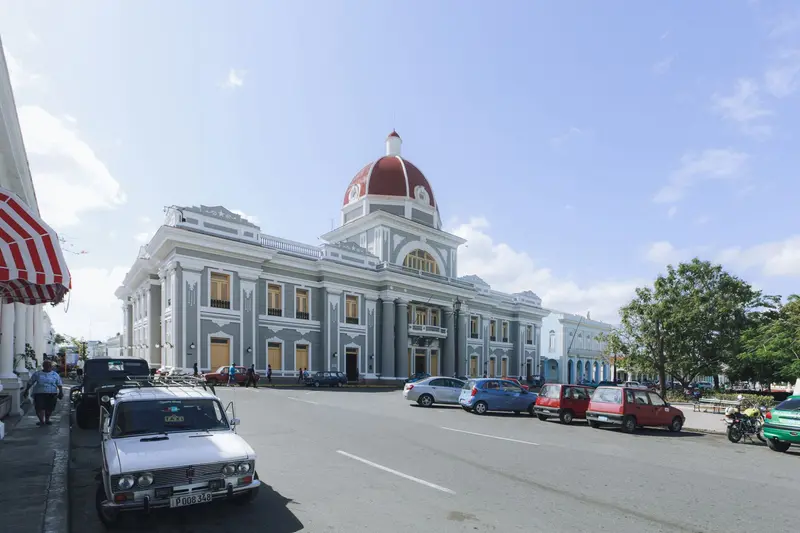
Cienfuegos

Photo by Mehmet Turgut Kirkgoz on Pexels

Highlight 4 of 4

Cienfuegos

Cienfuegos on the south coast was founded on April 22, 1819, by French settlers from Bordeaux and Louisiana under Don Luis De Clouet, initially named Fernandina de Jagua.

Discover

More highlights in Cuba

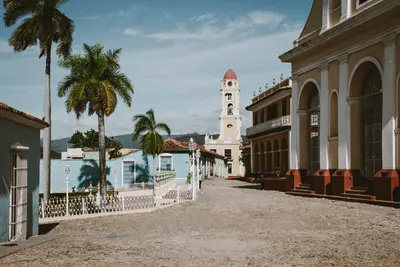
Trinidad

Trinidad

Trinidad, in south-central Cuba, was founded by Diego Velázquez on December 23, 1514. The city grew wealthy in the 18th and 19th centuries from the sugar trade; most of the single-story, brightly painted houses with verandas lining the cobblestone streets date from this period. Together with the nearby Valle de los Ingenios, Trinidad has been a UNESCO World Heritage site since 1988. The focal point is the Plaza Mayor, featuring palaces of the sugar barons, which are now museums. In the evenings, salsa is danced on the steps next to the church. South of the city lies Playa Ancón beach, and to the north are the mountains of Topes de…

Mehmet Turgut Kirkgoz·Pexels

Valle de los Ingenios

Valle de los Ingenios

The Valle de los Ingenios (Sugar Mill Valley) lies east of Trinidad and, with the city, became a UNESCO World Heritage site in 1988. In its San Luis, Santa Rosa, and Meyer valleys, 18th and 19th-century sugar mills operated, their wealth derived from enslaved labor. Manor houses, mill ruins, and enslaved quarters remain.Its emblem is the 45-meter-high tower of Hacienda Manaca Iznaga, from which field work was supervised. Other stops include Hacienda Guáimaro (with murals) and the ruins of San Isidro de los Destiladeros.

Mehmet Turgut Kirkgoz·Pexels

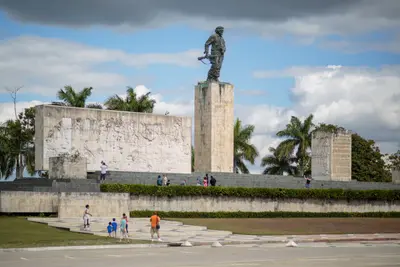
Santa Clara

Santa Clara

Santa Clara, in the heart of the island, is closely linked to Ernesto Che Guevara: In December 1958, rebels under his leadership stopped an armored train of government troops here. The memorial at the train, and the monument with Che's statue, mausoleum, and museum, are today the city's most important attractions.The center around Parque Vidal has been a national monument and pedestrian zone since 1996. Nearby lies Remedios, where the Parrandas are celebrated on the night of December 24th, and on the north coast, the island chain around Cayo Santa María.

Mehmet Turgut Kirkgoz·Pexels

Camagüey

Camagüey

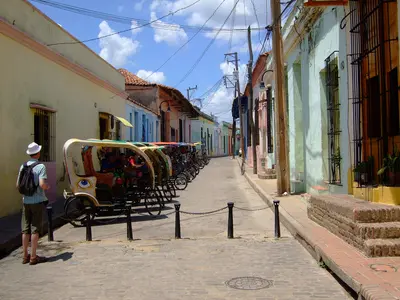
Camagüey was founded around 1514 on the north coast and moved to its current site between the Tínima and Hatibonico rivers in 1528; until 1903, the city was known as Santa María del Puerto del Príncipe. Its winding network of alleyways is said by Rough Guides to have been laid out to deter pirate attacks; in 1668, Henry Morgan raided the city. The historic center has been a UNESCO World Heritage site since 2008.Typical are the large clay jars, the Tinajones, and quiet colonial squares such as Plaza San Juan de Dios and Plaza del Carmen with the life-sized ceramic figures by Martha Jiménez.

Arnoud Joris Maaswinkel·CC BY-SA 4.0

Santiago de Cuba

Santiago de Cuba

Santiago de Cuba, in the southeast, is Cuba's second-largest city and a hub of Afro-Caribbean influenced music and festival culture. The city was founded in 1515 as the seventh Spanish villa; at Parque Céspedes stands the Casa de Diego Velázquez, built between 1516 and 1530. In July, Santiago celebrates its Carnival and the Festival del Caribe. Guarding the harbor entrance is the Castillo San Pedro de la Roca, a UNESCO World Heritage site since 1997. At Santa Ifigenia cemetery lie José Martí and Fidel Castro. Hurricane Melissa made landfall near Santiago on October 29, 2025, as a Category 3 storm, damaging the El Cobre pilgrimage…

Denys·Unsplash

Baracoa

Baracoa

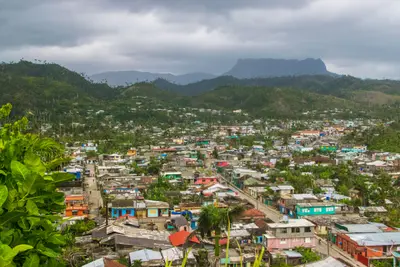
Baracoa, on the northeast coast, was founded in August 1511 by Diego Velázquez and is thus considered Cuba's first city; Columbus named the place Porto Santo in 1492. For a long time, Baracoa was only accessible by sea; it was not until 1965 that the La Farola pass road opened, connecting the town with Guantánamo, 120 km away. Above the city rises the flat-topped mountain El Yunque (575 m); to its west lies the Alejandro de Humboldt National Park, a UNESCO World Heritage site since 2001. The region is known for cocoa. Hurricane Melissa damaged roads and bridges around Baracoa in October 2025; according to Directorio Cubano, by the…

Will Jephcott·Unsplash

How to plan your trip to Cuba

From the guide to the road: here is what comes next.

  1. 1
    Sunrise over alpine peaks and a sea of clouds
    1234

    Round trip

    12 days · 4 stops

    Saved

    Pick a route

    Pick a ready-made one or save places and plan your own.

    Browse routes
  2. 2

    Trip to Cuba

    Live
    • 1Havana3 days
    • 2Viñales4 days
    • 3Varadero5 days
    Budget

    Plan your trip

    The planner sorts stops, days and budget. Plan together in real time.

    Go to My Trips
  3. 3
    9:41 No signal
    Cuba
    Available offline

    Photo by Robin Canfield on Unsplash

    Use it on the road

    Download the guide to your phone and use it on site, even offline.

Recommended Itineraries

Discover the best routes through Cuba.

  • City breaks
Havana in three days

Havana in three days

Three days in the capital, without overland travel, which according to the Foreign Office are currently barely possible due to fuel shortages: one day in the Old Town, one day in Centro Habana and Vedado, an evening in the fortresses and an excursion to Hemingway's Finca Vigía. The Foreign Office currently strongly warns against trips to Cuba; check the warnings on the country page beforehand.

4 Days
Stops at a glance
  1. 1.Habana Vieja
  2. 2.Vedado
  3. 3.Havana
View Route Details →

What you eat in Cuba

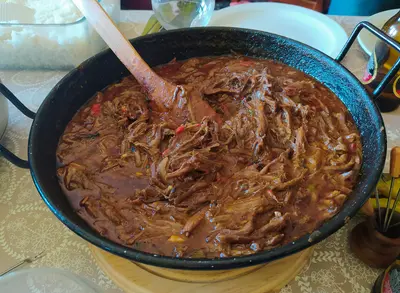
Ropa vieja

El Mono Español·CC BY-SA 4.0

Ropa vieja

Slow-braised, tender shredded beef

The beef is cooked, shredded, and braised in a sauce of bell peppers, tomatoes, onions, and garlic. The name means “old clothes”; Lonely Planet calls it Cuba’s national dish. It is served with rice and beans.

Moors and Christians

The rice with black beans

Rice and black beans are the base of almost every Cuban meal. Lonely Planet classifies Moros y cristianos as Western and describes Congrí as an Eastern version with red beans; other sources use both names for rice with black beans cooked together.

Lechón asado

Roast pork with bitter orange

The pig is marinated in garlic, salt, and bitter orange juice and slowly cooked over an open fire. Lechón is primarily served on holidays and at family celebrations.

Yuca with mojo

Cassava with Garlic-Citrus Sauce

Cooked cassava is drizzled with Mojo, a sauce made from oil, garlic, and citrus juice. According to Lonely Planet, the root was already used by the Taíno, the island's indigenous people.
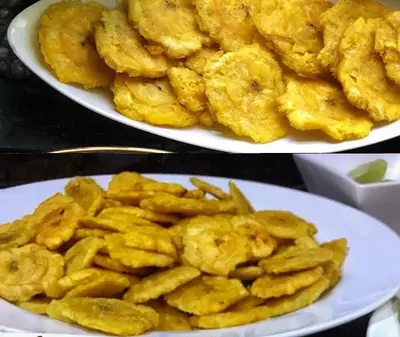
Tostones

Dreth1·CC BY-SA 4.0

Tostones

Plantains, twice deep-fried

Green plantains are sliced, fried, flattened, and fried a second time. Tostones are a typical side dish with meat and fish.
Mojito

El Nuevo Doge·CC0

Mojito

Rum cocktail with mint

White rum, mint, sugar, lime, and soda create the island's most famous cocktail. Like the Daiquirí, made with rum, lime, and syrup, it belongs to classic Cuban bar culture.

Good to Know

Essential info for your trip planning.

Land & People

Fact SheetCapital: Havana (La Habana)Population: 9,434,593 (according to ONEI National Bureau of Statistics, as of 31.

History & Society

Colonial EraColumbus landed on October 28, 1492, on Cuba's northeast coast and claimed the island for Spain.

Food & Drink

Creole CuisineCuban cuisine is down-to-earth. The national dish is Ropa vieja, shredded beef in a sauce of bell…

Practical Info

For current and binding travel, safety and health advice, see the UK FCDO travel advice, linked on this country page.

Getting Around

Getting ThereFrom Feb 10, 2026, foreign aircraft cannot refuel in Cuba, suspending many direct European flights.

Traveling with Kids

The Foreign Office currently strongly advises against travel to Cuba.

Best Time to Visit

When is the best time for your trip?

December
January
February
March
April
22–25°C·54–59 mm(moderate rain)
Havana is driest and pleasantly warm from December to April, with temperatures around 22-25°C. The rainy season starts in late April/early May in the east and is nationwide by late May; most annual rain falls then. Official advice states the hurricane season runs from May to November.
Climate data for Casa Blanca station in Havana, normal period 1991-2020 (WMO), sunshine hours converted from monthly totals. In the east of the island, such as in Santiago de Cuba, it is warmer; and cooler in the mountains of the Sierra Maestra and Escambray.

Seasons

Jan
Feb
Mar
Apr
May
Jun
Jul
Aug
Sep
Oct
Nov
Dec
Dry season
Wet season
Crossing
Best Time to Visit
▶Show detailed monthly data
MonthTemp (°C)Rain (mm)Sun (h)
January22.2567.0
February22.4597.3
March23.7548.8
April24.8589.1
May26.11208.4
June27.01687.9
July27.61258.8
August27.91458.4
September27.41767.5
October26.11406.3
November24.5837.3
December23.0586.3

Travel advice

Germany's Federal Foreign Office strongly advises against travel to Cuba. Read the latest official advice before you plan or book. The UK government publishes it in English on GOV.UK.

Go to GOV.UK
Sources & method

  • Photos: Wikimedia Commons, Unsplash, Pexels. Each photo carries its credit.
  • The content is based on web research from public, traceable sources. How the content is made · The role of AI
Felix at Kuirau Park in Rotorua, New Zealand

Who's behind Fernweh?

Hi, I'm Felix.

I love to travel, and I love planning even more. Fernweh.guide is my attempt at building a really good online travel guide.

About Fernweh

All places in Cuba

  • Baracoa
  • Camagüey
  • Cayo Santa María
  • Cienfuegos
  • Habana Vieja
  • Havana
  • Santa Clara
  • Santiago de Cuba
  • Trinidad
  • Valle de los Ingenios
  • Varadero
  • Vedado
  • Viñales

More about Cuba

  • Best Time to Visit Cuba
  • Cuba with Kids
All Places & RegionsRound tripsNight trains in EuropeAll highlightsAbout FernwehFAQPrivacy PolicyImprint
Download on the App StoreGet it on Google Play
ExploreGuideDestinationsMy tripsMy trip