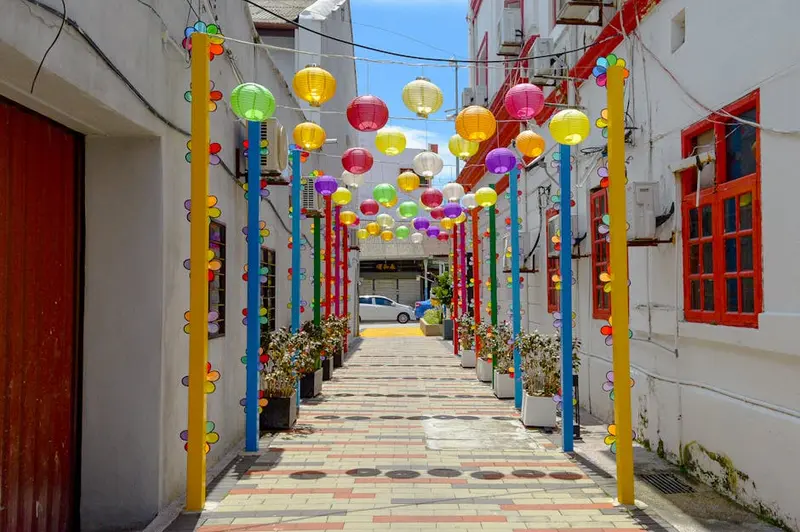
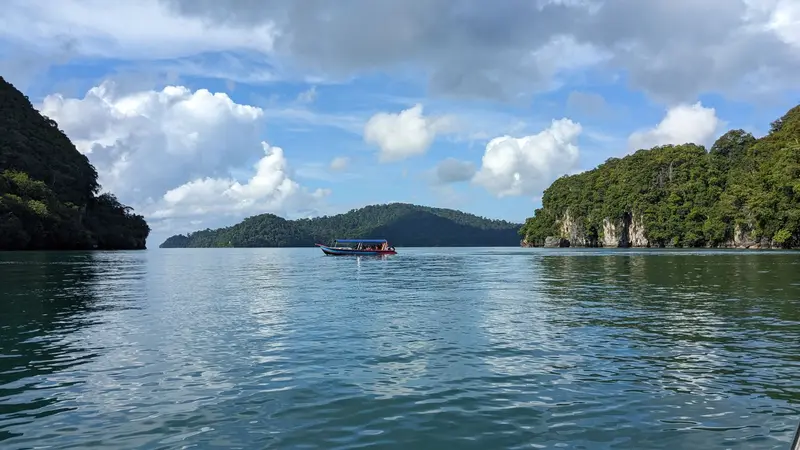
The route starts in the port city of Melaka, about two and a half bus hours from Kuala Lumpur Airport, and continues via Kuala Lumpur and Ipoh to George Town on Penang, finishing in Langkawi. ETS trains run between Kuala Lumpur, Ipoh, and Butterworth. To Langkawi, you fly from Penang in around 40 minutes or take the ferry from Kuala Kedah; currently, there's no direct ferry from Penang.
19 Days / 18 Nights
December–March
5 stops
Why This Route?
For culinary travelers seeking Malaysia's Malay, Chinese, and Indian cuisine where it originated.
Hidden Gems
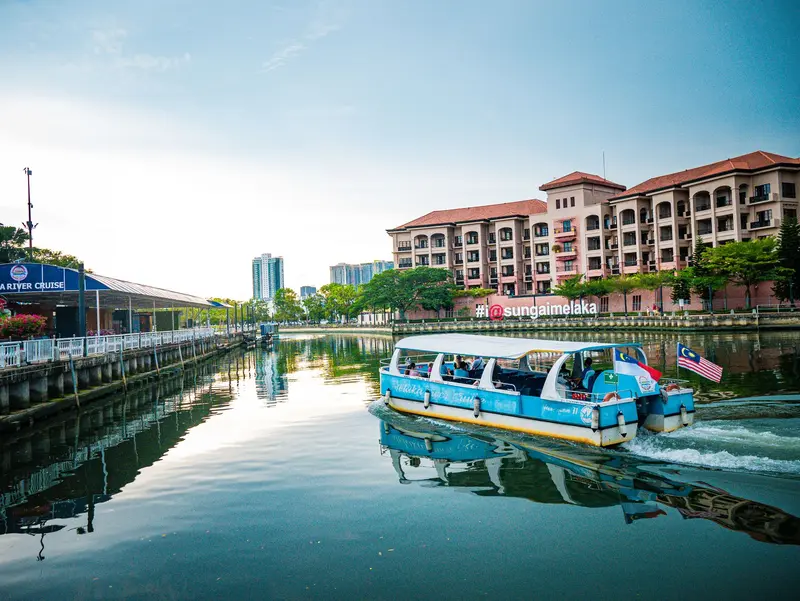
Kampung Morten in Melaka, a Malay wooden house village by the Melaka River
Kek Lok Tong, cave temple on the outskirts of Ipoh
Clan Jetties in George Town in the early morning, before the daytime visitors come
Itinerary
Stop 1 • 3 Nights
Melaka
Region
Rich in culture and history. Culinary highlights and Perfect for an exciting city trip.
Melaka was one of Asia's most important ports in the 15th century. Portuguese, Dutch, and British left their mark on the Old Town, while Chinese, Indian, and Malay communities built their temples, mosques, and kitchens. Since 2008, the Old Town, along with George Town, has been a UNESCO World Heritage site.The distances are short: From the red Dutch Square, you cross the river to Jonker Street or head up St. Paul's Hill. Two days are enough for the city; many visit as a day trip from Kuala Lumpur.
History and Culture
Sultanate and Colonial EraAround 1400, Parameswara, a prince from Sumatra, founded the Sultanate of Melaka. It controlled the strait between the Indian Ocean and the South China Sea, becoming a hub for spices, silk, and porcelain.In 1511, the Portuguese conquered the city, followed by the Dutch in 1641. With the Anglo-Dutch Treaty of 1824, it was ceded to Great Britain and became part of the Straits Settlements.Peranakan and KristangFrom the union of Chinese traders with Malay families emerged the Peranakan culture, featuring its own cuisine, clothing, and architecture. Descendants of Portuguese settlers continue to preserve their Kristang creole language to this day.
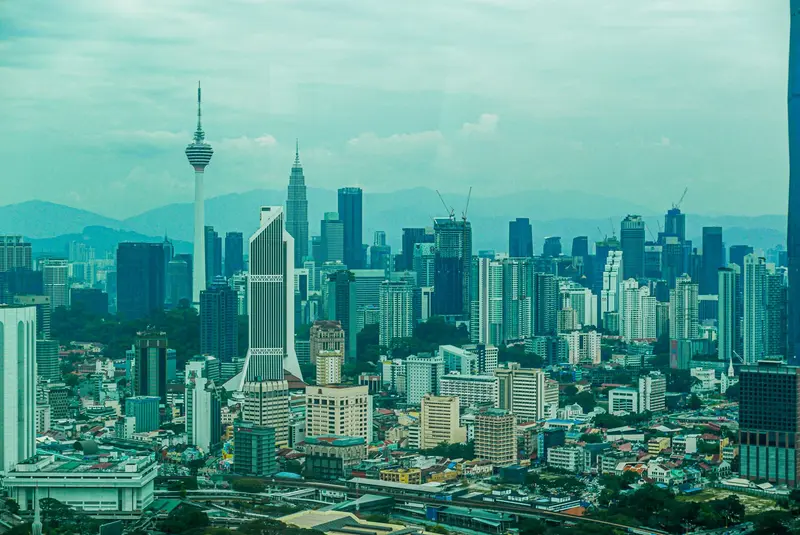
Malaysia's capital combines the Petronas Towers and modern shopping districts with colonial buildings around Merdeka Square, a vibrant Chinatown, and the hawker stalls of Jalan Alor and Kampung Baru. Malays, Chinese, and Indians equally shape the city's appearance, which is particularly evident in its cuisine.
7 Sights
Culture and History
From Tin Settlement to Capital CityAround 1857, the Malay prince Raja Abdullah had tin mined at the confluence of the Klang and Gombak rivers, and Chinese miners and traders established the first settlement. Under Yap Ah Loy, the third Kapitan Cina, it grew into a trade hub. In 1880, Kuala Lumpur became the capital of Selangor, and in 1896, of the Federated Malay States. Buildings in the Indo-Saracenic style around Merdeka Square date from this period. There, at midnight on August 31, 1957, the Union Jack was lowered and the Malayan flag hoisted, and Tunku Abdul Rahman declared independence the following morning at Stadium Merdeka.A City of Three CulturesMosques, Chinese temples, and Hindu shrines are often just a few streets apart. During major festivals like Hari Raya, Chinese New Year, Deepavali, and Thaipusam, the entire city is decorated, and many families host “Open House” events where even strangers are welcome.
Perfect for an exciting city trip. Rich in culture and history and Culinary highlights.
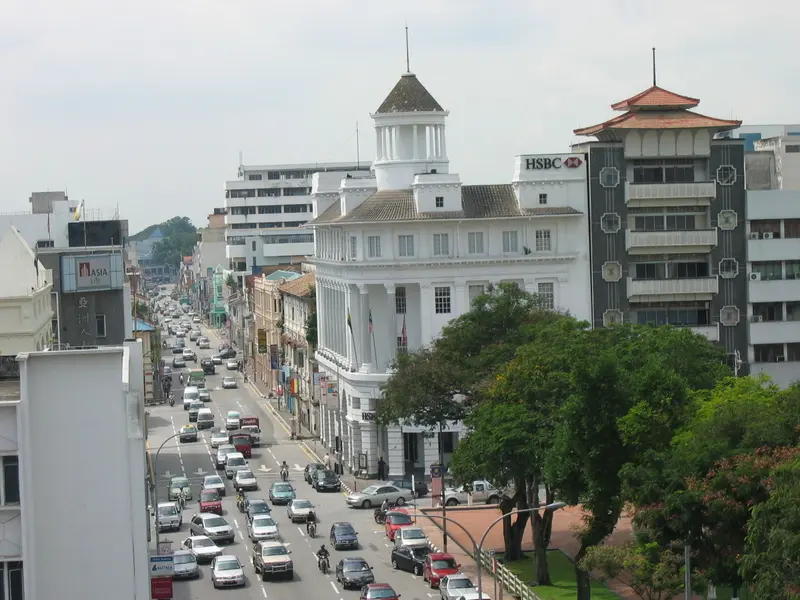
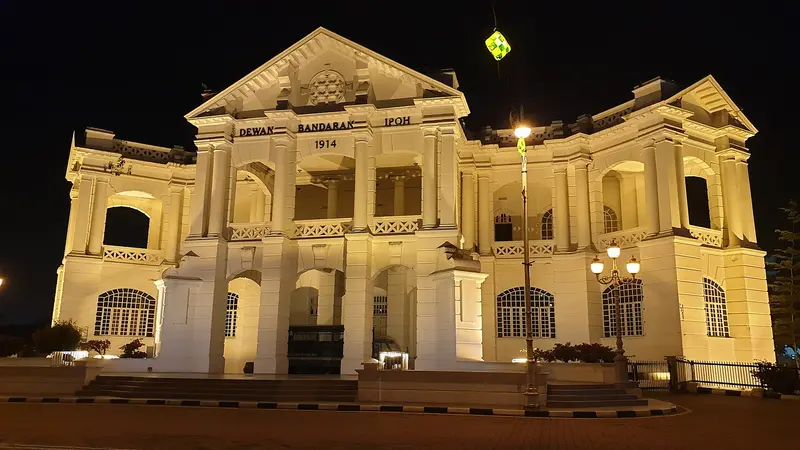
The capital of the state of Perak grew rich through tin mining in the Kinta Valley. This legacy is visible in the old town's colonial buildings and shophouses, now home to cafes, murals, and historic coffee houses. Surrounding the city are towering limestone cliffs, with Buddhist temples nestled within their caves. Ipoh is also known for White Coffee and Tauge Ayam.
6 Sights
4 Restaurants
Tin, Coffee and Limestone
A City of the Tin BoomFrom the 1880s, tin was mined on a large scale in the Kinta Valley, primarily by Chinese immigrants from the Hakka and Cantonese communities. After a major fire in 1892, the city was rebuilt in a grid pattern, and in 1937, it became the capital of Perak. With the wealth came banks, clubs, and villas, while the British administration constructed a railway station, town hall, and courthouse. Following the collapse of tin mining in the 1970s and 1980s, the city fell silent for a long time.New Life in Old BuildingsMeanwhile, the old town has seen a renewal: Shophouses have been restored, murals depict everyday life from the mining era, and old Kopitiams stand alongside new cafes. In the limestone cliffs around the city are Buddhist cave temples, which remain active pilgrimage sites to this day.
Penang Island, off the northwest coast of the Malay Peninsula, is renowned for George Town: Its Old Town, with Chinese clan houses, Indian temples, and colonial architecture, is a UNESCO World Heritage site. Other attractions include Penang Hill, a small national park with beaches, and a street food scene considered one of Malaysia's best.
Culture and History
Trading Post and Immigrant CityFrancis Light founded George Town in 1786 for the British East India Company. It was the first British settlement in Southeast Asia and grew into a free port. The harbour attracted traders and workers from China, India, Sumatra, and Arabia, whose descendants continue to shape the island today. Chinese and Malays form the largest population groups, along with an Indian community.Peranakan and World HeritageThis diversity is visible in the Old Town: mosques, Hindu temples, churches, and Chinese clan houses often stand on the same street. The Peranakan, descendants of early Chinese immigrants and Malay families, have developed their own cuisine, fashion, and living culture, which you can discover at the Pinang Peranakan Mansion. Since 2008, George Town, along with Melaka, has been on the UNESCO World Heritage List.
Langkawi is an archipelago of 99 islands off the northwest coast of Malaysia, just before the border with Thailand. You go there for gently sloping sandy beaches, rainforest-covered mountains, and boat tours through mangroves between limestone cliffs. The main island offers beaches like Pantai Cenang and Tanjung Rhu, waterfalls, and the cable car up Gunung Mat Cincang. Since 2007, the archipelago has been a UNESCO Global Geopark. Since 1987, Langkawi has been a duty-free island; alcohol here is also significantly cheaper than on the mainland. Since 2021, however, duties have again been levied on tobacco products.
3 Sights
Culture and Legends
Island Life in KedahLangkawi is part of the state of Kedah and is predominantly Malay-Muslim. Beyond the beach resorts, rice paddies, rubber plantations, and fishing villages define the landscape. For a long time, the island was remote; only its duty-free status from 1987 and the LADA development authority brought tourism.Myths and LegendsNumerous legends are connected to the islands. The most famous tells of Mahsuri, a young woman who was wrongly accused of adultery and executed in the late 18th century, and who then supposedly cursed the island for seven generations. Her grave is now a memorial. Even the name of the lake on Pulau Dayang Bunting, "Lake of the Pregnant Maiden", stems from a legend.