Fernweh: Home
    ExploreTravel GuidesPlan a tripMy tripLast visited
    de|en
    All Places & RegionsAll highlightsAbout FernwehFAQPrivacy PolicyImprint
    ExploreTravel GuidesPlan a tripMy tripLast visited
    • Overview
    • Places in the region
    • Recommendations
    • Food culture
    • Culture
    • Getting around
    • Round trips
    • Nearby
    Kuala Lumpur

    Malaysia

    Kuala Lumpur

    Region

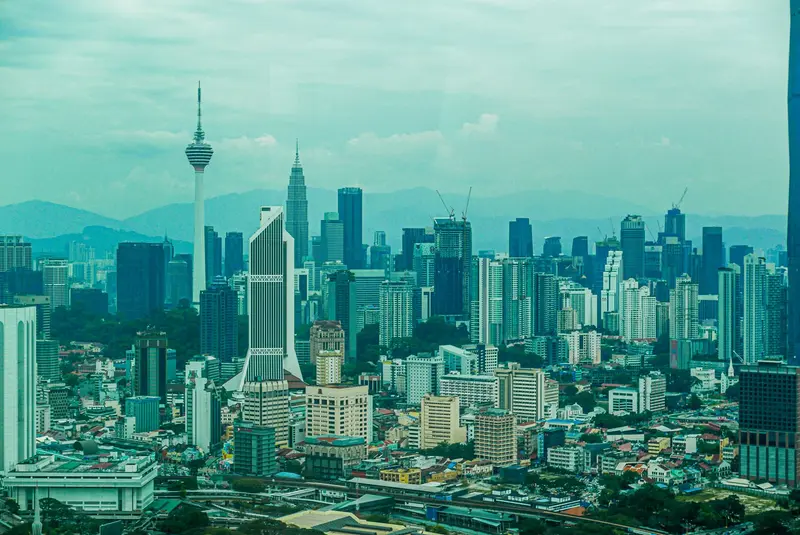
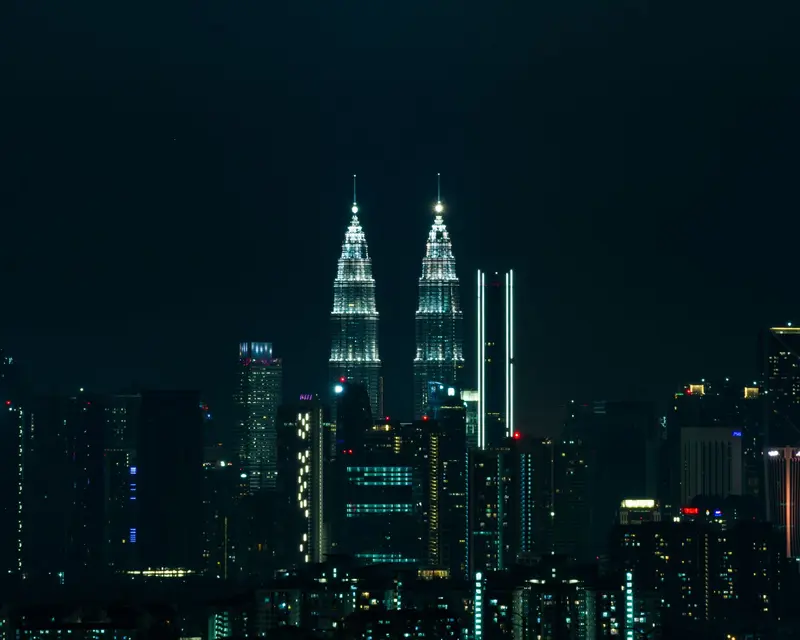
    Malaysia's capital combines the Petronas Towers and modern shopping districts with colonial buildings around Merdeka Square, a vibrant Chinatown, and the hawker stalls of Jalan Alor and Kampung Baru.

    by Felix Gillen

    1. Home
    2. Destinations
    3. Malaysia
    4. Kuala Lumpur
    Malaysia's capital combines the Petronas Towers and modern shopping districts with colonial buildings around Merdeka Square, a vibrant Chinatown, and the hawker stalls of Jalan Alor and Kampung Baru. Malays, Chinese, and Indians equally shape the city's appearance, which is particularly evident in its cuisine.
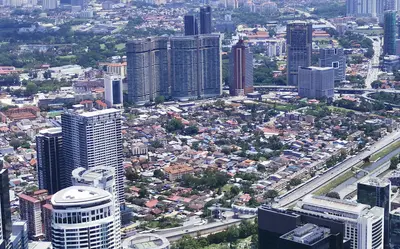
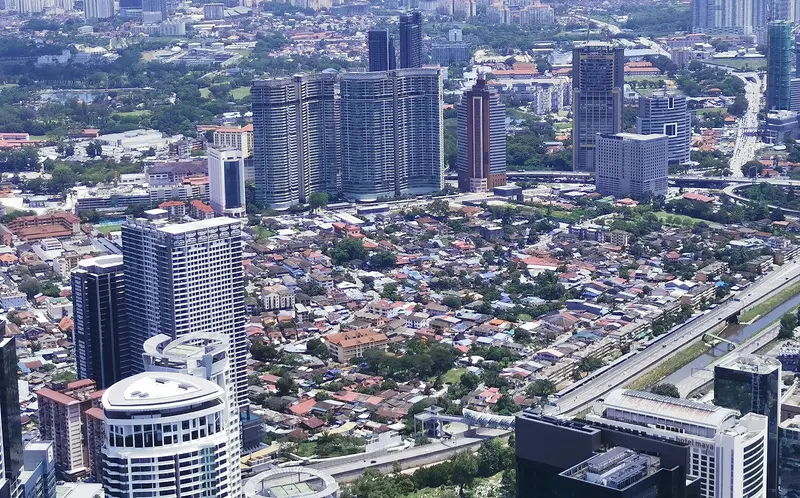
    Kuala Lumpur, founded in 1857 as a tin-mining settlement at the confluence of the Klang and Gombak rivers, is now a metropolis of around two million inhabitants, with significantly more in the greater Klang Valley. The main districts for visitors are close together: the KLCC financial district with the Petronas Towers, the shopping and entertainment hub of Bukit Bintang, Chinatown with its Central Market, and the historic core around Merdeka Square. A little further southwest are the Lake Gardens, home to the National Mosque, Bird Park, and National Museum, as well as Brickfields, the Indian community's district. You should plan three to four days for the city itself, plus excursions to the Batu Caves and Putrajaya.
    Putrajaya

    Place 1 of 4

    Putrajaya

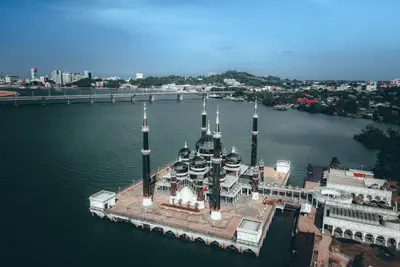
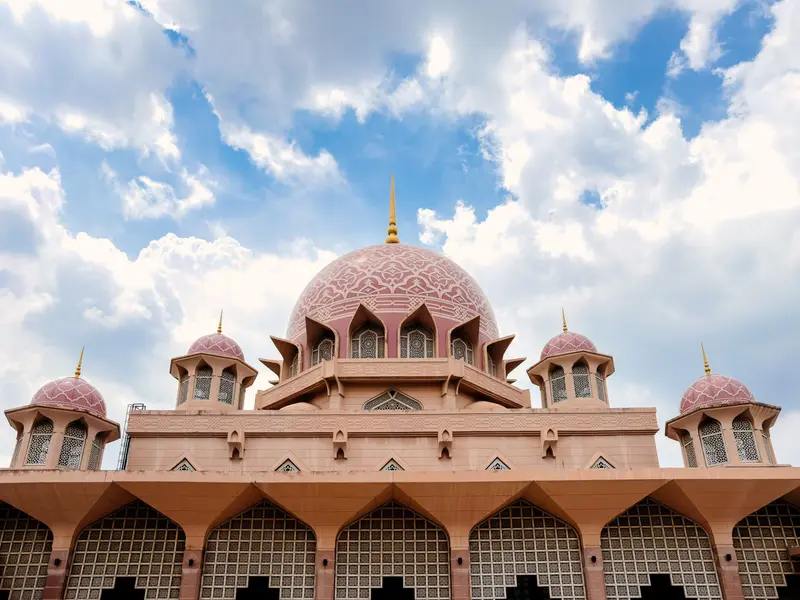
    The planned administrative capital, south of Kuala Lumpur, has been the seat of the federal government since 1999. Around the artificially created Putrajaya Lake stand monumental government buildings, bridges, and parks.

    Discover
    Batu Caves

    Place 2 of 4

    Batu Caves

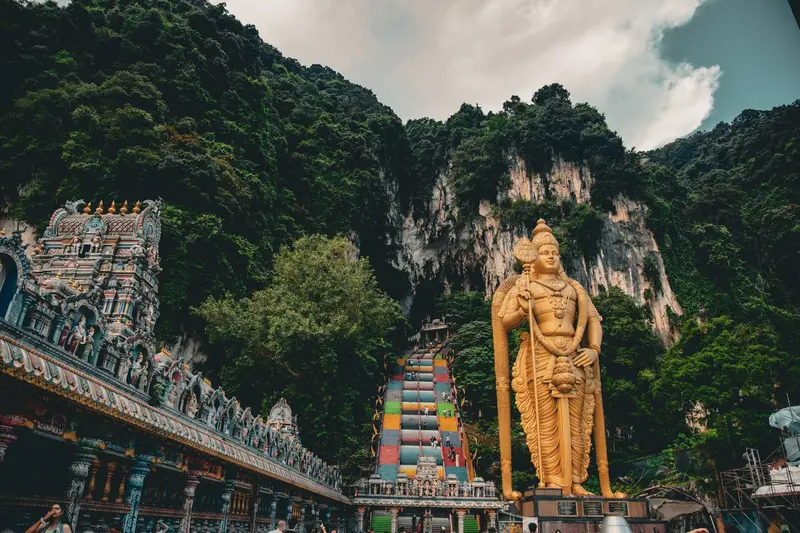
    The limestone caves about 13 kilometres north of Kuala Lumpur are among the best-known Hindu shrines outside India. In front of the stairs stands a 42.7-metre-tall gilded statue of the god Murugan, and 272 brightly painted steps lead up to the temple cave.

    Discover
    Bukit Bintang

    Place 3 of 4

    Bukit Bintang

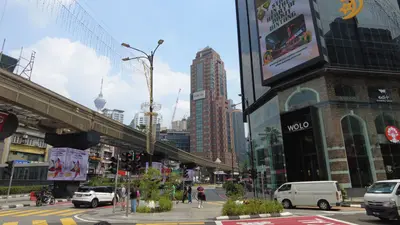
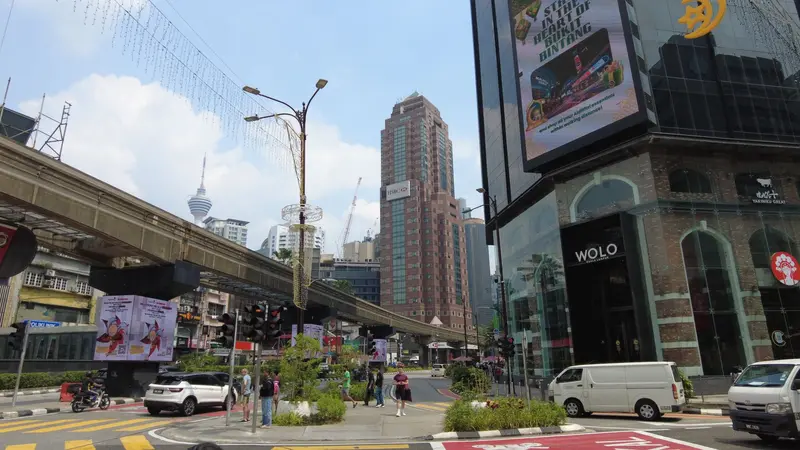
    Bukit Bintang is Kuala Lumpur's shopping and entertainment district. Along the eponymous street are large malls like Pavilion and Lot 10, and behind them lie the food street Jalan Alor and the bar strip Changkat Bukit Bintang.

    Discover
    Chinatown

    Place 4 of 4

    Chinatown

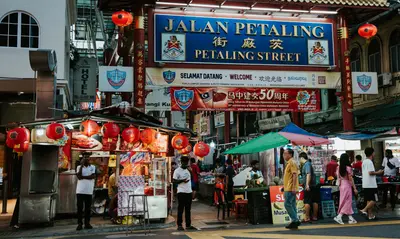
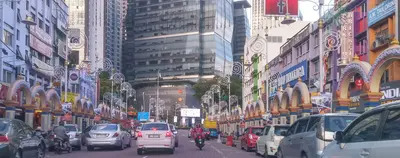
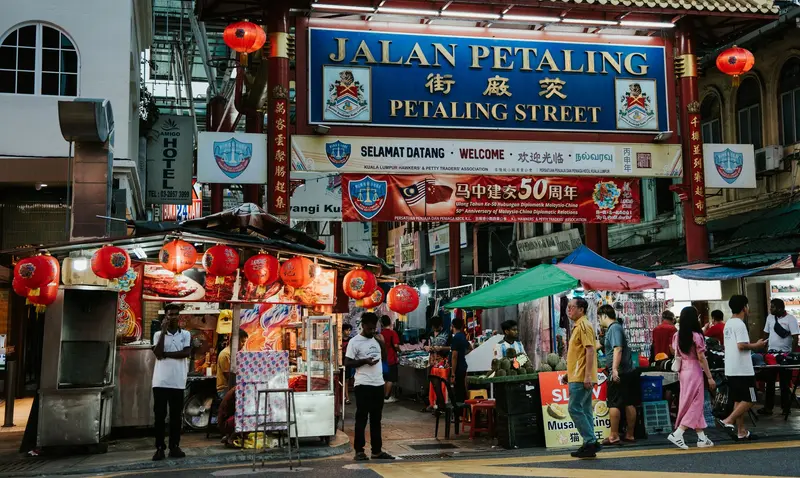
    Chinatown is Kuala Lumpur's oldest district. Around the covered Petaling Street, market stalls, street food vendors, and shophouses from the city's early days jostle for space.

    Discover

    More places in Kuala Lumpur

    Kampung Baru

    Kampung Baru

    Kampung Baru is the Malay village in the heart of Kuala Lumpur. Separated from KLCC and the Petronas Towers only by the Klang River, traditional wooden houses still stand here amidst palm and frangipani trees. The district originated in 1899 from a land grant by the Sultan of Selangor as a settlement where Malays were meant to preserve their village way of life within the city.In the streets around **Jalan Raja Muda Musa**, you'll find simple Malay eateries serving Nasi Lemak, Satay, and Ikan Bakar. In the evening, cross the **Saloma Link** over to KLCC and enjoy the illuminated skyline before you.
    KLCC and Petronas Towers

    KLCC and Petronas Towers

    The Kuala Lumpur City Centre district around the Petronas Towers is the city's modern showpiece. At the foot of the twin towers are the Suria KLCC shopping mall, a large park, and Aquaria. Covered walkways connect KLCC with Bukit Bintang.
    Brickfields (Little India)

    Brickfields (Little India)

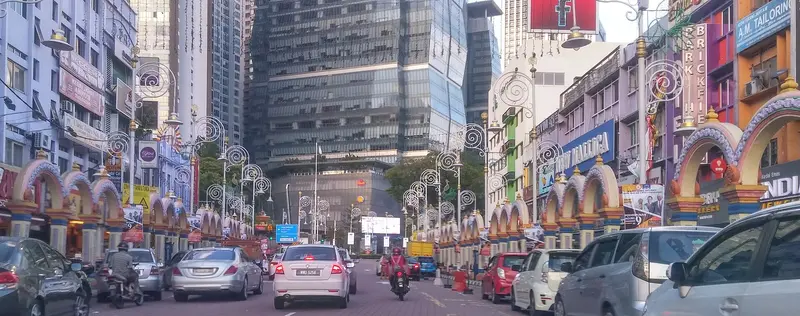
    Brickfields is Kuala Lumpur's Indian quarter, right next to the transport hub KL Sentral. Along Jalan Tun Sambanthan the air smells of jasmine and spices, and Tamil film music drifts out of the shops. Here you can buy saris and gold jewelry, eat banana-leaf rice or dosa, and visit temples of three religions within a few hundred meters.The area is well suited to half a day, for example before or after a trip from the airport.
    Perdana Botanical Garden

    Perdana Botanical Garden

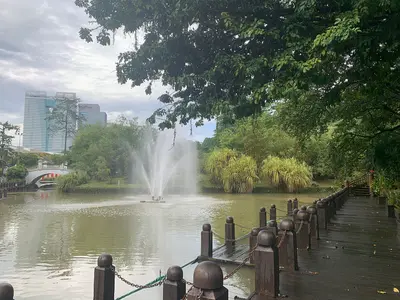
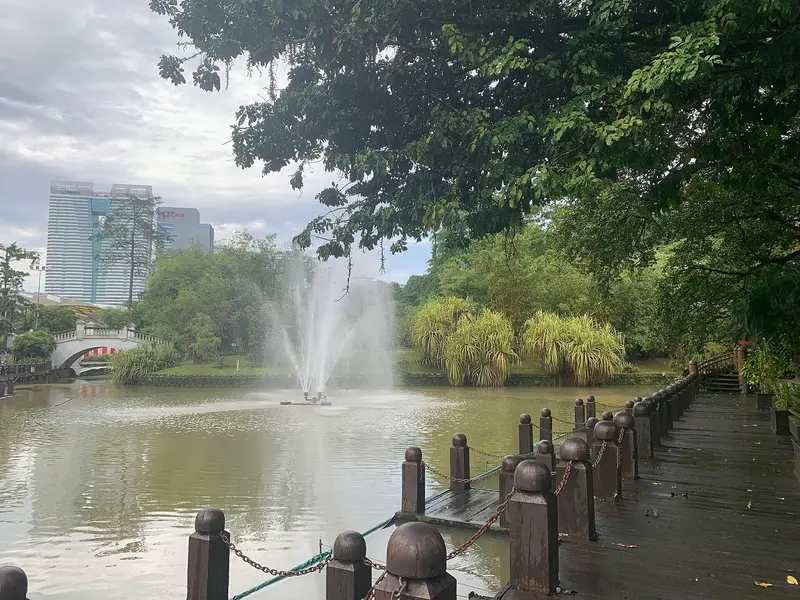
    The Perdana Botanical Garden, still known to locals as Lake Gardens, is the green lung in the west of the city centre. Around a lake, you'll find lawns, ancient giant trees, themed gardens, and shady paths where people jog and practice Tai Chi in the mornings.Within and around the park, you'll discover the Orchid Garden and the Hibiscus Garden, the KL Bird Park, the National Monument Tugu Negara, and the National Museum. Come in the early morning or late afternoon, as it gets very hot on the open spaces at midday.

    Sights in Kuala Lumpur

    Discover the most important sights and attractions

    Masjid Negara

    Masjid Negara

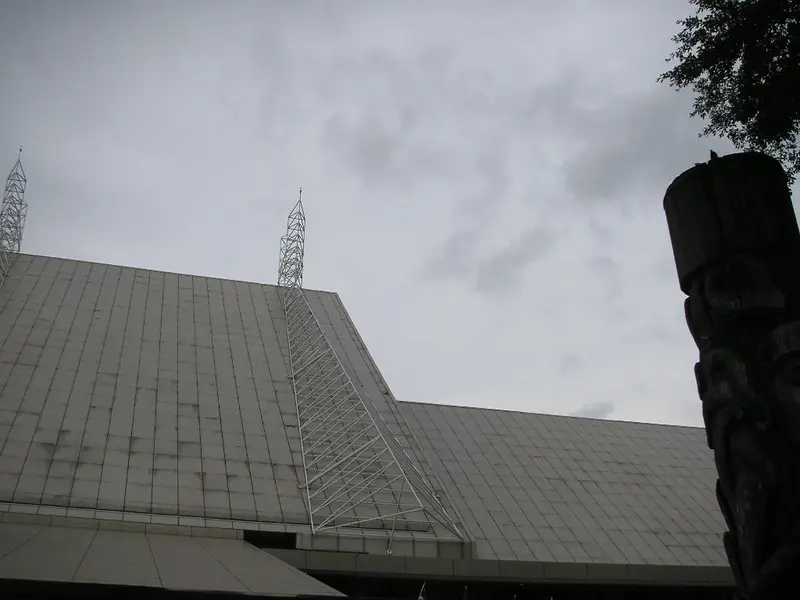
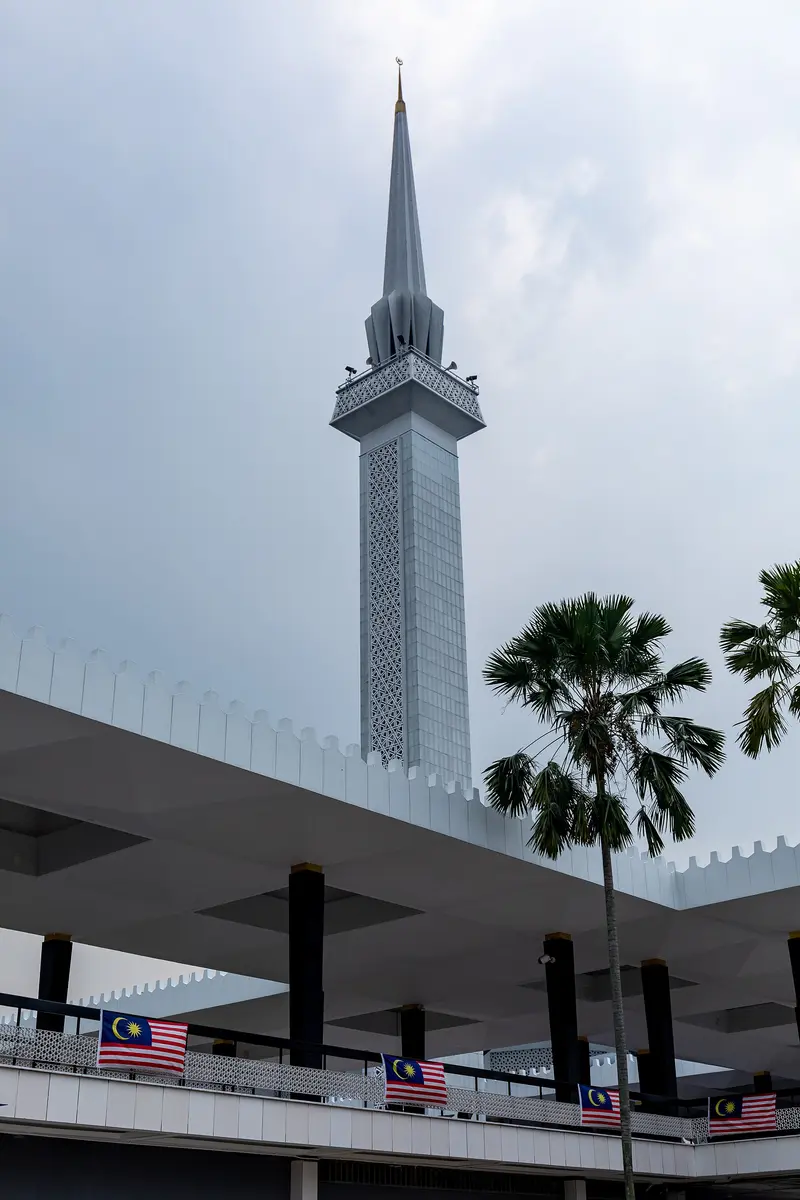
    The National Mosque, opened in 1965, makes a deliberate modern statement with its roof in the form of a 16-pointed star, reminiscent of an open umbrella, and its 73-meter-high minaret. It can accommodate up to 15,000 worshippers. Outside of prayer times, visitors can tour the mosque. Wear clothing that covers shoulders and legs; shoes must be removed.
    Open in Google Maps
    Thean Hou Temple

    Thean Hou Temple

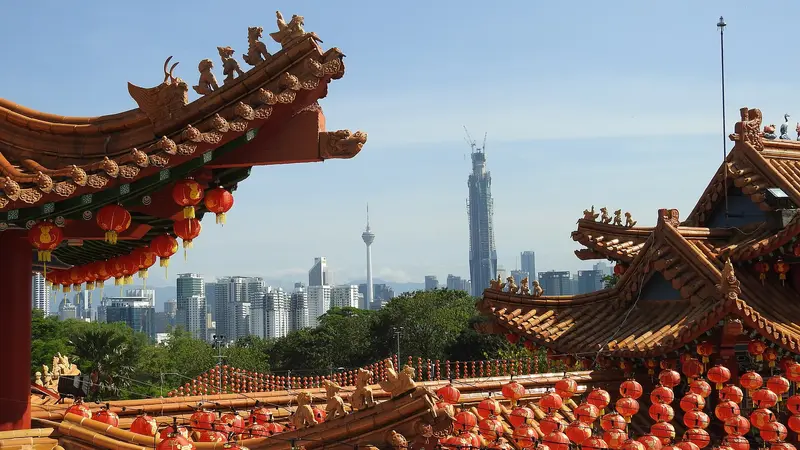
    The six-story Chinese temple on Robson Hill, south of the city center, opened in 1989 and is dedicated to the sea goddess Mazu (Tian Hou). Red lanterns, curved roofs, and the city views make it a popular photo spot, especially during Chinese New Year.
    Open in Google Maps
    National Art Gallery

    National Art Gallery

    The state art gallery on Jalan Tun Razak displays modern and contemporary art from Malaysia and Southeast Asia, from painting to installation.
    Open in Google Maps
    KL Bird Park

    KL Bird Park

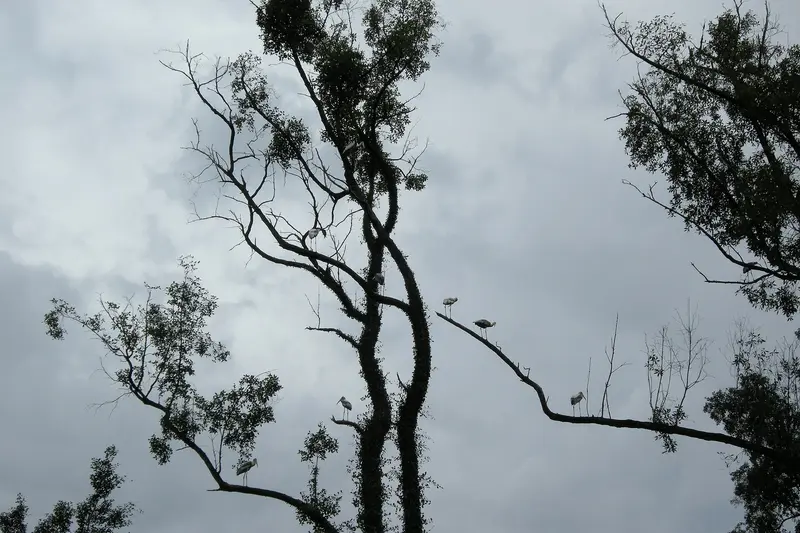
    The roughly 8.5-hectare bird park next to the Lake Gardens is a walk-through free-flight aviary under a large net roof and is one of the largest of its kind. Around 3,000 birds from over 200 species live here, including hornbills and numerous parrot species. Open daily from 9 AM to 6 PM. Pairs well with a visit to the National Mosque and Botanical Garden.
    Open in Google Maps
    Menara Kuala Lumpur (KL Tower)
    Historic Landmark

    Menara Kuala Lumpur (KL Tower)

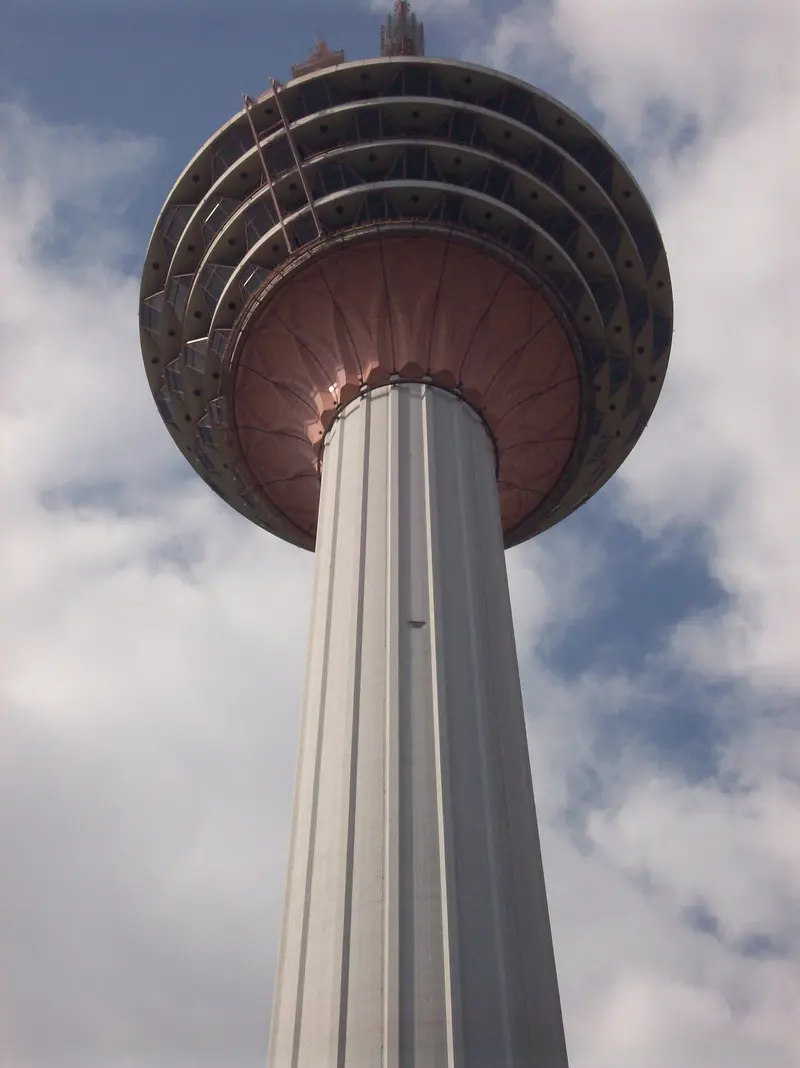
    The 421-meter-high TV Tower stands on the forested Bukit Nanas hill and was opened in 1996. An express elevator takes you to the observation deck at 276 meters in under a minute; above it are the open Sky Deck and the glass Sky Box. From the top, you look over the city to the Petronas Towers. At the foot of the tower lies the Bukit Nanas Forest Reserve.
    Open in Google Maps
    National Museum (Muzium Negara)
    Museum

    National Museum (Muzium Negara)

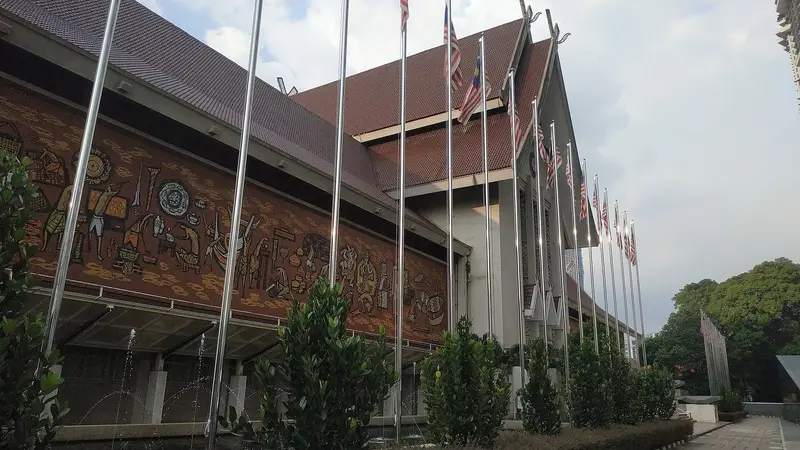
    Styled as a traditional Malay palace, the museum tells the country's story from prehistory through the sultanates and colonial era to independence. A good introduction at the start of a Malaysia trip; one to two hours suffice.
    Open in Google Maps

    Food and Drinks

    Kuala Lumpur offers the full spectrum of Malaysian cuisine. Often, you'll eat outdoors at hawker stalls, in food courts, and at 24/7 Mamak eateries.

    Nasi Lemak

    Rice cooked in coconut milk with Sambal, roasted peanuts, anchovies, and egg. The unofficial national dish, often enjoyed for breakfast.

    Roti Canai and Teh Tarik

    Flatbread with curry and pulled milk tea, the classics of Indian-Muslim Mamak eateries.

    Satay

    Grilled meat skewers with peanut sauce, especially good in Kampung Baru.

    Hokkien Mee

    Thick yellow noodles in dark soy sauce with pork and prawns, a KL specialty that differs significantly from the Penang version.

    Jalan Alor

    The street in Bukit Bintang transforms in the evenings into a long line of food stalls and open-air restaurants serving Chinese, Thai, and Malay cuisine.

    Culture and History

    From Tin Settlement to Capital CityAround 1857, the Malay prince Raja Abdullah had tin mined at the confluence of the Klang and Gombak rivers, and Chinese miners and traders established the first settlement. Under Yap Ah Loy, the third Kapitan Cina, it grew into a trade hub. In 1880, Kuala Lumpur became the capital of Selangor, and in 1896, of the Federated Malay States. Buildings in the Indo-Saracenic style around Merdeka Square date from this period. There, at midnight on August 31, 1957, the Union Jack was lowered and the Malayan flag hoisted, and Tunku Abdul Rahman declared independence the following morning at Stadium Merdeka.A City of Three CulturesMosques, Chinese temples, and Hindu shrines are often just a few streets apart. During major festivals like Hari Raya, Chinese New Year, Deepavali, and Thaipusam, the entire city is decorated, and many families host “Open House” events where even strangers are welcome.

    Getting here and around

    Getting ThereKLIA Airport is south of the city. The KLIA Ekspres connects KL Sentral, the central station, non-stop to T1 and T2. A single ticket costs 55 Ringgit, rising to 65 Ringgit from Jan 1, 2027. Online tickets are cheaper. Long-distance trains for Ipoh, Butterworth & the south also leave KL Sentral; buses from TBS.In the CityLRT, MRT, Monorail lines, and KTM Komuter suburban trains connect the main districts. The easiest way to pay is with a rechargeable Touch-'n-Go card.The electric GoKL buses run several routes through the city centre. They are free for Malaysians; foreign passengers pay 1 Ringgit per ride, cashless via Touch-'n-Go card, QR code, or bank card. Children aged twelve and under ride for free.Grab is the most common ride-hailing app and often the most comfortable option during hot midday hours.Many places are close enough to walk, but road crossings can be difficult in some areas. Covered pedestrian bridges connect KLCC and Bukit Bintang.

    Round trips through this region

    Malaysia West Coast Classics

    Malaysia West Coast Classics

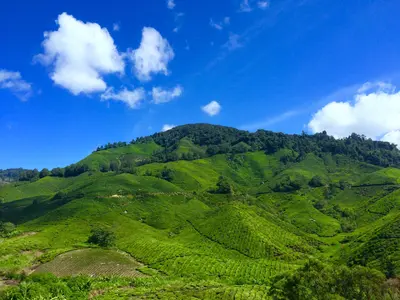
    The route leads from Kuala Lumpur to the cool Cameron Highlands, on to Penang and finally to Langkawi Island. The bus from Kuala Lumpur to Tanah Rata takes around four and a half to five hours. There is no direct ferry from Penang to Langkawi at present: You fly in about 40 minutes or drive to Kuala Kedah and cross from there in about an hour.

    18 Days
    4 stops
    Malaysia Nature & Rainforest

    Malaysia Nature & Rainforest

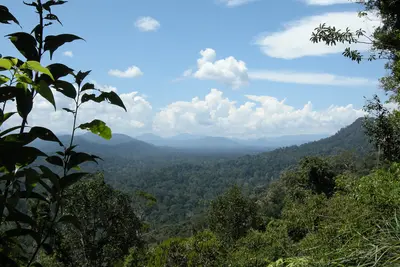
    Few stops, nature, island calm: From Kuala Lumpur, head to Taman Negara rainforest, then the Perhentian Islands. From Kuala Tahan, a morning bus heads to Kuala Besut jetty; boats cross to the islands in 30-45 minutes. Boat services may halt during monsoon; plan island visits March-October.

    13 Days
    3 stops
    Malaysia Culture & Cuisine

    Malaysia Culture & Cuisine

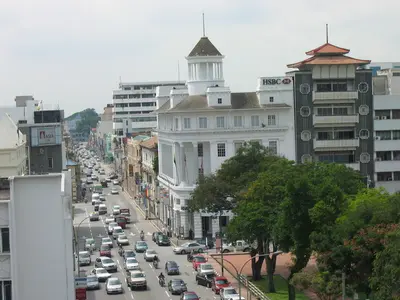
    The route starts in the port city of Melaka, about two and a half bus hours from Kuala Lumpur Airport, and continues via Kuala Lumpur and Ipoh to George Town on Penang, finishing in Langkawi. ETS trains run between Kuala Lumpur, Ipoh, and Butterworth. To Langkawi, you fly from Penang in around 40 minutes or take the ferry from Kuala Kedah; currently, there's no direct ferry from Penang.

    19 Days
    5 stops
    Malaysia relaxing & family-friendly

    Malaysia relaxing & family-friendly

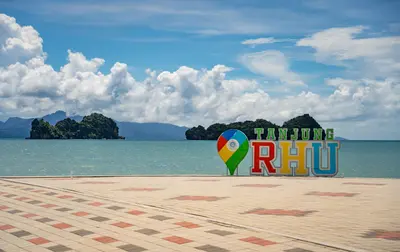
    The route has just three stops: Kuala Lumpur, Penang and Langkawi, each with multiple nights. After Penang, you travel by ETS train for around 3.5 to 4 hours to Butterworth. Langkawi is reached by a short 40-min flight or ferry from Kuala Kedah.

    19 Days
    3 stops
    Malaysia East & West Coast combined

    Malaysia East & West Coast combined

    From Kuala Lumpur, head to the East Coast to Kuala Terengganu, then across the peninsula to Penang and finally to Langkawi. For the crossing from the East to the West Coast, you should plan a full travel day. To Langkawi, you can fly from Penang or take the ferry from Kuala Kedah.

    16 Days
    4 stops

    Nearby

    Chinatown

    Chinatown

    Chinatown is Kuala Lumpur's oldest district. Around the covered Petaling Street, market stalls, street food vendors, and shophouses from the city's early days jostle for space. Between the stalls, a Taoist and a Hindu temple lie almost side-by-side; a few steps further, the Central Market sells handicrafts from all over Malaysia.By day, explore temples and alleys like Kwai Chai Hong; in the evening, noodle stalls and bars in the restored shophouses come alive. Bargaining is common when shopping at the market.
    Perdana Botanical Garden

    Perdana Botanical Garden

    The Perdana Botanical Garden, still known to locals as Lake Gardens, is the green lung in the west of the city centre. Around a lake, you'll find lawns, ancient giant trees, themed gardens, and shady paths where people jog and practice Tai Chi in the mornings.Within and around the park, you'll discover the Orchid Garden and the Hibiscus Garden, the KL Bird Park, the National Monument Tugu Negara, and the National Museum. Come in the early morning or late afternoon, as it gets very hot on the open spaces at midday.
    Bukit Bintang

    Bukit Bintang

    Bukit Bintang is Kuala Lumpur's shopping and entertainment district. Along the eponymous street are large malls like Pavilion and Lot 10, and behind them lie the food street Jalan Alor and the bar strip Changkat Bukit Bintang. Many of the city's hotels are located here.
    Brickfields (Little India)

    Brickfields (Little India)

    Brickfields is Kuala Lumpur's Indian quarter, right next to the transport hub KL Sentral. Along Jalan Tun Sambanthan the air smells of jasmine and spices, and Tamil film music drifts out of the shops. Here you can buy saris and gold jewelry, eat banana-leaf rice or dosa, and visit temples of three religions within a few hundred meters.The area is well suited to half a day, for example before or after a trip from the airport.
    Kampung Baru

    Kampung Baru

    Kampung Baru is the Malay village in the heart of Kuala Lumpur. Separated from KLCC and the Petronas Towers only by the Klang River, traditional wooden houses still stand here amidst palm and frangipani trees. The district originated in 1899 from a land grant by the Sultan of Selangor as a settlement where Malays were meant to preserve their village way of life within the city.In the streets around **Jalan Raja Muda Musa**, you'll find simple Malay eateries serving Nasi Lemak, Satay, and Ikan Bakar. In the evening, cross the **Saloma Link** over to KLCC and enjoy the illuminated skyline before you.

    Sources & method

    • Photos: Wikimedia Commons, Pexels. Each photo carries its credit.
    • Place data such as addresses and ratings comes from Google Maps.
    • The content is based on web research from public, traceable sources. How the content is made · The role of AI