Fernweh
    ExploreTravel GuidesMy Trips
    de|en
    About FernwehImprintFAQPrivacy Policy
    ExploreTravel GuidesMy Trips
    Bukit Bintang

    Bukit Bintang

    City
    1. Home
    2. Destinations
    3. Malaysia
    4. Kuala Lumpur
    5. Bukit Bintang
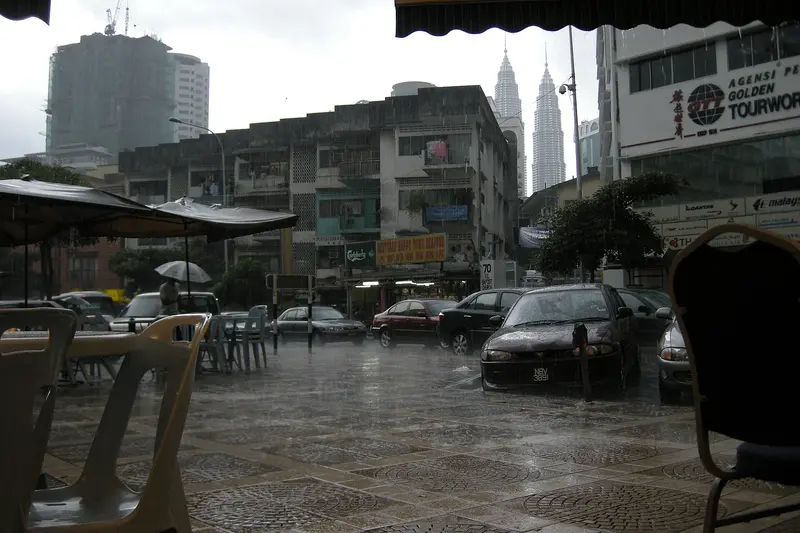
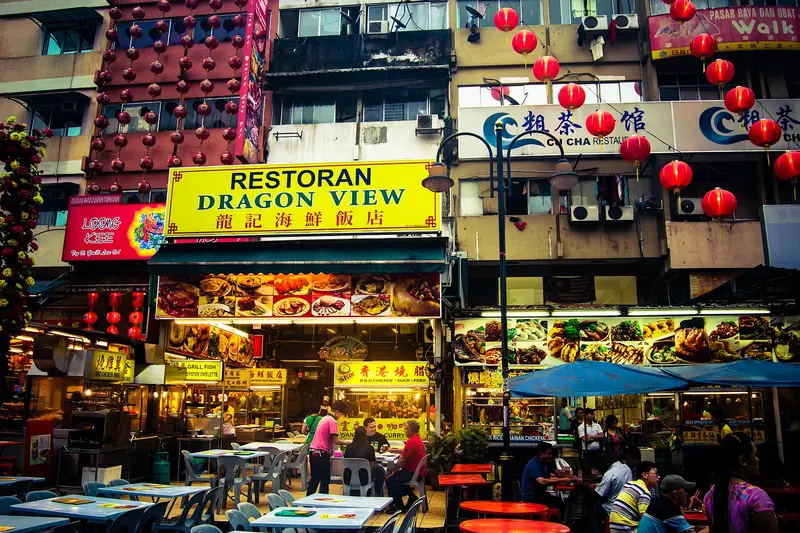
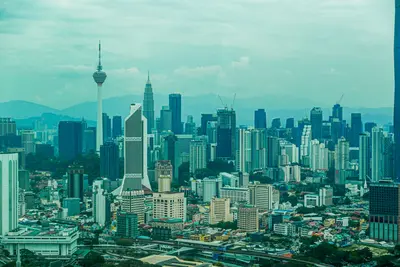
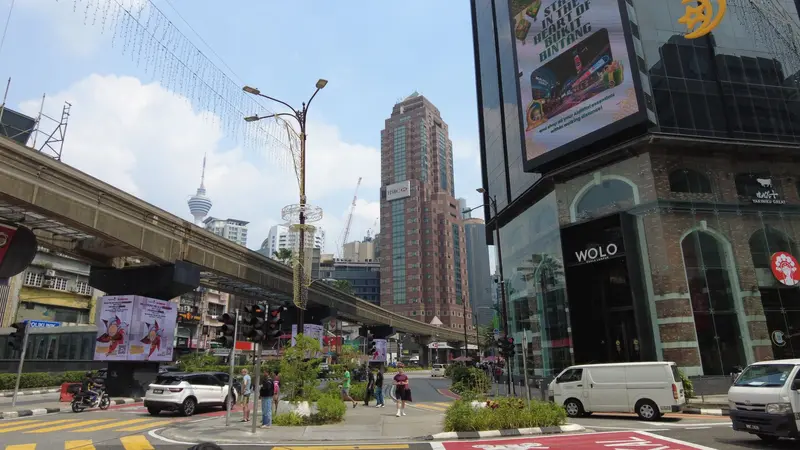
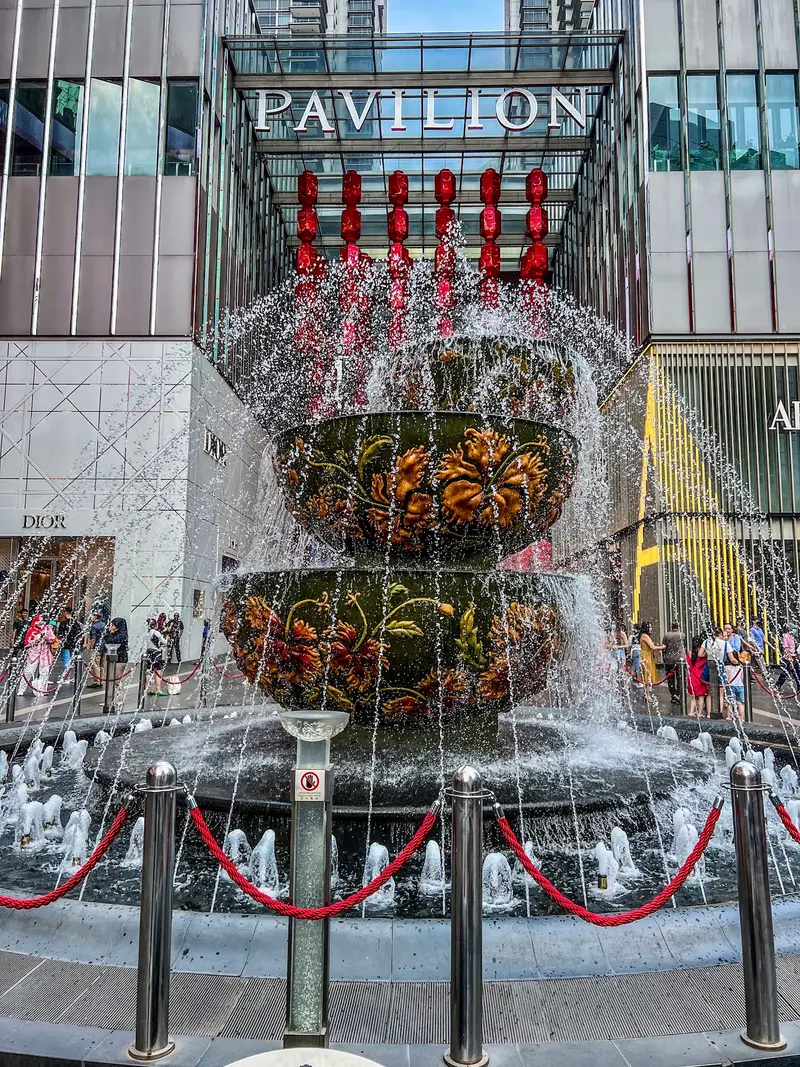
    Bukit Bintang is Kuala Lumpur's vibrant heart for shopping, dining, and entertainment. Here you'll find numerous luxury shopping malls such as Pavilion Kuala Lumpur and Starhill Gallery, housing international brands and local boutiques. In the evening, the famous Jalan Alor transforms into a giant open-air food street, where you can sample authentic Malaysian and regional specialties. Not far from there, Changkat Bukit Bintang offers a lively scene with bars and clubs for nightlife. This district represents the modern, dynamic side of the Malaysian capital and is excellently connected to the Monorail network. A late afternoon visit allows you to combine the shopping experience with the culinary offerings and the evening bustle.
    • Neighborhoods & highlights
    • Walking tours
    • Eat & drink
    • Culture
    • Getting around
    • Accommodation
    • Plan trip
    • Nearby
    • Neighborhoods & highlights
    • Walking tours
    • Eat & drink
    • Culture
    • Getting around
    • Accommodation
    • Plan trip
    • Nearby

    Overview

    Bukit Bintang is Kuala Lumpur's dynamic hub for shopping, dining, and entertainment. Here, you'll find luxurious shopping centres like the Pavilion Kuala Lumpur and the Starhill Gallery, featuring international brands. In the evenings, Jalan Alor transforms into an extensive open-air hawker street, where you can savour Malaysian specialities such as Satay and Char Kway Teow. The nearby Changkat Bukit Bintang offers a vibrant scene with bars and clubs. The district is well connected to the Monorail network; a visit in the late afternoon optimally combines shopping, culinary delights, and evening entertainment.

    Places in Bukit Bintang

    Discover the most important sights and attractions

    Sights in Bukit Bintang

    1Masjid Negara

    The Masjid Negara, Malaysia's National Mosque, completed 1965, symbolizes the nation's independence and Islam's state role. Its unique, tradition-inspired modern architecture shapes the cityscape. It boasts a vast main hall for thousands, and a striking 73-meter minaret. Its 16-pointed star roof represents Malaysia's 13 states and Islam's five Pillars, holding deep cultural meaning. Surrounded by tranquil gardens and reflective pools, the mosque offers a peaceful, contemplative atmosphere, inviting lingering. Visitors observe the dress code: shoulders and knees covered. Women receive headscarves at the entrance if needed. Our Tip: Visit outside prayer times to explore the main hall peacefully, avoiding crowds. Best photo ops are by reflective pools, beautifully mirroring its unique architecture.
    Open in Google Maps

    2St. John's Cathedral Bukit Nanas

    The St. John's Cathedral Bukit Nanas, one of Kuala Lumpur's oldest churches, rises majestically on Bukit Nanas hill. Its history dates back to 1883, when it was founded as a humble church, before being elevated to a cathedral in 1955. Here you'll find an impressive example of Neo-Gothic architecture, characterized by its high pointed arches, striking stained-glass windows, and imposing bell tower. Inside, an atmosphere of peace and contemplation awaits you, forming a contrast to the city's bustling activity. Pay attention to the detailed embellishments and the ornate altars, which underscore the spiritual significance of the place. The cathedral serves as the mother church of the Archdiocese of Kuala Lumpur and is an important center for the Catholic community in Malaysia. Our tip: It's best to visit the cathedral on weekday mornings to enjoy the greatest tranquility and appreciate the architectural details in natural light. For an undisturbed photo of the facade, early morning is recommended, before services begin and the surroundings become busier. Please observe the dress code and respect ongoing services.
    Open in Google Maps

    3Dewan Filharmonik PETRONAS

    The Dewan Filharmonik PETRONAS, nestled at the base of the PETRONAS Twin Towers, is Malaysia's first and premier concert hall, opened in 1998. It serves as the home of the renowned Malaysian Philharmonic Orchestra and has established itself as a central venue for classical music in Southeast Asia. The hall's architecture blends traditional Malay elements with modern design, visible in intricate wood paneling and elegant interior furnishings.Here, you will experience world-class acoustics, designed by Kirkegaard Associates, making the hall internationally renowned. In addition to the Philharmonic Orchestra, international soloists and ensembles regularly perform, offering a wide spectrum from classical music to jazz and traditional performances. The atmosphere is always refined, allowing for an intense musical experience.Practical Tip: Check the schedule online well in advance, as popular concerts often sell out quickly. For the best acoustics, seats in the stalls or the first circle are recommended. Note the dress code; Smart Casual is customary, while more formal attire may be appropriate for special occasions.
    Open in Google Maps

    4Thean Hou Temple

    The Thean Hou Temple, majestically situated on a hill in Kuala Lumpur, is one of the largest and oldest Chinese temples in Southeast Asia. It was completed in 1987 and officially opened in 1989, dedicated to the Goddess of Heaven Mazu, the patron saint of fishermen. Here you'll find an impressive blend of Buddhism, Taoism, and Confucianism, reflected in its architecture and numerous shrines. The multi-storey complex captivates with its traditional red pillars, ornate roofs adorned with dragon motifs, and detailed carvings. Inside, magnificent statues of the goddesses Mazu, Guan Yin, and Buddha await you. Particularly noteworthy is the main hall, with its elaborate decorations and many red lanterns, creating a unique atmosphere. The temple is also a popular venue for Chinese weddings. Our Tip: Visit the temple early in the morning, shortly after opening, to enjoy the tranquility and capture the best photos without large crowds. From the upper level, you also have an excellent panoramic view of the city. Please ensure appropriate attire that covers shoulders and knees.
    Open in Google Maps

    5Petrosains, The Discovery Centre

    Petrosains, The Discovery Centre, located in the iconic PETRONAS Twin Towers in Kuala Lumpur, is an interactive science museum initiated by PETRONAS. It was designed to foster public understanding of science and technology, particularly in the oil and gas industry. Here, you'll find a variety of exhibits that convey complex concepts in an engaging way.The exhibitions cover topics from the formation of oil to modern technologies. You can experience interactive displays, simulations, and hands-on experiments designed for visitors of all ages. Noteworthy are the sections on space exploration, robotics, and the depths of the oceans, often presented with a focus on energy exploration. It's an educational experience that provides insights into the importance of science and engineering for modern life.Our Tip: To avoid crowds and fully enjoy the experience, it's recommended to visit Petrosains on weekday mornings. Plan at least two to three hours for your visit to explore all interactive stations at your leisure. This is an excellent choice for families with children, as many exhibits are specifically designed for younger visitors.
    Open in Google Maps

    6Lembaga Tabung Haji

    The Lembaga Tabung Haji (LTH) is a significant institution in Malaysia, founded in 1963 to manage savings for Muslim Malaysians' pilgrimage to Mecca (Hajj). The striking building in Bukit Bintang is a modern architectural landmark, reflecting the role of Islamic finance in the country. It serves as the headquarters of this important government agency, which not only coordinates Hajj preparations but also conducts investments according to Sharia principles. You won't find a typical tourist attraction with guided tours here, but rather an impressive example of contemporary Malaysian architecture. Our Tip: It's best to view the building from the outside, especially in the evening when it's illuminated, to fully appreciate its effect. For a good photo, position yourself on the opposite side of the street to capture the entire facade. Note that it is an administrative building, and access to the interior is generally restricted to employees.
    Open in Google Maps

    City walks in Bukit Bintang

    Curated walking tours through the city's highlights — handpicked by experienced travel journalists.

    Bukit Bintang: Glanz, Geschmack & der Puls von KL

    Erleben Sie den vibrierenden Herzschlag Kuala Lumpurs auf diesem 2-stündigen Spaziergang durch Bukit Bintang. Von luxuriösen Einkaufszentren über die weltberühmte Jalan Alor bis hin zu den lebhaften Bars von Changkat – tauchen Sie ein in eine Welt voller Kontraste und unvergesslicher Eindrücke.

    ~2 Std. 10 Min.
    In Google Maps öffnen
    Stopps (6)

    Essen & Trinken

    Cultural Change in Bukit Bintang

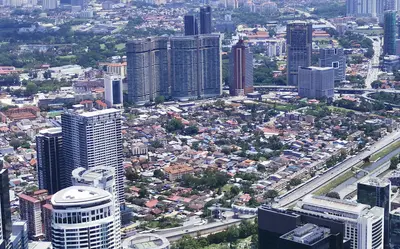
    Although Bukit Bintang is primarily perceived today as a modern center for commerce and entertainment, its development tells its own story of cultural change in Kuala Lumpur. Originally established as a residential and business district in the early 20th century, the area underwent rapid transformation after Malaysia's independence, especially from the 1980s onwards.The district's architecture is shaped by contemporary skyscrapers, luxury hotels, and sprawling shopping malls, which underscore its status as an economic powerhouse. Nevertheless, isolated older pre-war shophouses can be found, offering a visual contrast and insights into Kuala Lumpur's architectural past.Culturally, Bukit Bintang represents modern urban Malaysia. Here, diverse communities and influences merge, reflected in a rich culinary scene, current fashion trends, and dynamic street art. This contemporary cultural diversity, complemented by spontaneous performances and public art installations, defines Bukit Bintang as a place that strikingly illustrates Malaysia's rapid modernization and the synthesis of global and local identities.

    Exploring Locally

    Getting around Bukit Bintang is refreshingly straightforward, thanks to its well-developed public transport network. Its core is the metro system, especially the MRT Sungai Buloh-Kajang Line and the KL Monorail, which directly link the main shopping centres and attractions. A Touch 'n Go Card is essential for this, greatly simplifying payment; routes can be easily planned using apps like Moovit.Additionally, numerous bus lines cover areas not directly served by the metro. For longer distances or trips outside operating hours, taxis and the popular ride-sharing service Grab offer a practical and affordable alternative, easily booked via app.Although the centre is often bustling, Bukit Bintang is surprisingly pedestrian-friendly, with many covered walkways that shield from sun and rain. Renting bicycles or e-scooters is less common due to traffic and heat, so public transport and ride-sharing are the preferred options. Allow a little extra time for journeys during peak hours to avoid traffic jams.

    Accommodations in Bukit Bintang

    Accommodations in Bukit Bintang

    Find perfect stay in Bukit Bintang

    Booking.com
    Search Hotels
    Agoda
    Search Hotels
    Airbnb
    Vacation Rentals
    Hotels.com
    Hotels Worldwide
    Hostelworld
    Hostels

    Plan your trip to Bukit Bintang

    Save places, build a route and plan your city trip — all in one place.

    Save places

    Bookmark sights, restaurants and neighborhoods you're interested in.

    Build your route

    Turn your bookmarks into a route — define order, days and budget.

    Refine with AI

    Let Mein Fernweh suggest experiences and put together a tailored daily plan.

    Start trip planningOpen bookmarks

    Locations nearby

    These places are nearby — perfect for additional days or a day trip.

    KLCC (Kuala Lumpur City Centre)

    KLCC (Kuala Lumpur City Centre)

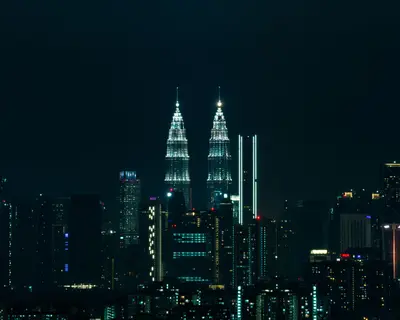
    The modern heart of Kuala Lumpur, known for its iconic Twin Towers, the expansive park, and exclusive shopping malls.
    Chinatown (Petaling Street)

    Chinatown (Petaling Street)

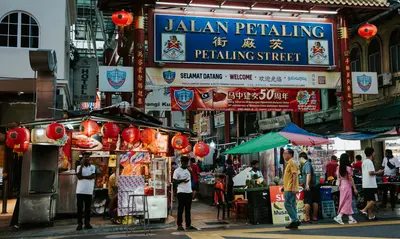
    Petaling Street, the heart of Kuala Lumpur's Chinatown, is a bustling marketplace that transports you into a world of colours, aromas, and sounds. Here you'll discover an abundance of goods, from clothing and souvenirs to traditional herbs and electronic devices, as you observe the lively activity. The area is renowned for its authentic street food scene; be sure to try local specialties like Hokkien Mee or Char Kway Teow at the many stalls. In the immediate vicinity, you'll find important cultural sites such as the vibrant Sri Mahamariamman Temple, the city's oldest Hindu temple, and the Chinese Sin Sze Si Ya Temple. These places of worship reflect Malaysia's multicultural history and religious diversity. An evening visit is particularly recommended, when the lanes are illuminated by lights and the food stalls are in full swing. Be sure to haggle when shopping, as this is expected here and is part of the shopping experience.
    Kuala Lumpur

    Kuala Lumpur

    Kuala Lumpur is a fascinating metropolis that harmoniously blends futuristic skyscrapers with colonial architecture and lush green spaces. As Malaysia's vibrant heart, the city offers a unique mix of cultures, world-class shopping, and unparalleled culinary diversity. Experience a city of contrasts that excitingly unites modernity and tradition.
    Kampung Baru

    Kampung Baru

    Kampung Baru offers you a unique insight into traditional Malay life, right in the shadow of Kuala Lumpur's modern skyscrapers. Here you'll find a remarkable architectural and cultural juxtaposition to the Petronas Towers. The district is known for its well-preserved wooden houses on stilts, which retain an authentic village atmosphere. Especially in the evening, it transforms into a lively hub for authentic Malay cuisine; along Jalan Raja Muda Musa, you can sample local specialties like Nasi Lemak or Satay. As one of KL's oldest Malay settlements, it was founded in the late 19th century to preserve the cultural identity of the Malays. The Masjid Jamek Kampung Baru is a prominent landmark. For an authentic experience and the best food selection, a visit in the late afternoon or evening is recommended.
    Perdana Botanical Garden (Lake Gardens)

    Perdana Botanical Garden (Lake Gardens)

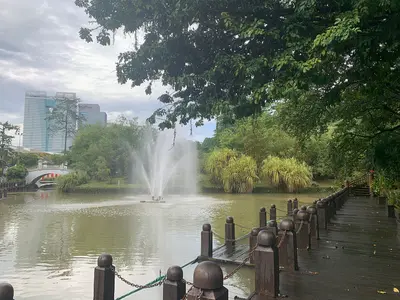
    A spacious green oasis in the heart of the city, ideal for walks, relaxation, and nature experiences away from the urban hustle and bustle.