Two weeks from Marrakech over the High Atlas to the kasbahs and dunes in the south and on to Fès, Chefchaouen and Tangier.
15 Days / 14 Nights
March to May, September to November
7 stops
Why This Route?
This route links Morocco's three main facets: the medinas of the Imperial Cities, the Atlas' southern kasbahs and gorges, and the Sahara's sand dunes. It concludes in the north, from where you return to Europe via flight or ferry.
Hidden Gems
Gnawa music in Khamlia near Merzouga
Monkey Fingers in the Dadès Valley
mint tea at Café Hafa overlooking the Strait of Gibraltar
Getting there and back
Open jaw: start and end are in different places
Arrival
Flight · Marrakesch (RAK)Marrakesh Menara Airport is located a few kilometers from the Medina; Bus 19 goes to Jemaa el-Fna.
Departure
Flight · Tanger (TNG)Alternatively, you can go from Tangier by ferry to Tarifa or Algeciras, back to Spain.
Itinerary
Stop 1 • 3 Nights
Marrakech
City
Route highlight
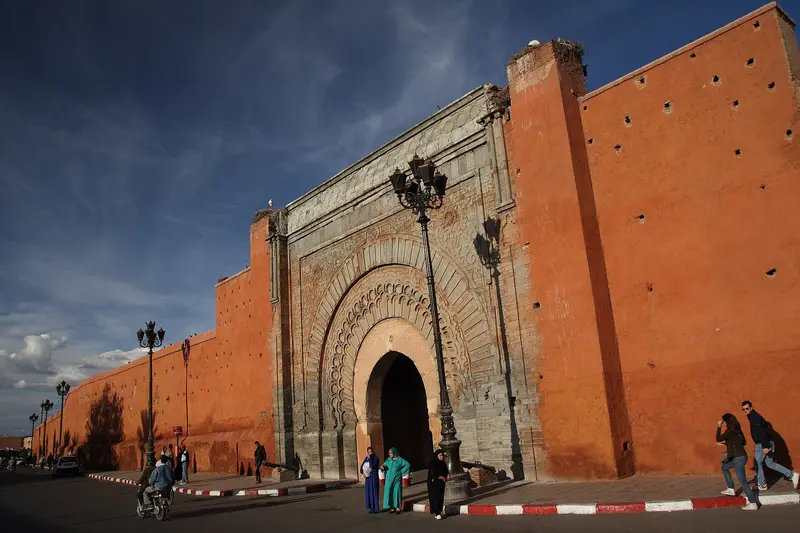
Marrakech, nestled at the foot of the High Atlas, will be Morocco’s top destination in 2025, expecting over ten million passengers. Founded by the Almoravids around 1070, its approximately nine-kilometre-long red clay walls still enclose the Medina, a UNESCO World Heritage site since 1985. Its heart is Jemaa el-Fna Square, surrounded by souks, palaces, and gardens.
Medina, Jemaa el-Fna and Jardin Majorelle
9 Sights
3 Restaurants
Culture & History
Capital of Two DynastiesMarrakech was the capital of the Almoravids, who here in the 11th century ruled an empire reaching as far as Andalusia. In the 12th century, the Almohads built the Koutoubia Mosque, whose minaret still defines the city's skyline. In the 16th century, the Saadians once again made the city their residence; the Medersa Ben Youssef dates from this time.Jemaa el-FnaSince the 14th century, the square has been considered a symbol of the city. Storytellers, healers, musicians, and food stalls made it so unique that UNESCO recognized it in 2001 as one of the first Masterpieces of the Oral and Intangible Heritage of Humanity. This initiative was sparked by the Spanish writer Juan Goytisolo, who lived in Marrakech.After the EarthquakeThe earthquake of September 8, 2023, damaged parts of the city wall, several mosques, and historic buildings. The Koutoubia has been open again since March 2024, while restoration work is still ongoing at other monuments like the Bahia and Badi Palaces.
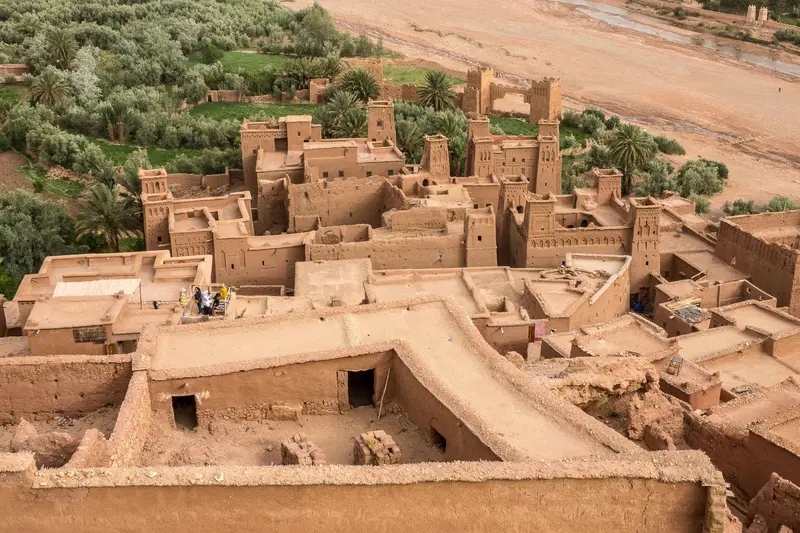
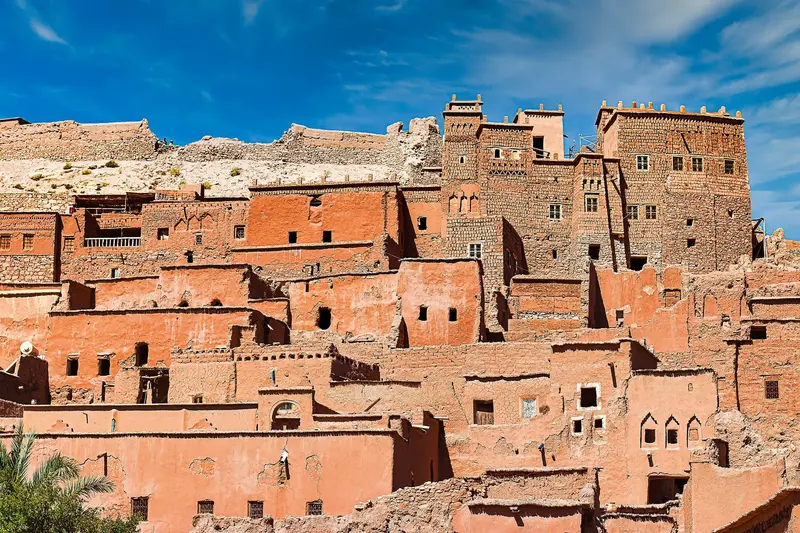
The Ksar Aït-Ben-Haddou is a fortified mud-brick settlement in the Ounila Valley on the old caravan route between the Sahara and Marrakesh. Since 1987, it has been a UNESCO World Heritage site. The backdrop of mud-brick kasbahs on the hillside above the river served for films like Lawrence of Arabia and Gladiator.
Over the Tizi n'Tichka Pass, Ksar in the afternoon
3 Sights
2 Restaurants
Culture & History
Life in the KsarThe mud-brick houses of the Ksar climb the hill, topped by a ruined granary. Today, only a few families still live in the old Ksar. The 2023 earthquake caused cracks and partial collapses.Film SetOver twenty films were shot here, including Lawrence of Arabia (1962), The Man Who Would Be King (1975), Gladiator (2000), Kingdom of Heaven (2005), and Prince of Persia (2010). The series Game of Thrones also used the location.
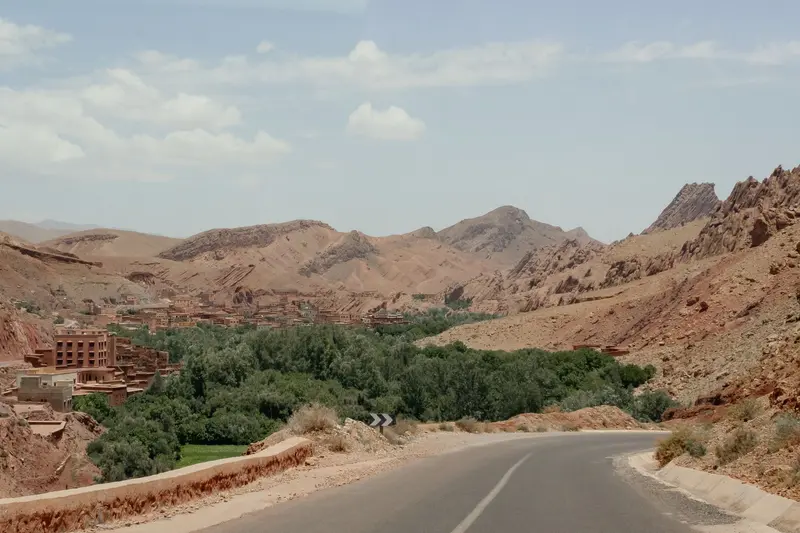
The Dadès Gorge stretches north of Boumalne Dadès into the High Atlas, with rock walls 200 to 500 meters high above the valley floor. Famous are the red rock formations known as the Monkey Fingers and the winding road that ascends the gorge in tight hairpin bends. The valley is home to kasbahs, villages, and guesthouses.
Hairpin bends and monkey fingers
1 Sight
1 Restaurant
Culture & History
Valley of the KasbahsThe Dadès River flows about 350 kilometres to the Drâa. Boumalne Dadès, at the valley's exit, lies at over 1,500 metres and is home to the Aït Atta.Roses of Kelaat M'GounaNot far from Boumalne lies Kelaat M'Gouna, the centre of Moroccan rose cultivation. Every year, during the rose blossom season between mid-April and mid-May, a multi-day Rose Festival takes place there.
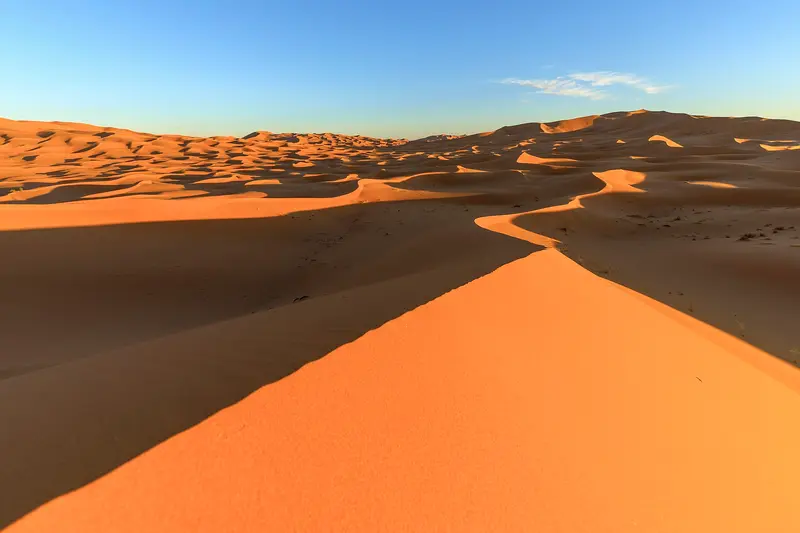
At Merzouga in southeastern Morocco, the Erg Chebbi rises, a roughly 28-kilometer-long dune sea with dunes about 150 meters high. Many travelers come for a camel ride into the dunes and a night in a desert camp. The village is located about 50 kilometers from the Algerian border.
Camel ride & desert camp night
3 Sights
4 Restaurants
Culture & History
Life on the Edge of the DunesMerzouga is located approximately 35 kilometers southeast of Rissani. In the neighboring village of Khamlia, musicians preserve Gnawa music, and many residents have West African ancestors. West of Merzouga, after rain, Lake Dayet Srji fills up, where flamingos often gather.Weather and NatureOn May 26, 2006, a flash flood destroyed numerous houses and hotels. Since 2024, after heavy rainfall, Lake Yasmina has newly formed.
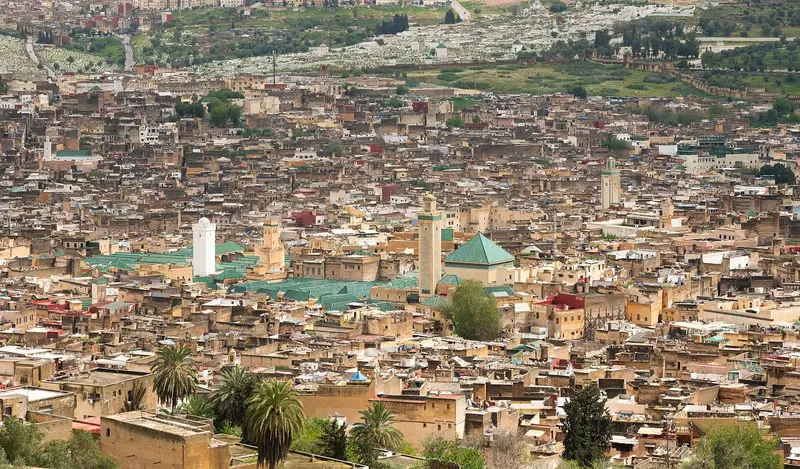
Fès is the oldest of Morocco's imperial cities and is considered the spiritual heart of the country. The Medina Fès el-Bali, founded by the Idrisids at the end of the 8th century, is one of the largest car-free urban areas in the world and has been a UNESCO World Heritage site since 1981. Beyond the Bab Boujloud gate, a labyrinth of alleys begins, featuring Quranic schools, tanneries, and artisan quarters.
Medina Fès el-Bali guided tour, trip to Meknès and Volubilis
6 Sights
4 Restaurants
Culture and History
Two FoundationsIdris I founded a first settlement on the Fès River in 789; his son Idris II founded a second on the opposite bank in 809. From these grew Fès el-Bali, the Old City. Tradition holds that Fatima al-Fihri founded the al-Qarawiyyin Mosque in 859, which developed into a center of Islamic scholarship. Non-Muslims are not permitted to enter.The MarinidsFès experienced its golden age under the Marinids. In 1276, west of the Old City, they founded Fès el-Jdid as a fortified royal city, which includes the Dar al-Makhzen Royal Palace and the former Jewish Quarter, Mellah. The Quranic schools Bou Inania and al-Attarine, with their wood carvings and tile mosaics, also date from this period.CraftsTo this day, tanners, dyers, carpet weavers, and coppersmiths work in the Medina; their workshops have been located for centuries at Place Seffarine. The largest tannery is Chouara. You can view its dyeing vats from the terraces of the surrounding leather shops; entry is free, but vendors hope for a purchase.
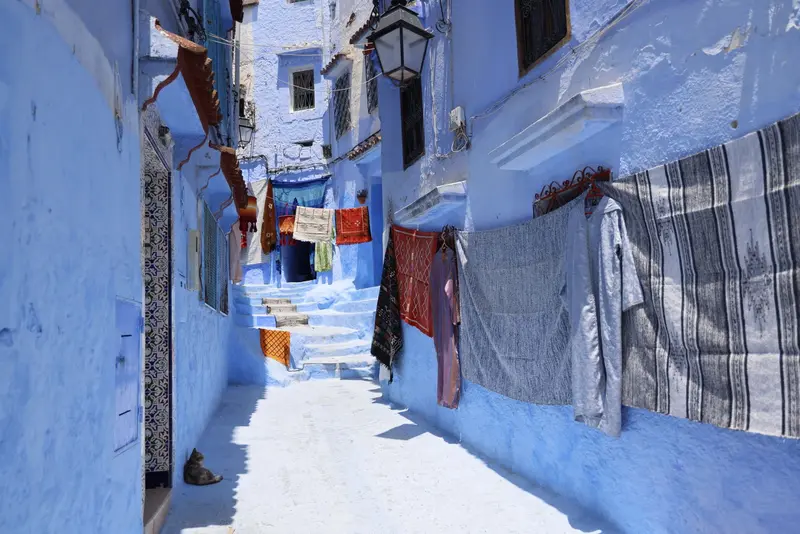
Chefchaouen, located in the Rif Mountains, is known for its blue-washed houses and medina alleys. Founded in 1471 as a fortress, the city today has about 46,000 residents. The Kasbah, Ras el-Maa Spring, and the Spanish Mosque viewpoint are key attractions.
The Blue Medina and the Spanish Mosque
4 Sights
3 Restaurants
Culture & History
Fortress in the RifAli ibn Rashid al-Alami founded Chefchaouen in 1471 as a fortress. The Kasbah, with its ten towers, dates from this period and today houses a small ethnographic museum.Why Blue?There are several explanations for the blue colour of the houses. A local version suggests that the paint was introduced in the 1970s for tourism. Above the town stands the Spanish Mosque, built in the 1920s, a popular sunset viewpoint.
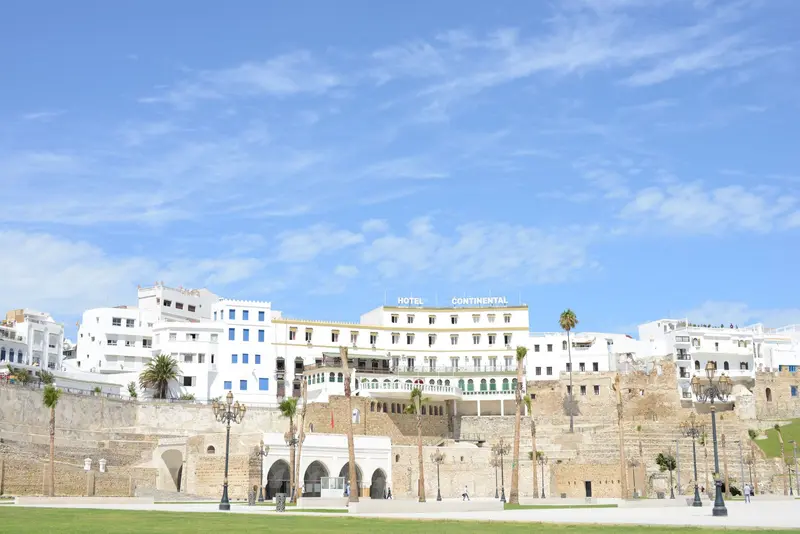
Tangier is situated on the Strait of Gibraltar, where the Mediterranean and Atlantic converge, and for many travelers from Spain, it is the gateway to Morocco. From 1923 to 1956, the city was an international zone, attracting writers and artists. Today, the Al Boraq connects Tangier with Casablanca in just over two hours.
Kasbah and Café Hafa
5 Sights
3 Restaurants
Culture & History
International ZoneTangier's origins date back to a Phoenician settlement. In the 20th century, several powers administered the city as an international zone. During this period, writers like William S. Burroughs lived here, writing Naked Lunch at the Tangerinn bar in the Hotel El Muniria.The KasbahPerched on the hill above the medina is the Kasbah, home to the Dar el-Makhzen palace, built by Sultan Moulay Ismail. Today, it houses the Kasbah Museum, featuring collections of Moroccan art and regional archaeology. The Hafa Cliff Café, dating back to 1921, is a traditional spot for mint tea with views of the strait.