After four days in Mexico City, with a trip to the Teotihuacán pyramids, you drive about 220 kilometers north to the colonial city of Querétaro. From there, it's about 80 kilometers to San Miguel de Allende and another one and a half bus hours to Guanajuato. All four cities are UNESCO World Heritage sites and are well connected by comfortable long-distance buses; for the return journey, you fly from Bajío Airport near León.
13 Days / 12 Nights
October–April
4 stops
Why This Route?
For travelers who want to explore Mexico's colonial history, silver cities, and capital without a rental car and with short bus journeys.
Hidden Gems
Peña de Bernal, a freestanding rock in the state of Querétaro with a path to the chapel
Santuario de Atotonilco, about 14 kilometers from San Miguel de Allende, with murals by Miguel Antonio Martínez de Pocasangre
Museo Casa Olga Costa in the Barrio de Pastita in Guanajuato
Getting there and back
Open jaw: start and end are in different places
Arrival
Flight · Mexiko-Stadt (MEX)From the airport, Metrobús and Metro run to the center; buses to Querétaro also depart directly from there.
Departure
Flight · León/Bajío (BJX)Bajío Airport is about 27 km from Guanajuato; flights to Europe involve a connection.
Itinerary
Stop 1 • 4 Nights
Mexico City
City
Rich in culture and history. Perfect for an exciting city trip and Culinary highlights.
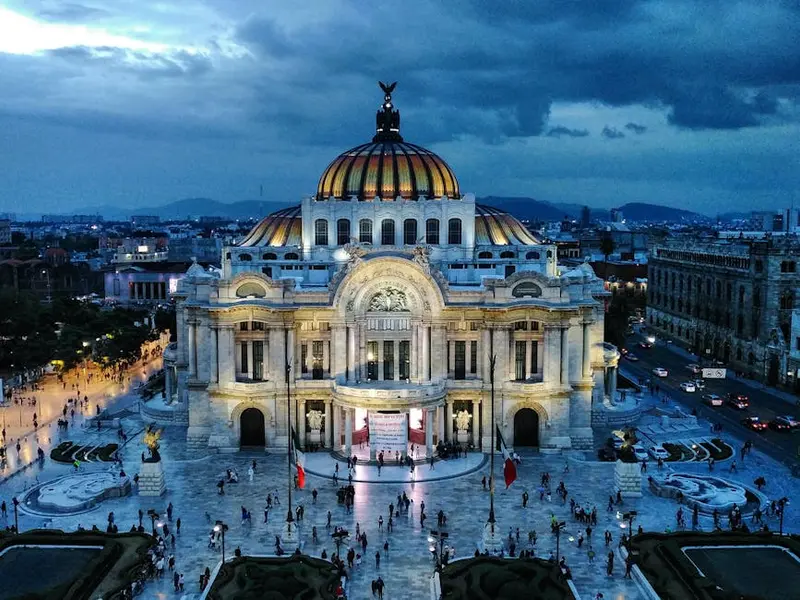
Mexico City, the country's capital, is located at approximately 2,240 meters in a high valley surrounded by volcanoes, and its metropolitan area has nearly 22 million inhabitants. You travel here for the ruins of the Aztec capital Tenochtitlán beneath the colonial center, a UNESCO World Heritage site since 1987; for museums like the National Museum of Anthropology; and for a cuisine ranging from taco stands to tasting menus. Green residential neighborhoods like Roma and Condesa, the canals of Xochimilco, and day trips to Teotihuacán round out the stay.
Day trip to Teotihuacán, just under an hour by bus from Terminal Norte
23 Sights
11 Restaurants
Culture & Character
From Tenochtitlán to MetropolisThe Mexica founded Tenochtitlán around 1325 on an island in Lake Texcoco. After the conquest in 1521, the Spanish built their capital directly on its ruins; the lake was gradually drained. The soft lakebed is still noticeable today: many colonial buildings have subsided, and earthquakes like 1985 and 2017 hit the city hard.Art and MuseumsMexico City has an exceptionally dense museum landscape; several major museums are located in Chapultepec Park alone. Distinctive features include the murals by the Muralists in public buildings, the Anthropological Museum, and an active contemporary art scene with galleries in Roma, San Rafael, and Polanco. Día de Muertos is celebrated with altars, parades, and cemetery visits.
Rich in culture and history. Perfect for an exciting city trip.
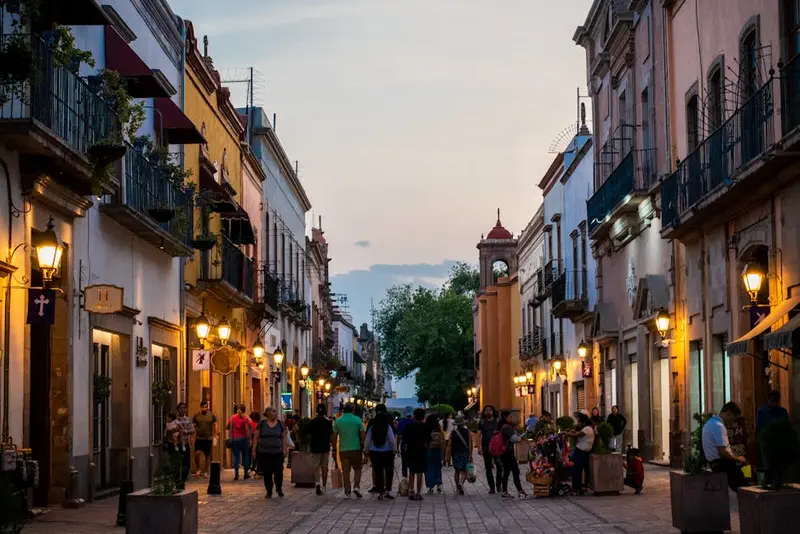
Santiago de Querétaro was founded in 1531 and lies approximately 220 km northwest of Mexico City at about 1,820 m elevation. Its Old Town, with its squares, Baroque churches, and a 74-arch aqueduct, has been a UNESCO World Heritage site since 1996.In 1810, the conspiracy that triggered the War of Independence began here, and in 1917, Mexico's current constitution was proclaimed in the Teatro de la República.
15 Sights
4 Restaurants
History and Culture
Cradle of IndependenceQuerétaro was founded on July 25, 1531. In 1810, conspirators against Spanish colonial rule met at the home of Corregidor Miguel Domínguez and his wife Josefa Ortiz de Domínguez. When the plan was exposed in September 1810, Josefa Ortiz warned Miguel Hidalgo, who then called for an uprising in Dolores. In 1867, Emperor Maximilian was sentenced to death in Querétaro and shot on June 19 on the Cerro de las Campanas; in 1917, the constitution was proclaimed in the Teatro de la República.Baroque in StoneCharacteristic of Querétaro are its 18th-century churches with richly gilded altars, like Santa Rosa de Viterbo and Santa Clara, and the cloister of the former Augustinian monastery, now an art museum.ExcursionsPeña de Bernal: 433 m high monolith near the village of Bernal, about an hour's drive away.Tequisquiapan and Wine Region: Wineries and cheese factories in the east of the state.San Miguel de Allende: Colonial city in the neighboring state of Guanajuato, easily accessible by bus.Franciscan Missions of the Sierra Gorda: five Baroque mission churches in the north, a UNESCO World Heritage site since 2003.
Rich in culture and history. Perfect for unwinding and relaxation and Perfect for an exciting city trip.
San Miguel de Allende sits at roughly 1,900 meters in Guanajuato state, about four bus hours north of Mexico City. Its old town, with steep cobblestone streets, ochre houses and the pink Parroquia, has been a UNESCO World Heritage site since 2008, along with the Sanctuary of Atotonilco. For decades, many foreigners have lived here, especially from the USA and Canada.
13 Sights
8 Restaurants
History and City Living
From San Miguel el Grande to AllendeThe Franciscan Juan de San Miguel founded the town in 1542 as San Miguel el Grande. It grew rich as a stop on the Silver Route between Zacatecas and Mexico City. Ignacio Allende, one of the leaders of the 1810 independence movement, was born here. In his honor, the city has borne its current name since 1826.City of ArtistsIn 1938, Felipe Cossío del Pomar and Stirling Dickinson founded an art school in the former monastery, later joined by the Instituto Allende. After World War II, many US veterans came to study with GI Bill scholarships. To this day, galleries, courses, and cultural centers like Bellas Artes shape the cityscape. Around September 29, the city celebrates its patron, San Miguel Arcángel, for a week with processions and fireworks.ExcursionsAbout 14 kilometers outside the city lies the 18th-century Sanctuary of Atotonilco, whose interiors Antonio Martínez de Pocasangre painted over approximately three decades. In the surrounding area, there are several hot springs and wineries.
Rich in culture and history. Perfect for an exciting city trip and For adventure seekers.
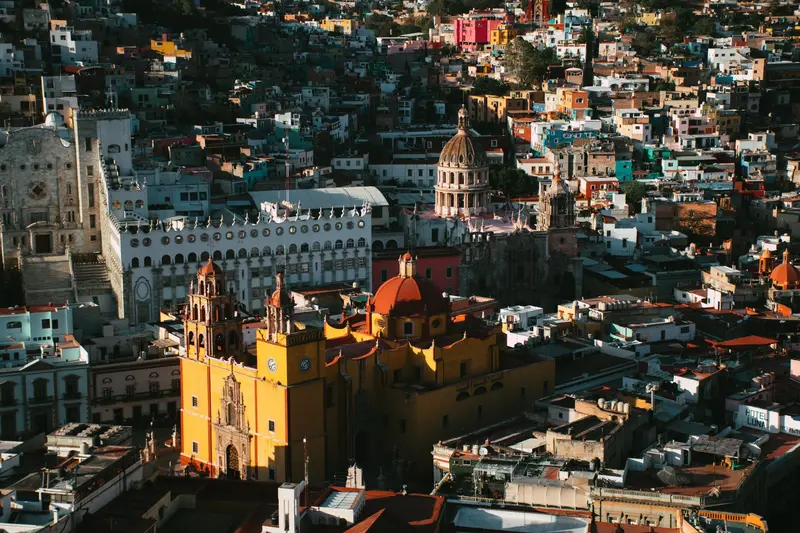
Guanajuato stretches at over 2,000 m altitude through a narrow gorge in the central highlands, approximately 340 road kilometers northwest of Mexico City. You come for the colorful Old Town from the silver mining era, a UNESCO World Heritage site since 1988, with steep stair-alleys, Baroque churches, and squares bustling with students. In the 18th century, the La Valenciana mine at times supplied around two-thirds of the world's silver production, making the city rich. Colorful houses cling to the slopes, and most traffic runs through tunnels beneath the Old Town.
18 Sights
8 Restaurants
History and Culture
Silver and IndependenceSilver veins were mined here starting in 1548, and Santa Fe de Guanajuato was officially founded in 1570. In the 18th century, the La Valenciana mine at times supplied about two-thirds of the world's silver. In 1810, insurgents led by Miguel Hidalgo stormed the Alhóndiga de Granaditas, marking one of the first battles of the War of Independence.Festival CervantinoEvolving from performances of Cervantes' interludes in small squares, the Festival Internacional Cervantino was established in 1972, becoming one of Latin America's largest cultural festivals. Every October, theater, music, and dance from around the world converge. In 2026, its 54th edition took place from October 3rd to 18th, with France as the guest country.ExcursionsWorthwhile excursions include the old La Valenciana silver mine with its Baroque San Cayetano church, the Cerro del Cubilete with the Cristo Rey statue of Christ, and Dolores Hidalgo, where the call for independence was sounded in 1810.