

Fernweh
    ExploreTravel GuidesMy Trips
    de|en
    About FernwehImprintFAQPrivacy Policy
    ExploreTravel GuidesMy Trips
    Mexico City

    Mexico City

    CityCulture
    1. Home
    2. Destinations
    3. Mexico
    4. Central Mexican Highlands
    5. Mexico City
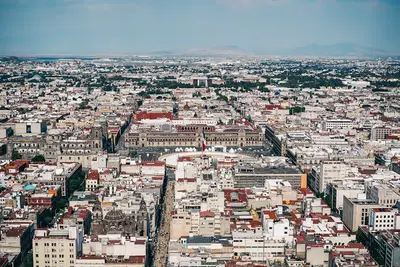
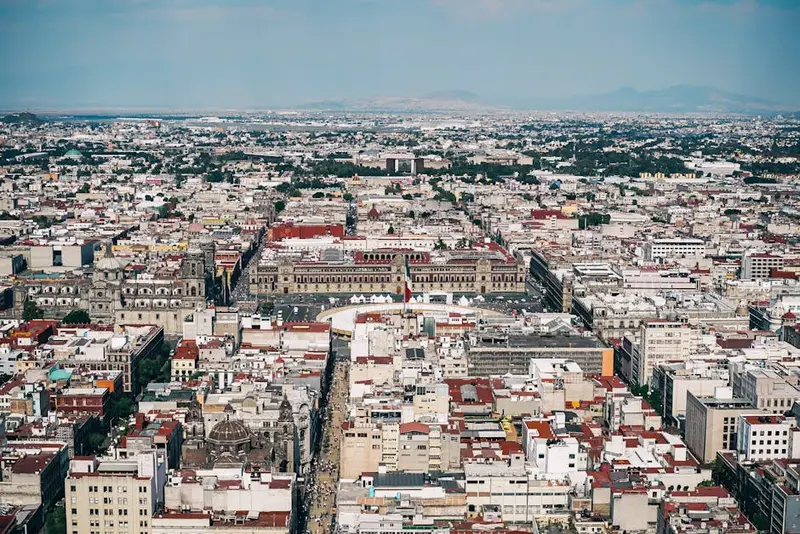
    Mexico City is a vibrant metropolis that blends indigenous roots with colonial history and modern life. Here you'll find the impressive Zócalo, one of the world's largest squares, surrounded by the Metropolitan Cathedral and the Palacio Nacional with murals by Diego Rivera. The Museo Nacional de Antropología in Chapultepec Park offers deep insights into Mexico's pre-Columbian history. Explore the charming district of Coyoacán with Casa Azul, Frida Kahlo's former home, for an authentic cultural experience. The city is renowned for its diverse gastronomy, from street food to upscale restaurants, and its vibrant art scene. For pleasant exploration, the dry season from November to April is recommended. A weekend visit to the floating gardens of Xochimilco offers unique insight into local tradition.
    • Neighborhoods & highlights
    • Walking tours
    • Eat & drink
    • Culture
    • Nightlife
    • Getting around
    • Accommodation
    • Plan trip
    • Nearby
    • Neighborhoods & highlights
    • Walking tours
    • Eat & drink
    • Culture
    • Nightlife
    • Getting around
    • Accommodation
    • Plan trip
    • Nearby

    Overview

    Mexico City blends pre-Columbian history, colonial heritage, and vibrant modern life. In the center, you'll find the Zócalo with the Metropolitan Cathedral and Rivera's murals in the Palacio Nacional. The Museo Nacional de Antropología in Chapultepec Park offers deep insights into Mexico's indigenous cultures. Explore Coyoacán with Frida Kahlo's Casa Azul for authentic culture. The gastronomy is diverse. The dry season from November to April is ideal; also visit the floating gardens of Xochimilco.

    Places in Mexico City

    Discover the most important sights and attractions

    Sights in Mexico City

    Palacio de Bellas Artes

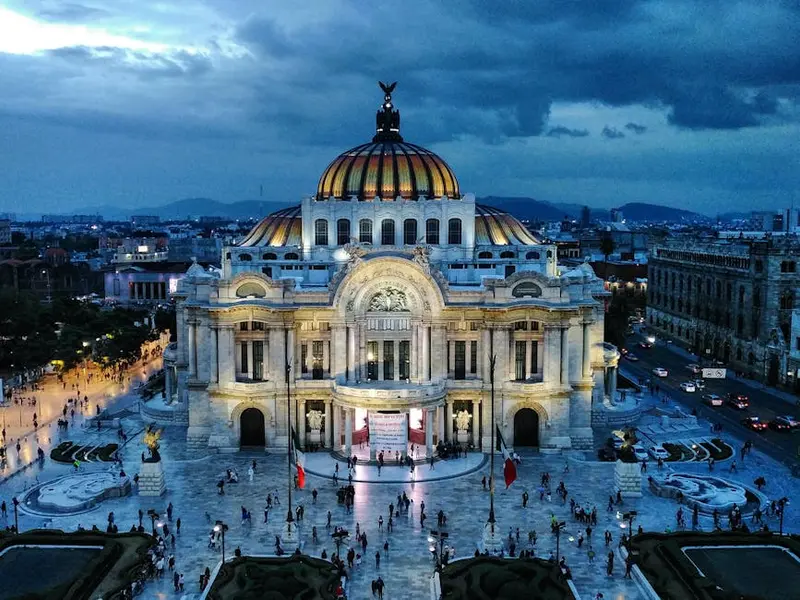
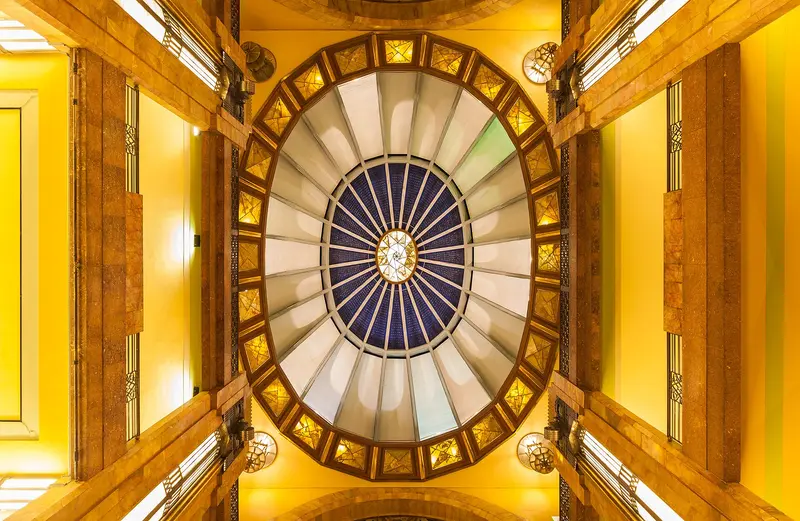
    The **Palacio de Bellas Artes** in Mexico City is an architectural masterpiece and the country's most important cultural center. You'll find a unique blend of Art Nouveau and Neoclassicism on its exterior, while the interior is designed in Art Deco style. Construction began in 1904 under Italian architect Adamo Boari and was only completed in 1934, which explains the building's stylistic evolution. The building is famous for its monumental murals by artists such as Diego Rivera, David Alfaro Siqueiros, and José Clemente Orozco, which you can admire on the upper floors. It houses the National Museum of Architecture and is a primary venue for opera, ballet, and concerts.Look out for the impressive Tiffany glass curtain in the main hall, made of almost a million pieces of glass and depicting a view of Popocatépetl. **Our tip:** For a spectacular exterior view of the palace, especially at sunset, head to the terrace of the Sears department store opposite. Plan your visit for a weekday morning to avoid the crowds and enjoy the artworks in peace.
    Open in Google Maps

    Templo Mayor

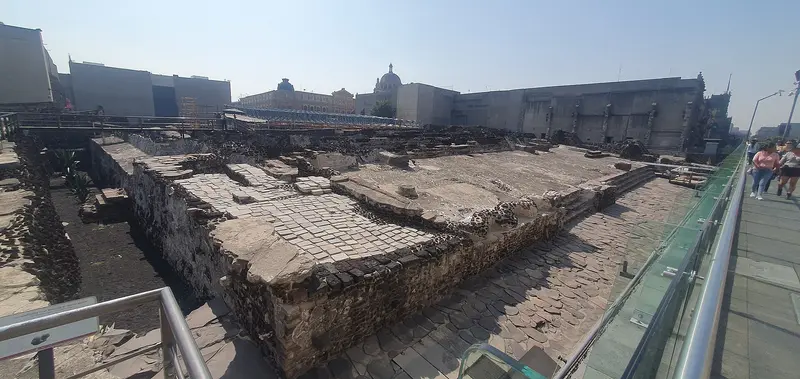
    The Templo Mayor was the central sanctuary of the Aztecs (Mexica) in their capital Tenochtitlan, modern-day Mexico City. It was dedicated to the deities Huitzilopochtli, god of war and the sun, and Tlaloc, god of rain and fertility. The ruins you see today are the remnants of a structure that was expanded and built over repeatedly in seven phases. The excavation site offers deep insight into Aztec architecture and religious practices, with uncovered sacrificial stones and impressive sculptures like the Coyolxauhqui monolith. Directly adjacent is the Museo del Templo Mayor, which houses an extensive collection of artifacts found here and brings the site's history to life. It is essential for grasping the cultural significance of the findings. Our tip: Plan your visit for early morning to avoid both the largest crowds and the intense midday heat. This allows for a calmer exploration of the complex and the museum.
    Open in Google Maps

    Museo Nacional de Arte

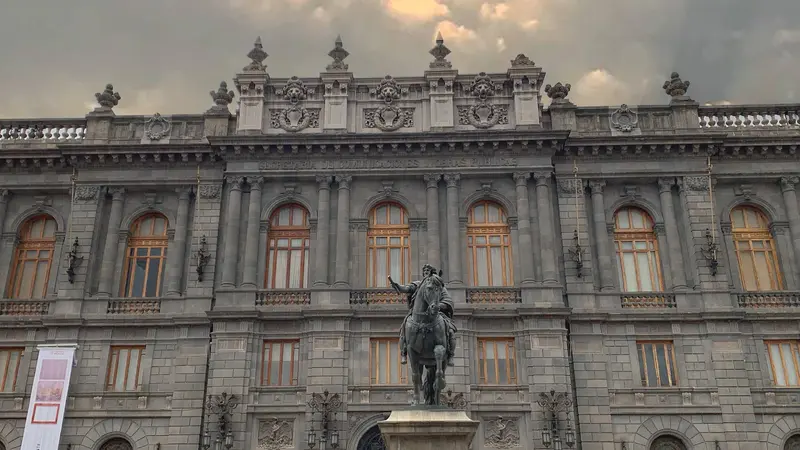
    The National Museum of Art (MUNAL) in Mexico City is housed in one of the city's most magnificent neoclassical buildings, the former Palacio de la Secretaría de Comunicaciones y Obras Públicas. It houses an impressive collection of Mexican art from the 16th to the mid-20th century, offering you a comprehensive insight into the development of the nation's art history. Here you'll find works from the colonial period, 19th-century academic art, and the beginnings of modernism, reflecting Mexico's cultural and political transformation. Particularly noteworthy are the large-format paintings and sculptures that shaped the country's identity. Take your time to admire the building's architecture itself, especially the magnificent entrance hall and the grand central staircase. A practical tip: Visit the museum on a weekday morning to avoid the crowds and enjoy the artworks in peace. For an impressive perspective of the building and the surrounding Plaza de Manuel Tolsá, we recommend exploring the square in front of the museum.
    Open in Google Maps

    Museo de Arte Popular

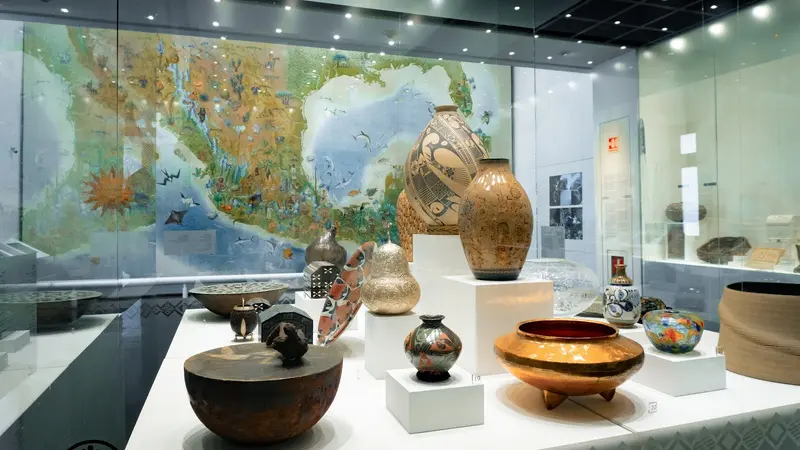
    The Museo de Arte Popular in Mexico City is dedicated to preserving and showcasing the rich tradition of Mexican folk art. Here you'll find an impressive collection of handicrafts from all regions of the country, reflecting the diversity and creativity of indigenous cultures. The exhibits range from colorful textiles and ceramics, traditional toys and masks, to the famous Alebrijes, fantastic creatures made of papier-mâché or wood. The museum is housed in a former Art Deco fire station, whose architecture is a sight to behold in itself. It offers a deep insight into Mexico's cultural identity, which often manifests itself in these everyday and ritual objects. Our Tip: Plan your visit for a weekday morning to avoid the crowds and admire the exhibits in peace. Pay special attention to the changing special exhibitions, which often highlight specific crafts or regions. The museum shop also offers an excellent selection of authentic and high-quality handicrafts.
    Open in Google Maps

    El Ángel de la Independencia

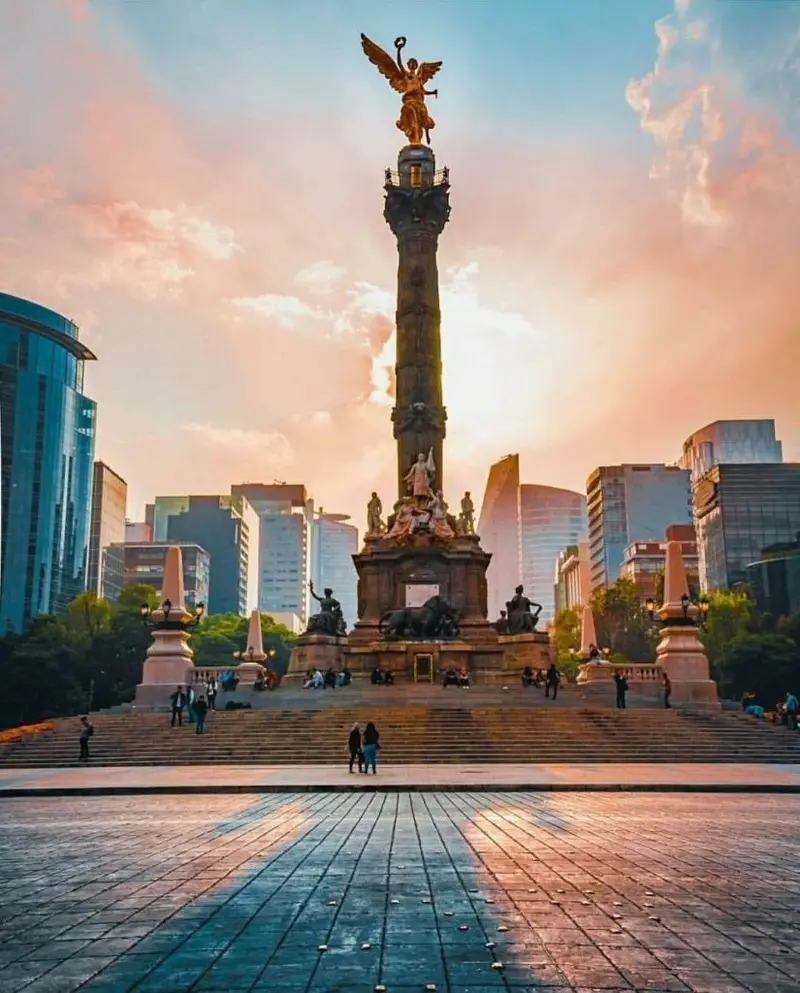
    The Angel of Independence, known as El Ángel de la Independencia, is a landmark in Mexico City. This monumental structure was inaugurated in 1910 under President Porfirio Díaz to commemorate the centenary of the start of the Mexican War of Independence. The imposing column is crowned by a gilded bronze statue of the winged goddess of victory, Nike, holding a laurel wreath and a broken chain – symbols of triumph and freedom. At the base of the monument are statues of important heroes of the independence struggle; their remains rest in the mausoleum within the plinth, which gives the Ángel profound historical significance. For locals, the Ángel serves not only as a historical monument but also as a gathering point for celebrations and demonstrations. You can best admire the monument from the sidewalks of Paseo de la Reforma. Our tip: Visit the Ángel in the early morning for the best photo light and to avoid heavy traffic, or in the evening when it is atmospherically lit.
    Open in Google Maps

    Kathedrale von Mexiko-Stadt

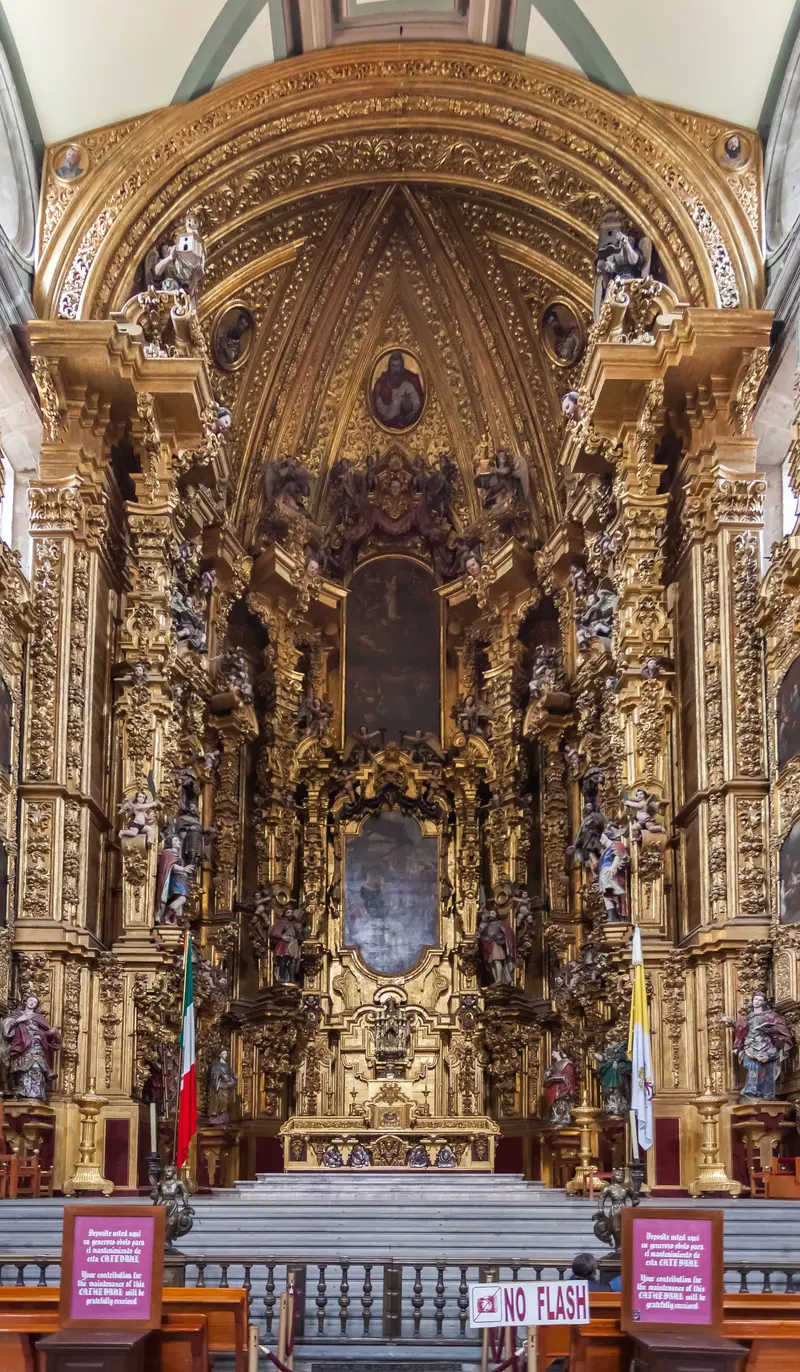
    The Metropolitan Cathedral of Mexico City is the largest and oldest cathedral in Latin America and a central landmark of the city. You'll find it directly on the Zócalo, built starting in 1573 upon the ruins of the Aztec Templo Mayor, which underscores its deep historical and cultural significance as a symbol of the Spanish conquest and Christianization. Its more than 250-year construction period shaped an impressive blend of Baroque, Churrigueresque, and Neoclassical styles, which you can recognize on its facade and within its interior.Inside, you'll find five naves, 16 chapels, and magnificent altars such as the Altar of Forgiveness and the Altar of the Kings, whose detailed design is captivating. Note the building's visible tilt: Due to the soft subsoil, the cathedral has sunk over the centuries, necessitating extensive stabilization work and making it a unique architectural testament.Our tip: It's best to visit the cathedral early in the morning on a weekday to enjoy the tranquility and avoid crowds. For an impressive overall view of the facade, position yourself on the Zócalo. A visit to the nearby Templo Mayor excavation site complements the historical picture.
    Open in Google Maps

    City walks in Mexico City

    Curated walking tours through the city's highlights — handpicked by experienced travel journalists.

    Mexiko-Stadts Historisches Herz: Eine Zeitreise durch Kultur & Pracht

    Entdecken Sie auf diesem angenehmen zweistündigen Spaziergang das pulsierende Herz von Mexiko-Stadt. Von präkolumbianischen Wurzeln über die koloniale Pracht bis zur Jugendstil-Eleganz führt Sie diese Tour durch die faszinierendsten Sehenswürdigkeiten des Centro Histórico.

    ~2 Std.
    In Google Maps öffnen
    Stopps (7)

    Essen & Trinken

    Mexico City: Cultural Heritage & Architecture

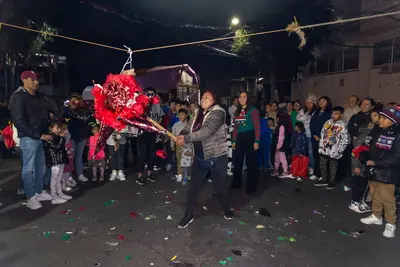
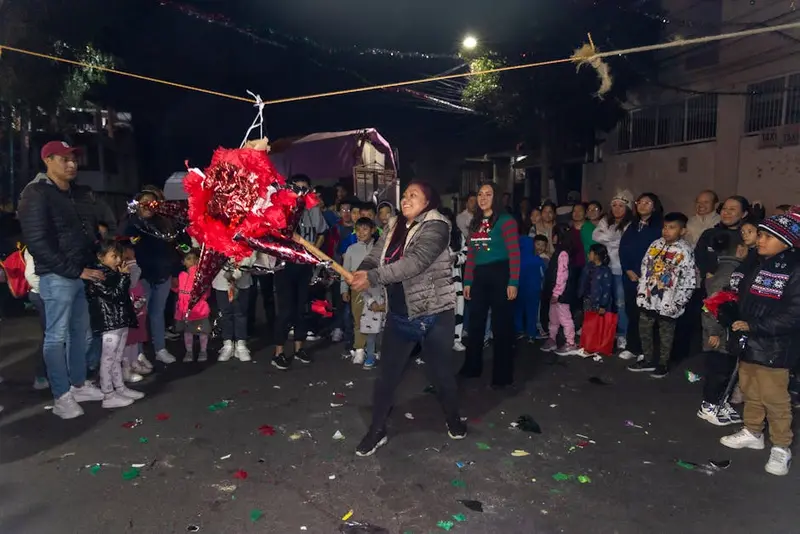
    Mexico City is built upon the ruins of **Tenochtitlán**, the former capital of the Aztec Empire, marking its deep historical roots. The arrival of the Spanish in the 16th century led to an overlay of pre-Columbian structures with colonial Baroque architecture, a contrast that still shapes the cityscape today. The city reflects a rich history, stretching from the high culture of the Aztecs through the Spanish colonial era to the modern Mexican Republic. Architecturally, this manifests in the coexistence of Aztec temple remnants like the Templo Mayor alongside imposing colonial buildings such as the Metropolitan Cathedral and modern skyscrapers. Cultural characteristics include the vibrant 20th-century Muralism movement with works by artists like Diego Rivera and David Alfaro Siqueiros. Traditions like the **Día de Muertos** are deeply rooted in indigenous customs and shape social life.

    Nightlife

    Mexico City's nightlife is diverse, ranging from traditional mezcal bars to modern clubs, which you'll find primarily in Roma Norte and Condesa. Here, you'll discover specialized venues like Templo Mezcaleria and established live music venues such as Zinco Jazz Club.

    On-site mobility

    Mexico City offers diverse and efficient transportation options to navigate its impressive size. At the heart of public transport is the Metro: fast, affordable, and ideal for longer distances across the city. Be sure to get the rechargeable Tarjeta de Movilidad Integrada, valid for Metro, Metrobús, and Trams, to avoid waiting times and seamlessly use all modes of transport.For flexible, shorter distances, bike-sharing services like Ecobici and e-scooters via app are available, especially popular in neighborhoods like Roma and Condesa. For taxis, ride-sharing services like Uber or DiDi are safer and more recommendable than street taxis due to fixed prices and GPS tracking. Although the historic center is easily walkable, traffic in other neighborhoods can be very dense; plan extra time for this.Use navigation apps like Google Maps or Moovit for current timetable information and real-time traffic data, especially during rush hour, to make your journey relaxed and bypass bottlenecks.

    Accommodations in Mexico City

    Accommodations in Mexico City

    Find perfect stay in Mexico City

    Booking.com
    Search Hotels
    Agoda
    Search Hotels
    Airbnb
    Vacation Rentals
    Hotels.com
    Hotels Worldwide
    Hostelworld
    Hostels

    Plan your trip to Mexico City

    Save places, build a route and plan your city trip — all in one place.

    Save places

    Bookmark sights, restaurants and neighborhoods you're interested in.

    Build your route

    Turn your bookmarks into a route — define order, days and budget.

    Refine with AI

    Let Mein Fernweh suggest experiences and put together a tailored daily plan.

    Start trip planningOpen bookmarks

    Locations nearby

    These places are nearby — perfect for additional days or a day trip.

    Centro Histórico

    Centro Histórico

    Das pulsierende Herz der Stadt, wo die Geschichte Mexikos in prächtigen Kolonialbauten und präkolumbianischen Ruinen lebendig wird.
    Mexico City

    Mexico City

    Willkommen in Mexico City, einer Metropole, die dich mit ihrer unermesslichen Geschichte, lebendigen Kultur und einer unvergleichlichen kulinarischen Szene sofort in ihren Bann ziehen wird. Tauche ein in eine Stadt, die alte Traditionen mit modernem Flair verbindet und dich an jeder Ecke überraschen wird.
    Roma Norte

    Roma Norte

    Ein trendiges Viertel, bekannt für seine Art-déco-Architektur, entspannten Parks und eine blühende Gastronomieszene mit zahlreichen Cafés und Boutiquen.
    Condesa

    Condesa

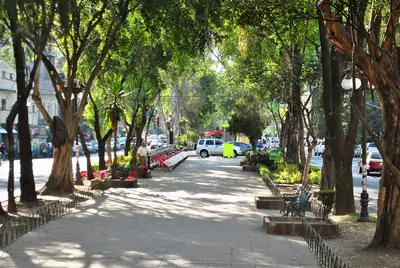
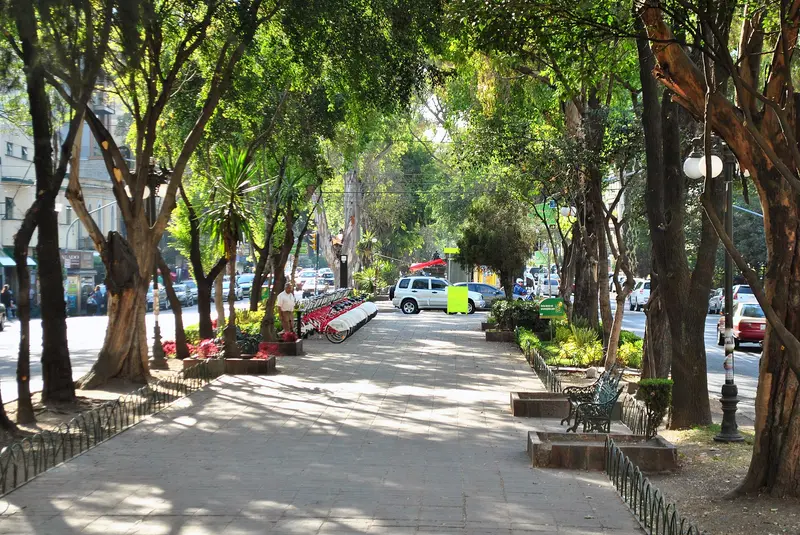
    Ein elegantes und grünes Viertel, das dich mit seinen baumgesäumten Alleen, Parks wie dem Parque México und einer entspannten, gehobenen Atmosphäre empfängt.
    Polanco

    Polanco

    Das luxuriöse Viertel der Stadt, bekannt für seine exklusiven Boutiquen, hochklassigen Restaurants und einige der besten Museen Mexikos.