Fernweh: Home
    ExploreTravel GuidesPlan a tripMy tripLast visited
    de|en
    All Places & RegionsAll highlightsAbout FernwehFAQPrivacy PolicyImprint
    ExploreTravel GuidesPlan a tripMy tripLast visited
    • Overview
    • Places in the region
    • Food culture
    • Best travel time
    • Culture
    • Getting around
    • Round trips
    • Nearby
    Central Mexican Highlands

    Mexico

    Central Mexican Highlands

    Region

    The Central Mexican Highlands stretch from the Valley of Mexico to the Bajío and are mostly 1,800 to 2,400 m high.

    by Felix Gillen

    1. Home
    2. Destinations
    3. Mexico
    4. Central Mexican Highlands
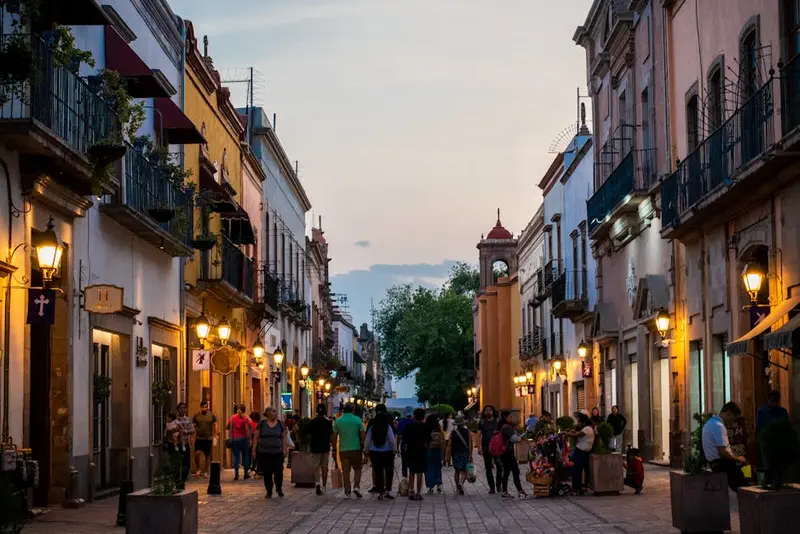
    The Central Mexican Highlands stretch from the Valley of Mexico to the Bajío and are mostly 1,800 to 2,400 m high. Here are Mexico City, colonial cities Puebla, Querétaro, Guanajuato, and San Miguel de Allende, and pyramid cities Teotihuacán and Cholula.The region is ideal for a bus tour: most destinations are two to four hours' drive from each other.
    The Highlands are the historical heartland of Mexico. Several old cities are on the UNESCO World Heritage list: Mexico City and Puebla since 1987, Guanajuato since 1988, Querétaro since 1996, and San Miguel de Allende since 2008. Also included are pre-Hispanic sites like Teotihuacán, Cholula, Cacaxtla, and Tula. Its high altitude ensures mild days and cool nights; the rainy season runs from about June to September.
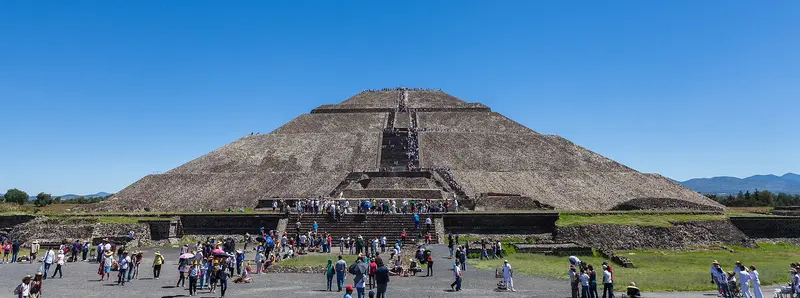
    Teotihuacán
    MIKHEIL / Wikimedia Commons / CC BY-SA 4.0

    Place 1 of 4

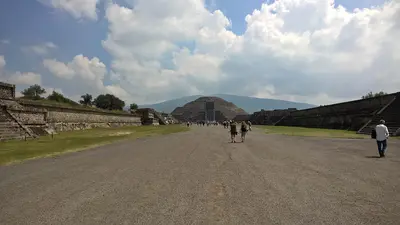
    Teotihuacán

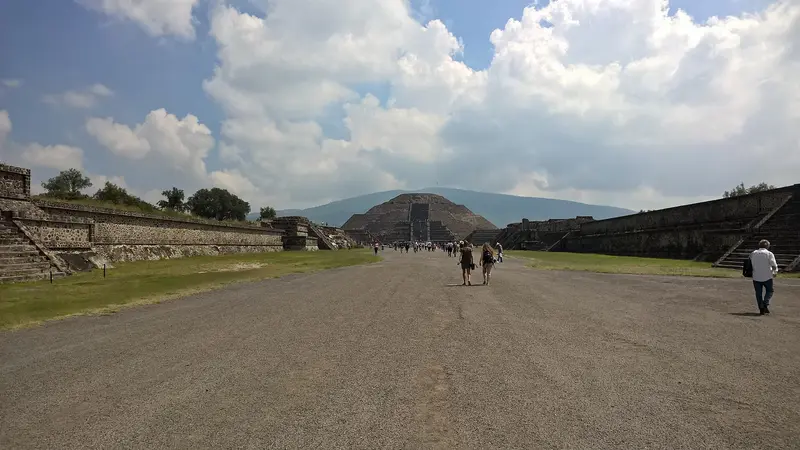
    Teotihuacán, around 50 kilometers northeast of Mexico City, was one of the largest cities in Mesoamerica between the 1st and 7th centuries and has been a UNESCO World Heritage site since 1987.

    Discover
    Cholula

    Place 2 of 4

    Cholula

    Cholula lies about 10 km west of Puebla and comprises the municipalities of San Pedro and San Andrés Cholula. Its landmark is the Great Pyramid, atop which the church Nuestra Señora de los Remedios has stood since 1594.

    Discover
    Guanajuato

    Place 3 of 4

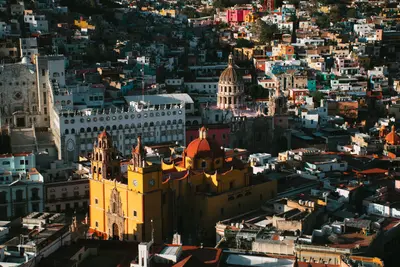
    Guanajuato

    Guanajuato stretches at over 2,000 m altitude through a narrow gorge in the central highlands, approximately 340 road kilometers northwest of Mexico City.

    Discover
    Mexico City

    Place 4 of 4

    Mexico City

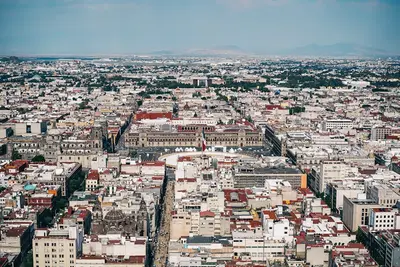
    Mexico City, the country's capital, is located at approximately 2,240 meters in a high valley surrounded by volcanoes, and its metropolitan area has nearly 22 million inhabitants.

    Discover

    More places in Central Mexican Highlands

    Puebla

    Puebla

    Puebla was founded by the Spanish in 1531 and is located at an altitude of approximately 2,135 m between Mexico City and Veracruz. Its Old Town, with its Cathedral, the Rosary Chapel, and numerous facades adorned with Talavera tiles, has been a UNESCO World Heritage site since 1987.The city is considered the birthplace of Mole poblano and Chiles en nogada and is a good starting point for Cholula and the volcanoes Popocatépetl and Iztaccíhuatl.
    San Miguel de Allende

    San Miguel de Allende

    San Miguel de Allende sits at roughly 1,900 meters in Guanajuato state, about four bus hours north of Mexico City. Its old town, with steep cobblestone streets, ochre houses and the pink Parroquia, has been a UNESCO World Heritage site since 2008, along with the Sanctuary of Atotonilco. For decades, many foreigners have lived here, especially from the USA and Canada.
    Santiago de Querétaro

    Santiago de Querétaro

    Santiago de Querétaro was founded in 1531 and lies approximately 220 km northwest of Mexico City at about 1,820 m elevation. Its Old Town, with its squares, Baroque churches, and a 74-arch aqueduct, has been a UNESCO World Heritage site since 1996.In 1810, the conspiracy that triggered the War of Independence began here, and in 1917, Mexico's current constitution was proclaimed in the Teatro de la República.

    Sights in Central Mexican Highlands

    Discover the most important sights and attractions

    Teotihuacán
    Historic Landmark

    Teotihuacán

    The ancient city, located some 40 km northeast of Mexico City, was one of the world's largest around 450 AD and has been a UNESCO World Heritage site since 1987. Along the Avenue of the Dead stand the 65m-high Pyramid of the Sun, the Pyramid of the Moon, and the Temple of the Feathered Serpent.
    Open in Google Maps
    Museum

    Cacaxtla

    The archaeological site in the south of the state of Tlaxcala flourished approximately between 650 and 900 AD and was rediscovered in 1975. It is known for its colorful murals, including the approximately 26 m long battle scene, which combine stylistic elements of the highlands and the Maya.
    Open in Google Maps
    Peña de Bernal
    Park

    Peña de Bernal

    The monolith above the village of Bernal in the state of Querétaro is an approximately 8.7-million-year-old volcanic dome, rising about 350 m above its surroundings; its summit is at a good 2,500 m. A footpath leads up to a chapel; beyond that, climbing equipment is required.
    Open in Google Maps
    Attraction

    Tula

    The ruins of the Toltec capital are located in the southwest of Hidalgo state, about 75 km north of Mexico City. Its heyday was between 900 and 1150 AD; on Pyramid B stand the roughly 4-meter-tall Atlantes, warrior figures made of basalt.
    Open in Google Maps
    National Park

    Parque Nacional Iztaccíhuatl-Popocatépetl

    Established in 1935, the national park covers the volcanoes Popocatépetl (5,426 m) and Iztaccíhuatl (5,230 m) between Mexico City and Puebla. Popocatépetl is active and an exclusion zone surrounds the crater; hikes are possible on Iztaccíhuatl. Check the current status with Mexico's civil protection agency CENAPRED and the UK FCDO Travel Advice before you go.
    Open in Google Maps

    Food and Drink in the Highlands

    The cuisine of the Highlands combines pre-Hispanic ingredients such as corn, chili, and cocoa with influences from the colonial era.

    Mole poblano

    Dark chili, spice, and chocolate sauce, traditionally with turkey, often with chicken. From Puebla.

    Chiles en nogada

    Stuffed Poblano chilies with walnut sauce and pomegranate seeds from Puebla, season is from late August when walnuts are harvested.

    Enchiladas queretanas

    Tortillas in red chili sauce, usually filled with chicken or cheese and served with fried potato and carrot cubes, grated cheese, and cream. A specialty from Querétaro; recipes vary from kitchen to kitchen.

    Pulque

    Milky-white, slightly viscous drink made from fermented aguamiel, the sap of the maguey agave, with about 4 to 6 percent alcohol. In traditional pulquerías, it’s served neat or as a curado with fruit purée.

    Wine from Querétaro

    Querétaro has developed into one of Mexico's most important wine regions; most wineries are located around Tequisquiapan, El Marqués, and Ezequiel Montes.

    Best Time to Visit

    When is the best time for your trip?

    October
    November
    December
    January
    February
    March
    April
    15–20°C·5–71 mm(little rain)
    From October to April, it is mostly dry and sunny. Days are mild, with winter nights cool at over 2,000 m elevation. March to May are the warmest months.
    Climate data for Mexico City (Tacubaya Station, normal period 1991 to 2020). During the rainy season from June to September, precipitation mostly occurs as afternoon and evening thunderstorms, while mornings are often dry. Querétaro and Guanajuato are located slightly lower and are warmer and drier during the day.

    Seasons

    Jan
    Feb
    Mar
    Apr
    May
    Jun
    Jul
    Aug
    Sep
    Oct
    Nov
    Dec
    Dry season
    Transition time
    Rain time
    Best Time to Visit
    ▶Show detailed monthly data
    MonthTemp (°C)Rain (mm)Sun (h)
    January15.4127.5
    February16.968.3
    March18.6128.5
    April20.3248.0
    May20.4597.5
    June19.81336.0
    July18.81745.8
    August18.91765.7
    September18.41584.9
    October17.6716.2
    November16.4177.5
    December15.457.3

    History and Culture

    From Teotihuacán to IndependenceLong before the Aztecs, Teotihuacán emerged northeast of modern-day Mexico City, becoming one of the world's largest cities around 450 AD. Between 900 and 1150, the Toltec city of Tula experienced its heyday, and in the 14th century, the Mexica founded Tenochtitlán. After the Spanish conquest, Puebla and Querétaro were founded in 1531, and the silver cities of the Bajío grew wealthy. In Querétaro, conspirators led by Josefa Ortiz de Domínguez planned an uprising in 1810; following its discovery, Miguel Hidalgo prematurely launched it in Dolores in September 1810.ExcursionsTeotihuacán: approximately 40 km northeast of Mexico City, featuring the Pyramids of the Sun and Moon.Cacaxtla: 7th to 9th-century murals in southern Tlaxcala, easily accessible from Puebla.Peña de Bernal: approximately 350 m high monolith in the state of Querétaro.Tula: Toltec Atlantean figures in the state of Hidalgo, about 75 km north of Mexico City.

    Exploring the Region

    Comfortable first-class long-distance buses, such as those from ADO, ETN, or Primera Plus, operate between cities. From Mexico City, buses depart from TAPO terminal (towards Puebla) and Norte terminal (towards Querétaro, Guanajuato, San Miguel de Allende, and Teotihuacán); some routes also start directly at AICM Airport. By bus, you'll need around two hours to Puebla and three to four hours to Querétaro.A rental car offers more flexibility for destinations like Cacaxtla or Peña de Bernal; the fastest routes are the toll highways (cuotas). For current travel and safety information, see the UK FCDO Travel Advice for Mexico.

    Round trips through this region

    Mexico Delight & Sea

    Mexico Delight & Sea

    After four days in Mexico City – markets, museums, cuisine, plus a trip to the Teotihuacán pyramids – you fly in approx. 1h 15m to Puerto Escondido, Oaxaca's Pacific coast. Eight nights there are for beaches, surfing, and seafood restaurants.

    13 Days
    2 stops
    Open jaw
    Highland Classic: Mexico City to Guanajuato

    Highland Classic: Mexico City to Guanajuato

    After four days in Mexico City, with a trip to the Teotihuacán pyramids, you drive about 220 kilometers north to the colonial city of Querétaro. From there, it's about 80 kilometers to San Miguel de Allende and another one and a half bus hours to Guanajuato. All four cities are UNESCO World Heritage sites and are well connected by comfortable long-distance buses; for the return journey, you fly from Bajío Airport near León.

    13 Days
    4 stops
    Open jaw

    Nearby

    Santiago de Querétaro

    Santiago de Querétaro

    Santiago de Querétaro was founded in 1531 and lies approximately 220 km northwest of Mexico City at about 1,820 m elevation. Its Old Town, with its squares, Baroque churches, and a 74-arch aqueduct, has been a UNESCO World Heritage site since 1996.In 1810, the conspiracy that triggered the War of Independence began here, and in 1917, Mexico's current constitution was proclaimed in the Teatro de la República.
    Polanco

    Polanco

    Polanco, north of Chapultepec Park, is one of the city's most affluent neighborhoods. Avenida Presidente Masaryk is lined with luxury shops, while side streets feature embassies, hotels, and some of Mexico's most renowned restaurants. In the northwest, in Nuevo Polanco, are the Soumaya and Jumex museums.
    Teotihuacán

    Teotihuacán

    Teotihuacán, around 50 kilometers northeast of Mexico City, was one of the largest cities in Mesoamerica between the 1st and 7th centuries and has been a UNESCO World Heritage site since 1987. You travel here to walk along the Avenue of the Dead between the over 60-meter-high Pyramid of the Sun and the Pyramid of the Moon, a day trip easily undertaken from the capital. The Aztecs gave the long-abandoned city its name, often translated as 'Place where men become gods'. In 2023, INAH recorded around 1.8 million visitors.
    Roma Norte

    Roma Norte

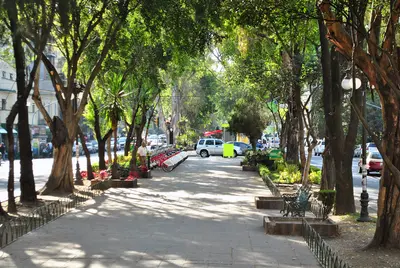
    Roma Norte emerged circa 1900 as a wealthy residential area. French-style villas, Art Nouveau, and Art Deco buildings line tree-lined streets like Avenida Álvaro Obregón and Calle Colima. Today, the district features cafés, galleries, bars, and top city restaurants, plus popular lodging.
    Centro Histórico

    Centro Histórico

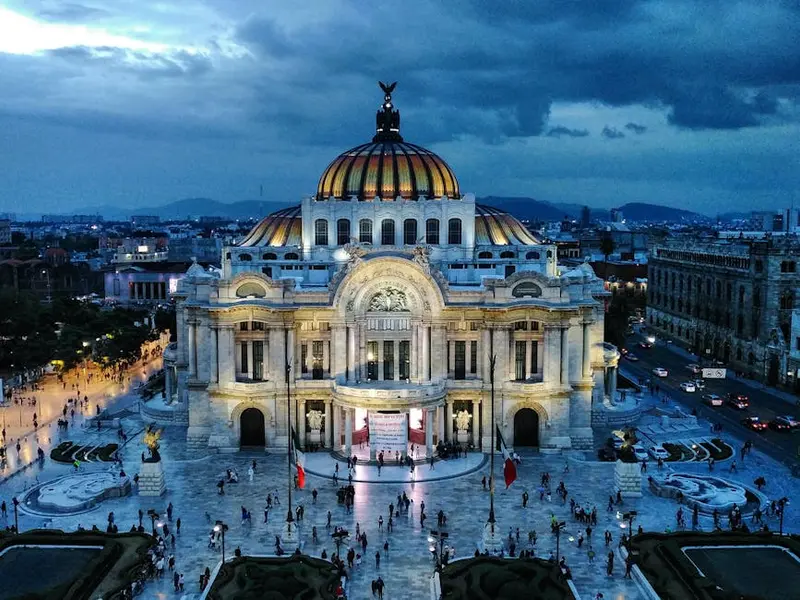
    The Historic Centre of Mexico City has been a UNESCO World Heritage site since 1987. Around the Zócalo you'll find the Templo Mayor, Cathedral, and National Palace, while to the west, Madero pedestrian street leads to Bellas Artes and the Alameda. In the side streets, you'll discover colonial palaces, churches, markets, and traditional cafes; the major sights are detailed on the Mexico City page.

    Sources & method

    • Photos: Wikimedia Commons, Pexels. Each photo carries its credit.
    • Place data such as addresses and ratings comes from Google Maps.
    • The content is based on web research from public, traceable sources. How the content is made · The role of AI